
Right to Education

On March 31, 2011, Leflore County, Mississippi entered into a Memorandum of Agreement (MOA) with the United States to address the DOJ’s investigation findings into the Leflore County Juvenile Detention Center (LCJDC). The MOA outlines that LCJDC must provide young people with reasonably safe conditions of confinement, protect youth from harm, limit the use of…

On May 12, 2015, the DOJ filed a complaint in the U.S. District Court for the Northern District of Mississippi against Leflore County, Mississippi for engaging “in a pattern or practice of conduct that violates the Constitutional and statutory rights of youth at the Detention Center.” The complaint outlines 14th Amendment violations based on Leflore…

From the introduction: “This report will describe, dissect, and draw lessons from Connecticut’s striking success in juvenile justice reform for other states and communities seeking similar progress. The first section details the timeline and dimensions of change in Connecticut’s juvenile justice system over the past two decades. In 1992, Connecticut routinely locked up hundreds of…

On August 22, 2012, the DOJ released its investigation findings into the Pendleton Juvenile Correctional Facility in Indiana. The investigation finds that “Pendleton exposes incarcerated youth to significant harm in violation of their constitutional and federal statutory rights. Pendleton fails to take reasonable steps to prevent youth from committing suicide, fails to provide reasonably safe…

On March 31, 2011, the Department of Justice released the findings of their investigation into the Leflore County Juvenile Detention Center (LCJDC) in Greenwood, Mississippi. The DOJ found that “[o]ur investigation revealed systemic, egregious and dangerous abuses perpetuated by a lack of accountability and controls.” The DOJ investigation uncovered that LCJDC fails to prevent unconstitutional…
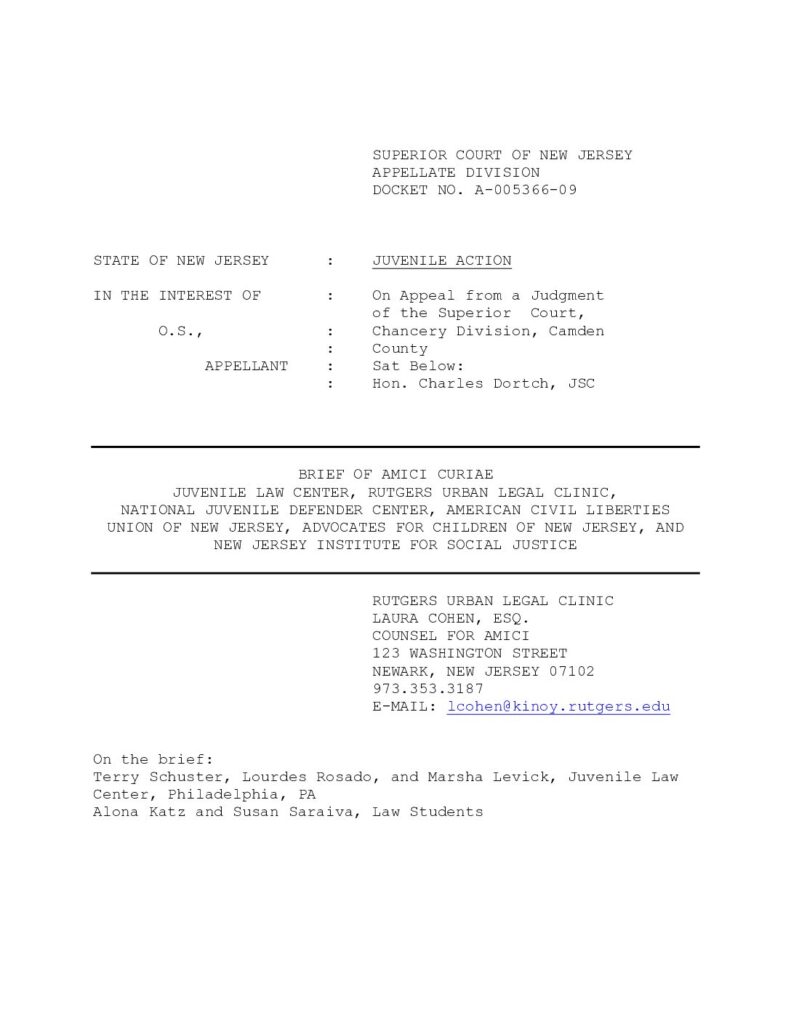
This amici brief by Juvenile Law Center, Rutgers Legal Clinic, The Gault Center, and others argues trial courts retain jurisdiction post-disposition to modify or change dispositional orders that are contrary to the purpose of the juvenile code. Further, the brief argues trial courts must provide oversight to ensure the safety of young people in abusive…
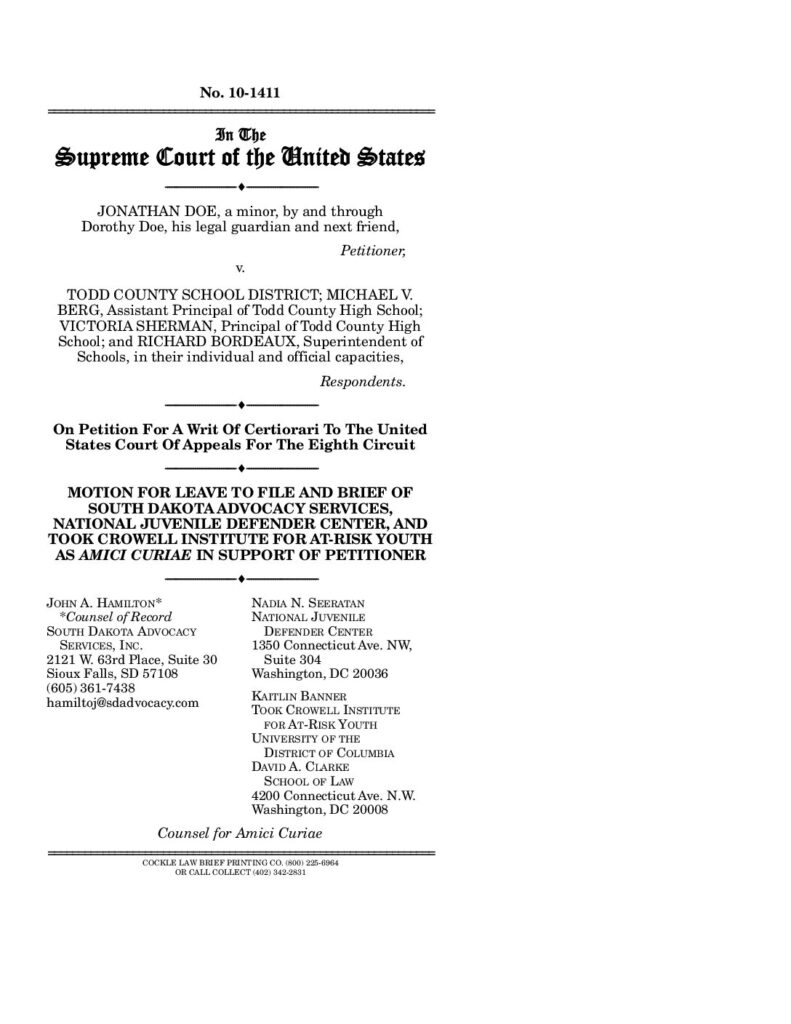
This amicus brief by South Dakota Advocacy Services, The Gault Center, and others argues the 8th Circuit’s interpretation of IDEA’s procedural safeguards are unconstutional under the 14th Amendment Due Process Clause and violate the plain language of the statute. The brief also outlines procedural protections from school exclusion for students with disabilities. As stated in…
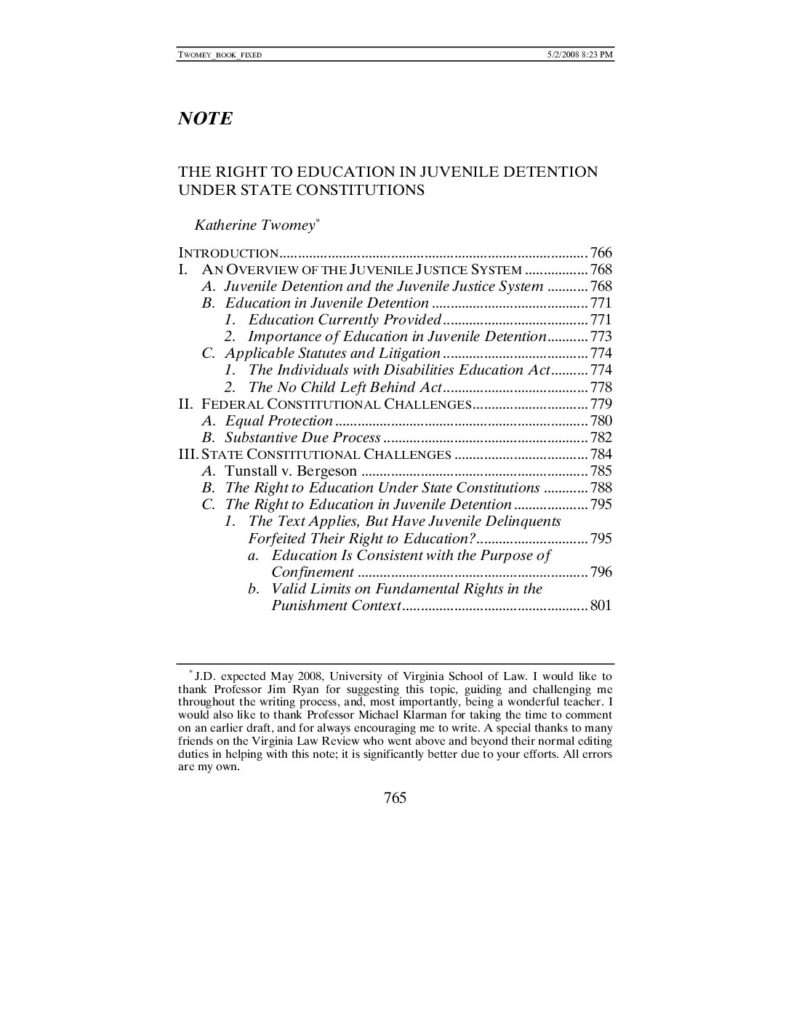
From the introduction: “This Note will argue that children in juvenile detention have a right to an adequate education based on state constitutional guarantees of education. This right can be used to challenge the inadequacy of the current educational services provided in juvenile detention facilities. The argument will proceed in three parts. Part I will…


The intended audience for this manual is defense attorneys who represent children in delinquency matters and in status offenses; the intended audience includes also disability rights attorneys and other public interest attorneys with an interest in representing children who are enmeshed in the delinquency system. Children strive to be productive and to be accepted. Children…

- « Previous
- 1
- 2
