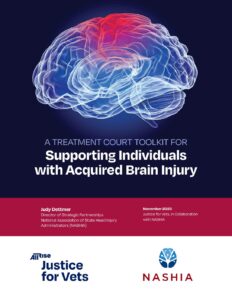
A Treatment Court Toolkit for Supporting Individuals with Acquired Brain Injury
This toolkit from All Rise and Justice for Vets provides support to treatment courts serving individuals with traumatic brain injury. Additionally, this toolkit includes an overview of brain injury and treatment courts, screening methods for brain injury-related challenges, and resources for making accommodations for brain injury in the legal system.
From the Summary:
As expressed in the beginning of this toolkit, the prevalence of brain injury is extremely high within criminal and juvenile justice settings. The likelihood that a given treatment court will have one or more individuals with brain injury in its caseload is high. A key takeaway from this guide is to remember that, as court teams and community behavioral health clinicians, you are not expected to diagnose brain injury, but there is value in screening for a history of brain injury through self-reporting. Understanding that a person has a history of brain injury and knowing the challenges they are facing related to their injury will allow you to adjust your support and provide compensatory strategies. Additionally, you are not expected to treat the brain injury. The hope is that with the tools provided you can adjust how you are providing support with a brain injury-informed lens. Treatment courts can increase successful outcomes by training court and provider teams on the fundamentals of brain injury and implementing a screening, support, and referral protocol as outlined in this guide. Additionally, understanding your state’s community-based brain injury resources and making referrals when indicated will help ensure that the success that the justice-involved individual experiences while engaged in your treatment court is sustained long beyond release from supervision.