
News
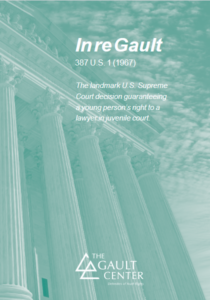
As we celebrate the 60th Anniversary of the landmark U.S. Supreme Court decision of In re Gault, we are excited to share that we have updated our Pocket Gault 2.0 which includes The Gault Center name with our intentional shift to drop the “J” and not refer to young people as “juveniles.” This pocket edition of the In re Gault opinion provides youth defenders, children’s advocates, and champions of justice with an invaluable tool: the constitutional mandate for upholding youth rights.
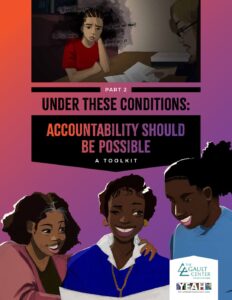
We are delighted to share Part II of our Revolutionizing Probation series aimed at moving probation from surveillance to support for all youth. Please check out our Toolkit, Under These Conditions: Accountability Should Be Possible.
Our Toolkit includes:
- Self-assessment checklist to examine your local probation orders
- National analysis of juvenile probation orders
- Best practice recommendations and key research
- Model probation order
- Spotlight on implementation of our model probation order in Pierce County, Washington
- Narrative guide
Our Toolkit was also recently covered by The Imprint.
This Toolkit is offered as part of the Juvenile Probation Accountability Coalition (JPAC). Please join our JPAC Listserv to receive news, updates, and opportunities. And please contact us if you are interested in learning more.
On July 24, 2026, the Governor of Michigan signed into law landmark legislation to ensure that all youth in the state have access to qualified youth defense counsel. This law gives the Michigan Indigent Defense Commission the authority to establish a statewide youth defense system, which will include youth defense standards, oversight, quality improvement, and support for youth defense counsel.
Following the Gault Center’s assessment of access to and quality of youth defense counsel in Michigan in 2020, the Gault Center worked closely with advocates and leaders in Michigan to fulfill young people’s constitutional right to counsel by improving the state’s delivery of youth defense services. The Gault Center celebrates this tremendous win alongside Michigan leaders and advocates who fought relentlessly for this victory on behalf of all youth in the state.
Campaign Goal:
To establish a universal juvenile probation order with three clear, developmentally appropriate conditions that all young people can understand, complete, and succeed under.
Campaign Title:
Under These Conditions
Campaign Taglines:
- Accountability Should Be Possible.
- Three Conditions. Better Outcomes.
- Clear Expectations. Stronger Futures.
- Fair Conditions Create Success.
- Youth Deserve a Chance to Succeed.
- Could You Succeed Under These Conditions?
Campaign Summary:
The Juvenile Probation Accountability Coalition (JPAC) seeks to transform how the nation understands juvenile probation and accountability. For decades, juvenile probation has been framed as a necessary mechanism for supervision and public safety. Yet across the country, youth are routinely subjected to dozens of probation conditions that vary widely by jurisdiction, are difficult to understand, and often create pathways to failure rather than success.
JPAC’s campaign, Under These Conditions: Accountability Should Be Possible, aims to replace a fragmented and punitive probation framework with a universal juvenile probation order built around three clear conditions: keep in touch with your probation officer, try your best to go to school or work regularly, and stay in a safe home.
The campaign is grounded in the belief that accountability should be understandable, achievable, and connected to positive youth development.
Call to Action:
Raise public awareness by sharing the posts below across your networks.
Instructions:
- Download the image (click the image to see a full-size version then right click the image to save and download)
- Copy and paste one of the sample messages—or create your own (please include the #UnderTheseConditions hashtag and please tag @gaultcenter and @yeahphilly)
- Post and encourage others to join the conversation
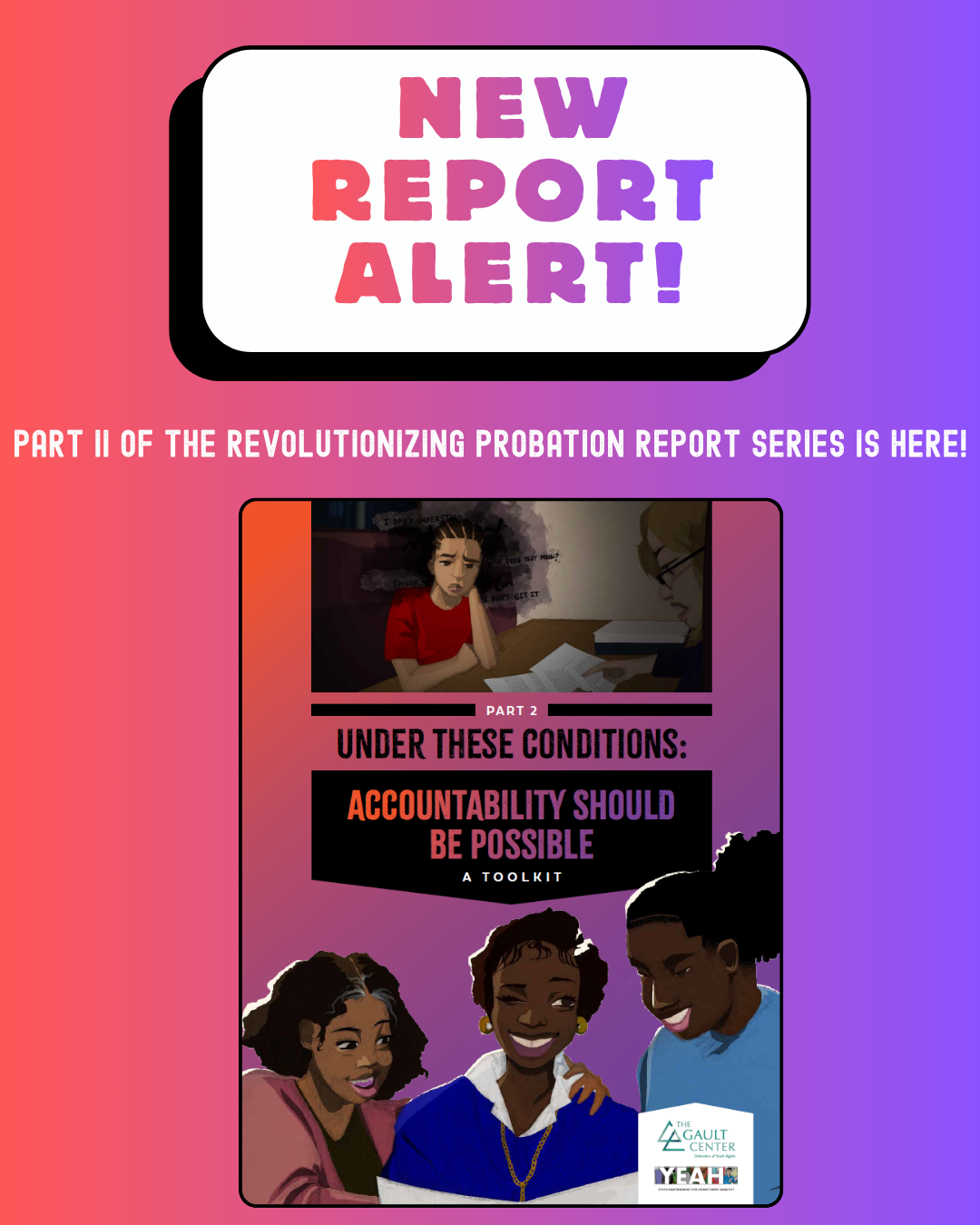
The Juvenile Probation Accountability Coalition (JPAC) just released a new toolkit to critically examine juvenile probation orders and to move probation from punishment to possibility for all youth. Check out JPAC’s toolkit to learn more about what you can do to support youth rights. #UnderTheseConditions #AccountabilityShouldBePossible #RevolutionizeProbation
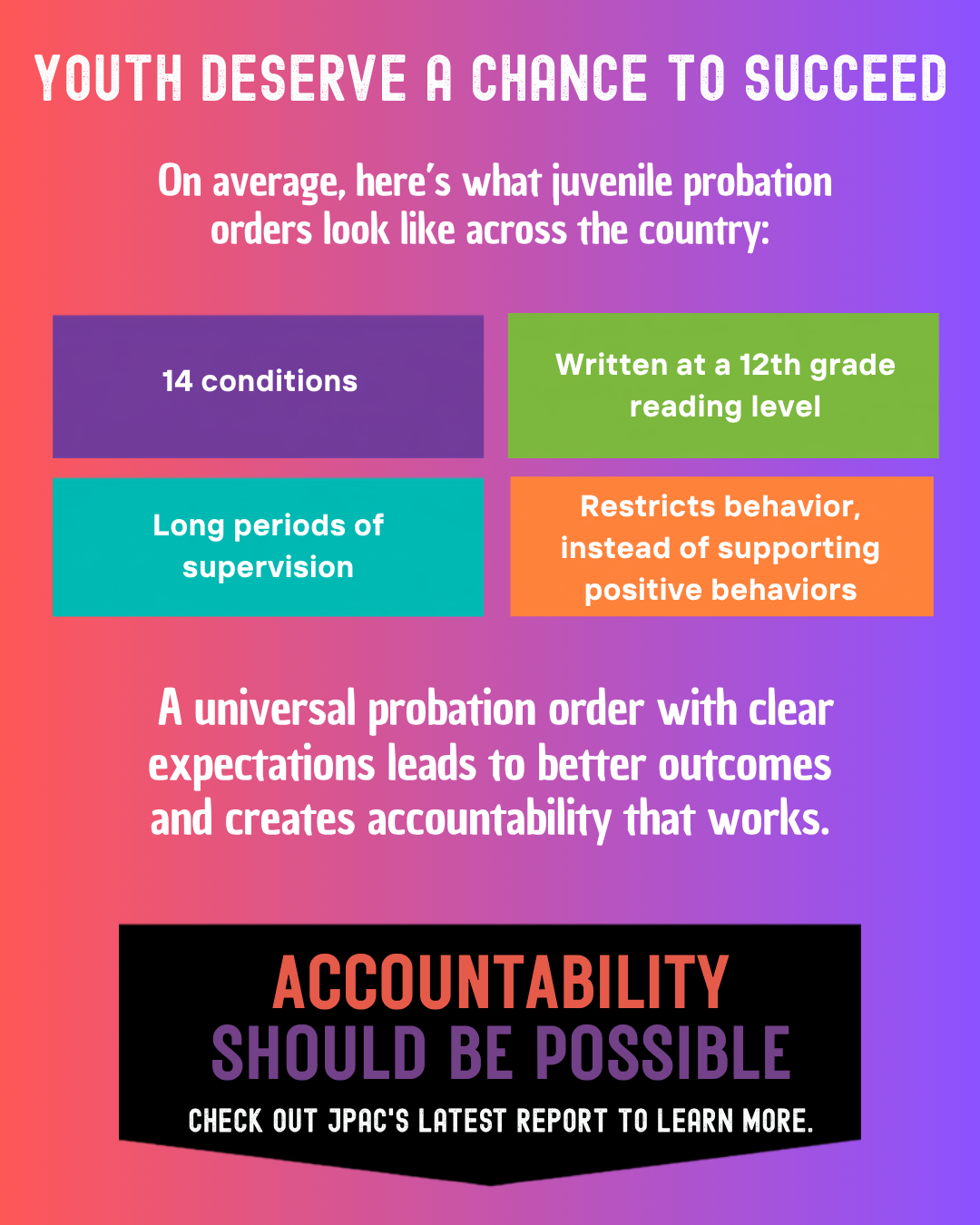
Young people are bound by complicated and arbitrary probation rules that are difficult to understand and designed to surveil, punish, and restrict youth behavior. JPAC’s model probation order offers an alternative: Three clear and developmentally appropriate conditions to create accountability that works. Youth deserve a chance to succeed. #UnderTheseConditions #AccountabilityShouldBePossible #RevolutionizeProbation
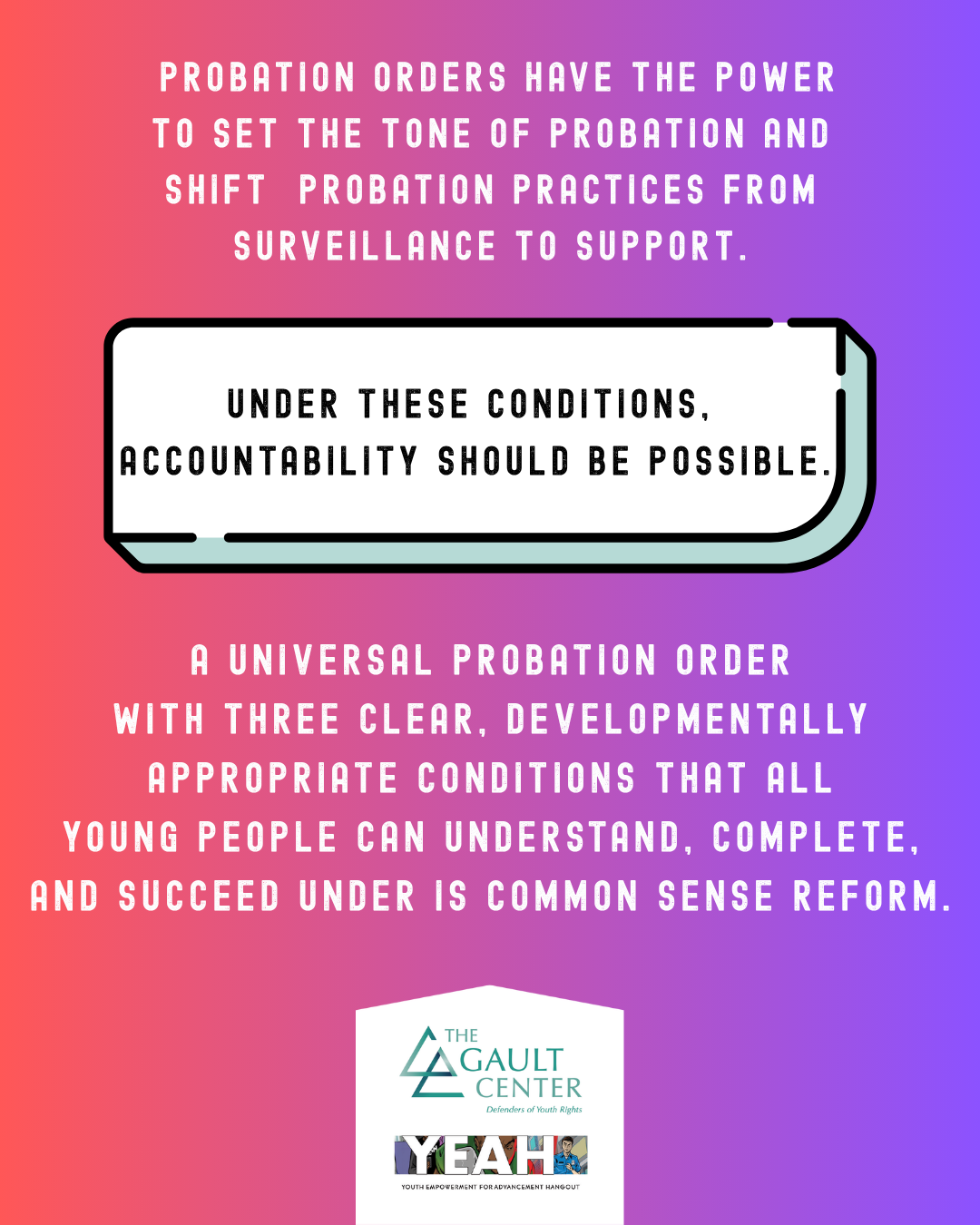
Probation orders set the rules. They have the power to shift probation from surveillance to support. JPAC’s model probation order has three conditions that set up youth to succeed. #UnderTheseConditions #AccountabilityShouldBePossible #RevolutionizeProbation
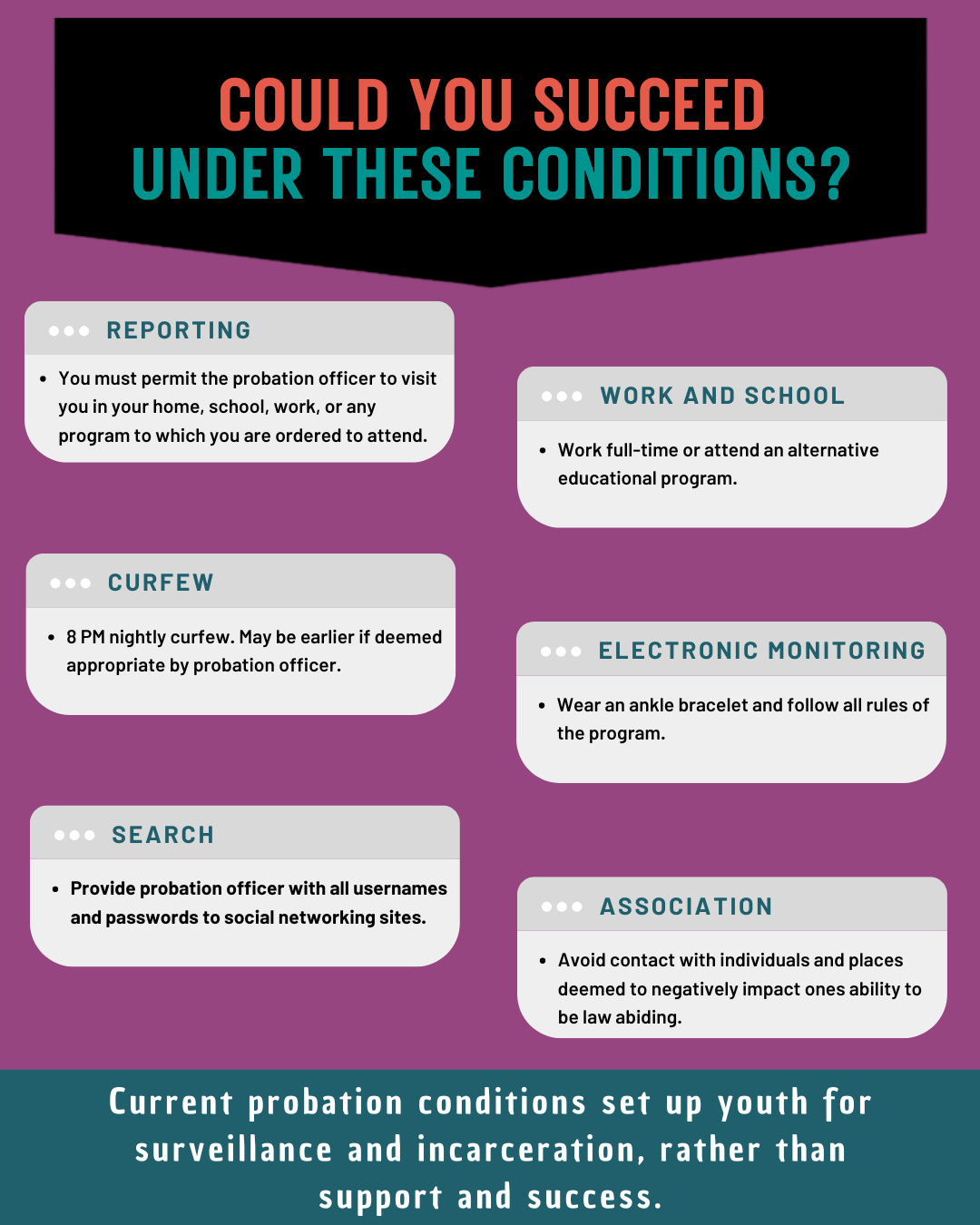
Youth are often set up to fail by probation conditions that impose unrealistic and arbitrary conditions. Youth deserve a chance to succeed. Check out JPAC’s toolkit to shift probation from surveillance to support. #UnderTheseConditions #AccountabilityShouldBePossible #RevolutionizeProbation
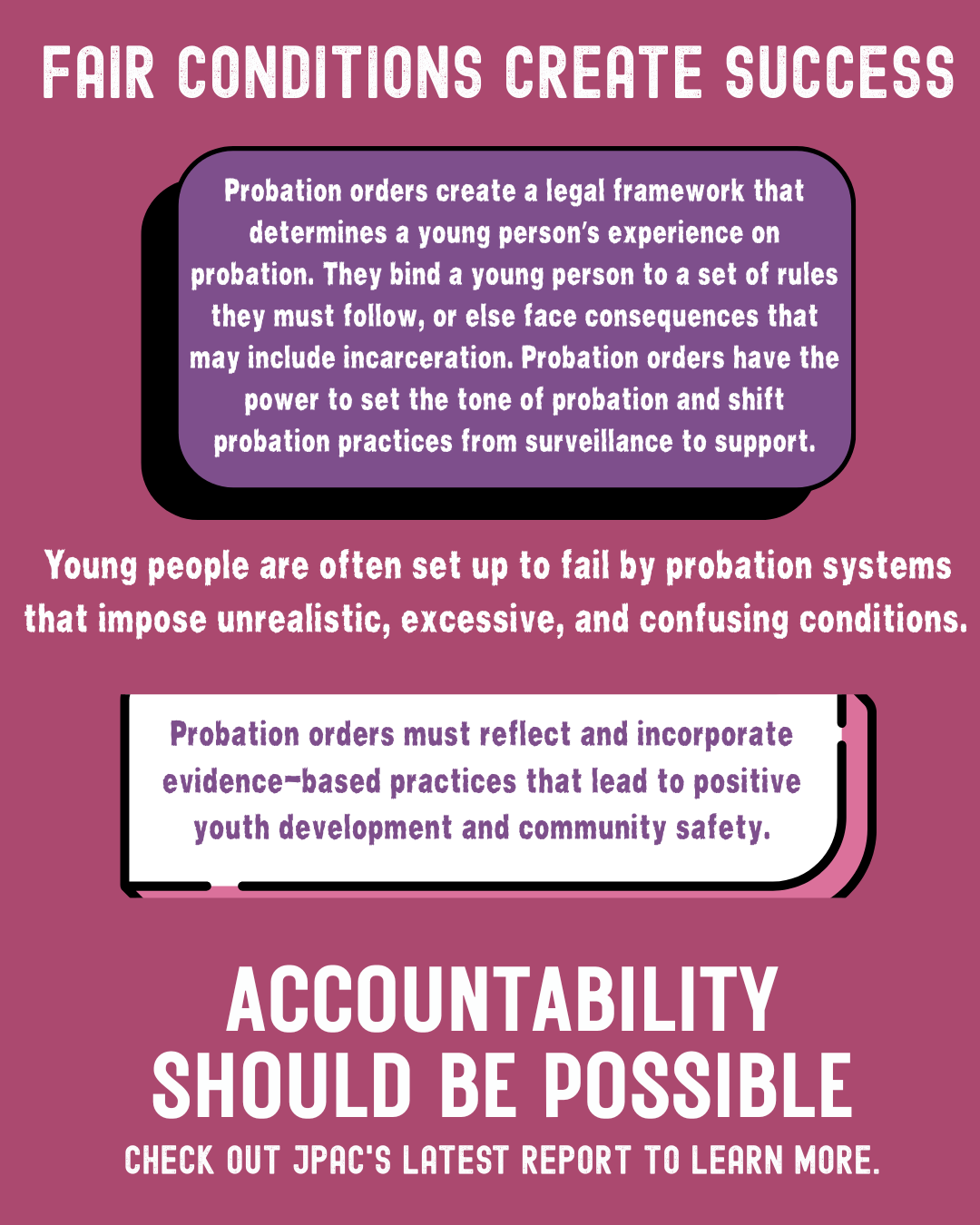
JPAC’s model probation order is backed by research on what keeps communities safe and supports youth growth. #UnderTheseConditions #AccountabilityShouldBePossible #RevolutionizeProbation
Accountability should be understandable, achievable, and connected to positive youth development. Check out JPAC’s toolkit to shift probation from punishment to possibility. #UnderTheseConditions #AccountabilityShouldBePossible #RevolutionizeProbation
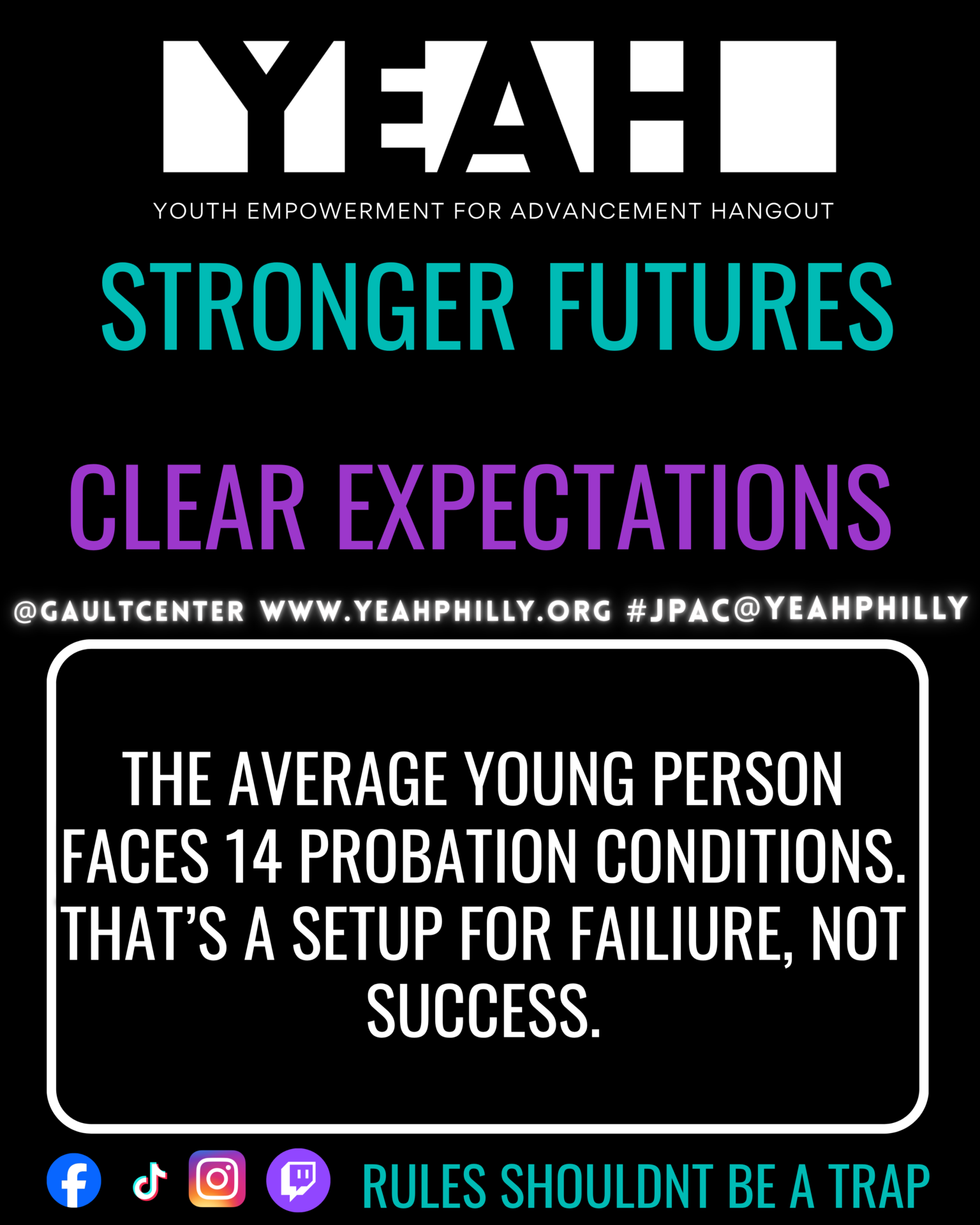
Accountability should be fair, clear, developmentally appropriate, and designed to support youth success and community safety. Clear expectations lead to stronger futures. Check out JPAC’s toolkit to learn more. #UnderTheseConditions #AccountabilityShouldBePossible #RevolutionizeProbation
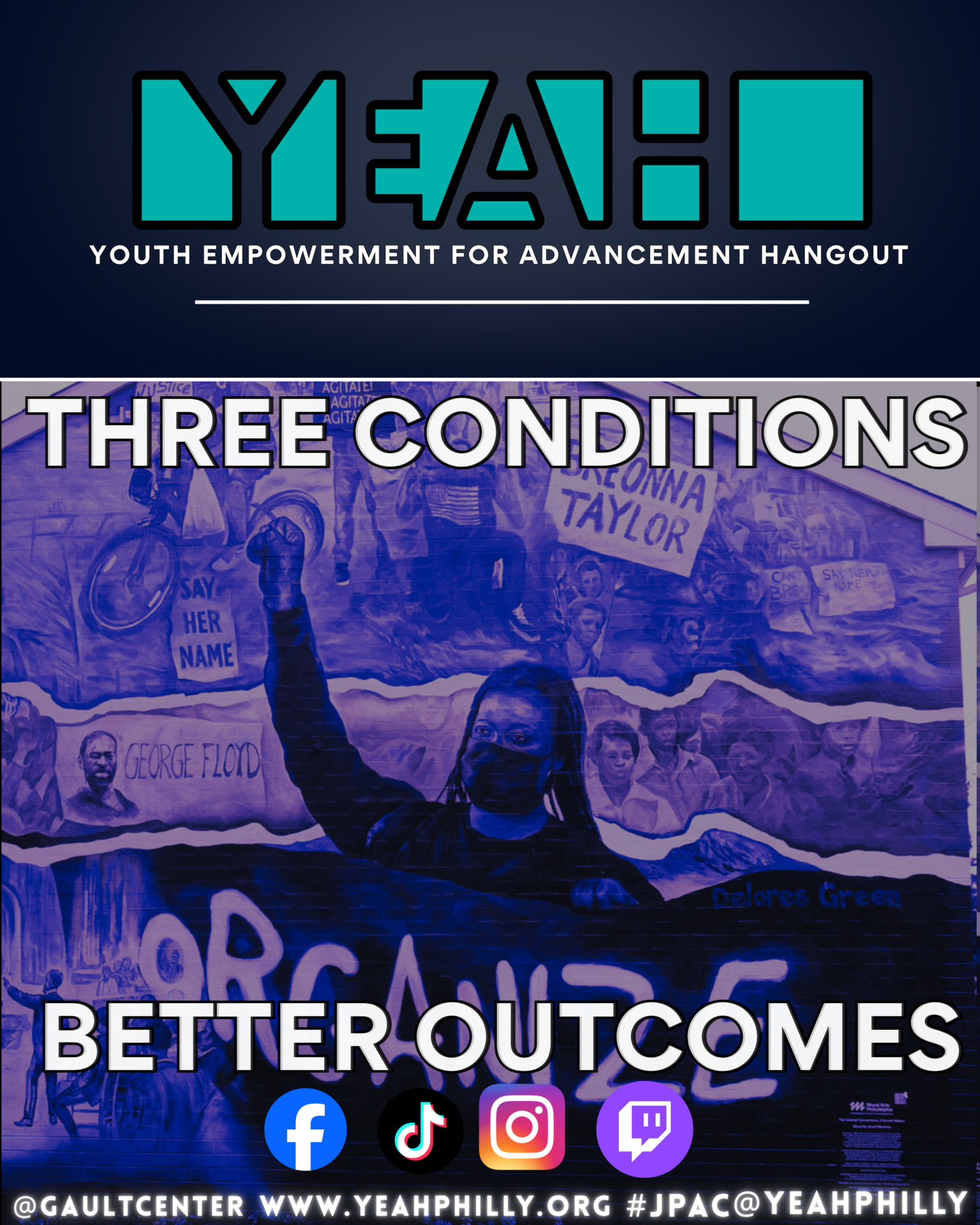
JPAC’s campaign, Under These Conditions: Accountability Should Be Possible, aims to replace a fragmented and punitive probation framework with a universal juvenile probation order built around three clear conditions: keep in touch with your probation officer, try your best to go to school or work regularly, and stay in a safe home. #UnderTheseConditions #AccountabilityShouldBePossible #RevolutionizeProbation
To learn more about this campaign, check out our Toolkit, Under These Conditions: Accountability Should be Possible.
The Gault Center has been regularly updating our Resource Library, where you will find a broad range of youth defense resources to enhance your practice and advocacy. Below are some notable resources from the past few months that may be of interest to youth defense advocates. Please note that some of these resources are only available to registered youth defense users; to access, please log in or register on the Gault Center’s website.
From the Gault Center
Working Toward a Horizon of Interdependence: An Abolitionist Ethos for Youth Defenders
This Essay outlines the role of youth defenders in abolition and offers five entry points for youth defenders to embrace an abolitionist ethos, starting where you are. The five entry points offered in this essay are (1) Embrace a shared vision that points toward a horizon of interdependent thriving where all children are free to grow in communities of care, (2) Reckon with the juvenile legal system’s lineage of racialized social control and the need to shift power to communities, (3) Commit to a transformation within ourselves, (4) Engage in collective action toward a shared vision of interdependence, and (5) Courageously experiment with change. This essay is an ode to the youth defense community and an invitation to embrace a widened lens of how our work can fit into a broader strategy of abolition as we “imagine beyond the status quo, dream as a form of resistance, and lean into the power of collectivity to create anew, both among youth defenders and alongside community and movement leaders.”
Webinar Tip Sheet: Revolutionizing Probation from Punishment to Community-Led Safety, Part I
On March 26, 2026, the Gault Center, Youth Empowerment for Advancement Hangout (YEAH Philly), and the Institute of Women and Ethnic Studies hosted a webinar introducing a framework to shift narratives and practices around juvenile probation to move from punishment to possibility for all youth. This tip sheet compiles some of the key takeaways and resources that came out of the webinar and offers a starting point to build narrative strategies around the need for change and community-based solutions. This tip sheet is offered as part of the Juvenile Probation Accountability Coalition.
This video, developed by youth leaders at Progeny, highlights key findings from the Five Years Later: An Update on the Kansas Youth Defense Assessment report. This video is part of the Defending Futures: Youth Defense for All in Kansas campaign to establish a statewide youth defense system and highlights the importance of building strong youth defense systems.
Caselaw Updates
In the Interest of K.W.-D., 2026 Pa. Super. LEXIS 272 (Pa. Super. Ct. 2026)
The Pennsylvania Superior Court vacated a probation revocation order because K.W.-D. was deprived of his constitutional right to notice. In this case, the Commonwealth made an oral request to revoke probation in court without filing a written motion or providing advance notice of the specific underlying allegations of the revocation request. The juvenile court then issued a “notice of review hearing” to the parties, and defense counsel had access to the youth’s progress reports. The Superior Court underscored the constitutional inadequacies at play, noting “the fact that defense counsel may have had access to some, or even all of K.W.-D.’s progress reports, does not vitiate his right to due process with respect to the notice of the Commonwealth’s intent to revoke his probation. The mere fact that defense counsel may have been aware that K.W.-D.’s progress was lacking or that he was non-compliant with some of the conditions of his probation is of no consequence. Counsel cannot be expected to guess or surmise the potential basis or bases on which the Commonwealth might opt to seek revocation of a juvenile offender’s probation. Instead, the Commonwealth was required to provide K.W.-D. and his counsel with notice of the specific allegations and evidence supporting the request to revoke his probation.” This case highlights the importance of young people’s procedural due process rights, especially the right to notice, and its interplay with the right to effective assistance of counsel.
People v. Campbell, 2026 IL App (1st) 220373-B (Ill. Ct. App. 2026)
The Illinois 1st District Court of Appeals held that a statutory minimum sentence that effectively amounted to a de facto life sentence as applied to youth violated the Eighth Amendment’s prohibition on cruel and unusual punishment. The court reasoned that the core takeaway of Miller v. Alabama is that “there must be an exercise of real discretion” to consider the mitigating qualities of youthfulness and age at sentencing. The court stated, “The holding in Miller is rooted in society’s growing awareness that even brutal crimes may be, and frequently are, the product of the transient characteristics of youth.” This decision emphasizes the legal significance of considering youthfulness and age at sentencing and extends this consideration to statutory minimums that amount to de facto life sentences for youth.
From the Field
ICE Out: Mapping and Resisting Local Law Enforcement Collusion with ICE in Massachusetts and Beyond
This report by Citizens for Juvenile Justice (CfJJ) investigates the level of information sharing and collusion between police and courthouse staff with federal Immigration and Customs Enforcement (ICE) in Massachusetts. CfJJ filed more than 90 public records requests in the state and found that police and courthouse staff regularly share information with ICE, effectively becoming “force multipliers” for ICE. This report details specific ways police and courthouse staff are cooperating with ICE and cautions that this practice undermines public trust, legitimacy, and democratic accountability. This report offers key policy and narrative recommendations to create guardrails around information sharing practices with ICE, including a proposed ban on transmitting youth fingerprints to the FBI (which are then shared with ICE). CfJJ offered a training on this report for the Gault Center’s New England Region, and the webinar slides are available here.
This law review article by Professor Tyler Rose Clemons develops a new substantive due process jurisprudence on the right to seek joy. Tracing the historical origins of the right to liberty of the Due Process Clauses of the Fifth and Fourteenth Amendments, this article connects the concept of liberty with the pursuit of happiness, or the right to seek joy. Noting that “Most humans experience the desire to align their external gender presentation with their internal gender sense as a pressing need,” this article argues that the natural desire for internal/external gender alignment is a liberty interest that must be highly protected. Applying this framework, this article examines the harms of gender-affirming care bans, especially as applied to youth, and argues that standard legislative and judicial procedures are inadequate to justify an infringement on this protected liberty interest. This article offers novel legal strategies to protect the due process right to seek joy and details critical insights around gender identity formation during childhood and adolescence for defenders to consider, especially when transgender youth in the juvenile legal system face barriers to access gender-affirming care and support.
Patrol Demographics Calculator
This new interactive tool, developed by a team of data scientists, provides racial demographic data by police patrol districts for defenders to use when building arguments about racially disparate stops. From the team: “This tool estimates the demographic composition of U.S. police patrol districts using areal interpolation of U.S. Census American Community Survey data, addressing a key gap faced by public defenders who must assess whether traffic stops reflect discriminatory enforcement or local population patterns. Because Census geographic units do not align with police patrol boundaries, the tool recalculates demographic proportions by overlaying census blocks with patrol district polygons, which are gathered through public ESRI hubs, georeferencing city maps, or Freedom of Information Act requests. The tool houses these patrol district files as well as their estimated demographics for easy downloadability.” To learn more or discuss further, please contact the team members: Julia Healey-Parera at julia.healey-parera@duke.edu, Milo Soriano at milosoriano47@gmail.com, Leon Belegu at leonbelegu2003@gmail.com, and Andreea Matei at amatei@urban.org.
Executive Director Mary Ann Scali and Senior Youth Defense Counsel Sarah Johnson were interviewed by Stateline regarding the Youth Justice Landscape, and transfer policies across the country.
From the Article: “’Transfer of youth to adult court is bad public policy,’ said Mary Ann Scali, the executive director of The Gault Center, a national organization that trains and supports defense attorneys who represent young people in court. ‘It causes more harm and does not lead to better outcomes for young people or communities.'”
“Sarah Johnson, senior youth defense counsel with The Gault Center, said research does not support the argument that moving children into adult court improves public safety.”
“’Transfer does not increase public safety. Transfer increases recidivism. Transfer traumatizes young people because they’re now placed in an adult facility,’ Johnson said, noting that children may face heightened risks of physical and sexual abuse from other incarcerated people and staff.”
To learn more about our work regarding transfer to adult court, please visit our Resource Library or join our Transfer to Adult Court Workgroup through our Transformative Policy Initiative.

The Gault Center’s Executive Director Mary Ann Scali joined Executive Director John A. Tuell from the National Resource Center for the Transformation of Youth Justice in their podcast, “Youth Justice Transformation in Action.” Mary Ann shared the Gault Center’s vision for the 60th Anniversary of the In re Gault decision, what it means to be a youth defender, and how youth defenders and advocates can continue to support young people by serving as bridges outside of the harmful juvenile legal system to communities of care.
Click here to access the podcast!
Description: What does it actually mean to defend a young person’s rights? In this episode, the RFK National Resource Center Executive Director John Tuell speaks with Mary Ann Scali, Executive Director at The Gault Center to explore nearly 30 years of evolution in the fight for youth justice. We talk about the 1967 Supreme Court ruling that gave the organization its name, why In re Gault remains as relevant as ever as we mark its 60th anniversary, and what it looks like when youth defenders are doing this work at its best; meeting young people where they are, strengthening connections to community, and pushing back against a system that too often pulls youth deeper in rather than offering a way out. From the tools and resources TGC provides to defenders on the ground, to the bold reforms on the horizon like reimagining probation, this conversation is a window into what genuine, rights-based youth defense looks like in practice, and why it matters now more than ever.
In this new opinion piece published by The Detroit News (full article requires subscription), MCYJ Executive Director Jason Smith, Georgetown Law’s Juvenile Justice Clinic and Initiative’s Director Kristin Henning and The Gault Center’s Executive Director Mary Ann Scali argue for solutions that provide young people with a voice in shaping the spaces they want to gather in, be in community with each other, and help young people find connection, belonging and purpose.
From the article: “Our success in achieving community safety depends as much on what we get wrong as what we get right. We won’t succeed if we sensationalize news stories to stoke fears about teen gatherings. We won’t get there by deprioritizing the basic social needs of our children and taking an ineffective, harsh and expensive approach when harm occurs. We fall even further from building community safety when implicit biases about youth of color drive our interventions, or when we demonize the many for the actions of a few.
“Our youth are telling us what they need from us. They need safety, yes. So do their families, neighbors and business owners. However, safety will not come from treating every gathering as a threat or every young person as a problem. It will come from listening early, investing consistently and building communities where young people have somewhere to go, something meaningful to do and someone supporting them when they get there.”
HyeJi Kim, at the Gault Center, wrote an essay on the critical role of youth defenders in building toward an interdependent future, where all children and youth are free to thrive. This essay is an ode to the youth defense community and offers a widened lens of how our work can fit into a broader strategy of abolition as we continue to evolve as a collective.
This essay offers five entry points for youth defenders to embrace an abolitionist ethos to build toward a horizon of interdependence, starting where you are:
- Embrace a shared vision that points toward a horizon of interdependent thriving where all children are free to grow in communities of care,
- Reckon with the juvenile legal system’s lineage of racialized social control and the need to shift power to communities,
- Commit to a transformation within ourselves,
- Engage in collective action toward a shared vision of interdependence, and
- Courageously experiment with change.
We hope you can use the article to grow actions toward Gault@60 and strengthen our efforts to bridge toward community. We are ever grateful for your continued fight for youth rights.
Executive Director Mary Ann Scali was interviewed by USA Today regarding conditions of confinement concerns at Ohio’s Indian River Juvenile Correctional Facility. Staffing shortages, extensive use of solitary confinement, and staff conducting rounds via video instead of in person are a just a few of the issues that have been reported by young people and their families.
From the Article: “Mary Ann Scali, director of The Gault Center, a national nonprofit focused on youth justice, said holding teens in solitary confinement “is just torture, plain and simple.”
If Indian River cannot maintain enough staffing to provide mental health, education and security for incarcerated young people, Ohio could shut it down and invest in community-based services for them, Scali said.”
To learn more about our work regarding conditions of confinement and detention issues, please visit our Resource Library or join our Detention and Conditions Workgroup through our Transformative Policy Initiative.
The Gault Center has been regularly updating our Resource Library, where you will find a broad range of youth defense resources to enhance your practice and advocacy. Below are some notable publications from the past few months that may be of interest to youth defense advocates. Please note that some of these resources are only available to registered youth defense users; to access, please log in or register on the Gault Center’s website.
From the Gault Center
Revolutionizing Probation from Punishment to Community-Led Safety, Part I
The Gault Center and Youth Empowerment for Advancement Hangout (YEAH Philly) released Part I of our Revolutionizing Probation series as part of our Juvenile Probation Accountability Coalition. Part I introduces a framework to shift narratives and practices around juvenile probation to move away from punishment and toward possibility for all youth. This report highlights youth perspectives on juvenile probation, finding that young people are experiencing probation as surveillance, control, and punishment, negatively impacting their mental health and wellbeing. This report also walks through the historical lineage of probation as a form of racialized social control to challenge dominant narratives that probation is a benign act of benevolence on behalf of youth. Part II of this report will be released in summer 2026, highlighting concrete steps to transform local probation practices and policies and spotlighting examples of successful practices already underway. An executive summary of Part I is also available. In addition, please check out this recent article covering our report.
Caselaw Updates
Commonwealth v. Donovan, 497 Mass. 355 (Mass. 2026)
The Supreme Court of Massachusetts held that a transfer hearing is a “critical stage of the criminal process” that requires effective assistance of counsel under the 6th Amendment of the U.S. Constitution. The Court held that defense counsel’s failure to present evidence on youthfulness, developmental maturity, and rehabilitation prevented the judge from considering factors critical to the transfer decision. The Court emphasized, “A transfer hearing in many cases is ‘the whole ball game.’ A ‘thoughtful presentation by defense counsel directed at both [probable cause and whether, in view of the defendant’s maturity and rehabilitation, transfer is apt] is thus critical.’ Because a § 72A transfer hearing presents such consequential stakes, a defendant is entitled to the effective assistance of counsel.” (citations omitted). This decision strengthens young people’s constitutional right to counsel at transfer hearings and emphasizes the critical importance of effective youth defense counsel to raise arguments around developmental maturity to prevent against unnecessary transfer of youth to adult court.
Commonwealth v. Lee, 2026 Pa. LEXIS 553 (Pa. 2026)
The Supreme Court of Pennsylvania ended the use of mandatory life without parole for felony murder cases based on the state constitution’s prohibition against cruel punishment. Finding that Pennsylvania’s constitutional safeguards against cruel punishment offers greater protections than the 8th Amendment of the U.S. Constitution, the Court reasoned that the blanket imposition of mandatory life without parole absent an individual consideration of culpability heightens the risk of disproportionate punishment. The Court also noted that the practice of sentencing an individual to mandatory life without parole for felony murder cases where intent is essentially immaterial does not meet the goals of rehabilitation, deterrence, retribution, or incapacitation (i.e., the traditional penological justifications for criminal punishment). Accordingly, the Court finds that the Pennsylvania state constitution prohibits mandatory life without parole for felony murder cases and holds that there must be an individualized determination at sentencing. This decision reflects the opportunity to challenge mandatory sentences for felony murder cases based on heightened state constitutional principles. In addition, the Antiracism and Community Lawyering Practicum at Boston University School of Law, Fred T. Korematsu Center for Law and Equality, and the NAACP Legal Defense and Educational Fund submitted an amicus brief on this case highlighting several racial justice arguments that defenders may also reference to build effective challenges to felony murder cases from a racial justice lens.
State v. Mann-Tate, 2026 WI App 17 (Wis. Ct. App. 2026)
The Court of Appeals of Wisconsin held that the state’s reverse waiver statute was unconstitutional “to the extent it does not require circuit courts to consider the unique attributes of youth identified by the United States Supreme Court.” In Wisconsin, a youth’s case that is directly filed in adult criminal court may be sent to juvenile court in a “reverse waiver” procedure if the youth proves by a preponderance of the evidence three statutory factors: that the youth could not receive adequate treatment in the adult, criminal system; that sending the case to juvenile court would not depreciate the seriousness of the offense; and that retaining jurisdiction in adult, criminal court is not necessary for deterrence. Relying on Miller v. Alabama and its progeny, the Court of Appeals held that the same considerations of adolescent development are constitutionally relevant at the transfer stage pursuant to a young person’s due process rights under the 14th Amendment. The Court of Appeals stated, “The reverse waiver procedure is rendered functionally meaningless if courts are not required to consider that children’s ‘lack of maturity and … underdeveloped sense of responsibility’ leads them to poor decision making. This concept is so fundamental that the Supreme Court described it as something ‘any parent knows.’” (citation omitted). As such, the Court of Appeals held that reverse waiver determinations must consider the following six Miller factors to comport with the demands of due process: 1) youth’s age and adolescent development, 2) family and home environment, 3) circumstances of the offense, 4) impact of peer pressure, 5) effect of age in ability to navigate the legal system, and 6) the possibility of rehabilitation. This decision extends the Miller factors to transfer/reverse transfer determinations and offers a compelling argument to strengthen developmental considerations at the transfer phase under a due process framework.
From the Field
Eugenic Criminology and the Birth of Predictive Algorithms in Criminal Justice
This law review article written by Professors Megan T. Stevenson and Robynn J.A. Cox uncovers the eugenic origins of risk assessment tools and highlights how modern-day uses of risk assessments for preventive detention still perpetuate eugenic criminology, albeit with new terminology. This article challenges the ongoing influence of eugenics in identifying who is “high risk” and “dangerous,” which the authors argue “may simply be the modern equivalents of ‘degeneracy’ and ‘defectiveness.’” This article offers a caution for defenders and advocates to examine the underlying historical roots of risk assessment instruments to critically evaluate manifestations of its eugenics foundation in modern-day practice.
Time Out for Transfer: Youth Transfer as Punishment
This law review article written by Professor Kristina Kersey explores transfer as a form of punishment and calls for jurisdictions to enact a moratorium on transfer, drawing lessons from the movement to end the death penalty. Noting similarities between transfer and the death penalty, this article analogizes the two and argues that transfer mechanisms operate to punish youth before a finding of guilt—achieving neither retributive justice nor deterrence, while failing to decrease recidivism or improve public safety. This article also highlights the staggering racial disparities that taint transfer practices across the country and connects its prevalence to the racialized history of the juvenile court system. Given these factors, the article calls for a moratorium to immediately halt the practice of transferring youth to adult court to study and evaluate its necessity. This article offers key policy considerations and comparative analyses for defenders and advocates to challenge the prevalence of transferring youth to adult court in their local jurisdictions.

We are delighted to share Part I of our new report and executive summary, created in partnership with Youth Empowerment for Advancement Hangout (YEAH Philly), as part of our Juvenile Probation Accountability Coalition (JPAC).
Part I of our report summarizes youth perspectives on juvenile probation based on 25 interviews with youth across the country who experienced probation firsthand and examines the historical roots of juvenile probation to inform the transformation of probation moving forward.
Part II will be released later this year and will highlight concrete steps to transform local probation practices and policies, spotlighting successful examples already underway.
Check out coverage on this report here.
Please join our JPAC Listserv to receive news, updates, and opportunities. And please contact us if you are interested in learning more.

The Gault Center is so grateful to partner with Players Coalition to strengthen youth rights in Maryland!
Players Coalition “exists to end social injustices and racial inequality so future generations have the opportunity to thrive without barriers.” Players Coalition has been supporting youth justice advocacy since 2018.
Please see this post from Players Coalition supporting the passage of Maryland’s SB 323, which would limit the automatic transfer of youth to adult court. The act has now been passed by both the Senate and the House and is on its way to the Governor’s office!
We are so grateful to Torrey Smith for lifting up this critical issue, and for the Maryland Youth Justice Coalition for pushing for this change in Maryland and supporting youth rights.
Please visit our Transformational Policy Initiative page for additional information on our policy efforts and the critical work of Players Coalition.


In 2020, the Gault Center was invited by the Kansas Supreme Court to conduct a Statewide Assessment of its youth defense delivery system. Since that time, the Gault Center has been working with partners in Kansas to build a statewide Youth Defense System, and in 2025, released a five-year follow-up assessment in partnership with Progeny Youth Leaders.
Please see the op-ed written by Senior Youth Defense Counsel Sarah Johnson, celebrating March 18 as Kansas Public Defense Day, and encouraging the State of Kansas to fund a robust, statewide youth defense system.
“Public Defense Day is a critical moment to elevate the full scope of the conversation around the fundamental right to counsel by naming how it includes young people. . . . Now is the moment to fulfill the promises of Gideon and Gault by building a robust, statewide youth defense system. The future of Kansas’ youth and, inherently, the future of this state compel decisive investment and unwavering commitment. We encourage Kansas to fulfill the principles of both Gault and Gideon by ensuring every child is afforded the defense — and the future — that the people of Kansas deserve.”

We are excited to introduce the 2026 Ambassadors for Racial Justice (ARJ). During the year-long program the Gault Center and Georgetown Juvenile Justice Initiative partner with a cohort of 10 youth defenders selected as Ambassadors for Racial Justice to lead and develop strategies to combat racial inequities in their respective jurisdictions and nationally. Ambassadors participate in guided discussions, webinars, mentorship, and training programs throughout the year to support capstone project they design.
The Gault Center and Youth Empowerment for Advancement Hangout (YEAH Philly) are partnering together to launch the Juvenile Probation Accountability Coalition (JPAC). JPAC will focus on exposing the harms of juvenile probation, amplifying alternative models, and advancing local policies and practices that move us beyond punishment-based juvenile probation. Our aim is to create a national blueprint to end mass supervision and strengthen pathways for community-based healing, accountability, and safety for all youth.
Please check out this recent op-ed that covers this issue and our coalition.
If you are interested in learning more about joining JPAC and our forthcoming work, please contact HyeJi Kim or Kendra Van de Water.
The Gault Center has been regularly updating our Resource Library, where you will find cutting edge youth defense resources to enhance your practice and advocacy. Below are some notable publications from the past few months that may be of interest to youth defense advocates. Please note that some of these resources are only available to registered youth defense users; to access, please log in or register on the Gault Center’s website.
Also, we wanted to share that the 2025 Edition of the Trial Manual for Defense Attorneys in Juvenile Delinquency Cases developed by Randy Hertz, Martin Guggenheim, & Anthony G. Amsterdam is available on our website. This Trial Manual has 39 chapters and offers a detailed examination of how to handle each step of a youth defense case.
From the Gault Center:
Beehive Buzz: Emerging Strategies from Summit 2025
In October 2025, the Gault Center convened over three hundred youth defense lawyers and advocates at our annual Youth Defender Leadership Summit. Together, we practiced the cultivation of community in service of building a more just, more liberated, and more human humanity for all children and for us all. This resource captures the shared learnings and collective action strategies that youth defenders built together during Summit covering ways we can lean into the strength of identities and defend against hypervigilance in transfer, gun charges, and digital surveillance. In addition, the Gault Center hosted a Summit policy meeting and created a companion Beehive Buzz policy resource outlining key legislative wins and trends from the past year, including Michigan raising the age to 18 and California creating a one-year cap on juvenile probation, and policy goals for the year ahead, including increasing funding for community-based alternatives and shifting narratives around young people and community safety.
Five Years Later: An Update on the Kansas Youth Defense Assessment 2025
The Gault Center released an update on the state of youth defense in Kansas, which centers the perspectives and experiences of young people impacted by the juvenile legal system, through a collaborative effort with Progeny, a youth-adult partnership in Kansas, TerraLuna Collaborative, a research consulting group, and Mulberry Art Gallery, which focuses on supporting emerging youth artists of color. Youth leaders at Progeny interviewed other young people who had experienced the juvenile legal system in Kansas about their experiences in the system and specifically with their youth defense attorney to shed light on the gaps, challenges, and opportunities to improve youth defense in the state. The interview findings were then shared with youth artists, who developed artwork (highlighted throughout the report) to represent the collective experiences of young people in the juvenile legal system across the state. This report powerfully outlines the lived experiences of young people through their own words about client communication, shackling, case preparation, courtroom experiences, hearings, costs and fees, and racial justice advocacy. This report serves as an important tool for youth leaders and policy advocates to improve the youth defense delivery system in Kansas and offers an example for other jurisdictions working with or interested in partnering with youth leaders to drive policy change based on youth experiences and perspectives.
Throughout this year, the Gault Center has been building out our Immigration Tip Sheet Series to guide those working in the juvenile legal system on best practices and policies to safeguard the rights of immigrant youth in juvenile court. The series includes resources for youth defenders (General Guidance, Rights of Noncitizen Youth, and Special Immigrant Juvenile Status), juvenile court judges (General Guidance), and juvenile probation officers (General Guidance and Checklist). To view the complete series, in addition to other key resources around immigration and youth defense, please visit our Immigration page.
Caselaw Update:
In re K.-M.D.C, 343 Ore. App. 92 (Or. Ct. App. 2025)
The Oregon Court of Appeals reversed a juvenile court’s adjudication of reckless burning, holding that a finding of recklessness requires evidence around a young person’s subjective awareness of risk. This case involved a 13-year-old youth who lit a fire on a grassy hill which spread and ended up damaging several homes. At issue was whether there was sufficient evidence that the youth acted recklessly in damaging property. The Court of Appeals stated, “A recklessness inquiry must consider a person’s subjective awareness. . . . Here the juvenile court summarily concluded that playing with a lighter in a dry field is ‘certainly’ something that a 13-year-old child would recognize as risky and ‘is just simply reckless.’ But the question in this case was not whether playing with a lighter in a dry field was generally ‘risky.’ Instead, the juvenile court was required to determine whether the record supported a determination that the youth was specifically aware of the risk of property damage as alleged in the state’s petition.” This decision lays the groundwork for a reasonable child standard on recklessness, noting the importance of considering a young person’s subjective awareness of risk to sustain the requisite mens rea required in a recklessness finding.
From the Field:
Professor Kris Henning and Rebba Omer authored a law review article on decriminalizing normal adolescent behaviors, race, and disabilities. This article maps a way forward for all system actors in the juvenile legal system to mitigate and buffer against the harms of juvenile legal system involvement for youth with disabilities. Specifically, this article outlines youth defense litigation strategies when representing youth with disabilities, including 1) putting the judge, prosecutor, and probation officer on notice of a youth’s disability and requesting all appropriate accommodations either on probation or in a juvenile facility; 2) gathering mitigating evidence about a youth’s disability and trauma history to advocate for diversion or community-based alternatives; 3) advocating for a youth’s release from confinement based on a facility’s violations of the Americans with Disabilities Act (ADA), the Individuals with Disabilities Education Act (IDEA), Section 504 of the Rehabilitation Act, and/or relevant state laws; and 4) filing a motion to dismiss or motion to suppress when police or other officials violate the ADA. To access practice guides, sample motions, and other key resources around representing youth with disabilities in the juvenile legal system, please visit our Strategy Guide on Youth with Disabilities.
CfJJ delivered written testimony to the Massachusetts’ Joint Committee on Racial Equity, Civil Rights and Inclusion on information-sharing practices between the juvenile and criminal legal systems and federal immigration authorities. Following a review of public records requests around these practices, CfJJ found a pattern of collaboration between police, prosecutors, probation officers, and Immigration and Customs Enforcement (ICE) throughout the state. The testimony calls for state policies to restrain police collaboration with ICE, noting specific changes needed around the fingerprinting process, police surveillance and databases, internal police policies, oversight and accountability measures, facilities, and court policies around ICE presence in courthouses. This testimony offers persuasive language to push for heightened protections at a policy level to safeguard the rights of immigrant communities. To access more policy tools, please visit our Strategy Guide on Policy.
The Gault Center has been regularly updating our Resource Library, where you will find up-to-date youth defense resources to enhance your practice and advocacy. Below are some notable publications from the past few months that may be of interest to youth defense advocates. Please note that some of these resources are only available to registered youth defense users; to access, please log in or register on the Gault Center’s website.
From the Gault Center:
The Gault Center submitted an amicus brief in the Supreme Court of Ohio on a case involving a young person’s right to appeal a competence and transfer determination in juvenile court after entering a guilty plea in adult court. Outlining procedural justice arguments and the constitutional right to a competency and transfer hearing, the brief argues that young people must retain their right to challenge systemic violations of their core constitutional rights in juvenile court. The brief also analyzes the county’s juvenile court system based on the National Youth Defense System Standards and finds that youth in Cuyahoga County have been “routinely processed in a system with structural deficiencies that distort due process and frustrate its core principles of fairness”—emphasizing the critical need to preserve the right to appeal as a mechanism of accountability. This brief is an example of ways youth defenders may challenge the everyday systemic injustices youth face in juvenile court using the System Standards as a framework.
Caselaw Update:
People v. Taylor, 2025 Mich. LEXIS 603 (Mich. 2025)
On April 10, 2025, the Supreme Court of Michigan extended its 2022 decision in People v. Parks, which declared mandatory life without parole (LWOP) for 18-year-olds unconstitutional, to also apply to 19- and 20-year-olds. Relying on the state’s constitutional prohibition against “cruel or unusual punishment,” the Court found that mandatory LWOP for 19- and 20-years olds is disproportionate given the scientific consensus that “the late-adolescent brain carries exceptional neuroplasticity during this crucial stage of cognitive development, which has ‘significant consequences for young adults’ behavior.’” Noting that this stage of development “blurs the already thin societal line between childhood and young adulthood,” the Court held that sentencing a young adult to mandatory LWOP without first considering their late adolescent brain development no longer aligns with the “evolving standards of decency that mark that progress of a maturing society.” This decision marks a trend of courts recognizing the legal significance of late adolescent brain development and extending heightened legal protections based on the developmental realities of youth and young adults.
State v. D.S.H, 339 Ore. App. 596 (Or. Ct. App. 2025)
On April 9, 2025, the Oregon Court of Appeals found that a probation condition ordering a youth “to follow probation conditions as designated by OYA [the Oregon Youth Authority]” was legally insufficient to determine whether a young person violated a term of their probation. The Court explained, “without knowing what probation conditions OYA had actually designated for youth, the court had no objective measure by which to evaluate youth’s conduct, and youth’s ability to show that he had not violated his probation conditions was compromised.” Relying on the Due Process Clause, the Court held that youth are entitled to notice of their conditions and any violation of probation must be tied to an actual probation condition. This decision offers a legal rationale for pushing back against courts giving blanket authority to probation departments to set their own probation conditions without adequate notice to the youth.
State v. Knowles, 2025 MT 107 (Mont. 2025)
The Supreme Court of Montana reversed a trial court’s decision denying a sentence reduction for a young adult who was convicted of a homicide offense when he was 16 years old. Noting that transferring a youth to adult court cannot mean that the state “forget[s] about his age,” the Court relies on the juvenile court purpose clause to recognize that youth must be afforded heightened protections given their diminished culpability and likelihood of rehabilitation, which must be considered at sentencing. This decision demonstrates the power of looking to juvenile court purpose clauses to argue for heightened and differential protections for youth.
From the Field:
2025 Kids Count Data Book: State Trends in Child Well-Being
The Annie E. Casey Foundation released its annual Kids Count Data Book, which offers a national analysis on four indicators of child wellbeing: economic wellbeing, education, health, and family and community. This report is part of the Kids Count Data Center, which provides demographic and wellbeing data on children and families. This report includes data on racial disparities across the indicators of wellbeing, highlighting structural impediments to wellbeing based on race. As an example, this report found that one in five Black and Native/Indigenous youth lived in high-poverty areas between 2019 and 2023, which is twice the national rate. This resource offers youth defenders a framework to advocate for youth wellbeing in juvenile court and key datapoints to highlight racial disparities on structural barriers to wellbeing.
From Punishment to Prevention: A Better Approach to Addressing Youth Gun Possession
The Sentencing Project released a report on adolescent gun possession cases, highlighting the harms of punishment and calling for comprehensive community-based initiatives to reduce gun violence. This report offers research on the reasons why youth carry guns, ranging from peer influence to past experiences of trauma and walks through how juvenile court systems typically respond to gun possession cases. Based on a national survey of youth defenders and a review of local court practices, this report finds that gun possession cases are increasingly handled with rigidity and harshness—youth are often categorically denied diversion opportunities, regularly transferred to adult court, and placed in locked facilities for gun possession cases. Such punitive responses ignore young people’s perceived need for protection, deepen racial inequities, and are counterproductive to achieving public safety. Accordingly, this report calls for an increase in the use of diversion and a reduction in the use of detention and adult prosecution for youth gun possession cases, in addition to increased investment in community-based initiatives. This report offers key research and evidence on the realities of gun violence, harms of punitive responses for gun possession cases, and effective community-based solutions for youth defenders to incorporate in their advocacy.
Immature Minds in a “Maturing Society”
Following the 20th anniversary of the Roper v. Simmons decision that ruled the death penalty unconstitutional for youth under the age of 18, the Death Penalty Information Center released a report on the latest science of adolescent brain development and evolving societal standards that recognize the need for heightened legal protections for 18- to 20-year-olds. This report covers persistent racial disparities in the use of the death penalty, particularly as applied to 18- to 20-year-olds, and calls for sentencing relief for young adults based on their youthfulness. This report offers an overview of the developmental jurisprudence, racial disparities in sentencing, and the latest science on the developmental realities of emerging adults. While this resource is primarily focused on the adult system, it highlights the importance of advocating for heightened legal protections based on adolescent development research for youth defenders to further advance in juvenile court.
In Other News:
Strategies for Helping Black Trans Youth Surmount Structural Violence
The American Bar Association Human Rights Magazine featured an article written by D Dangaran and Daniella Carter about the discrimination-to-incarceration pipeline. This article talks about the structural barriers and anti-trans biases that lead trans children into the foster system, homelessness, and incarceration, creating a cycle of structural violence that disproportionately harms Black trans children—a pipeline that directly impacted Daniella Carter. This article calls for “collective action through a more holistic approach to understanding the trans youth experience” and calls for policymakers, judges, prosecutors, and defense attorneys to protect the rights of transgender youth. Specifically, the article states, “We need defense attorneys to bring the full life history of Black trans youth and others from marginalized social backgrounds into the holistic defense of those individuals in criminal cases.” This article walks through the personal journey of Daniella Carter and offers a powerful call to action to fight against the discrimination-to-incarceration pipeline to ensure the rights and wholeness of trans youth are protected, “allowing them to seek rest and liberation alike.”
The Gault Center has been regularly updating our Resource Library, where you will find up-to-date youth defense resources to enhance your practice and advocacy. Below are some notable publications from the past few months that may be of interest to youth defense advocates. Please note that some of these resources are only available to registered users; to access, please log in or register on the Gault Center’s website.
From the Gault Center:
Youth Defender Immigration Tip Sheet
On February 12, 2025, the Gault Center hosted a youth defense and immigration round table, an opportunity for youth defense advocates and immigration experts to share information and advice on how to navigate the current landscape of immigration actions against youth and families. This tip sheet compiles the advice and resources that were shared during the round table and covers key practice areas, including client interviewing, data monitoring and tracking, special considerations related to the Laken Riley Act (LRA), immigration relief options, and litigation and advocacy. Notably, the tip sheet outlines the importance of asking every single client about their immigration status at the first meeting, exercising caution when dealing with offenses listed in the LRA, and talking to clients about the risks and benefits of virtual appearances. The tip sheet offers youth defense advocates key insights and strategies to uphold the rights and dignity of all youth, especially those who are at risk of experiencing harm from immigration actions.
The Gault Center released a virtual appearance checklist to guide youth defenders through key considerations before seeking a virtual appearance of their client as a youth defense strategy. In recognition that there may be unique circumstances in which a young person may feel safer or more comfortable waiving their physical presence in court, this resource walks through the risks and benefits of proceeding virtually and offers tips to advocate for virtual accommodations that safeguard a young person’s constitutional rights. This checklist covers considerations related to client counseling, such as weighing the complexity of a proceeding against the risk of increased bias in decision-making; confidentiality, such as setting up a separate, confidential means of communication with your client during a proceeding; communication, such as talking through how the virtual appearance will work beforehand with your client; and technology, such as asking the court for permission to co-host the virtual meeting, which would enable youth defenders to adjust sound and/or stop video as needed during the proceeding. This resource may be paired with the Youth Defender Immigration Tip Sheet to ensure both client safety and the mitigation of risks associated with virtual appearances.
Caselaw Update:
People v. M.N.B, 2025 Mich. App. Lexis 1591 (Mich. Ct. App. 2025)
On February 28, 2025, the Michigan Court of Appeals ruled that the trial court’s denial of a racial justice expert violated a young person’s due process rights to present a defense. This case involved an altercation between two middle school students involving the use of a racial slur and other racially derogatory comments. Defense counsel sought to admit an expert affiliated with the Gault Center to testify about the social context of this fight and how the other classmate’s racially charged comments could have made the youth “feel more fearful, thereby justifying her use of force.” Clarifying the legal standard for admitting court-appointed expert testimony, the Court of Appeals explained, “It was enough for defense counsel to indicate that he wanted to call an expert from the Gault Center or an expert suggested by the Gault Center.” The Court of Appeals continued, “Testimony from an expert could have helped illustrate for the jury that [the youth’s] response to being called a racial slur was not excessive under the circumstances. Moreover, the materials presented to the trial court indicated that an expert could have been useful for contextualizing race and racism in the juvenile justice system at large, as well as in the classroom.” This case offers key language that supports the use of racial justice experts on juvenile cases to contextualize youth behavior rooted in young people’s due process rights to present a defense and offer expert testimony.
From the Field:
Felony Murder Affidavit of Patricia Coffey, Ph.D., and Odile Rodrik, M.S.
This affidavit relies on adolescent development research to conclude that felony murder should not be applied to youth, given that young people’s ongoing brain and psychosocial development goes against the very premise of felony murder. This affidavit emphasizes how felony murder perpetuates racial disparities and is contrary to adolescent development principles—namely that youth experience more difficulty controlling, regulating and coordinating their thoughts and behavior, are more vulnerable to peer influence, and are less likely to consider long-term consequences. Further, this affidavit draws attention to an incongruence between normative developmental processes and core assumptions of the felony-murder doctrine regarding a level of foresight, executive functioning and control, and resistance to peer influence that is not supported by psychological research as applied to youth. This affidavit is developed by Dr. Patricia Coffey, a clinical psychologist with over 25 years of experience conducting psychological evaluations of young people in the juvenile legal system, and Odile Rodrik, a Ph.D. student in clinical psychology with experience conducting mental health research in prison settings and psychological court-ordered evaluations within the juvenile legal system. This affidavit, initially shared during a Summit session in October 2024, may be used by youth defenders to bring attention to key adolescent development research related to juvenile felony murder and litigate against felony murder charges as applied to youth.
Juvenile Sex Offense Registry Affidavit of Patricia Coffey, Ph.D., and Odile Rodrik, M.S.
This affidavit compiles key research on adolescent brain development and the harms of juvenile sex offense registration and concludes that young people should not be placed on sex offender registries. Specifically, this affidavit highlights research showing that registration requirements are ineffective in keeping communities safe and lowering recidivism rates, in addition to research demonstrating that registration requirements cause significant harm to young people in light of their ongoing psychosocial development. This affidavit is developed by Dr. Patricia Coffey, a clinical psychologist with over 25 years of experience conducting psychological evaluations of young people in the juvenile legal system, and Odile Rodrik, a Ph.D. student in clinical psychology with experience conducting mental health research in prison settings and psychological court-ordered evaluations within the juvenile legal system. This affidavit, initially shared during a Summit session in October 2024, may be used by youth defenders to litigate against juvenile sex offense registration requirements as a mechanism to bring in relevant studies and the expertise of clinical psychologists on the harms of registries.
Kids You Throw Away: New Jersey’s Indiscriminate Prosecution of Children as Adults
Human Rights Watch conducted a study on New Jersey’s waiver mechanisms, finding that the state is effectively operating a prosecutorial waiver system that is disproportionately harming Black and Latine youth, sidelining judicial oversight, and prioritizing punishment over treatment. This report offers recommendations for a wide range of system professionals to ultimately end the prosecution of children in adult court. Outlining the harms of adult prosecution on youth, this report argues that waiver systems disregard adolescent development while exacerbating childhood trauma. This report offers a helpful framework to challenge prosecutorial discretion and waiver mechanisms using adolescent development research, local data on racial disparities and differential treatment, and youth perspectives on the harms of adult prosecution.
The Gault Center has been regularly updating our Resource Library, where you will find up-to-date youth defense resources to enhance your practice and advocacy. Below are some notable publications from the past few months that may be of interest to youth defense advocates:
As always, please contact us if there are any resources you’d like us to add to our Resource Library.
We hope these resources strengthen your efforts to defend young people. As always, thank you for all you do to protect youth rights.
From the Gault Center:
Research Overview on Positive Youth Development
This resource highlights research demonstrating the critical importance of community-based alternatives that promote positive youth development and, in turn, public safety. Specifically, this resource outlines a sampling of studies establishing the importance of fresh air and free time; counseling; sports and extracurricular activities; and family, community, spiritual, or other mentorship activities for youth to thrive. This resource offers youth defense advocates with research to push back against harmful mechanisms of control within the juvenile legal system and simultaneously shape evidence-based alternatives that ensure both positive youth development and public safety.
From the Field:
Center Us: A Native Youth Survey Report
The Center for Native American Youth (CNAY) at the Aspen Institute released a report detailing survey results of nearly one thousand Native youth on their needs and priorities across issues that matter most to them. This survey was built and disseminated by Native youth leaders who worked in partnership with CNAY staff to practice and build capacity for Indigenous-led research and Indigenous research methodologies designed to preserve culture and identity. Through focus group conversations, the following priorities and needs for Native youth emerged: access to higher education, reclamation and preservation of culture, civic engagement in tribal and U.S. federal/state/local elections, and equitable access to resources in their communities. Native youth also discussed the impact of overpolicing on reservations, sharing that it is “hard to feel safe” when surrounded by tribal, state, local, and federal police forces. Instead, Native youth expressed their needs around culturally competent services, affordable education, and cultural resources and opportunities. This resource offers key insights on what Native youth prioritize as pressing issues and what they need to thrive to guide youth defenders in their advocacy of Native youth in juvenile court.
Delinquency Cases in Juvenile Court, 2021
The Office of Juvenile Justice and Delinquency Prevention and the National Institute of Justice released a fact sheet highlighting key delinquency caseload trends from 2021. There were 437,300 delinquency cases in the United States, down by 39% from 2020, contributing to an overall decline in delinquency cases since its peak in 1997. In 2021, 44% of delinquency cases involved white youth, 35% Black youth, 17% Hispanic youth, 2% American Indian youth, and 1% Asian youth. In addition, over half (53%) of the delinquency cases involved youth under the age of 16 at the time of referral. This fact sheet also highlights the prevalence of detention (26% of all delinquency cases), waiver to criminal court (1% of all delinquency cases), and adjudications (48% of all petitioned cases) in 2021. Among the cases that resulted in an adjudication, notably 65% resulted in probation and 28% resulted in residential placement. This fact sheet is based on the National Center for Juvenile Justice’s annual report, Juvenile Court Statistics 2021, and provides youth defense advocates with baseline data to demonstrate the reach and impact of delinquency cases on youth across the country.
Memorandum in Opposition to Proceeding Without a Competency Hearing
This memo, filed by youth defenders from the Hamilton County, Ohio public defender office, demands evidentiary competence hearings based on state statutory grounds and constitutional doctrines of fundamental fairness, effective assistance of counsel, and separation of powers. Notably, this memo cites Standard 3.2 of the National Youth Defense System Standards on independence to highlight an inherent conflict of interest that arises when juvenile courts oversee a restoration process and also directly employ competence evaluators. The memo details that this scheme creates a perverse incentive for evaluators to find a youth competent as a way to connote their employer’s success in running the restoration program and argues that this power imbalance necessitates evidentiary competence hearings with effective youth defense representation to uphold the demands of due process. This memo offers youth defenders with compelling constitutional arguments to advocate for evidentiary competence hearings in juvenile court.
This study examined data from the Adolescent Brain Cognitive Development Social Development study, a national, longitudinal study involving 2,156 youth across the country, to assess the impact of race on school discipline. This study found that Black youth experience higher levels of exclusionary discipline and police contact, starting at a younger age, than white youth. In addition, once Black youth face detention and suspension, they are more likely to receive severe school discipline in the future over a shorter period of time, compared to white youth. Based on the racialization of school discipline, this study calls for alternative approaches that focus on evidence-based and relational responses to student misconduct. This study offers youth defense advocates with data on racial disparities to fight against school discipline practices and advance equitable policies that promote a healthy learning environment for all youth.
In Other News:
In December 2024, the Cincinnati Enquirer published an op-ed titled “Want to Stop Youth Violence? Asking Kids for Answers Would be a Good Start.” This article centers the reflections of students at the Hamilton County Juvenile Court Detention Center on youth violence. The students expressed, “we know we won’t be able to stop all of the violence, but asking us for answers would be a good start.” They also stated, “all kids deserve to be heard and given the chance to get our lives together with support that will actually help us do that.”
The students speak directly to parents, teachers, police, courts, local government officials, and other teenagers throughout the city expressing fear, hurt, frustration, and at times gratitude, and they detail what they need from each group to feel safe and thrive. They ask parents to create space for honest communication, teachers to show empathy, police to interact without judgment, courts to see the hope and potential of youth, government officials to create opportunities for youth to “do good in life and just be kids,” and other teenagers to embrace safer ways to deal with trauma.
The op-ed ends with this reflection from the students, “We need to live in the truth instead of blaming each other so we can really make a difference. We just want to be kids. We just want to be better.” This article displays the power of centering youth voice in conversations around public safety and offers a concrete example of ways to amplify youth voices around what they need to thrive to shape public policy and youth defense advocacy.
The Gault Center has been regularly updating our Resource Library, where you will find up-to-date youth defense resources to enhance your practice and advocacy. Below are some notable publications from the past few months that may be of interest to youth defense advocates.
Please contact us if there are any resources you’d like us to add to our Resource Library.
We hope these resources strengthen your efforts to defend young people. As always, thank you for all you do to protect youth rights.
From the Gault Center:
National Youth Defense Townhall Notes
On August 29, 2024, the Gault Center hosted a National Youth Defense Townhall focused on the role of youth defenders in transforming the juvenile legal system. The Townhall outlined a theory of change rooted in cultivating critical connections to harness our collective power to transform systems of harm and punishment. In attendance were nearly 200 youth defense advocates from across the country, who participated in small-group sessions to brainstorm strategies to uphold and advance young people’s constitutional rights as a vehicle to disrupt injustice and fight for liberation. This resource outlines the ideas and strategies that came out of each small group, covering five key constitutional rights: (1) right to counsel at questioning and interrogation; (2) right to probable cause determinations; (3) right to evidentiary transfer hearings; (4) right to equal treatment; and (5) right to post-disposition representation. This resource offers youth defense advocates policy, legal, and relational strategies to challenge everyday injustices and fight for transformative change as a collective, from within the juvenile legal system.
From the Field:
The National Youth Justice Network released a report detailing legislative trends on youth rights from 2023. This report highlights key gains made by several states around juvenile court fines and fees, expungement, transfer, and youth interrogation among other issues, and flags several regressive legislative trends rooted in harmful narratives about young people. This overview of legislative trends can inform policy initiatives to strengthen and protect youth rights.
American Bar Association Resolution on Youth Interrogation
The American Bar Association (ABA) passed a resolution urging all governmental authorities to enact laws and policies prohibiting police from utilizing deceptive practices during youth interrogations. Relying on adolescent development research and recognizing the inherent vulnerabilities of youth during police interrogations, the ABA outlines that “it is beyond dispute that interrogations of adolescents by law enforcement, particularly with coercive and or deceptive means, are more likely to result in false confessions and wrongful convictions.” This resolution signals a growing consensus against youth interrogation practices that rely on deception and offers policy and legal advocates additional authority to challenge problematic youth interrogation practices.
Five Things About Youth and Delinquency
The National Institute of Justice issued five key findings from research and data on youth and delinquency. The findings include: 1) risk-taking behaviors are a normal part of adolescent development; 2) risky behaviors increase through adolescence and then decline over time as youth mature; 3) few youth are arrested for any crime, and even fewer for violent crime; 4) youth arrests for violent offenses have declined 67% from 2006 to 2020; and 5) youth comprise a smaller percentage of violent crime arrests than other age groups. This resource offers key studies and data points to push back against harmful narratives about youth in the juvenile legal system.
The Sentencing Project released an updated snapshot of youth arrest and incarceration rates, revealing that youth arrest rates have declined 80% from 1996 and youth incarceration declined 75% between 2000 and 2022. Despite these shrinking rates, the juvenile legal system is still marked by significant racial and ethnic disparities. Black youth are 4.7 times more likely to be held in a juvenile facility than white youth, and Native/Indigenous youth are 3.7 times more likely. This report outlines that differential treatment based on race and ethnicity at every single decision point contributes to these ongoing disparities. This resource offers youth defense advocates several data points to challenge youth incarceration and racial and ethnic disparities.
The Gault Center has been regularly updating our Resource Library, where you will find up-to-date youth defense resources to enhance your practice and advocacy. In this post are some notable publications from the past few months that may be of interest to youth defense advocates.
Please contact us if there are any resources you’d like us to add to our Resource Library. We hope these resources strengthen your efforts to defend young people. As always, thank you for all you do to protect the rights of youth.
From the Gault Center:
A Tale of Two Systems: An Assessment of Access to & Quality of Youth Defense Counsel in Utah
The Utah assessment is the 29th statewide assessment of youth defense delivery systems the Gault Center has conducted. These assessments gather information and data about the structure and funding of defense systems and examine whether youth receive counsel at all critical stages, the timing of appointments, waiver of counsel, youth defense resource allocation, supervision and training, and access to investigators, experts, social workers, and support staff. Some of the key findings of the Utah assessment include: Utah has recently enacted several legislative reforms that have greatly improved youth access to counsel throughout the juvenile court process; Utah’s Indigent Defense Commission is beginning to build a foundation for the state’s youth defense delivery system by establishing standards, contracting with managing defenders, and supporting appellate practice; and despite the state’s recent reforms, Utah’s county-based contract system for youth defense continues to limit access to justice for young people. Among other recommendations, this report encourages Utah to establish a strong statewide system for delivery of youth defense services, ensure the independence of youth defenders, and commit to combatting racial disparities.
National Youth Defense System Standards User Guide
This User Guide provides advocates with a step-by-step outline of how to actualize the vision of the National Youth Defense System Standards to equip and invest in youth defense teams to fight for the liberation of all youth. The User Guide outlines constitutional rights detailed in the System Standards, provides a checklist to assess the presence of a constitutional violation, and offers ideas on how and when to raise constitutional issues throughout various stages of a juvenile legal proceeding. These litigation strategies are intended to provide examples of how youth defenders can assert and strengthen the constitutional rights of young people, thereby mobilizing the power of a collective voice of youth defenders demanding constitutional rigor across the country to create opportunities for transformative change. A compilation of checklists from the User Guide is also available: A Checklist to Assess the Presence of a Constitutional Violation Under 34 U.S.C. 12601.
From the Field:
The Anti-Racist Imperative of Infancy
This article calls for the categorical exclusion of young children from juvenile court jurisdiction as a pathway toward the abolition of the juvenile legal system in its current form. This article highlights the landscape of age-based jurisdictional boundaries across the country: 24 states have no minimum age of arrest and prosecution, while 18 states have set a minimum jurisdictional boundary of ten years old. As a result, in 2019, more than 15 percent of incarcerated youth were under the age of 14. This article explores the racialized history of juvenile courts and the current drivers of racial inequities in the system against the backdrop of developmental science to conclude that the categorical exclusion of youth under the age of 14 is a necessary and incremental step to shrink the reach and harm of the juvenile legal system.
This infographic details statistics on the overrepresentation of Native and Indigenous communities in the criminal legal system, noting in particular that the incarceration rate of American Indian/Alaska Native communities increased 60 percent from 1990 to 2020. It cautions that current data collection practices on Native and Indigenous communities are often incomplete and inaccurate due to misclassifications, highlighting limitations in the data. In addition, this infographic provides a chronological summary of the historical trauma and its enduring effects on Native and Indigenous communities, starting with the arrival of colonial settlers in the early 1800s to the forced assimilation that continues today. Lastly, this infographic offers a sampling of various Native-led programs that focus on holistic wellbeing, balance, and harmony as examples of alternatives to carceral systems. Though this resource focuses on the criminal legal system, it provides important historical and cultural context to defend Native and Indigenous youth in juvenile court.
Please contact us if there are any resources you’d like us to add to our Resource Library.
We hope these resources strengthen your efforts to defend young people. As always, thank you for all you do to protect the rights of youth.
The Gault Center has been regularly updating our Resource Library, where you will find up-to-date youth defense resources to enhance your practice and advocacy. Moving forward, our Resource Library will replace our annual Youth Defender Resource Guide. As part of this transition, the Gault Center will periodically email notable resources that have recently been added to our Resource Library. Please contact us if there are any resources you’d like us to add.
Below are some notable publications from the past couple of months that may be of interest to youth defense advocates:
2021 Juvenile Court Statistics
In January 2024, the National Center for Juvenile Justice released their annual report detailing data trends in juvenile courts across the country from 2005 to 2021. This report provides a national snapshot of various trends in delinquency cases, including key demographic patterns across age, gender, and race at various stages of case processing. Notably, in 2021, youth with the following characteristics were more likely to be detained: older than 16, arrested for person offenses, male, and in a racial group other than white. This report provides youth defense advocates with several data points to demonstrate the reach and impact of delinquency cases on youth, especially across racial lines.
APA Resolution Opposing Involuntary Individual Isolation of Youth in Juvenile Justice Settings
In February 2024, the American Psychological Association released a resolution detailing evidence-based recommendations to limit and eventually eliminate the use of solitary confinement on youth. Key recommendations include prohibiting solitary confinement except under exigent circumstances, the duration of which generally should not exceed four hours, and prioritizing evidence-based strategies that promote positive youth development in lieu of subjecting youth to solitary confinement. This resolution provides youth defense advocates with an evidence-based tool to challenge state and local policies and practices that subject youth to the harms of incarceration, especially as they relate to isolation, time outs, room placements, and other forms of solitary confinement.
No Child Left Confined: Challenging the Digital Convict Lease
This article is a transcript of a lecture given by Professor Chaz P. Arnett at a Symposium hosted by the University of Maryland Francis King Carey School of Law’s Journal of Health Care Law & Policy. Professor Arnett discusses juvenile courts’ increased reliance on electronic monitoring, which he classifies as “e-carceration,” or the “the digital outsourcing of aspects of prison into communities under the guise of carceral humanism.” Professor Arnett walks through ways in which electronic monitoring worsens race and class disparities in the juvenile legal system: they widen the net of carceral system involvement by extending social control over Black and Latino/a youth; they are overly invasive and restrictive; and they laden families with financial burdens. Professor Arnett cautions that electronic monitoring threatens the healthy development of youth and places digital monitoring within a historical context of racialized surveillance. This resource provides youth defense advocates with a critical race and digital studies framework to challenge the use of electronic monitoring in juvenile courts.
What We Need to Thrive: A Youth-Led Vision for a Just Alameda County
The Ella Baker Center for Human Rights and Ceres Policy Research Center partnered with youth leaders in Alameda County, California, to assess the current landscape of the juvenile legal system and outline a youth-centered vision for the future. Utilizing a youth participatory action research protocol, this report relied on youth leaders to design and implement a study in their communities to hear directly from impacted community members about their experiences with policing and carceral systems. Key perceptions from the community include: there are not enough community programs supporting youth development, creativity, and career building; there needs to be fewer interactions between youth and police; and there needs to be better community alternatives to system involvement for all youth. This report calls on decisionmakers to increase investment in community-based, trauma-informed youth development programs and ensure equitable access to community supports, especially for Black, Latino/a, non-English speaking, and LGBTQ+ youth. The findings and recommendations of this report provide a roadmap for youth-centered reforms focused on community care and healing.
We hope these resources strengthen your efforts to defend young people. As always, thank you for all you do to protect the rights of youth.
A specialized corps of zealous youth defenders can unlock young people’s constitutional rights and wield the power to challenge and dismantle institutionalized oppression. For youth defenders to effectively do this work, states must invest in well-resourced youth defense delivery systems to comply with their constitutional mandates. The National Youth Defense System Standards outline steps states must take to satisfy the minimum requirements of the U.S. Constitution to fully safeguard the rights of youth in the juvenile legal system.
The System Standards provide a metric to assess a state’s compliance with constitutional mandates that safeguard the rights of young people in the juvenile legal system, with a particular focus on the right to counsel. Youth defenders are uniquely positioned to unlock and enforce the panoply of rights guaranteed to all youth, yet too often, youth defenders face crippling infrastructures that impact their ability to fully satisfy the hallmarks of zealous representation as envisioned by the U.S. Constitution.
The System Standards call on states to invest in well-resourced youth defense delivery systems to comply with their constitutional obligations to provide every single youth facing liberty deprivations with a qualified and zealous attorney. For more information about state liability, please take a look at Cause of Action: Fulfilling the Promises of Gault.
The Gault Center believes that building a specialized corps of youth defenders is the key to liberation. Establishing robust youth defense systems will ensure that youth defenders have the right resources to fulfill the constitutional promise of counsel and in so doing, fight for a transformed system under a collective vision of freeing all youth from systemic injustices.
The System Standards are an integral part of the Gault Center’s Youth Defense System Transformation Initiative.
Over the past few months, we’ve been rebuilding our resource library to make it easier for defenders to find what they are looking for in our library. We have now finished our rebuild, and we are happy to announce that the new Resource Library is now live!
You can see the changes over at our Resources page, where you can browse our special resource collections, see updates about our resource library as they happen, or go straight to the whole resource library.
Please let us know if you have any issues.
