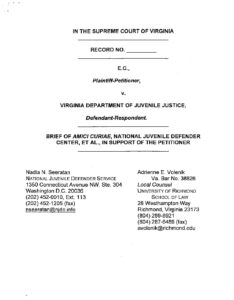
The Gault Center et al. Amicus Brief, E.C. v. Virginia Department of Juvenile Justice
This amicus brief by The Gault Center and others argues that Virigina curtails a child’s right to challenge the effectiveness of representation by defense counsel. Amici outline that habeas review is the only method that young people are able to protect their due process right to effective assistance of counsel, as no right exists to challenge effective assistance of counsel on direct appeal.
Further, amici outline significant barriers for youth to seek habeas review including limited or no access to post-conviction counsel, the inability for children under 18 to file pro se in the state, and the requirement the merits of a habeas petition to be reached before a young person is released. Amici argue habeas review is critical since juvenile court culture contributes to unreliable juvenile adjudications and an increase risk of false guilty pleas imposing harsh direct and collateral consequences on young people.
From the Introduction of the Brief: “Habeas review is critically important to Virginia juveniles because it is the only legal mechanism they have to protect their constitutional right to the effective assistance of counsel. Given unique factors in Virginia’s juvenile justice system, including: extremely low compensation rates for juvenile defense attorneys; the fact that Virginia juvenile courts are not courts of record; the lack of access to post-conviction counsel for the great majority of youth committed to state facilities; the inability of youth to file pro se should they obtain the knowledge to challenge their adjudications without the assistance of post-conviction counsel; and the indeterminate sentences that most juveniles receive, if the circuit court’s ruling is upheld, a juvenile’s ability to review ineffective assistance of counsel claims will be significantly diminished, and in many cases foreclosed, for Virginia’s youngest and most vulnerable defendants. In addition to the factors unique to Virginia’s juvenile court system, the juvenile court culture, which often discourages zealous advocacy, may undermine the reliability of juvenile adjudications.
The circuit court’s ruling in this case, that Virginia courts lose jurisdiction over pending habeas cases when the petitioner is released from detention, exacerbates these problems and should be overturned, as it curtails the right to counsel for juvenile defendants in Virginia. If upheld, the circuit court’s decision would require juvenile petitioners not only to file, but also necessitate that the reviewing court reach a decision on the merits of the petition before the juvenile is released from detention. Such a requirement seriously diminishes, and in many cases essentially forecloses a juvenile’s right to habeas review – a right that is critical to protect a juvenile’s due process right to counsel. For these reasons, this Court should grant the petition for appeal, vacate the order of the decision below, and remand this case for consideration of petitioner’s writ of habeas corpus on the merits.”