Amicus Brief, Human Rights for Kids in support of Petitioner (Billy Raymond Counterman v. Colorado, US Supreme Court)

5 Fast Facts about Decision Making and Emotional Regulation During Adolescence
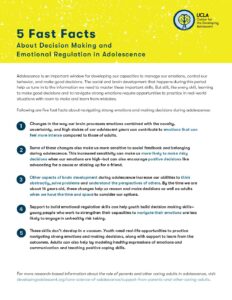
From the introduction: “Adolescence is an important window for developing our capacities to manage our emotions, control our behavior, and make good decisions. The social and brain development that happens during this period help us tune in to the information we need to master these important skills. But still, like every skill, learning to make…
Read MoreAdvancing Transgender Justice: Illuminating Trans Lives Behind and Beyond Bars

Making Children Pay: The Hidden Cost to Kansas of Juvenile Fines and Fees
From the introduction: “The goal of the Kansas juvenile legal system is ‘to promote public safety, hold juvenile offenders accountable for their behavior and improve their ability to live more productively and responsibly in their community.’ Evidence shows that juvenile fees and fines do the opposite. This report outlines the ways in which fees and…
Read MoreAdjudicating Discretion in Youth Cases: Research, Law, and Policy for Consideration in Immigration Proceedings

From the introduction: “This brief, along with others in the series, explains the importance of distinguishing between adults and children in immigration court by examining best practices established by science as well as in related, domestic legal fields such as juvenile justice.”
Read MoreYouth Acceptance Project Interim Evaluation Report

Developing Statutes for Competence to Stand Trial in Juvenile Delinquency Proceedings: A Guide for Lawmakers

Futures in the Balance: Examples of How Juvenile Court Hurts Youth and Communities
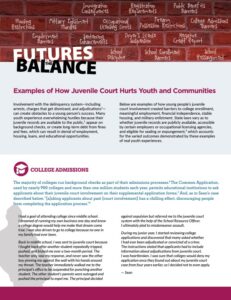
Involvement with the delinquency system—including arrests, charges that get dismissed, and adjudications— can create obstacles to a young person’s success. Many youth experience overwhelming hurdles because their juvenile records are available to the public, appear on background checks, or create long-term debt from fines and fees, which can result in denial of employment, housing, loans,…
Read MoreFutures in the Balance: Disrupting the School-to-Prison Pipeline

Key Points: Testing limits is normal adolescent behavior. Young people act out, make mistakes, and push boundaries largely because the parts of their brains that regulate these behaviors are still being formed. Diverting youth from the legal system by keeping them in school can result in better life outcomes for young people. The legal system…
Read MoreJoint Statement on the Importance of Specialization of Judges, Prosecutors, and Defenders in Juvenile Delinquency Proceedings
Due Process in the Time of COVID: Defenders as First Responders in a Juvenile Court System Struggling with the COVID-19 Pandemic
In February and March 2020, as COVID-19 spread throughout the United States, NJDC recognized a crisis facing youth involved in the juvenile courts and the attorneys tasked with defending them. The contagious nature of COVID-19 and the public health protocols meant to mitigate transmission heightened risks to the health and wellbeing of youth entering the…
Read MoreFutures in the Balance: Reforms that Keep Youth in School

Referring young people to the legal system can negatively impact their life outcomes as it excludes them from school, disconnecting them from learning and engaging in prosocial activities. There may be times when schools need to seek assistance from law enforcement, but for the vast majority of situations, a variety of levers exist outside of…
Read MoreFutures in the Balance: Myths and Facts About the Impacts of Juvenile Court

Numerous myths and misconceptions exist about involvement with the juvenile legal system and the effects it can have on a young person’s trajectory to success. Many people have misconceptions about the mostly unrealized benefits of juvenile court, thinking juvenile court is a benevolent system of support that does not lead to longterm negative outcomes. The…
Read MoreA Guide to Collateral Consequences of Juvenile Court Involvement in Texas

This guide provides information about what obstacles may lie ahead and how to prepare yourself as you move forward with your life after being involved in the juvenile court system. Your juvenile record can affect your life for years to come. But you can still pursue your goals and build a bright future by understanding…
Read MoreWhat Young People Are Saying About Juvenile Defense: Learning from the Experiences of Former Youth Clients
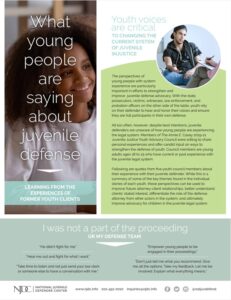
The perspectives of young people with system experience are particularly important in efforts to strengthen and improve juvenile defense advocacy. With the state, prosecutors, victims, witnesses, law enforcement, and probation officers on the other side of the table, youth rely on their defender to hear and honor their voices and ensure they are full participants…
Read MoreA Guide to Collateral Consequences of Juvenile Court Involvement in Massachusetts

This guide provides information about what obstacles may lie ahead and how to prepare yourself as you move forward with your life after being involved in the juvenile court system. Your juvenile record can affect your life for years to come. But you can still pursue your goals and build a bright future by understanding…
Read MoreHave a Juvenile Record in Kansas?: Plan for Your Future

As you move forward with your life after being involved in the juvenile court system, this summary provides information about what obstacles may lie ahead and how to prepare yourself. The court and police paperwork about your juvenile court involvement is called your “juvenile record.” This record can affect your life for years to come.…
Read MoreHave a Juvenile Record in New Hampshire? Plan for Your Future!

This summary provides information about what obstacles may lie ahead and how to prepare yourself as you move forward with your life after being involved in the juvenile court system. Your juvenile record can affect your life for years to come. But you can still pursue your goals and build a bright future by understanding…
Read More