Youth Defenders as Bridges to Communities: Crafting Persuasive Legal Arguments on Community-Based Alternatives
This page is visible only for registered attendees at our 2026 Youth Defender Leadership Summit who have signed up for access to our Summit portal. You can learn more about our Summit on our Summit Initiative page. If you’ve previously signed up for access to our Summit portal, you can log in below. If you…
Read MoreBeyond the Ban – Designing the Third Spaces Teens Need
This magazine article from the American Planning Association highlights the need to plan, design, and invest in third spaces for adolescents. The article discusses the negative impacts of certain technology use on teen’s health and overall wellness. To address this need for a third space offline, the article calls for increased investment in civic infrastructure – like…
Read MoreNowhere to go: Chicago teens on ‘takeovers,’ curfews, and lost community spaces
This article from the Investigative Project on Race & Equity provides an overview of what is being referred to as “teen takeovers” in Chicago. The article offers a variety of perspectives from Chicago area teenagers on the gatherings and the city’s response to them. From the article: “The teens — who grew up during the lockdowns of…
Read MoreHow to Talk about So-Called Teen Takeovers
Description: This article from the Vera Institute calls for a common sense approach to what politicians, the media, and others are calling “teen takeovers.” The article cautions public officials to look closer at the broad expansive of activities receiving this label and address the underlying reality of what the community needs before implementing punitive policies. Additionally, the article proposes investment in safe third…
Read MoreReducing Youth Incarceration: From Trauma-Informed Confinement to Community-Based Services

From the abstract: Growing evidence on the collateral consequences of youth incarceration, combined with increased attention to developmentally appropriate and trauma-informed care, has advanced national reform efforts aimed at rethinking youth confinement. While attention to trauma-informed care and developmentally appropriate approaches within juvenile justice systems is important, the structural barriers inherent in secure settings limit…
Read MoreYEAH Philly’s Violent Crime Initiative: Outcomes, Expansion and Scalability
From the executive summary: Youth Empowerment for Advancement Hangout (YEAH Inc.) launched the Violent Crime Initiative (VCI) to support young people ages 15–24 in West and Southwest Philadelphia who have been arrested for violent offenses or gun crimes. Unlike traditional system-driven approaches, VCI provides voluntary, holistic, and flexible services that address both immediate needs (such…
Read MoreYouth Detention and Incarceration Facilities in the United States (2010 to February 2023): Mapping Closure Intents and Implementation
From the Discussion: “This study illuminates pathways for future research to explore facility closures. Such research should investigate the impact of specific drivers supporting completed closures of youth facilities, including the combination of stated reasons to appeal to different audiences. Notably, we only found 1 paper in our scoping review that explores the strategies used…
Read MoreAnnotated Bibliography: Policing as Trauma

This resource was created as part of the 2022 Racial Justice Training Series, co-hosted with the Georgetown Juvenile Justice Clinic & Initiative. Advocates and experts gathered each month to discuss a chapter of Prof. Kristin Henning’s Book The Rage of Innocence: How America Criminalizes Black Youth. Watch recordings of the monthly webinars and see other…
Read MoreYEAH Philly Violent Crime Initiative Year One Process Evaluation
From the executive summary: “YEAH (Youth Empowerment for Advancement Hangout) is a community-based organization working to empower, advocate for, and meet the needs of young people ages 15 to 24 based in West and Southwest Philadelphia. Kendra Van de Water and James Aye co-founded YEAH in 2018 to address the stark lack of safe, culturally…
Read MoreBarriers to Wellness: Voices and Views from Young People in Five Cities

A Review of the Domains of Well-Being for Young People
From the Executive Summary of this research report by the Urban Institute: Adolescence and young adulthood are critical life stages full of possibility, but to experience healthy development, young people need support in all aspects of their lives. During this life stage, people begin to gain independence, learn social skills and behaviors that shape the…
Read MorePositive Childhood Experiences and Adult Health Outcomes
From the abstract: OBJECTIVES: Adverse childhood experiences (ACEs) can drive poor adult mental and physical abstract health, but the impact of early life protective factors should not be overlooked. Positive childhood experiences (PCEs) measures quantify protective factors, but evidence is lacking on their link to health conditions independent of ACEs in nationally representative studies. This…
Read MorePolicing and Overuse of the Juvenile Justice System
From the abstract: National attention toward recent highly publicized police killings and the coronavirus disease abstract 2019 pandemic, which has disproportionately impacted communities of color, highlight the continued systematic oppression of racial and ethnic minorities in the United States. Furthermore, burgeoning evidence demonstrates that police contact is associated with adverse health outcomes for Black and…
Read MoreEncouraging Strengths in Parents and Youth to Promote Positive Childhood Experiences
From the commentary on research findings from Huang et al. on positive childhood experiences: Twenty-five years ago, Felitti et al published the landmark study on adverse childhood experiences (ACEs) and their significant negative effects on adult physical and mental health. ACE scoring has been adapted for families and children with modification of the criteria, including…
Read MoreYouth Justice Community Collaborative Launches in Albuquerque
This blog post from the Annie E. Casey Foundation features the Albuquerque Justice for Youth Community Collaborative, which includes 20 community-based organizations, young people, and families. The collaborative aims to engage all participants in efforts to “shape promising futures for young people – even after they’ve made mistakes.” In their first announcement as a Collaborative, they stated: “[Our] work is…
Read MoreSticker Shock 2020: The Cost of Youth Incarceration

From the introduction: “Justice Policy Institute found that the average cost of the most expensive confinement option for a young person in 48 states was $588 per day, or $214,620 per year. The data show that in 40 states taxpayers spend at least $100,000 a year for a single young person’s confinement, and in 12…
Read MoreTreating Mothers’ Trauma as a Way to Prevent Youth Violence
This article from The Trace highlights a program, called Sisters United Resilient and Empowered (or, SURE Moms), for mothers with children who are impacted by the juvenile legal system. The program aims to address the whole family’s wellbeing, including the parents or guardians, so that children may grow up in healthier and more supportive homes and communities.
Read MorePositive Childhood Experiences Self-Report
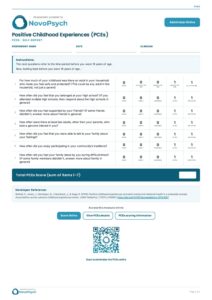
This self-assessment questionnaire on positive childhood experiences is a strength-based tool used to evaluate early life protective factors that impact adult physical and mental health.
Read More