
Immigration

Covers guidance for youth defenders on client interviewing, data monitoring and tracking, the Laken Riley Act, immigration relief options, and litigation and advocacy strategies when representing noncitizen youth.

Guides youth defenders on how to screen for SIJS eligibility and obtain a SIJS predicate order in juvenile court to support a young person’s application for immigration relief.

This guide is meant to help young people in New York understand the collateral consequences to juvenile court involvement and adjudications, and what they can do to overcome those consequences. Written in youth-friendly language, this guide walks through how young people should talk about their juvenile court record and the impact of their record on…
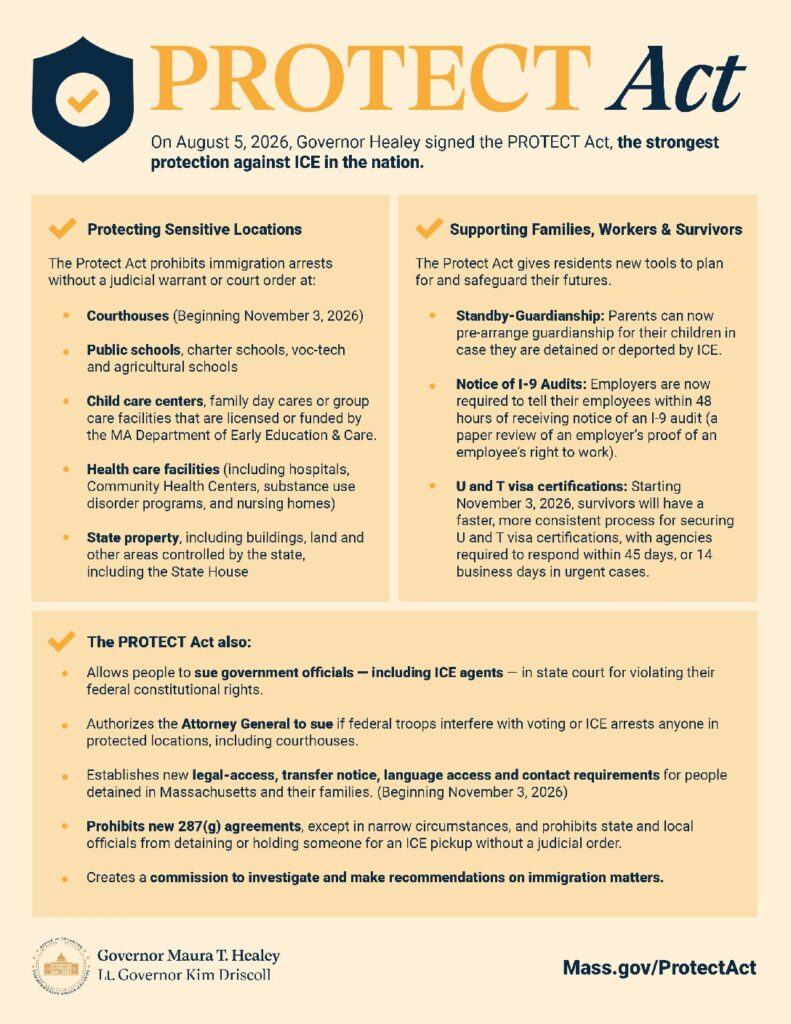
This infographic by the Massachusetts Office of the Governor outlines the key provisions of the PROTECT Act, which was signed into law on August 5, 2026. The Protect Act prohibits immigration arrests without a judicial warrant or court order at courthouses and allows people to sue government officials – including ICE agents – in state…
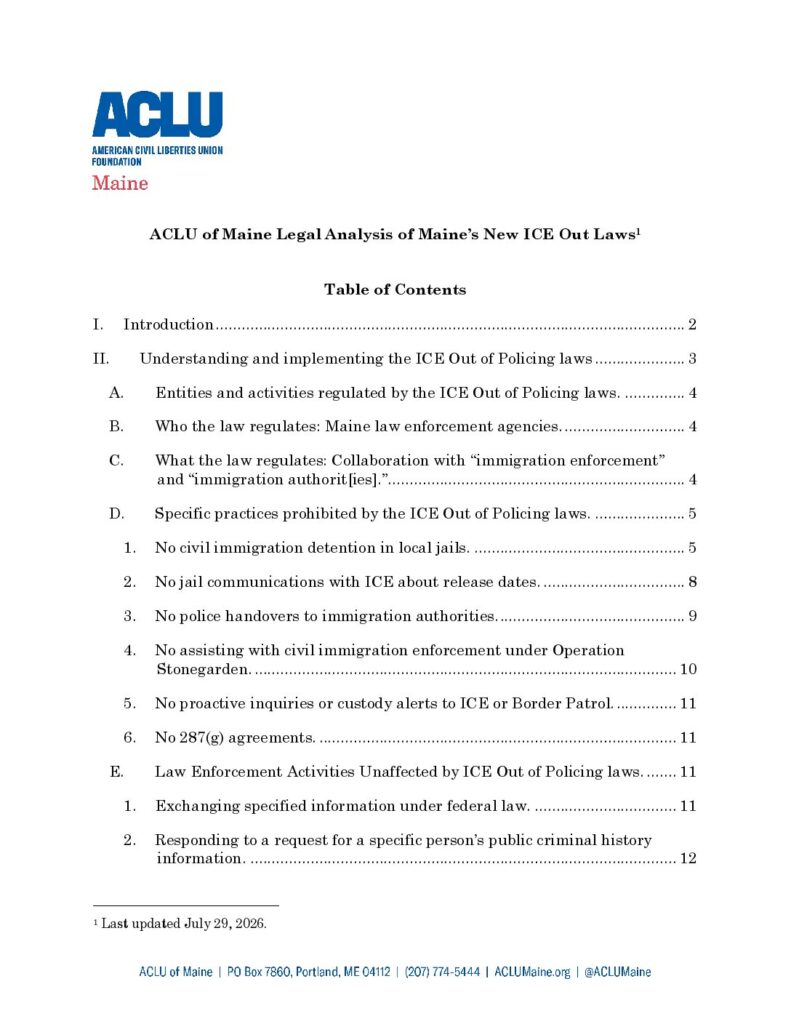
From the introduction by the ACLU of Maine: “In 2025 and 2026, the Maine legislature passed a package of important bills to protect Maine’s immigrant residents and ensure they can access state and local services without fear that doing so will lead them or their loved ones to be targeted by federal immigration authorities. This…
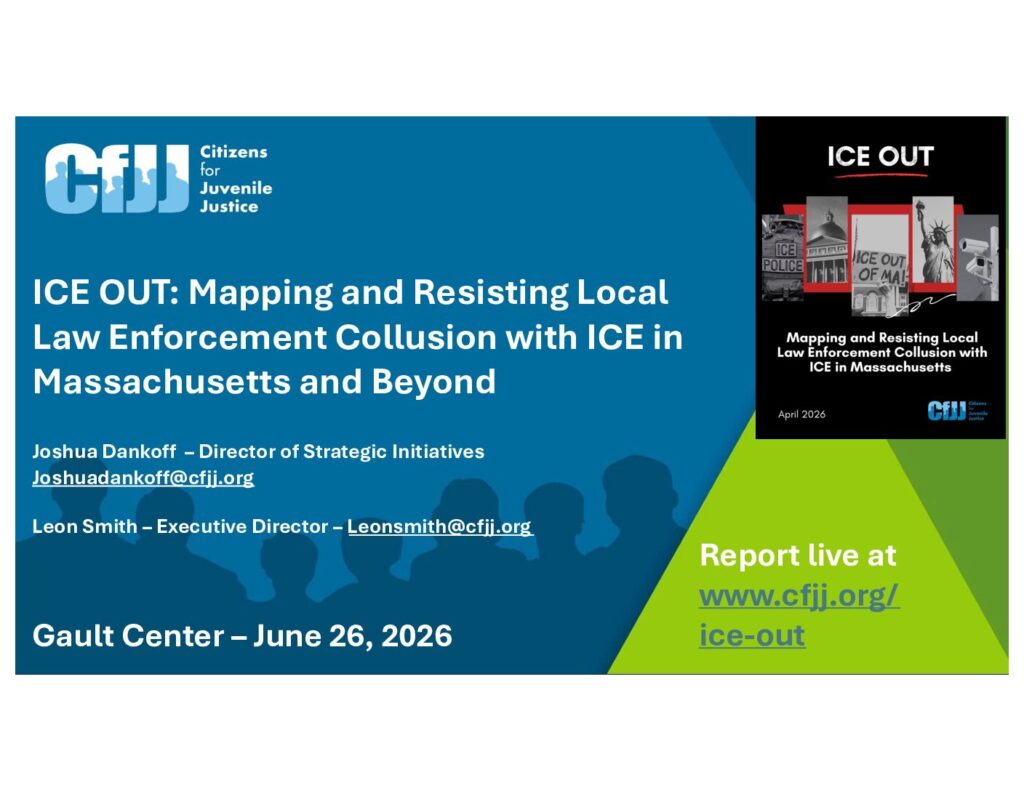
On June 26, 2026, Joshua Dankoff and Leon Smith from Citizens for Juvenile Justice (CfJJ) offered a training for the Gault Center’s New England Region on mapping and resisting local law enforcement collusion with ICE in Massachusetts and beyond. The training walked through CfJJ’s report that culminated from over 90 public records requests submitted to…
This article was published by Professor Juan Caballero in the Loyola of Los Angeles Law Review. From the abstract: American history is littered with threats and attempts at mass deportation. The Trump administration’s announced policy of mass deportations is the most recent manifestation of such a policy and one that perhaps poses an unprecedented threat…

From the resource by Case Western Reserve University Schubert Center for Child Studies: “This document offers an overview of the most current and reliable national and Ohio-specific guidance and resources to support practitioners and providers working with immigrant children. It is organized in the following child and youth-specific settings: Each section provides practical tools, current…

The Delaware Family Court granted an expungement petition of a previous juvenile sex offense adjudication based on testimony showing low recidivism risk and specific collateral consequences related to the juvenile record. The court stated in relevant part: In considering a petition for discretionary expungement under 10 Del. C. § 1018(a)(3), the Court is tasked with finding whether the…
From the Summary of this practice guide by Youth Law Center: “In May 2025, the California Department of Social Services (CDSS) issued an All County Information Notice (ACIN) in response to the growing intersection between immigration enforcement and child welfare involvement. The ACIN provides guidance regarding the rights of children, youth, and parents who are…

This report was written by Define American, an organization dedicated to “helping audiences see all immigrants with their full humanity” through diverse and nuanced storytelling about immigrant experiences across diverse media and industries. From the Overview: “Define American set out to better understand the “Moveable Middle”—people in the U.S. who, with the right approach, could…
“USCIS’s SIJS deferred action (DA) policy began in 2022 and provided that USCIS would automatically consider granting DA to people with approved SIJS, if the person could not yet apply for SIJS-based adjustment of status solely because they did not have a visa available. Many young people were granted DA based on SIJS in the…
From the Introduction: “Special Immigrant Juvenile Status (SIJS) is a humanitarian immigration protection that provides a pathway to lawful permanent residence for noncitizen children up to the age of 21 years who have been abused, neglected, or abandoned by their parent(s), and where a state juvenile court has determined that it is not in the…
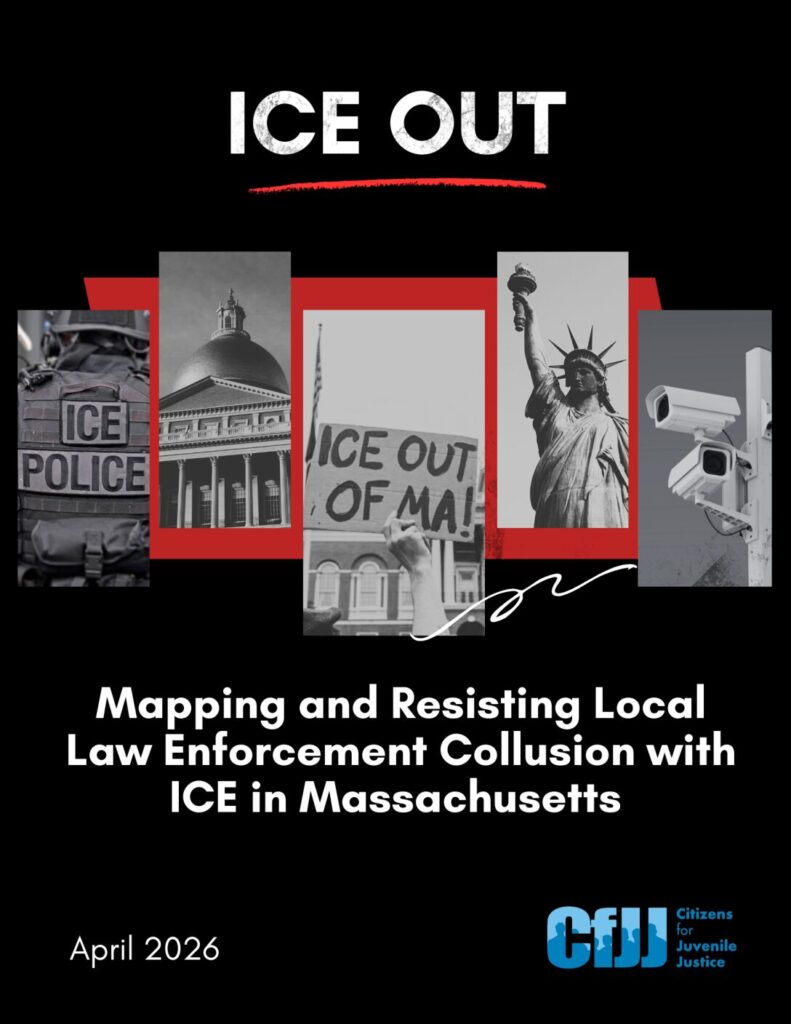
This report by Citizens for Juvenile Justice (CfJJ) investigates the level of information sharing and collusion between police and courthouse staff with federal Immigration and Customs Enforcement (ICE) in Massachusetts. CfJJ filed more than 90 public records requests in the state and found that police and courthouse staff regularly share information with ICE, effectively becoming…
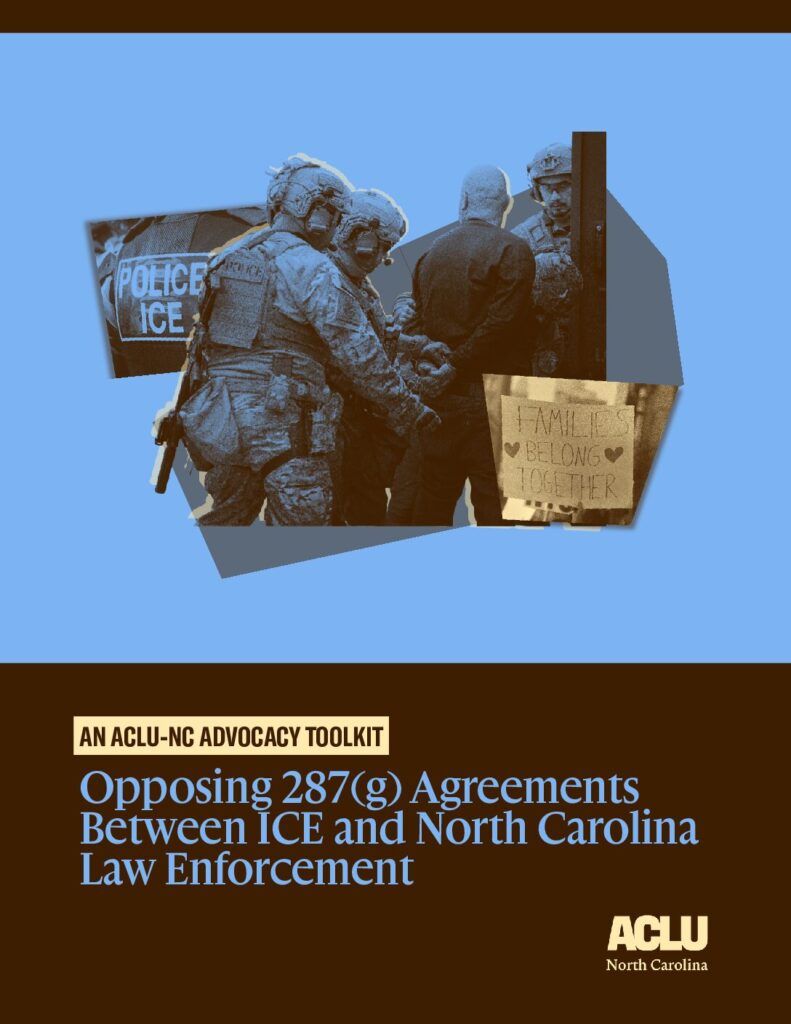
From the Toolkit: “A 287(g) agreement gives local law enforcement the power to enforce federal immigration law, something they normally cannot do. These agreements turn local officers into Immigration and Customs Enforcement (ICE) agents, fueling deportations, racial profiling, and fear in immigrant communities. As the Trump administration continues to supersize deportations and immigrant detention, Immigration…
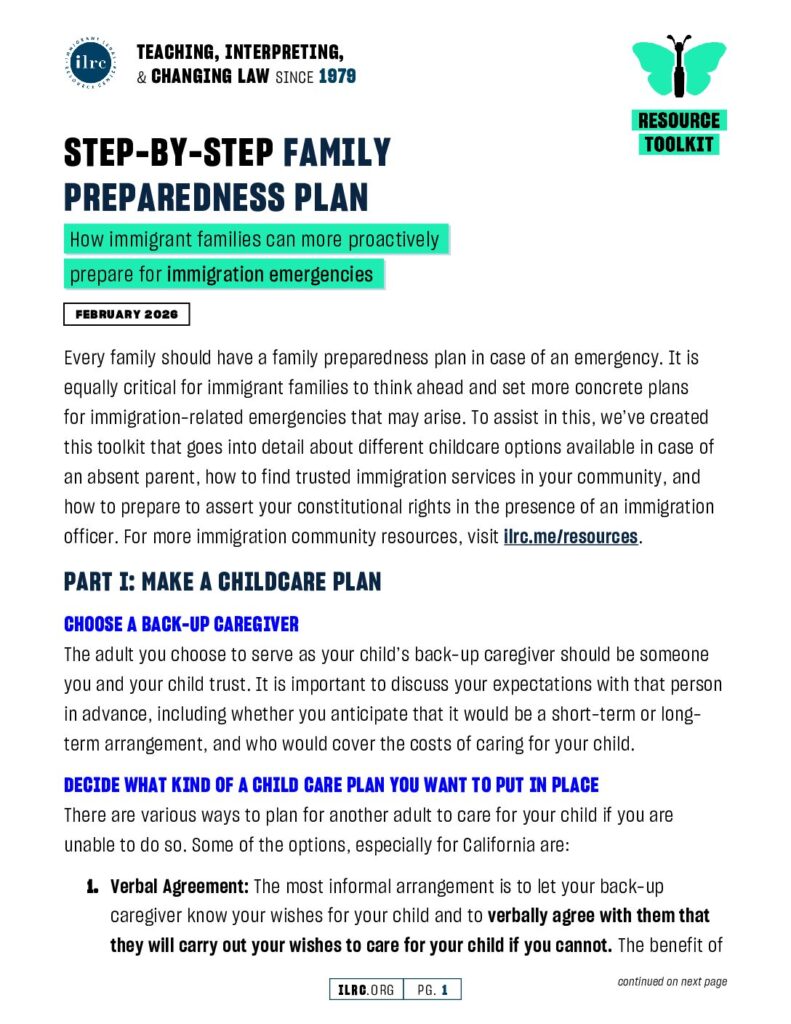
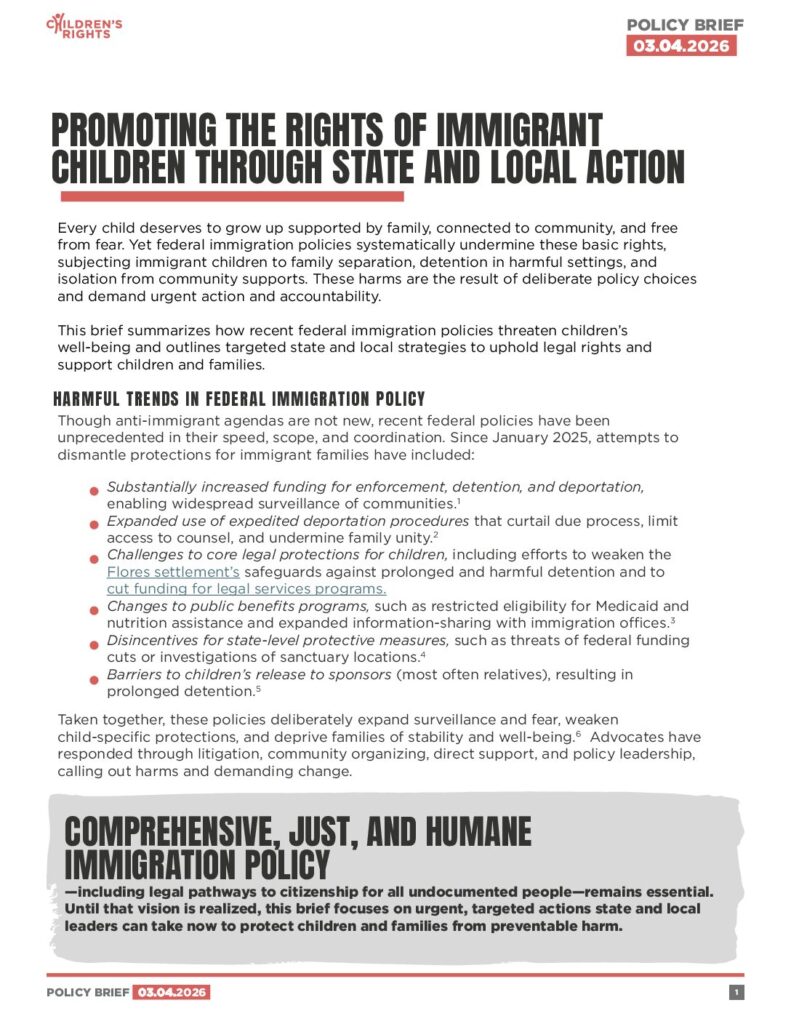
From the resource by Children’s Rights: “Every child deserves to grow up supported by family, connected to community, and free from fear. Yet federal immigration policies systematically undermine these basic rights, subjecting immigrant children to family separation, detention in harmful settings, and isolation from community supports. These harms are the result of deliberate policy choices…
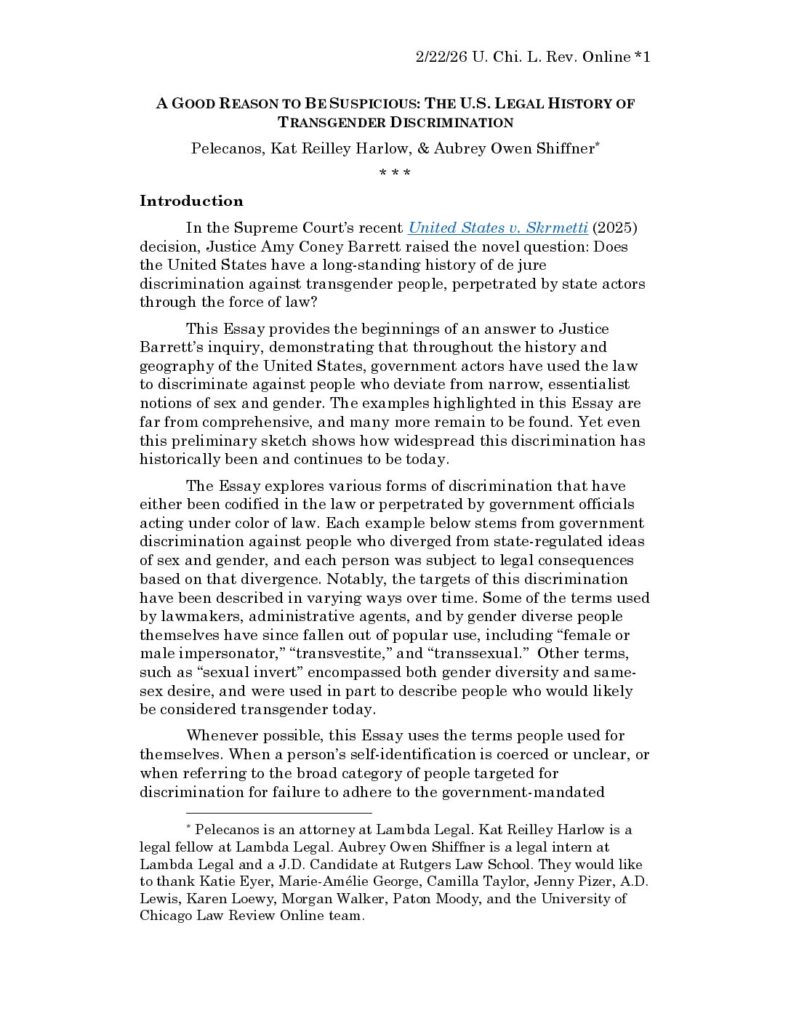
“In the Supreme Court’s recent United States v. Skrmetti (2025) decision, Justice Amy Coney Barrett raised the novel question: Does the United States have a long-standing history of de jure discrimination against transgender people, perpetrated by state actors through the force of law? This Essay provides the beginnings of an answer to Justice Barrett’s inquiry, demonstrating that throughout the…
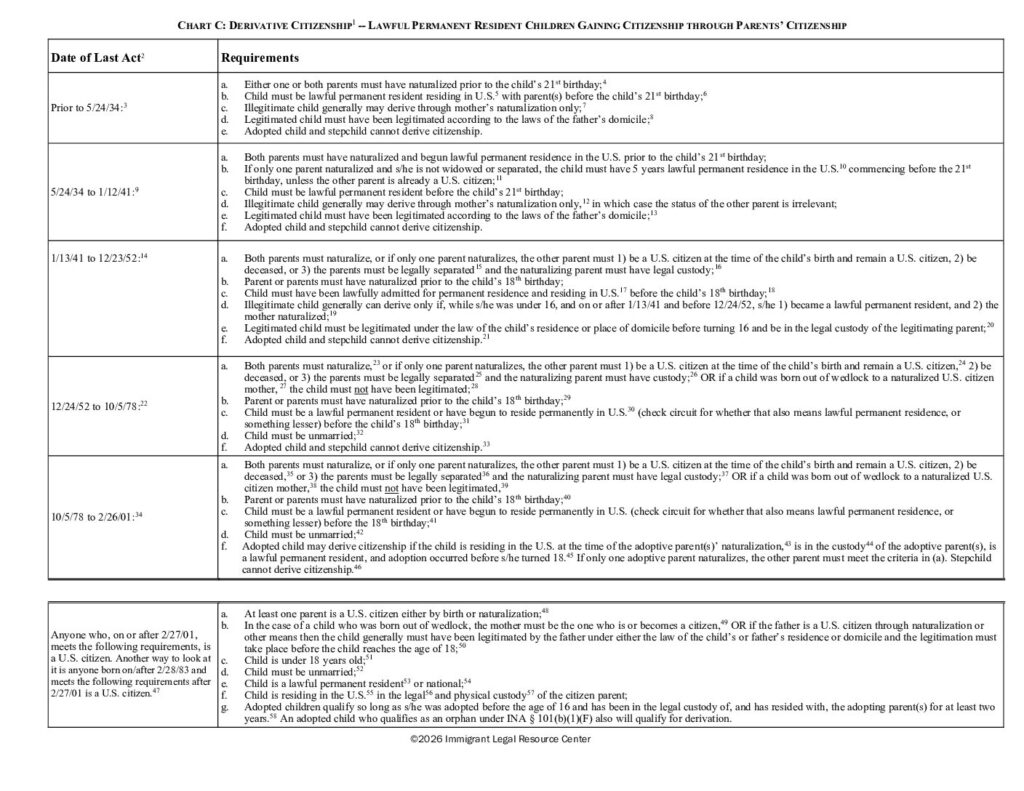
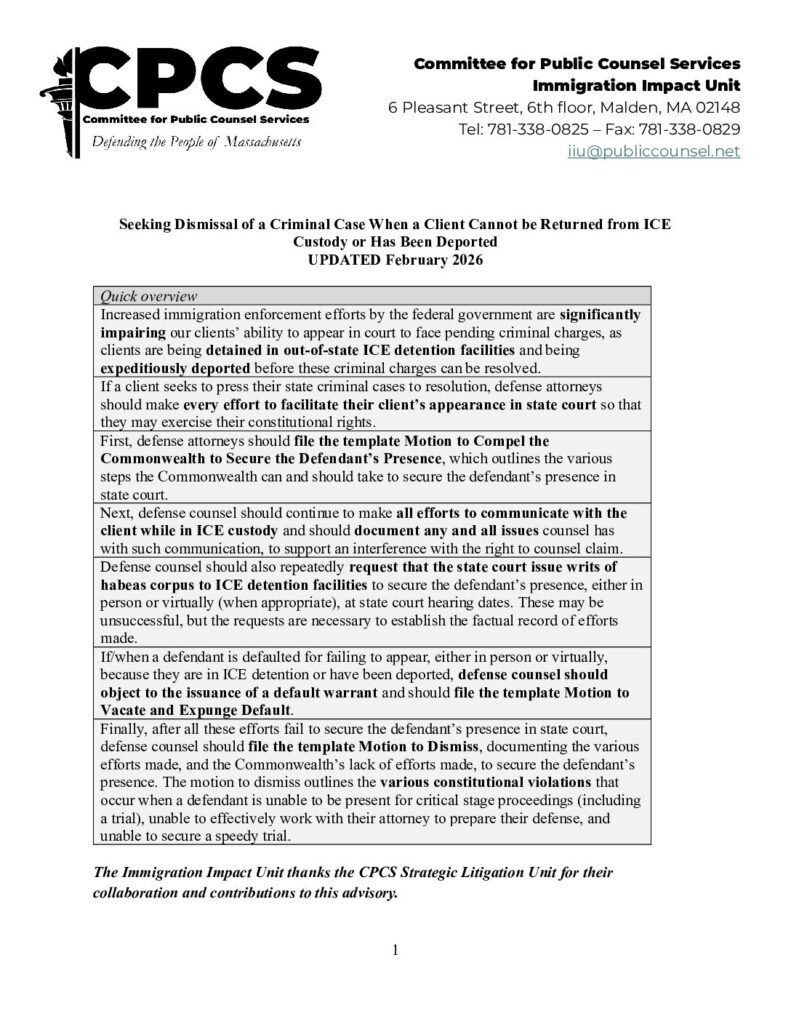
This guide from the Massachusetts Committee for Public Counsel Services, Immigration Impact Unit, offers defense attorneys a step-by-step outline for handling a client’s case when they are detained in ICE detention facilities or have been deported. From the report: “To address the concerns these open cases pose to our clients, this advisory lays out potential…

From the resource by Kids in Need of Defense: “This policy brief provides an overview of the expanding ways that the Administration’s policies and actions are tearing families apart and illustrates how the Administration is using government agencies, resources, and staffing to exploit, rather than mitigate, children’s vulnerabilities. It documents how efforts prioritizing the removal…
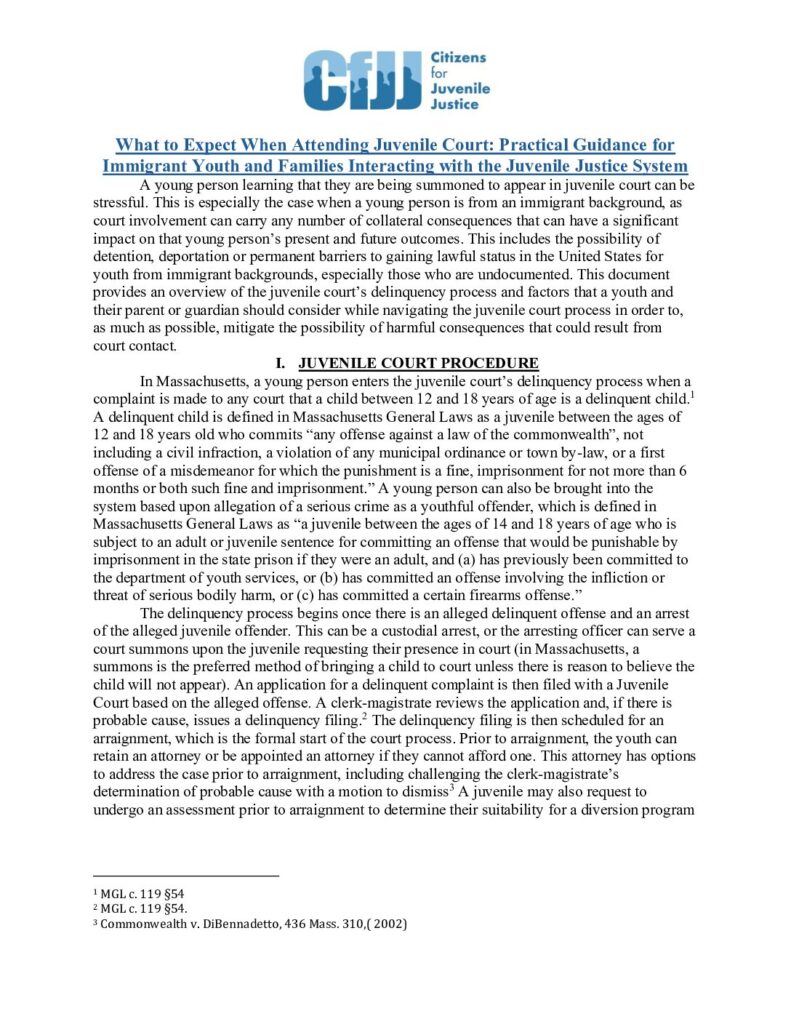
This resource from Citizens for Juvenile Justice offers practical guidance for immigrant youth and families interacting with the juvenile legal system. From the resource: “A young person learning that they are being summoned to appear in juvenile court can be stressful. This is especially the case when a young person is from an immigrant background,…
