
Shackling


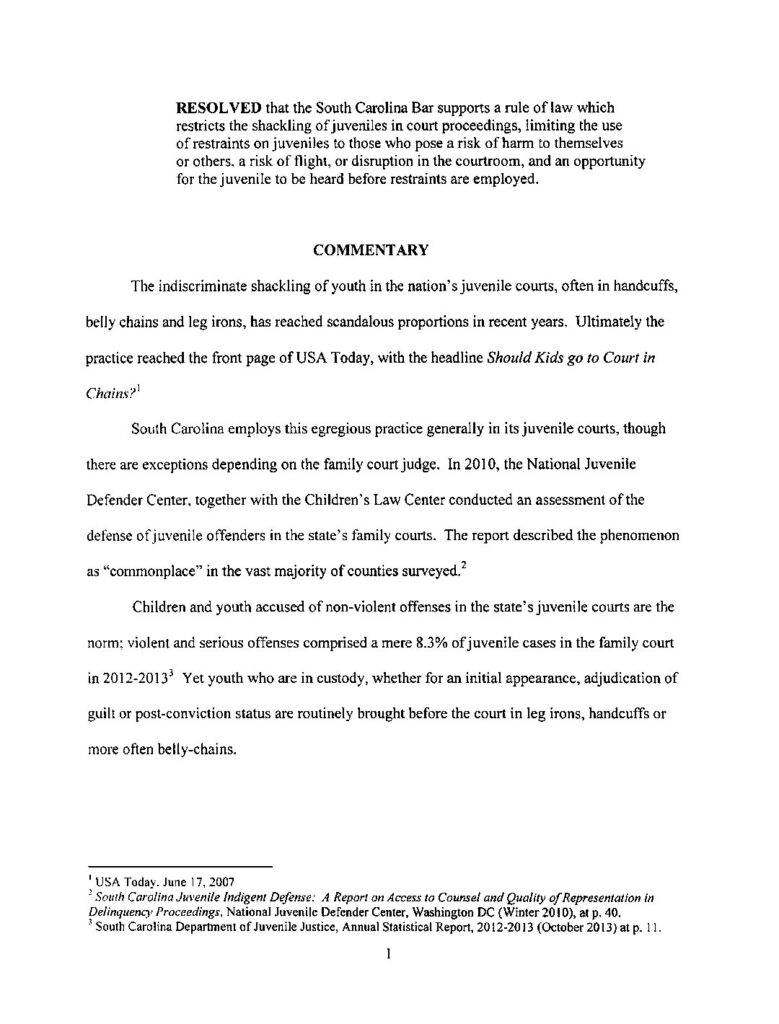
Model statute on shackling reform.

Fact sheet on the use of shackling in youth court.


In juvenile courts throughout the nation, children arrive, face full hearings, and depart weighed down by handcuffs, leg irons, and belly chains. They appear this way not because they pose a threat to others in the courtroom or are a flight risk but because most jurisdictions indiscriminately shackle all youth in juvenile court, often without…



When the Gault Center launched the Campaign Against Indiscriminate Juvenile Shackling in 2014, only 13 states had legislation, court rules, or caselaw limiting indiscriminate shackling in juvenile court. Today, 39 states, DC, and Puerto Rico limit or prohibit the indiscriminate shackling of children, while just 11 states do not. Feedback from people in jurisdictions that…

In 2014, only 13 states had legislation, court rules, or caselaw limiting indiscriminate shackling in juvenile court. Today, 39 states, DC, and Puerto Rico limit or prohibit the indiscriminate shackling of children, while just 11 states do not. This one-pager highlights the progress made across the country from 2014-2024 and the harms of indiscriminate shackling.


On March 31, 2011, Leflore County, Mississippi entered into a Memorandum of Agreement (MOA) with the United States to address the DOJ’s investigation findings into the Leflore County Juvenile Detention Center (LCJDC). The MOA outlines that LCJDC must provide young people with reasonably safe conditions of confinement, protect youth from harm, limit the use of…

On May 12, 2015, the DOJ filed a complaint in the U.S. District Court for the Northern District of Mississippi against Leflore County, Mississippi for engaging “in a pattern or practice of conduct that violates the Constitutional and statutory rights of youth at the Detention Center.” The complaint outlines 14th Amendment violations based on Leflore…

This expert affidavit from Dr. Gwenyth Campbell Rost, Ph.D., a speech-language pathologist, describes the impacts of shackling and the use of physical restraints on young people with communication and language disabilities who are involved in the juvenile legal system. The affidavit highlights how shackling and restraining youth impedes their ability to communicate and remember information…

This expert affidavit from Dr. Louis Kraus, a child psychiatrist, and chief of child and adolescent psychiatry at Rush University Medical Center, describes the traumatic impacts of indiscriminate shackling on young people in the juvenile legal system. The affidavit highlights how shackling interferes with the purported goals of the juvenile legal system and with a…

This expert affidavit from Dr. Robert Bidwell, a physician who is board certified in pediatric and adolescent medicine and licensed in Hawaii, underscores the harm of indiscriminately shackling young people in the juvenile legal system. Dr. Bidwell highlights the high proportion of young people in the juvenile legal system who have experienced trauma and exhibit…

This is an expert affidavit from Dr. John F. Chapman, a clinical child psychologist and Assistant Clinical Professor in the Department of Psychiatry at the University of Connecticut School of Medicine and Assistant Clinical Professor at Yale University School of Medicine’s Child Study Center. The affidavit highlights the racial disproportionality of shackling Black youth compared…

This expert affidavit from Dr. Marty Beyer, Ph.D., a clinical psychologist licensed in D.C., Virginia and Washington, highlights the negative impacts of shackling on young people’s identity development, including their views of their own self-worth and of fairness in legal settings. Further, the affidavit describes how shackling re-traumatizes youth who may have previously experienced traumatic…
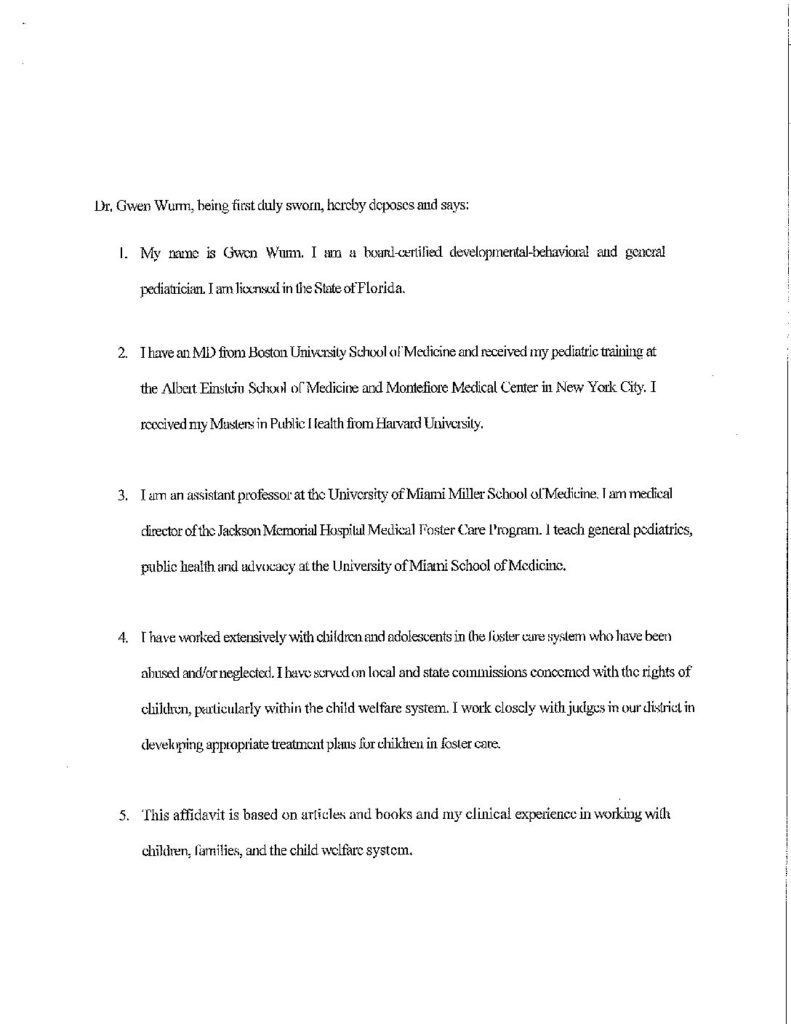
This expert affidavit from Dr. Gwen Wurm, a pediatrician licensed in the state of Florida, describes the impact that indiscriminate shackling has on adolescent, cognitive, and psychosocial development. The affidavit also describes the traumatizing effects of shackling on children who may have experienced abuse, neglect or other mental distress.
- « Previous
- 1
- 2
- 3
- Next »
