
Status Offenses
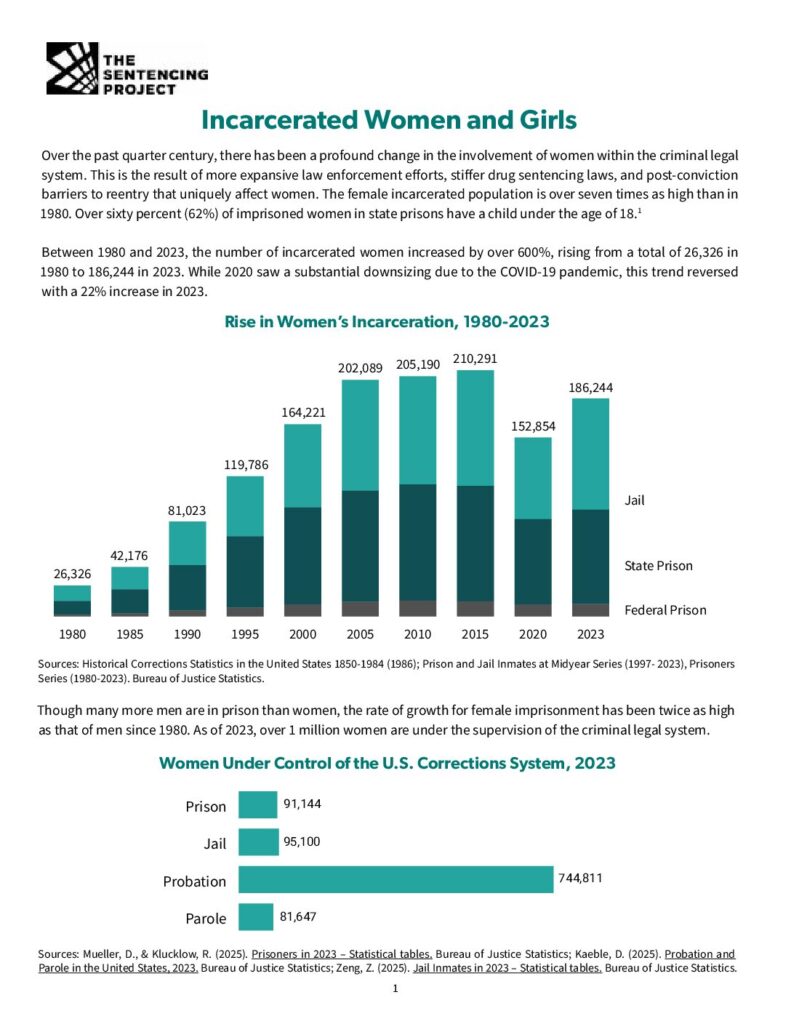
This report, by The Sentencing Project, examines the changes in involvement of women and girls in the criminal and juvenile legal system over the past quarter century. The report includes data examining the rise of women and girls’ incarceration in jails, state and federal prisons, residential placement centers, as well as women under the control of the U.S. Corrections systems through probation or parole., This…
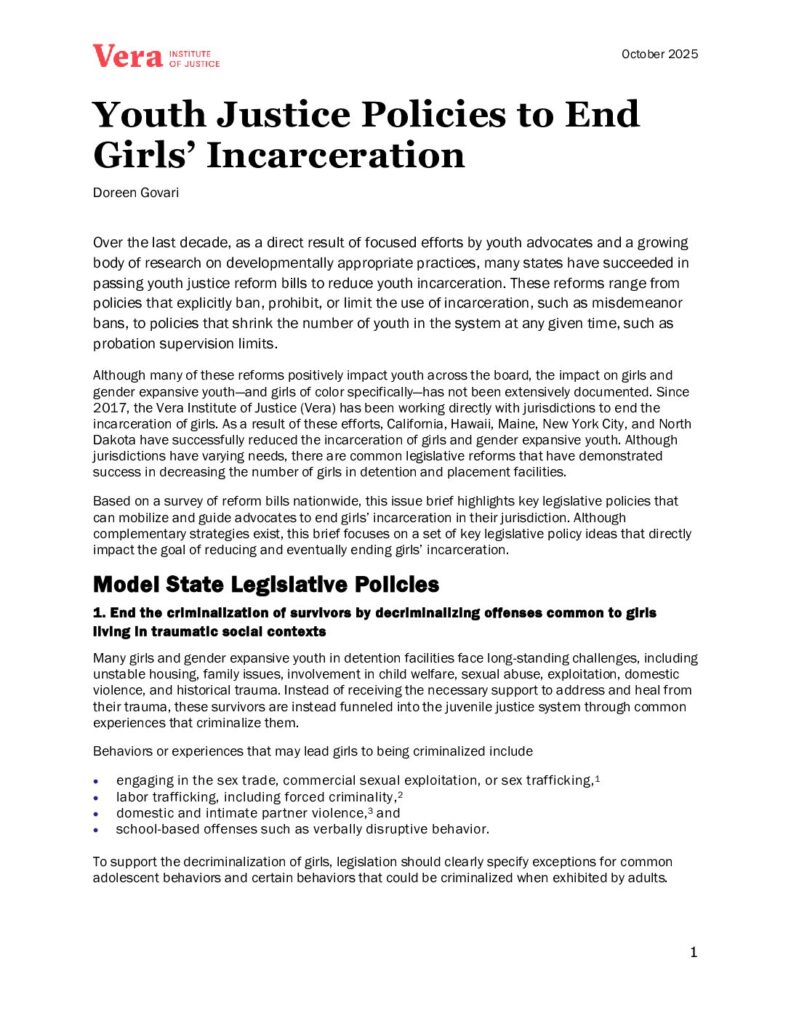
This report from Vera Institute for Justice provides examples of reforms from various states that are working to reduce the incarceration of girls in detention and long-term placement. “Over the last decade, as a direct result of focused efforts by youth advocates and a growing body of research on developmentally appropriate practices, many states have…

From the conclusion” “Conclusion There is no question that the statistical picture of special education is bleak. But after its meeting of stakeholders, interviews with experts, and review of the research, NCD believes that IDEA and other related disability laws, with improved enforcement, can and should benefit at-risk students who are properly referred and served.…
From the abstract: “Hundreds of thousands of children are brought under the jurisdiction of delinquency courts every year in the United States. Despite the reality that most children engage in delinquent behavior during their adolescence, poor children, children of color, children with disabilities, and children who identify as LGBTQIA+ comprise a disproportionate number of those who become delinquency system-involved. These disparities exist…

This research report by the NAACP Legal Defense Fund provides an in-depth overview of the “At-Risk Youth Program” created by the Pasco County Sheriff’s Office in Tampa Bay, Florida. The Pasco County sheriff’s office relied on a “rudimentary, person-based predictive policing system” based on inherently biased criteria to identify young people who were “destined to…


This brief describes how states currently treat two categories of young people: youth who commit status offenses—behaviors that are not categorized as crimes—and young children who do not have the developmental capacity to fully understand the crimes they are committing. Through a 50-state scan of policy and practice, we detail how states respond to these…

The COVID-19 pandemic, declared a public health emergency in the United States on March 13, 2020, had an impact on the policies, procedures, and data collection activities of juvenile courts relating to the referrals and processing of youth. Mitigation efforts such as stay-at-home orders and school closures impacted the volume and types of law-violating behavior…


From the introduction: “Imagine you’re a student with a disability that impacts how you interact with others and process situations. In an instant, that disability may be criminalized, and you could find yourself thrust into a juvenile justice system that offers little support and few education resources. This scenario is all too common. Thousands of…

This guide from the Interstate Commission for Juveniles provides guidance for court and legal personnel on introducing and admitting evidence in ICJ-related proceedings. From the Overview of the Issue: “At the request of the Commission’s Executive Committee, the following legal analysis has been prepared to serve as a resource documenting the legal implications of the significantly increased number of formal…

From the introduction: “This brief summarizes key findings from an unprecedented research study conducted by The Council of State Governments (CSG) Justice Center on the impact of juvenile justice system involvement—particularly probation— on school attendance in South Carolina and challenges jurisdictions across the country—as well as the broader field—to reconsider whether system involvement is the…


This expert affidavit from Dr. Robert Bidwell, a physician who is board certified in pediatric and adolescent medicine and licensed in Hawaii, underscores the harm of indiscriminately shackling young people in the juvenile legal system. Dr. Bidwell highlights the high proportion of young people in the juvenile legal system who have experienced trauma and exhibit…

This resource offers a summary of key research on sex offender registration and notification for youth. This resource includes research on recidivism, residency restrictions, collateral consequences, stresses of registration, and perceptions by the public, criminal legal systems, and individuals.

From the introduction: “This report will describe, dissect, and draw lessons from Connecticut’s striking success in juvenile justice reform for other states and communities seeking similar progress. The first section details the timeline and dimensions of change in Connecticut’s juvenile justice system over the past two decades. In 1992, Connecticut routinely locked up hundreds of…
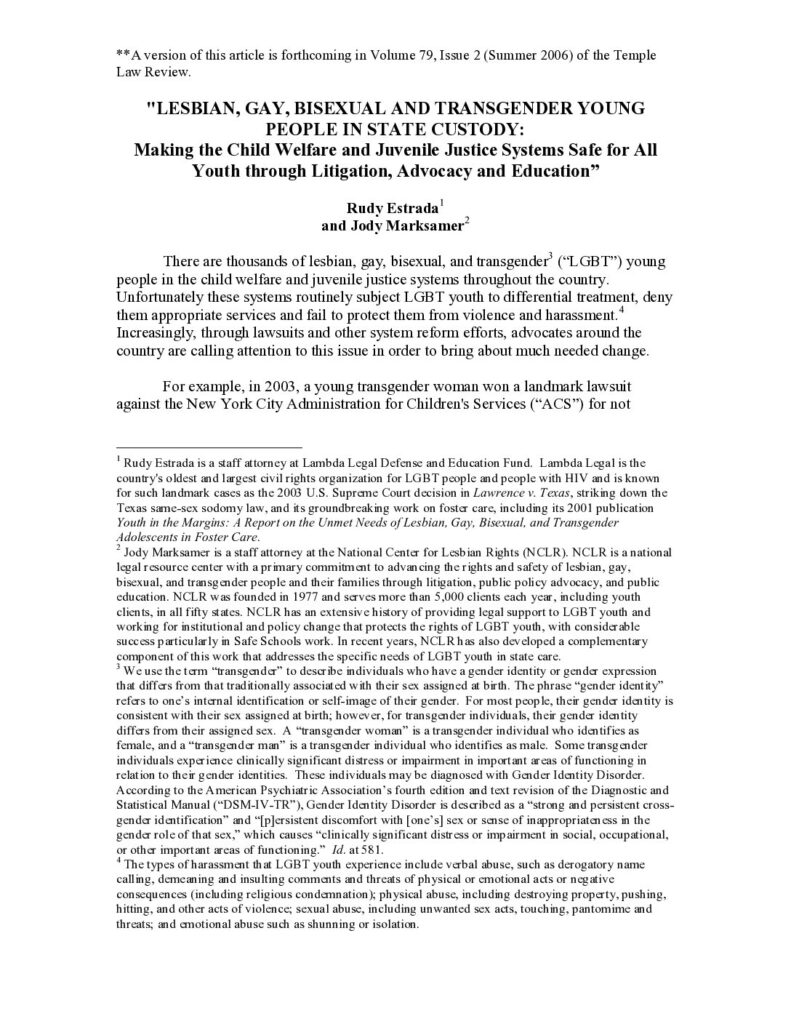
From the Conclusion: “For too long, LGBT young people in the child welfare and juvenile justice systems have been overlooked, ignored and mistreated. Because of the hard work of hundreds of advocates who have come together through coordinated national efforts, a cultural shift has begun. These advocates are creating effective nondiscrimination policies, best practices guidelines,…
