
Disabilities
The Supreme Court of New Mexico held that a young person’s age and intellectual disability are relevant considerations in determining whether the constitutional right to a speedy trial was violated. In State v. Villalobos, the Court held that an individual who had an intellectual disability and was 15 years old at the time of the…
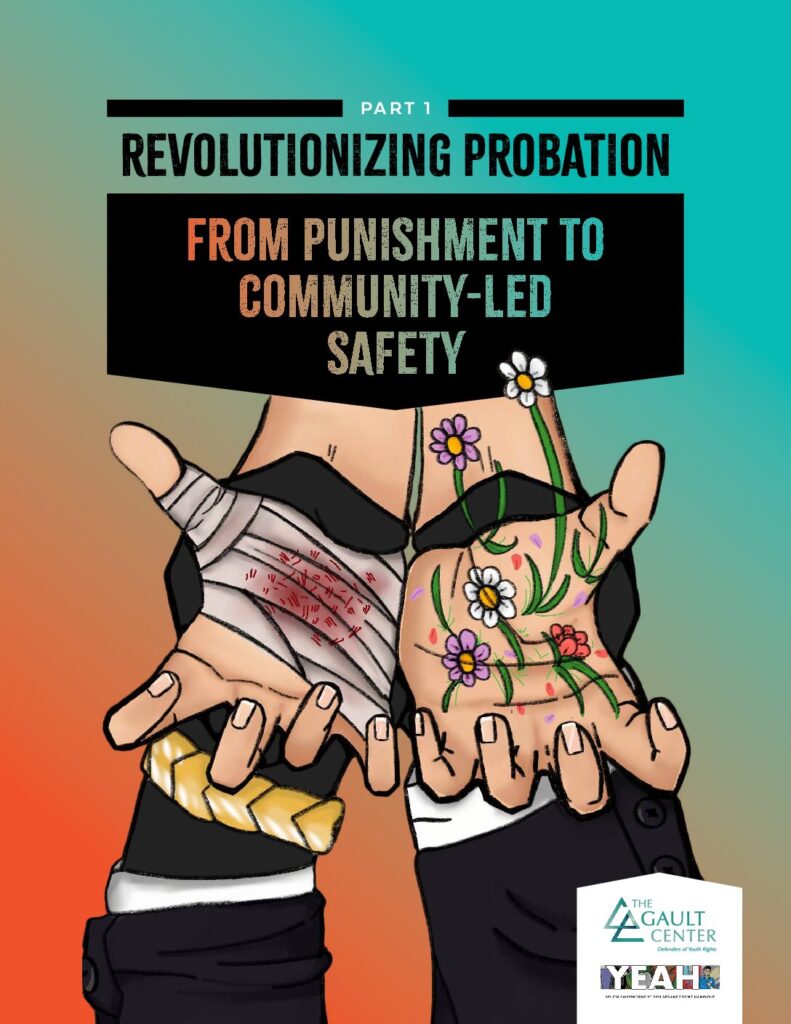
Examines young people’s experiences on juvenile probation and the racialized history of juvenile probation in our country.

This complaint filed in the U.S. District Court for the District of Colorado challenges Colorado’s practice of keeping dually involved youth detained on a delinquency case due to a lack of placement options in the state’s foster care system. The complaint raises substantive and procedural due process violations and seeks declaratory and injunctive relief. “The…
The Oregon Court of Appeals held that a trial court must consider mental health attributes at sentencing pursuant to the Eighth Amendment and the Oregon state constitution’s prohibition against cruel and unusual punishment. The court stated in relevant part: “We agree with defendant that ORS 131.295 and ORS 131.300 provide that objective societal standard. Through…
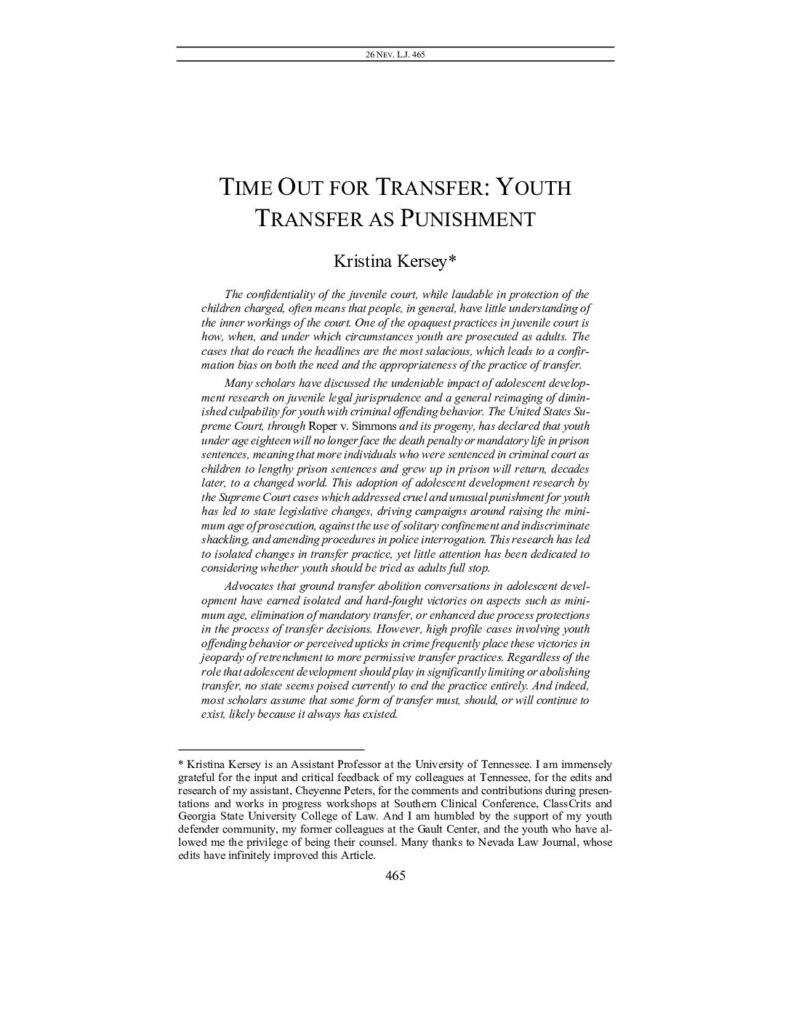
This law review article written by Professor Kristina Kersey explores transfer as a form of punishment and calls for jurisdictions to enact a moratorium on transfer, drawing lessons from the movement to end the death penalty. Noting similarities between transfer and the death penalty, this article analogizes the two and argues that transfer mechanisms operate…
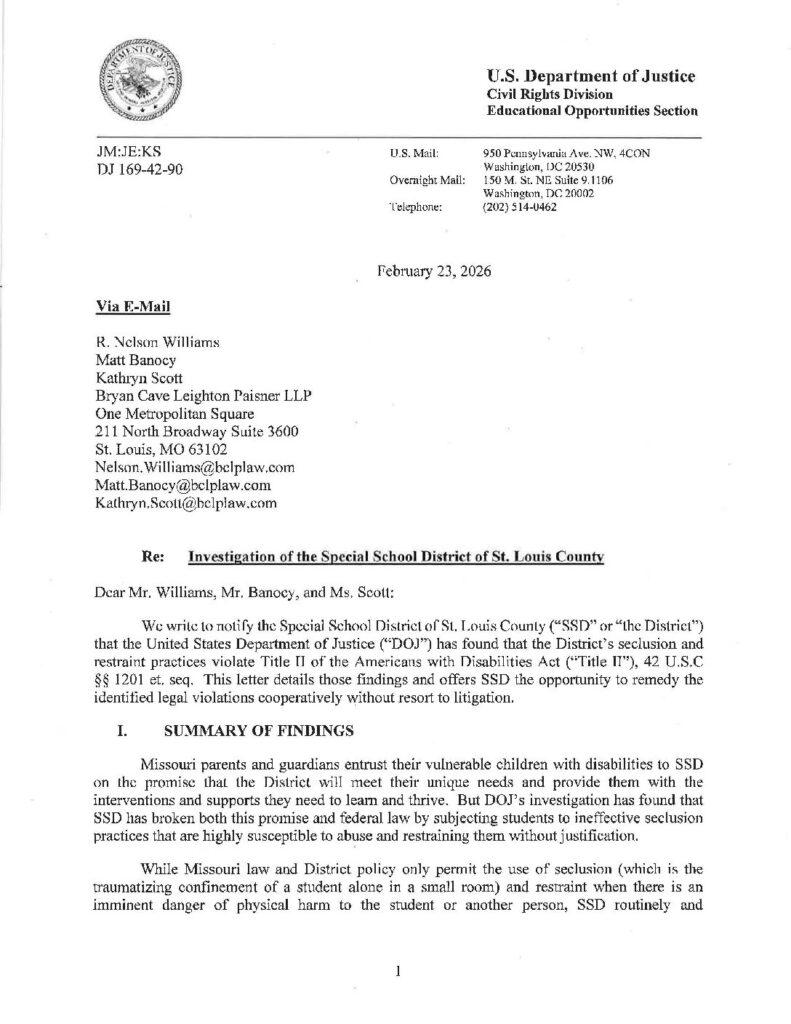
On February 23, 2026, the U.S. Department of Justice released its investigation findings of the Special School District of St. Louis County, highlighting that the District’s seclusion and restraint practices violate Title II of the Americans with Disabilities Act. From the investigation: “Missouri parents and guardians entrust their vulnerable children with disabilities to SSD on…
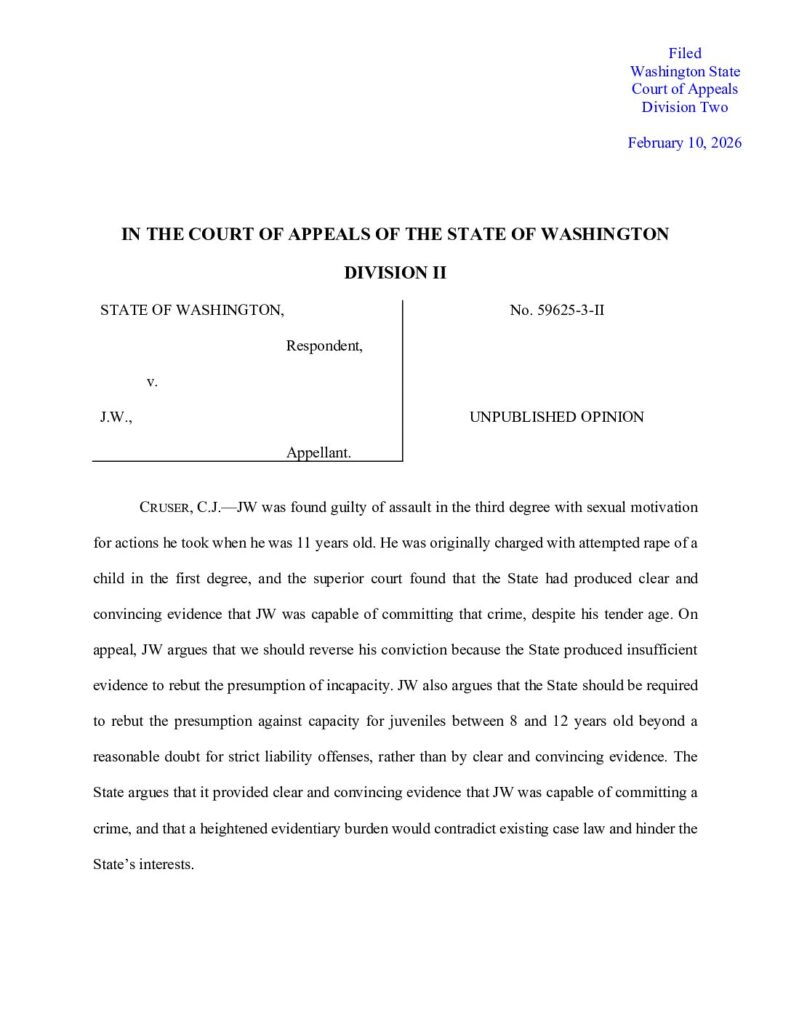
The Washington Appeals Division 2 reversed a conviction involving allegations of an 11-year-old child charged with attempted rape of a child, finding that the state failed to produce clear and convincing evidence that the child was capable of committing a criminal sexual act. The court stated in relevant part: “A child of at least 8…
From the Abstract: “Interrogation techniques are influenced by the interrogator’s style and the individual being interviewed. Most law enforcement agencies use adult-centered interrogation methods, leading to suboptimal results when working with youth. The research has focused on youth offenders in the interrogation room and the choices they make, often leading to false confessions when an…

The Second District Court of Appeals in Illinois vacated a 66-year sentence finding that the trial court misinterpreted youth-related statutory factors as aggravating instead of mitigating factors. The court stated in relevant part: “Defendant also argues that the trial court incorrectly interpreted the statutory factor of his ability to consider the risks and consequences of…

From the abstract: “Juvenile correctional programs that focus solely on safety, education, and structure yield suboptimal outcomes. Youth in these facilities often have learning disorders, and adaptive challenges, have been exposed to severe trauma, and have mental disorders, including autism spectrum disorder. Consequently, rehabilitation programs must be comprehensive, individualized, developmentally informed, and trauma informed to…
“Half a century ago, Congress “revolutionized” the way children with disabilities are educated in this country. Under the Individuals with Disabilities Education Act (“IDEA”), every year the public schools must prepare a “written statement” describing where each such child stands educationally, what educational goals she will work toward, and the special education services she will…

In October 2025, the Gault Center convened over three hundred youth defense lawyers and advocates at our annual Youth Defender Leadership Summit. Together, we practiced the cultivation of community in service of building a more just, more liberated, and more human humanity for all children and for us all. This resource captures the shared learnings…
This article focuses on the policies and practices of community supervision programs, and the impact they have on individuals with disabilities, including discriminatory practices that prevent disabled individuals from successfully completing probation or parole. From the introduction: ” This Article addresses disability discrimination in community supervision programs, a large—but frequently overlooked—component of the criminal legal…

The First District Court of Appeal in California held that defense counsel was ineffective for failing to present mitigation evidence at a resentencing hearing. The court stated in relevant part: “The judge might also have struck the enhancement as a reasonable response to the evidence of defendant’s intellectual disability and the abuse or neglect he…

This resource from Lambda Legal and the American Bar Association Children’s Rights Litigation Committee gives attorneys an overview on how to approach client interviewing and relationship building in a respectful and trauma-informed way. The page discusses the importance of identity for young people’s well being and on their legal cases. It also reviews basic interview…

“Do criminal courts meaningfully accommodate psychiatric disability? A review of competency proceedings across the United States suggests not. In competency to stand trial (CST) proceedings, criminal courts offer a narrow vision of psychiatric disability that excludes many defendants. Ultimately, the institutional context of criminal court under-mines even the meager accommodations that the competency framework provides.…

The Center for Democracy & Technology released a report on the current status of AI use in schools and emerging risks. This report covers the interaction of AI with the classroom, students, IEPs, literacy, deepfakes, student activity monitoring, and student privacy. From the report: “Artificial intelligence (AI) has continued to alter the educational experiences of…

This resource offers a brief overview of how children are transferred or bound over to adult court in Ohio and discusses what is at stake in the case of State v. D.T., 2024-Ohio-4482 (Ohio Ct. App. 2024) pending before the Ohio Supreme Court. The Gault Center filed an amicus in this case here. Oral arguments were…

“Today, America faces a health paradox: the nation’s largest jails are the nation’s largest psychiatric institutions. In a criminal justice system designed for punishment, solutions like mental health units or mental health courts try to address this contradiction. Yet, if mental illness is a health issue, and not a criminal issue, then increased investments in…

From the introduction: “Probation, parole, and other forms of post-conviction supervision are challenging for anyone, requiring strict adherence to dozens of complex rules under threat of incarceration for any slip-up. For the high number of people on supervision who have disabilities, supervision is even more challenging. Disabled people regularly face barriers to understanding their supervision…


The Health and Reentry Project highlights promising Medicaid policy changes that promote continuity of care for young people returning to their communities following incarceration. The changes will support reentry for young people who are eligible for Medicaid or the Children’s Health Insurance Program by introducing them to services that would start 30 days before release…
