
Diversion
This report from the Sentencing Project provides an overview of restorative justice (‘RJ’) diversion programs including research on the results of these programs, the advantages of RJ diversion programming over court involvement, benefits to victims, and recommendations for implementing RJ programs. From the Executive Summary: “Restorative justice (RJ) diversion programs address adolescent lawbreaking outside the court system using a process designed to address victims’ needs and repair the harm caused by youth misconduct.…

The National Institute for Criminal Justice Reform released a report spotlighting promising examples of credible messenger and intensive life-coaching programs to reach youth charged with serious offenses. “This brief argues that the next phase of youth justice reform must focus on intentionally and effectively serving HR2 youth. Doing so will require moving beyond strict replication…
“The non-punishment principle is a legal norm that has increasingly gained legitimacy over the past quarter-century within international, regional, and domestic law on human trafficking. At its core, this principle opposes the punishment of human trafficking victims for unlawful conduct they engage in as a consequence of their trafficking victimization. Little is known about the…
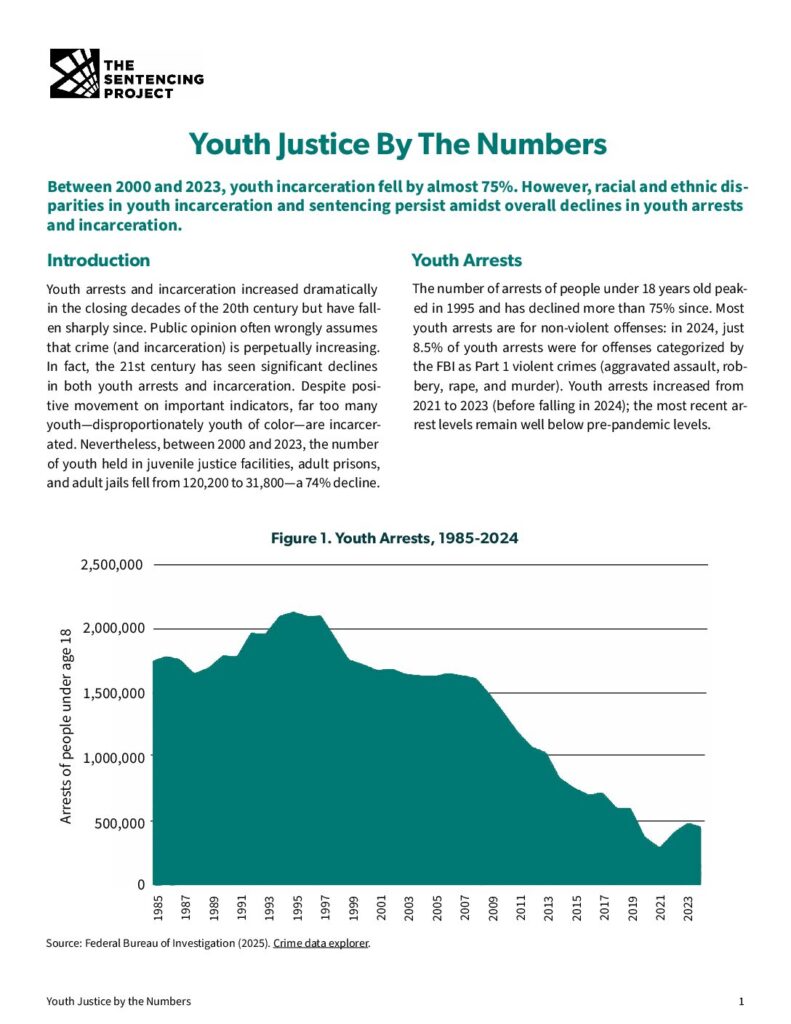
The Sentencing Project released an updated snapshot of the numbers of youth in the juvenile legal system from 2000 to 2023, finding significant declines in youth arrests and incarceration, though racial and ethnic disparities persist. The report calls for the need to continued shrinking the juvenile legal system by increasing informal or diversionary responses to youth arrests. Introduction: “Youth arrests and incarceration increased dramatically in the closing…
This report from Vera Institute for Justice provides examples of reforms from various states that are working to reduce the incarceration of girls in detention and long-term placement. “Over the last decade, as a direct result of focused efforts by youth advocates and a growing body of research on developmentally appropriate practices, many states have…
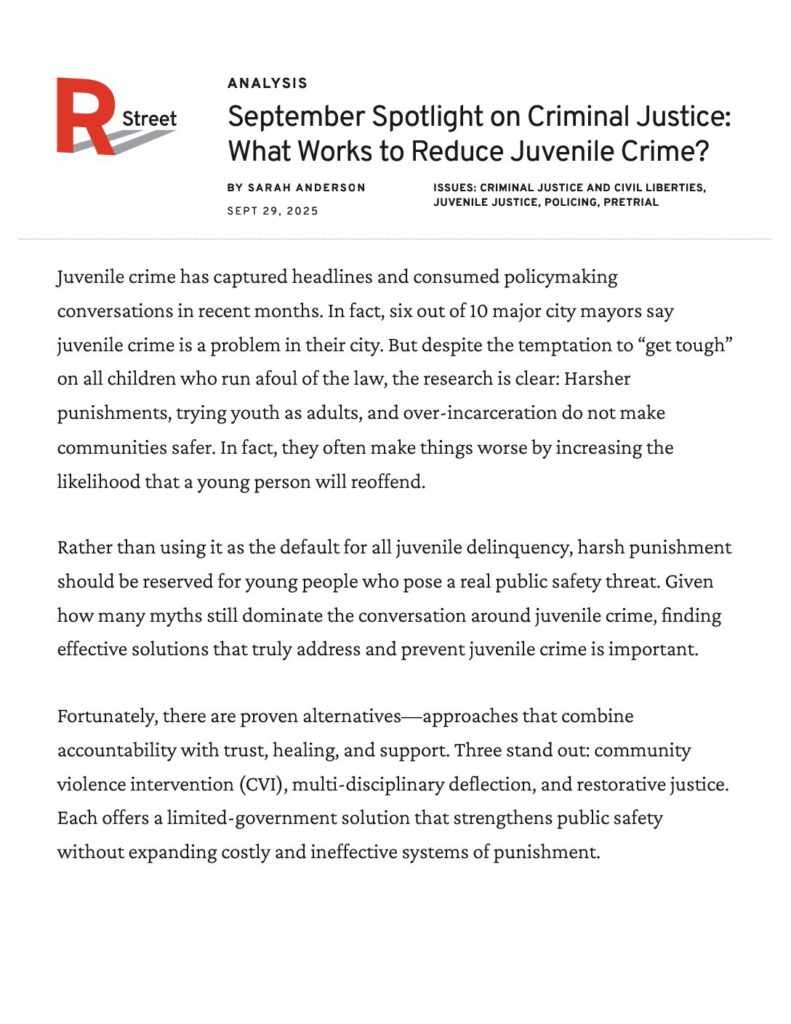
From the R Street Institute: “Juvenile crime has captured headlines and consumed policymaking conversations in recent months. In fact, say six out of 10 major city mayors say juvenile crime is a problem in their city. But despite the temptation to “get tough” on all children who run afoul of the law, the research is clear: Harsher punishments, trying youth…

Provides tangible opportunities probation officers have to support positive youth development equitably for all youth, regardless of immigration status and circumstances beyond a young person’s control.

A companion checklist for probation officers, walking through key considerations when working with noncitizen youth.

From the Introduction: “Following a 2024 County Council request, the Pierce County Performance Audit Committee contracted with the CoLab for Community and Behavioral Health Policy at the University of Washington to conduct an audit of the county’s juvenile justice system against national and research best practice. The assessment is intended to guide future county investments…
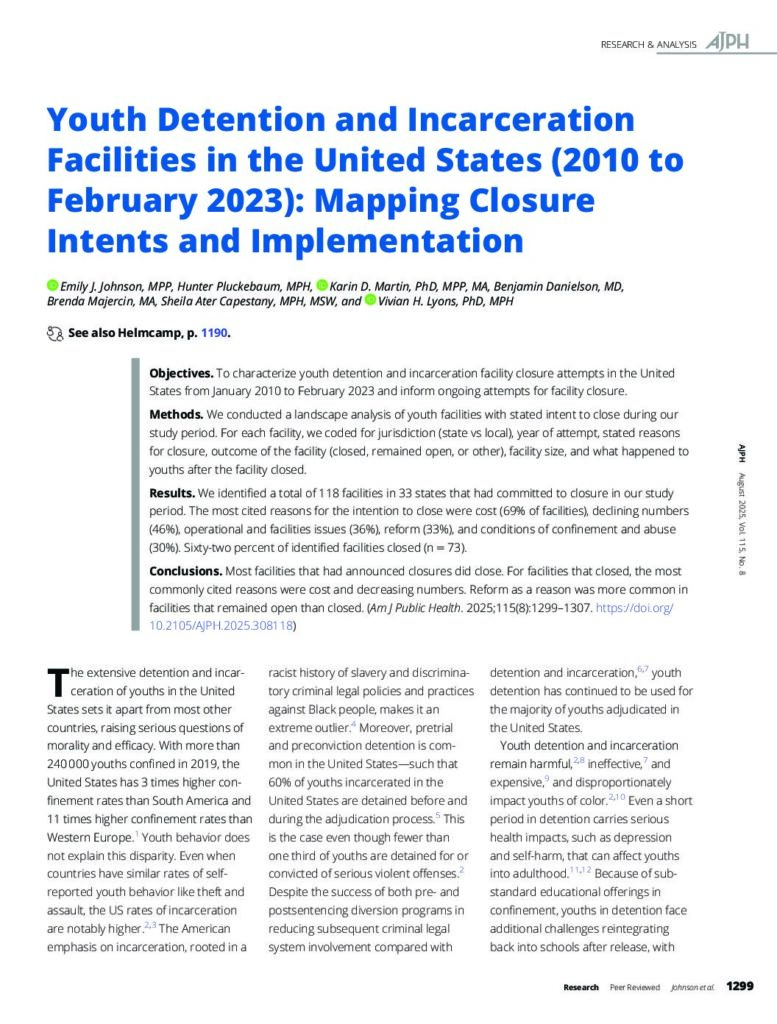
From the Discussion: “This study illuminates pathways for future research to explore facility closures. Such research should investigate the impact of specific drivers supporting completed closures of youth facilities, including the combination of stated reasons to appeal to different audiences. Notably, we only found 1 paper in our scoping review that explores the strategies used…


From the conclusion” “Conclusion There is no question that the statistical picture of special education is bleak. But after its meeting of stakeholders, interviews with experts, and review of the research, NCD believes that IDEA and other related disability laws, with improved enforcement, can and should benefit at-risk students who are properly referred and served.…

The Sentencing Project released a report on adolescent gun possession cases, highlighting the harms of punishment and calling for comprehensive community-based initiatives to reduce gun violence. This report offers research on the reasons why youth carry guns, ranging from peer influence to past experiences of trauma and walks through how juvenile court systems typically respond…


From the executive summary: “This report offers recommendations for researchers, policymakers, diversion programs, and community organizations focused on diverting Black women, girls, trans and gender nonconforming people from criminal punishment systems. Our recommendations are based on an assessment of diversion programs through a Black feminist lens, which starts from the standpoint of the women and…


This report challenges the notion that Georgia’s youth legal system is built to rehabilitate and suggests measures that protect the health and humanity of all the state’s children. First, this report will explore the myth of the “superpredator” and its impact on perceived Black youth criminality. Second, it will detail the state’s school-to-prison pipeline and…

This report from National Institute for Criminal Justice Reform offers six principles of a positive youth justice system (‘PYJS’) including: 1) Minimize contact with the juvenile justice system, 2) partner with youth and families to develop and share ownership of case plans, 3) community-based organizations should take the lead, 4) build on youth assets and…


The Sentencing Project released an updated snapshot of youth arrest and incarceration rates, revealing that youth arrest rates have declined 80% from 1996 and youth incarceration declined 75% between 2000 and 2022. Despite these shrinking rates, the juvenile legal system is still marked by significant racial and ethnic disparities. Black youth are 4.7 times more…

By understanding the conditions facing incarcerated youth, the responsibility of the justice system, and strategies designed to improve outcomes, stakeholders can make informed decisions. After arming readers with the historical timeline necessary to understand Texas’ complicated history with its juvenile justice system, LSJA’s Reimagining Reform report issues a challenge to stakeholders during a crucial time…

The National Youth Justice Network released a report detailing legislative trends on youth rights from 2023. This report highlights key gains made by several states around juvenile court fines and fees, expungement, transfer, and youth interrogation among other issues, and flags several regressive legislative trends rooted in harmful narratives about young people. This overview of…
