


Professor Kris Henning and Rebba Omer authored a law review article on decriminalizing normal adolescent behaviors, race, and disabilities. This article maps a way forward for all system actors in the juvenile legal system to mitigate and buffer against the harms of juvenile legal system involvement for youth with disabilities. Specifically, this article outlines youth…


This report, by the U.S. Department of Justice Civil Rights Division outlines key highlights of the Division’s work from 2021 to 2024 across policing, juvenile facilities, schools and beyond.

In August 2024, the Office for Access to Justice hosted a convening on youth defense, calling attention to the urgent need to invest in youth defense specialization. “Such investments from the state and federal level are essential to safeguarding young people’s constitutional rights. Well-trained and specialized counsel help young people understand their rights as they…

On October 24, 2024, the U.S. Department of Justice filed a Statement of Interest in a federal class action lawsuit challenging conditions of confinement at the Mary Davis Detention Home in Galesburg, Illinois. The DOJ asserted, “The federal government, too, has repeatedly recognized that children are developmentally and constitutionally different than adults and that excessive…

This one-page infographic from the Office of Juvenile Justice and Delinquency Prevention illustrates trends in delinquency cases in 2022.

The National Institute of Justice issued five key findings from research and data on youth and delinquency. The findings include: 1) risk-taking behaviors are a normal part of adolescent development; 2) risky behaviors increase through adolescence and then decline over time as youth mature; 3) few youth are arrested for any crime, and even fewer…
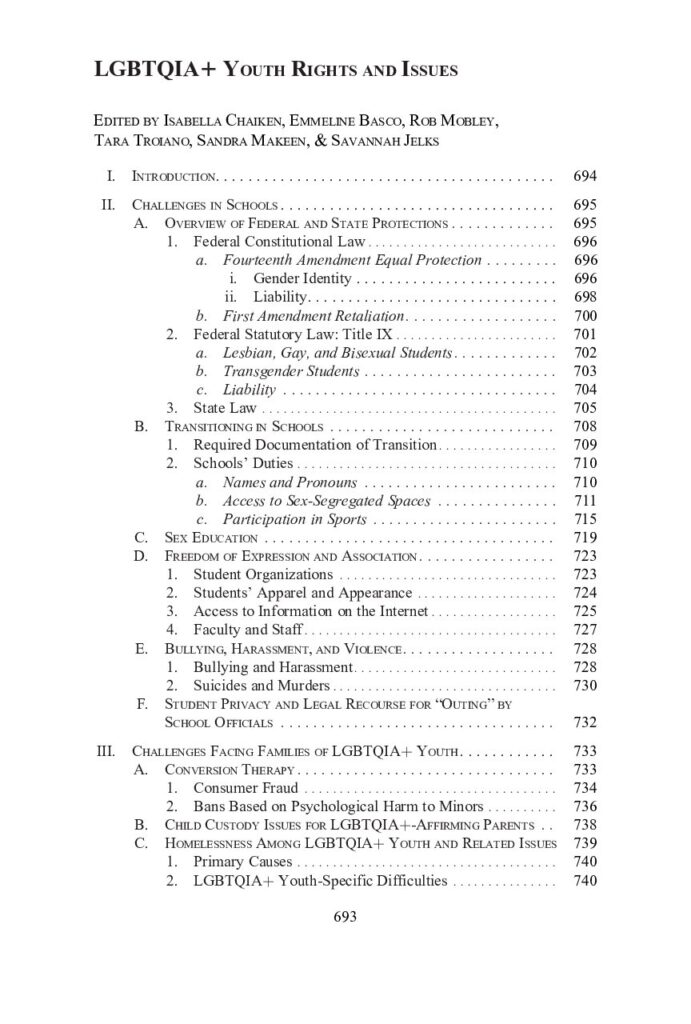
From the introduction: “This Article discusses the myriad challenges lesbian, gay, bisexual, transgender, and questioning (LGBTQIA+) youth face in the United States (U.S.). The Article focuses on issues LGBTQIA+ (the “plus” holds space for other sexual identities not represented within the acronym) youth confront in school as well as the issues faced by families with…

This one-page infographic illustrates statistics from the Office of Juvenile Justice and Delinquency Prevention’s Juvenile Residential Facility Census

This one-page infographic from the Office of Juvenile Justice and Delinquency Prevention illustrates statistics on waiver from juvenile to criminal courts.

Challenging the Status Quo: Mobilizing Youth Defense Teams to Uphold Youth Rights & Uproot Injustice
This Racial Justice Webinar was hosted by the Gault Center and Georgetown Law’s Juvenile Justice Clinic & Initiative on May 29, 2024. The webinar focused on a collective call to action for the youth defense community to transform the juvenile legal system by centering youth and their constitutional rights to freedom, liberty, and equality. This…

This User Guide provides advocates with a step-by-step outline of how to actualize the vision of the National Youth Defense System Standards to equip and invest in youth defense teams to fight for the liberation of all youth.The User Guide outlines constitutional rights detailed in the System Standards, provides a checklist to assess the presence…
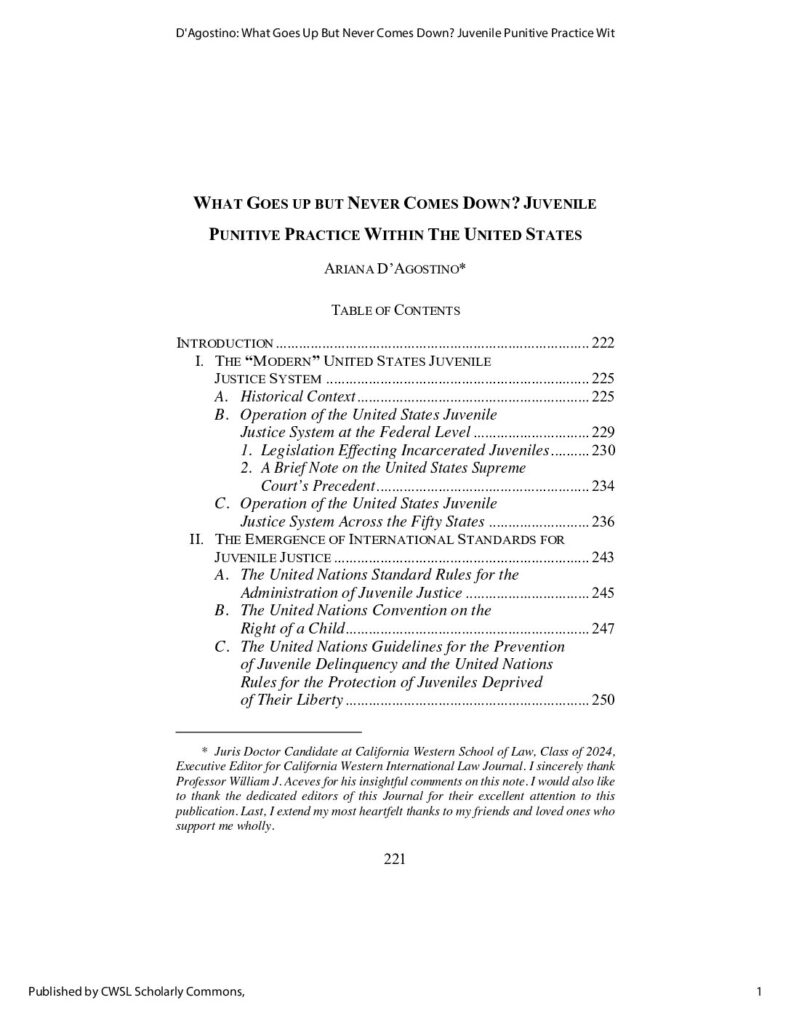
From the Introduction of the Paper: “The U.S.’s failure to implement an internationally abiding federal law regulating juvenile justice has important implications on the treatment of incarcerated adolescent populations while incarcerated, rehabilitated, and reintegrated into society. This article will analyze the harmful and outdated legal frameworks and institutional structures of the U.S. juvenile justice systems.…

No. 3:22-cv-00573 (M.D. La. 2023). The U.S. Department of Justice filed a statement of interest in a civil lawsuit addressing the constitutional rights of youth who had been adjudicated delinquent and transferred to the Louisiana State Penitentiary’s former death row building, known as Angola. In their statement, the United States asserted that youth are particularly…

Off. for Access to Just., U.S. Dep’t of Just. (2023). The U.S. Department of Justice’s Office for Access to Justice issued this report as a follow up on the department’s Fines and Fees Dear Colleague letter. The report spotlights jurisdictions that have eliminated fines and fees for youth and adults through various mechanisms and highlights…

Outlines steps that states must take to comply with the minimum requirements of the U.S. Constitution to protect the rights of youth facing deprivations of liberty.




Young people and their families are routinely assessed fees, fines, and other costs in delinquency matters. These financial assessments are often ordered without an ability-to-pay analysis by the court. A young person’s inability to pay can lead to long-lasting consequences, increased recidivism, and youth and their families having to choose between paying fees or buying…
