
Emerging Adults
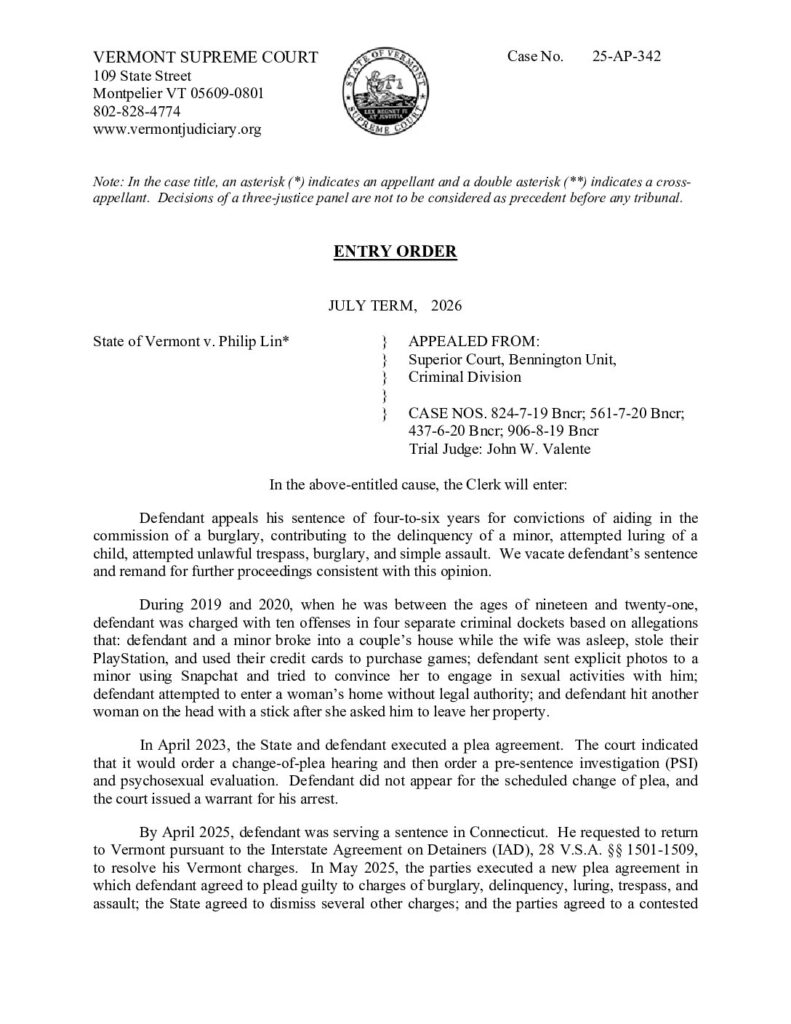
The Supreme Court of Vermont held that proceeding with sentencing without a previously ordered psychosexual evaluation that would take into account a young person’s disability constituted plain error, warranting vacatur and resentencing. The Court stated in relevant part: The absence of the psychosexual evaluation affected defendant’s right to have his sentence be based on accurate…
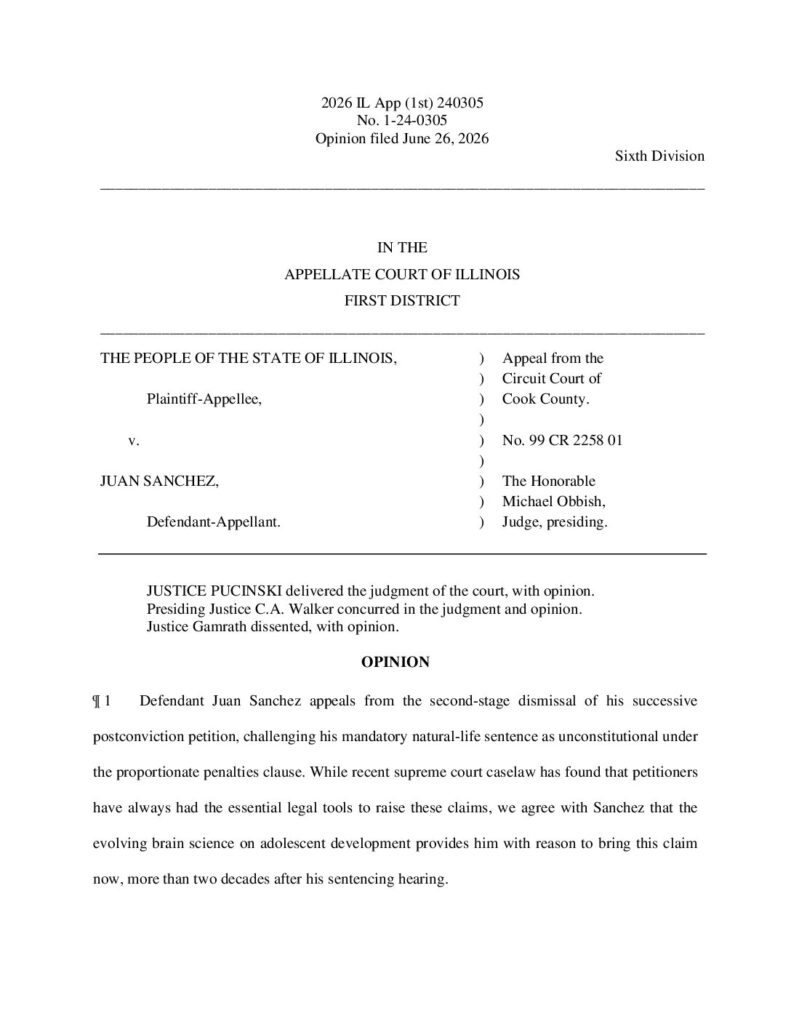
The Illinois First District Court of Appeals granted a full evidentiary hearing on a postconviction petition based on new research on late adolescent brain development that was unavailable at the original sentencing hearing in 2001 and a detailed affidavit connecting that research to the individual’s childhood abuse and trauma. The court stated in relevant part:…
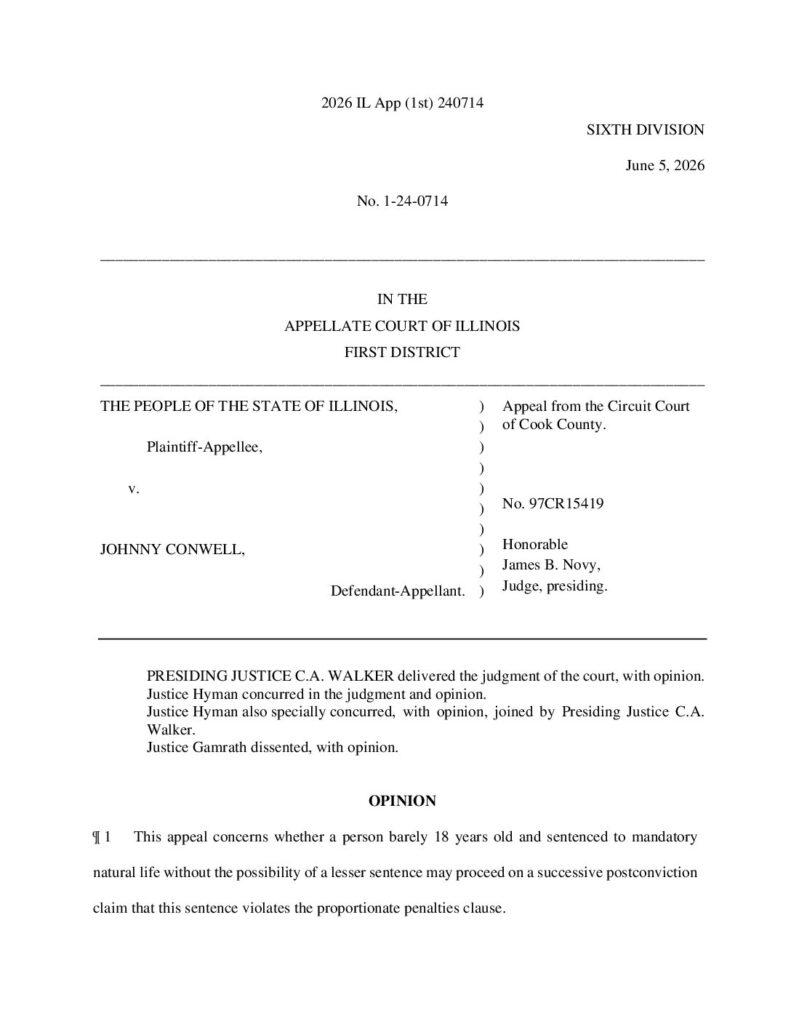
The Illinois 1st District Court of Appeals granted an individual to proceed on a postconviction hearing to challenge his life sentence based on the state’s proportionate penalties clause. The court held that the individual who 18 at the time of the offense was entitled to present mitigating evidence about his age and youthfulness. The court…
This infographic series on advancing best practices in youth justice from the RFK Community Alliance’s National Resource Center for the Transformation of Youth Justice provides accessible research on core practices driving change in youth justice and includes research on adolescent development and emerging adulthood, positive youth development and growth-focused case management, the negative effects of…

The 1st District Court of Appeals of Michigan vacated a life without parole sentence following a felony murder conviction, finding that trial counsel was ineffective by failing to raise mitigating evidence on adolescent brain development and childhood trauma and abuse. The court stated in relevant part: Appellate counsel obtained a mitigation expert, Mary Cuddehe, to…

From the abstract: “Over the past several decades, there have been an alarming number of instances where young Americans have had their lives ruined due to their involvement as confidential informants in law enforcement narcotics investigations. These tragedies have garnered national attention and inspired attempts at reform several times. Yet, the reckless use of the…
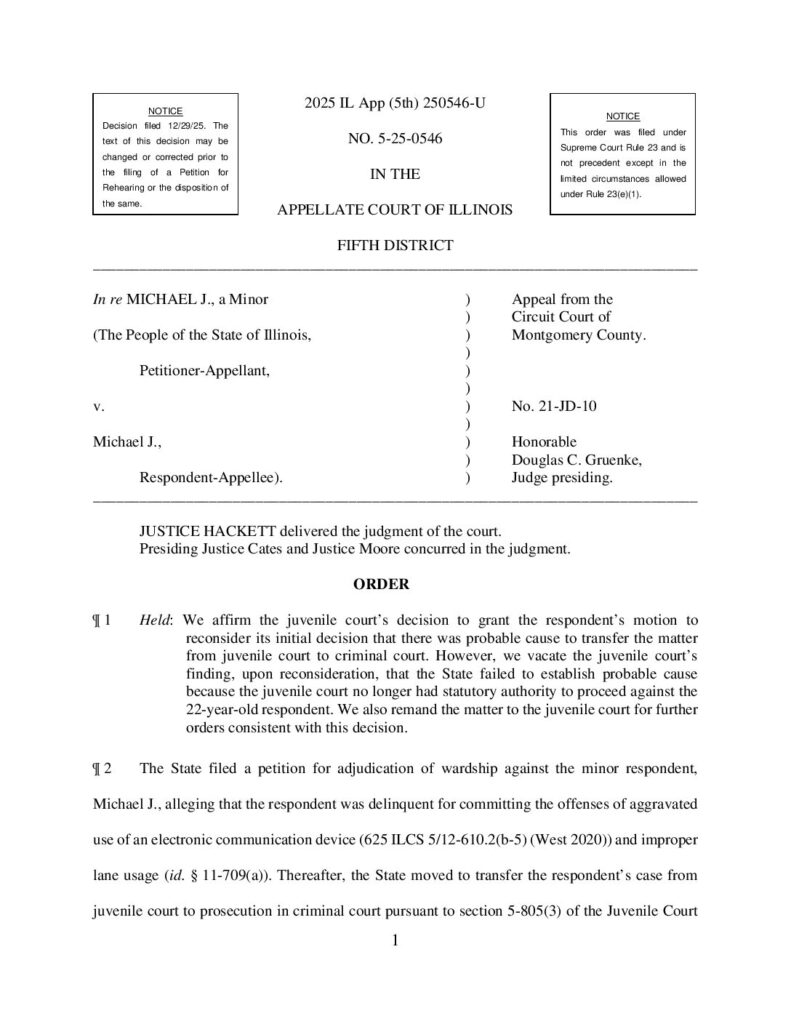
The Illinois 5th District Court of Appeals found that the juvenile court lacked statutory authority to proceed on a transfer determination once a young person turned 22 years old. This case involved an initial transfer determination followed by a reconsideration request by the defense based on lack of probable cause to justify the initial transfer…

The 6th District Court of Appeal in California reversed an order denying a resentencing petition based on trial counsel’s failure to raise the implications of youthfulness and adolescent development in disputing implied malice in a felony murder case. The court stated in relevant part: “Lopez, 20, participated in the attack on Sandoval with two peers.…

The Second District Court of Appeals in Illinois vacated a 66-year sentence finding that the trial court misinterpreted youth-related statutory factors as aggravating instead of mitigating factors. The court stated in relevant part: “Defendant also argues that the trial court incorrectly interpreted the statutory factor of his ability to consider the risks and consequences of…

The Michigan 1st District Court of Appeals vacated second-degree murder and assault with the intent to commit murder sentences for an individual who was 18 years old at the time of the incident and remanded with instructions for the trial court to consider youthfulness and its attendant characteristics as mitigating factors. The court stated in…

The Health and Reentry Project highlights promising Medicaid policy changes that promote continuity of care for young people returning to their communities following incarceration. The changes will support reentry for young people who are eligible for Medicaid or the Children’s Health Insurance Program by introducing them to services that would start 30 days before release…


From the conclusion: “The years between 16 and 25 are an important window to build pathways toward a thriving adulthood. By later adolescence, we have the cognitive abilities and social understanding to connect with others and navigate the world in new ways. We have new agency to pursue our own goals and new responsibilities that…


Following the 20th anniversary of the Roper v. Simmons decision that ruled the death penalty unconstitutional for youth under the age of 18, the Death Penalty Information Center released a report on the latest science of adolescent brain development and evolving societal standards that recognize the need for heightened legal protections for 18- to 20-year-olds.…


On April 10, 2025, the Supreme Court of Michigan extended its 2022 decision in People v. Parks, which declared mandatory life without parole (LWOP) for 18-year-olds unconstitutional, to also apply to 19- and 20-year-olds. Relying on the state’s constitutional prohibition against “cruel or unusual punishment,” the Court found that mandatory LWOP for 19- and 20-years…


A brief on the core changes happening during the remarkable period of growth from 10 to 25 years old. The brief highlights the opportunities for positive development during this period of adolescence and the critical need for social systems to adapt to youth in a way that supports their success.

In this amicus brief (and a companion brief filed in Michigan v. Andrew Czarnecki), Fair and Just Prosecution urges the Michigan Supreme Court to extend 19- and 20-year olds its finding that life without parole sentences for young people violate state and federal constitutional protections against cruel and unusual punishment.
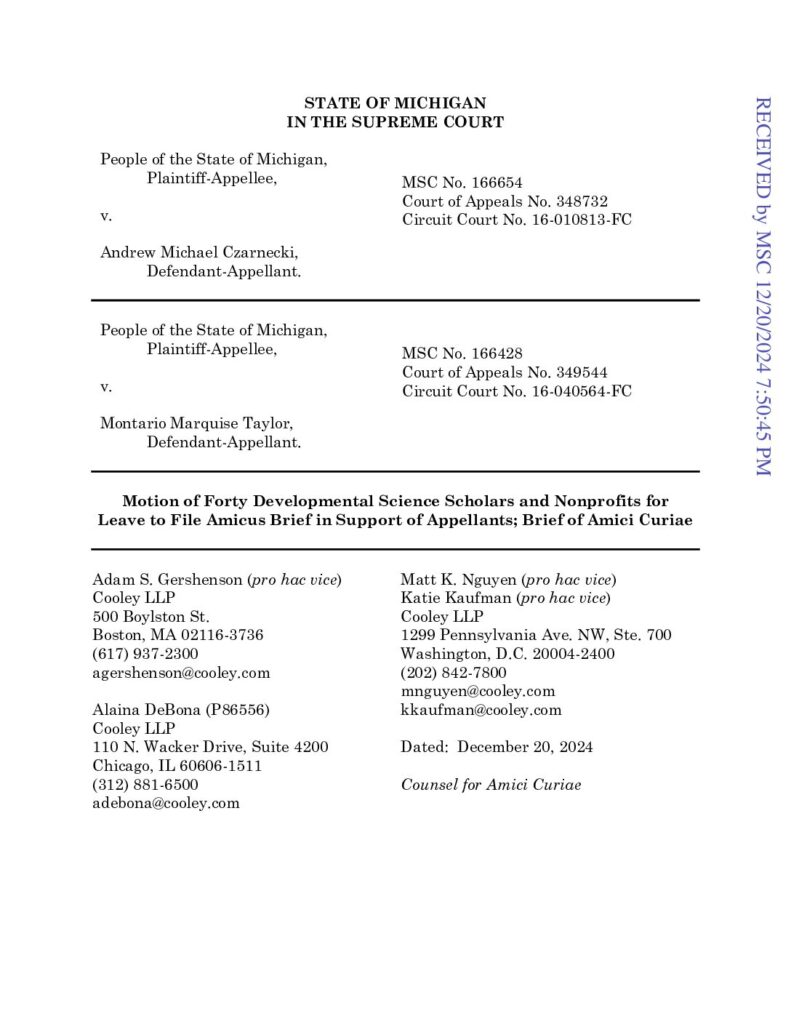
This amicus brief by forty developmental science scholars and nonprofits argues transformative growth during ages 18-20 makes mandatory LWOP for individuals in that age range a disproportionate sentence in violation of Article 1, Section 16 of the Michigan constitution. From the Summary of the Argument: “People v Parks held that Article 1, Section 16…
