
Mentorship

This report from Human Rights for Kids details survey results from 2,200 individuals who were incarcerated as adults for crimes they committed as children. The findings from the report demonstrate the fact that “children tried as adults are often victims long before they became [system-involved],” discusses the intersection between childhood trauma and the legal system,…
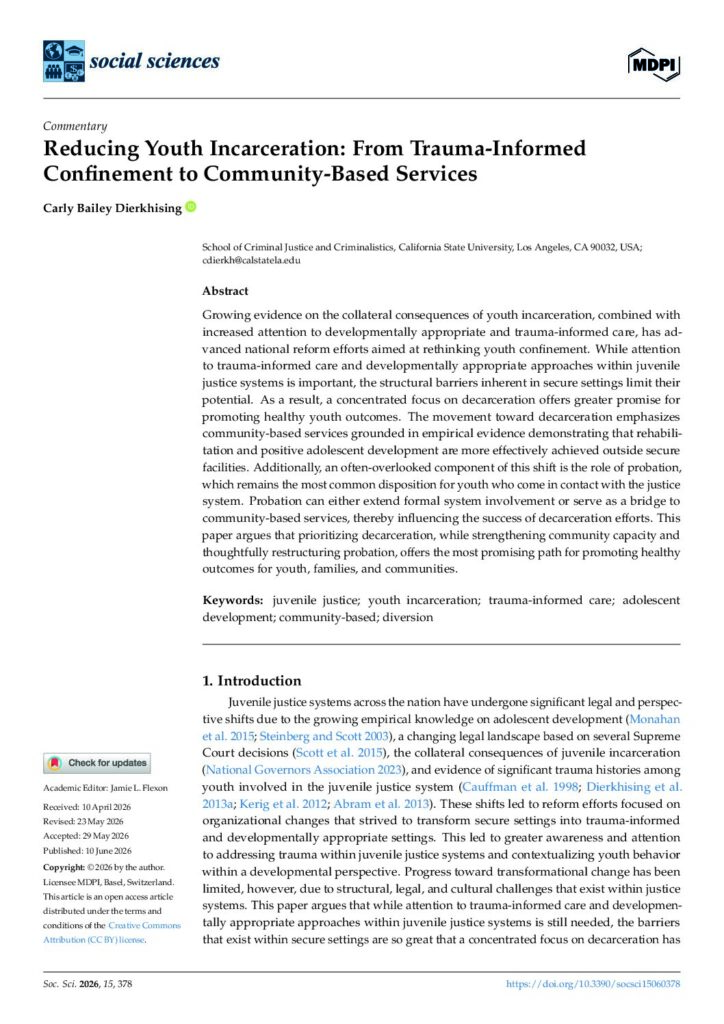
From the abstract: Growing evidence on the collateral consequences of youth incarceration, combined with increased attention to developmentally appropriate and trauma-informed care, has advanced national reform efforts aimed at rethinking youth confinement. While attention to trauma-informed care and developmentally appropriate approaches within juvenile justice systems is important, the structural barriers inherent in secure settings limit…

The National Institute for Criminal Justice Reform released a report spotlighting promising examples of credible messenger and intensive life-coaching programs to reach youth charged with serious offenses. “This brief argues that the next phase of youth justice reform must focus on intentionally and effectively serving HR2 youth. Doing so will require moving beyond strict replication…

From the executive summary: Youth Empowerment for Advancement Hangout (YEAH Inc.) launched the Violent Crime Initiative (VCI) to support young people ages 15–24 in West and Southwest Philadelphia who have been arrested for violent offenses or gun crimes. Unlike traditional system-driven approaches, VCI provides voluntary, holistic, and flexible services that address both immediate needs (such…

The Gault Center released an update on the state of youth defense in Kansas, which centers the perspectives and experiences of young people impacted by the juvenile legal system, through a collaborative effort with Progeny, a youth-adult partnership in Kansas, TerraLuna Collaborative, a research consulting group, and Mulberry Art Gallery, which focuses on supporting emerging…

From the conclusion: “Washington, DC has severe racial disparities in its justice-involved population. That should alarm local leadership and its residents. These disparities are rooted in policing practices that target communities of color, a lack of investment and opportunity in historically disadvantaged neighborhoods, and an overly punitive sentencing, parole, and corrections system. The current system…
