
Breaking the School-to-Prison Pipeline for Students with Disabilities

From the conclusion” “Conclusion There is no question that the statistical picture of special education is bleak. But after its meeting of stakeholders, interviews with experts, and review of the research, NCD believes that IDEA and other related disability laws, with improved enforcement, can and should benefit at-risk students who are properly referred and served.…
Read MoreBuild Community Power Through Art: Event Host Toolkit

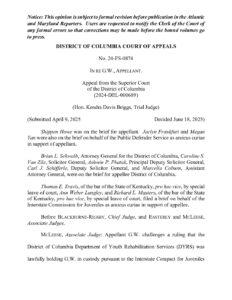
In re G.W., 2025 D.C. App. LEXIS 156 (D.C. 2025)
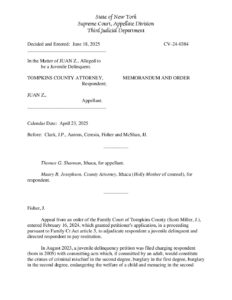
Matter of Juan Z., 2025 N.Y. App. Div. LEXIS 3737 (N.Y. App. Div. 2025)
Attorney Client Privilege: What to Know

From Punishment to Prevention: A Better Approach to Addressing Youth Gun Possession
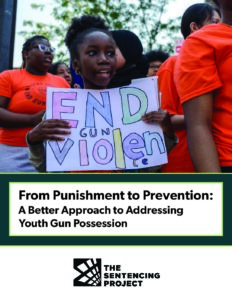
The Sentencing Project released a report on adolescent gun possession cases, highlighting the harms of punishment and calling for comprehensive community-based initiatives to reduce gun violence. This report offers research on the reasons why youth carry guns, ranging from peer influence to past experiences of trauma and walks through how juvenile court systems typically respond…
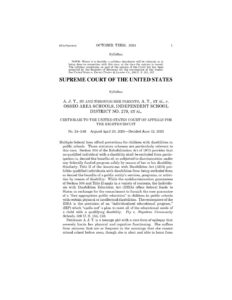
Read MoreA.J.T. v. Osseo Area Sch., Indep. Sch. Dist. No. 279, 2025 U.S. LEXIS 2279 (2024)
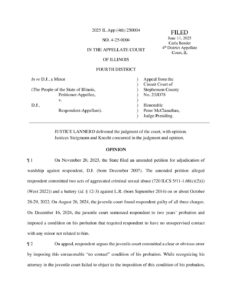
In re D.J., 2025 IL App (4th) 250004
The Gault Center Amicus Brief, State v. D.T.
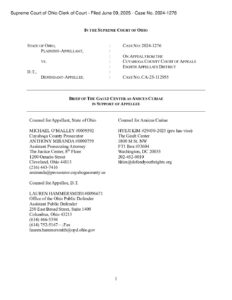
The Gault Center submitted an amicus brief in the Supreme Court of Ohio on a case involving a young person’s right to appeal a competence and transfer determination in juvenile court after entering a guilty plea in adult court. Outlining procedural justice arguments and the constitutional right to a competency and transfer hearing, the brief…
Read MoreDeportation Preparation Manual for Immigrant Families: Make a Plan to Protect Your Kids and Finances in the Face of Deportation

2025 Kids Count Data Book: State Trends in Child Well-Being

The Annie E. Casey Foundation released its annual Kids Count Data Book, which offers a national analysis on four indicators of child wellbeing: economic wellbeing, education, health, and family and community. This report is part of the Kids Count Data Center, which provides demographic and wellbeing data on children and families. This report includes data…
Read MoreState v. Smith, 2025 W. Va. LEXIS 222 (W. Va. 2025)

De/Reconstructing Delinquency

From the abstract: “Hundreds of thousands of children are brought under the jurisdiction of delinquency courts every year in the United States. Despite the reality that most children engage in delinquent behavior during their adolescence, poor children, children of color, children with disabilities, and children who identify as LGBTQIA+ comprise a disproportionate number of those who become delinquency system-involved. These disparities exist…
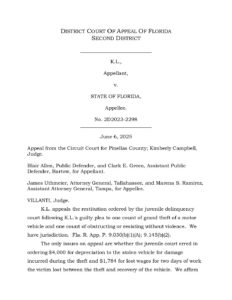
Read MoreK.L. v. State, 2025 Fla. App. LEXIS 4305 (Fla. Dist. Ct. App. 2025)
In the Matter of C. 343 Or. App. 371 (2025)

The Oregon Court of Appeals reversed the adjudication finding of the trial court, holding that there was insufficient evidence to support a finding that the youth intended to damage playground equipment. The Court of Appeals offered the following language in support: “There is an appreciable difference between intentional action—that is, acting with a conscious objective…
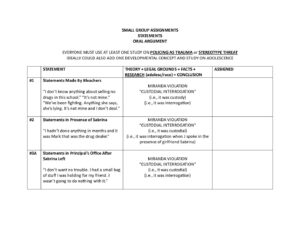
Read MoreForensic Chart Pairing Statements with Law
Sample Motion to Reduce Level of Detention Due to Disability

A.T.M.C. v. State, 2025 Fla. App. LEXIS 4244 (Fla. Dist. Ct. App. 2025)

Advocating for Students with Disabilities: Strategic Framing Insights
U.S. Citizen Kids and ICE Check-Ins: How to Prepare

From the introduction: “Before the second Trump Administration, it was considered safe and even recommended for parents attending an ICE & ISAP check-in to bring their U.S. citizen children with them. Because the number of arrests at check-ins has increased, and because ICE has illegally deported some U.S. children with their parents against those parents’…
Read MoreAlishea Kingdom v. Donald J. Trump, 2025 U.S. Dist. LEXIS 105237 (D.C. Cir. 2025)

We Can’t Afford It: Mass Incarceration and the Family Tax

Practice Advisory: Considerations in Asylum Claims for Transgender People

From the Introduction: Asylum claims based on gender identity are clearly established by decades of law in the United States, and transgender asylum seekers have long been successful in claims for humanitarian protection. The authors are legal service providers who regularly represent LGBTQ2 people seeking asylum. Due to recent transphobic Executive Orders that attempt to…
Read MoreWeaving Life and Law to Transform Youth Justice

From the introduction: “Youth justice advocates, including lawyers, organizers, and other youth and adult movement builders, want to replace the current damaging, discriminatory, and ineffective juvenile and criminal legal systems1 with better approaches. We envision approaches that support children, help them f lourish, and contribute to a safe, equitable, and healthy community. How do we…
Read MoreClean Slate, Dirty Data – An Audit of Algorithmic Automated Criminal Expungement Laws

From the abstract: “Automatic criminal record restriction laws, which suppress records at the initiative of the state, rather than the individual, present a promising new way to provide second chances to the one in three American adults that live with a criminal record. Buoyed by the success of drug legalization measures and the “Clean Slate”…
Read More