
Guidance to Nonprofits Regarding Immigration Enforcement
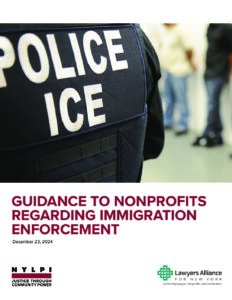
From the introduction: “The incoming federal administration has promised a set of actions focused on mass deportations as well as aggressive and harsh immigration policies. If implemented, the human cost to immigrant New Yorkers will be staggering. Community-based organizations and nonprofits provide mission-driven services to hundreds of thousands of immigrants in the state. Many in…
Read MoreDevelopmental Science Scholars and Nonprofits Amicus Brief, People v. Taylor
This amicus brief by forty developmental science scholars and nonprofits argues transformative growth during ages 18-20 makes mandatory LWOP for individuals in that age range a disproportionate sentence in violation of Article 1, Section 16 of the Michigan constitution. From the Summary of the Argument: “People v Parks held that Article 1, Section 16…
Read MoreThe ACLU of Michigan, et al., Amicus People v. Taylor
The Urgent Need for a Systemic Overhaul of the Broken Juvenile Detention System in Illinois
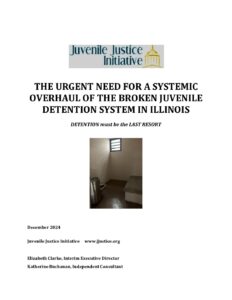
This report is the latest in a series of Juvenile Justice Initiative (JJI) reports on juvenile detention, building on prior research in concluding the time is ripe for a complete overhaul of the juvenile detention system in Illinois.
Read MoreThe Real Cost of “Bad News”: How Misinformation is Undermining Youth Justice Policy In Baltimore

From the introduction: “For decades media scholars have noted that local news coverage is often sensationalized and framed in ways that heighten public fears of youthful offending. And this tendency has continued since the outset of the pandemic. This coverage has likely contributed to a shift in public opinion toward tough-sounding policies that conflict with…
Read MoreMemorandum in Opposition to Proceeding Without a Competency Hearing

This memo, filed by youth defenders from the Hamilton County, Ohio public defender office, demands evidentiary competence hearings based on state statutory grounds and constitutional doctrines of fundamental fairness, effective assistance of counsel, and separation of powers. Notably, this memo cites Standard 3.2 of the National Youth Defense System Standards on independence to highlight an…
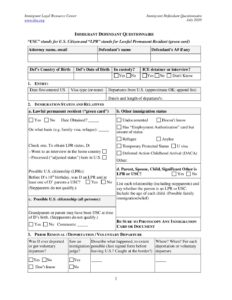
Read MoreDefendant Immigration Questionnaire
Amicus Brief of The Black Parents and Families Collective, National Congress on American Indians, Students Engaged in Advancing Texas, The Texas State Conference of NAACP Branches, IDRA, and ACLU of Texas

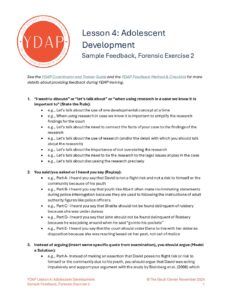
Adolescent Development – Sample Feedback Forensic Exercise 2
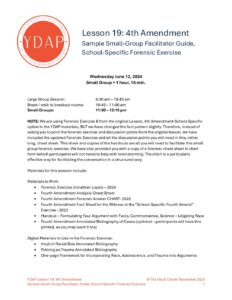
Lesson 19 Sample Facilitator Guide School-Specific Forensic Exercise
Georgia – Only Young Once: Dismantling Georgia’s Punitive Youth Incarceration System

This report challenges the notion that Georgia’s youth legal system is built to rehabilitate and suggests measures that protect the health and humanity of all the state’s children. First, this report will explore the myth of the “superpredator” and its impact on perceived Black youth criminality. Second, it will detail the state’s school-to-prison pipeline and…
Read MoreACLU of Michigan et al., Amicus, People v. Poole

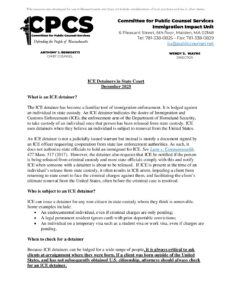
ICE Detainers in State Court (Massachusetts CPCS Immigration Impact Unit)
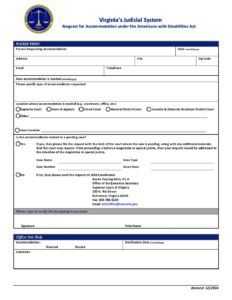
VA Request for Accommodation under the Americans with Disabilities Act
Immigration Relief Toolkit and Chart for Criminal Defenders

Digitizing the School-to-Prison Pipeline: Pasco County’s At-Risk Youth Program

This research report by the NAACP Legal Defense Fund provides an in-depth overview of the “At-Risk Youth Program” created by the Pasco County Sheriff’s Office in Tampa Bay, Florida. The Pasco County sheriff’s office relied on a “rudimentary, person-based predictive policing system” based on inherently biased criteria to identify young people who were “destined to…
Read MoreTeaching and Learning Styles
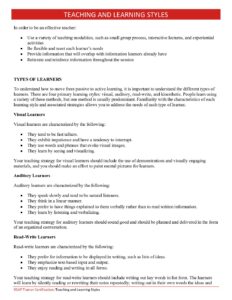
An exploration of learning styles and effective teaching strategies to ensure your training engages all types of adult learners.
Read MoreMatching Media with Learning Inclinations
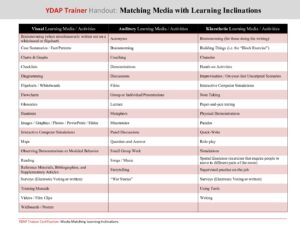
Training ideas to engage visual, auditory, and kinesthetic learners.
Read More10 Charismatic Leadership Tactics for Effective Training
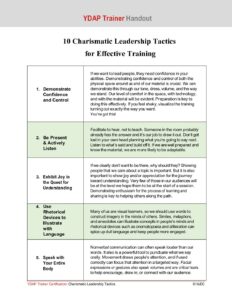
Tips for exhibiting leadership qualities that support effective training and engage participants in learning.
Read MoreUsing Adult Learning Principles
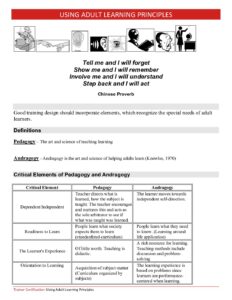
A review of the characteristics of adult learning, the laws of learning, learning styles, the nine principles of adult learning, and roles trainers play.
Read MoreTrainer Self-Assessment
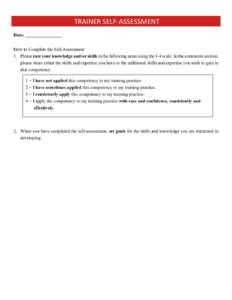
A tool for Certified YDAP Trainers to assess their training competencies, identify strengths and areas for growth as a trainer, and set goals for improving training skills and knowledge.
Read MoreGuide for Facilitating Conversations on Race
Created by Georgetown Law’s Juvenile Justice Initiative, this guide offers resources for providing effective training on and engaging in meaningful conversations about race.
Read MoreCreating Effective PowerPoint Presentations
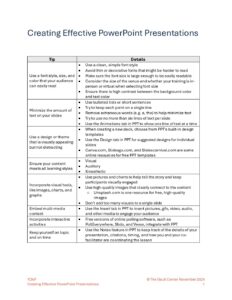
PowerPoint presentations — when done well — can be effective training tools. This document provides tips for creating effective PowerPoint presentations to engage all kinds of adult learners.
Read MoreYDAP Co-Facilitation Tips
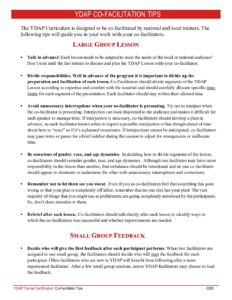
The YDAP Curriculum is designed to be co-facilitated by national and local trainers. This document includes tips to guide you in your work with your co-facilitators.
Read MoreTrainer’s In-Person Tech and Media Checklist
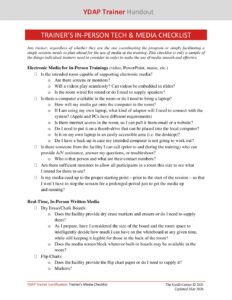
A checklist of logistical details to consider when planning an in-person YDAP training.
Read More