
Competence

This guidebook from National Conference of State Legislatures provides information on current youth justice policy at the federal and state level exploring a range of youth justice policy areas rom age of juvenile court jurisdiction and transfer into adult court to diversion and probation. From the introduction: “Today, a sound body of youth justice law…
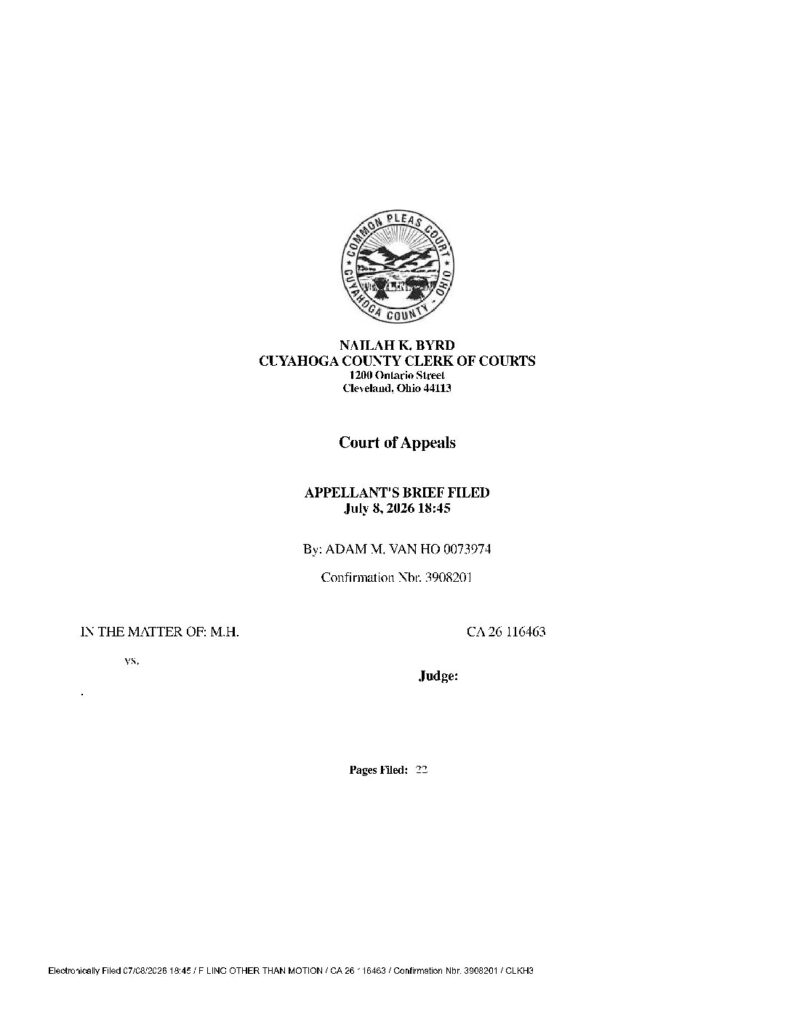
The Juvenile Law Center, the Gault Center, and Dr. Gia Elise Barboza-Salerno filed an amicus brief in support of an eleven-year old child who was deemed incompetent to stand trial and detained for competency restoration. From the introduction: Confining an eleven-year-old child deemed incompetent in a detention facility puts the child at grave risk of…
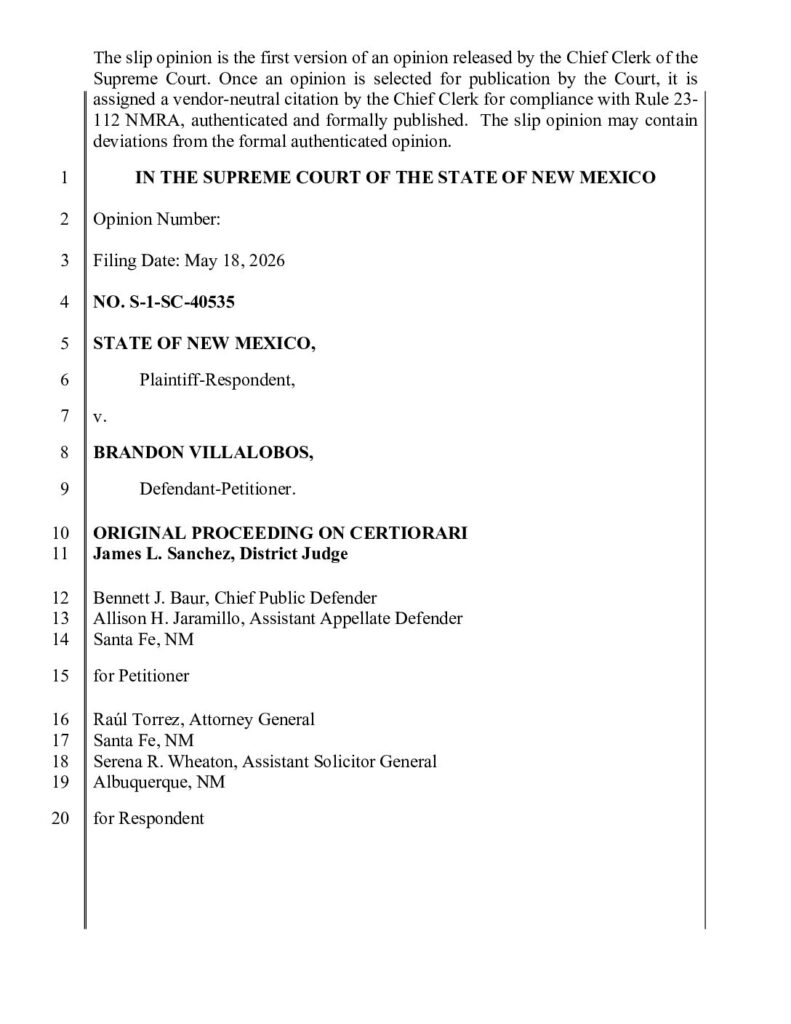
The Supreme Court of New Mexico held that a young person’s age and intellectual disability are relevant considerations in determining whether the constitutional right to a speedy trial was violated. In State v. Villalobos, the Court held that an individual who had an intellectual disability and was 15 years old at the time of the…

This analysis by R Street highlights the need for states to establish a minimum age of arrest and minimum age of juvenile court jurisdiction. From the analysis: “Arresting elementary schoolers is traumatic, expensive, and ineffective, yet the question remains: How do we meet unmet needs without utilizing law enforcement? The answer lies in shifting from…
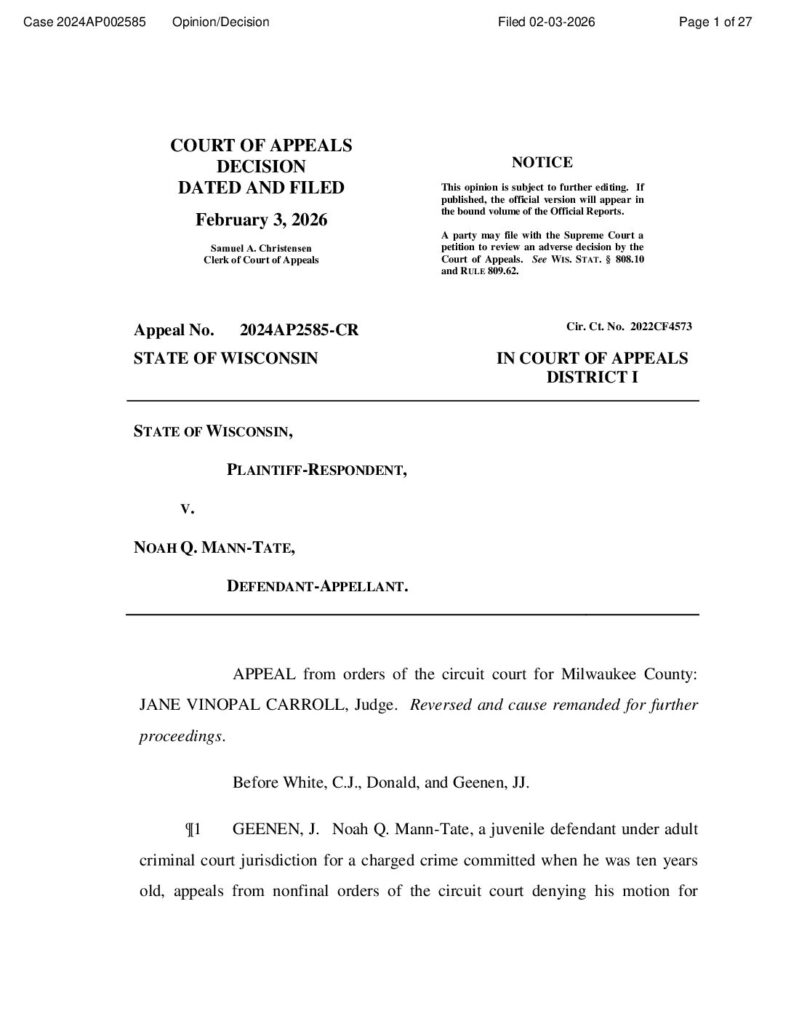
The Court of Appeals of Wisconsin held that the state’s reverse waiver statute was unconstitutional “to the extent it does not require circuit courts to consider the unique attributes of youth identified by the United States Supreme Court.” In Wisconsin, a youth’s case that is directly filed in adult criminal court may be sent to…


“Do criminal courts meaningfully accommodate psychiatric disability? A review of competency proceedings across the United States suggests not. In competency to stand trial (CST) proceedings, criminal courts offer a narrow vision of psychiatric disability that excludes many defendants. Ultimately, the institutional context of criminal court under-mines even the meager accommodations that the competency framework provides.…

This resource offers a brief overview of how children are transferred or bound over to adult court in Ohio and discusses what is at stake in the case of State v. D.T., 2024-Ohio-4482 (Ohio Ct. App. 2024) pending before the Ohio Supreme Court. The Gault Center filed an amicus in this case here. Oral arguments were…


The Gault Center submitted an amicus brief in the Supreme Court of Ohio on a case involving a young person’s right to appeal a competence and transfer determination in juvenile court after entering a guilty plea in adult court. Outlining procedural justice arguments and the constitutional right to a competency and transfer hearing, the brief…

From the abstract: “This paper explores the inequitable treatment of the Intellectually and Developmentally Disabled and Autistic (IDD/A) population in the criminal justice system. Although progress has been made over the past century with understanding the unique needs of this population, they still face challenges at all stages of the criminal justice system. Behavioral, social…


This memo, filed by youth defenders from the Hamilton County, Ohio public defender office, demands evidentiary competence hearings based on state statutory grounds and constitutional doctrines of fundamental fairness, effective assistance of counsel, and separation of powers. Notably, this memo cites Standard 3.2 of the National Youth Defense System Standards on independence to highlight an…

A webinar from April 10, 2023 with Dr. Martin Irwin, MD, Clinical Professor at the NYU School of Medicine, Department of Child & Adolescent Psychiatry. Multiple studies have concluded that children in the juvenile legal system or foster care, many of whom are victims of abuse and trauma, are prescribed psychiatric medication at a rate…

Webinar provided by the Gault Center on April 25, 2023. This training provided an historical overview on the racialized use of medicine, provider bias, and cultural mistrust, followed by a discussion on practical tools youth defenders can utilize to litigate against medication conditions and/or misdiagnoses of youth in the juvenile legal system. This training built…

On March 24, 2021, NJDC and the Mid-Atlantic Juvenile Defender Center hosted a webinar titled FASD & Youth: What Defenders Need to Know. This video includes information about FASD provided by Dr. Larry Burd. Portions of the webinar addressing defense strategies have been edited out of this public version. Description of the webinar: Approximately five…

This article calls for the categorical exclusion of young children from juvenile court jurisdiction as a pathway toward the abolition of the juvenile legal system in its current form. This article highlights the landscape of age-based jurisdictional boundaries across the country: 24 states have no minimum age of arrest and prosecution, while 18 states have…


Courtesy of Dr. Antoinette Kavanaugh

Courtesy of Dr. Antoinette Kavanaugh

I.N. respectfully requests that this Court dismiss the above-captioned matter with prejudice pursuant to the United States Constitution and the Constitution of Maine, on the grounds that the State has violated I.N.’s right to a speedy trial by failing to conduct a competency evaluation within twenty-one days of the Court’s order, as is required by…

Evaluations of juvenile adjudicative competence (AC) are frequently ordered, yet significant gaps remain in the field’s understanding of referred youth. Using a sample of 277 court-ordered evaluations of juvenile AC, this study provides further support for the relationship of age and intelligence with competence, but other factors remain inconsistent. In the current study, developmental immaturity…
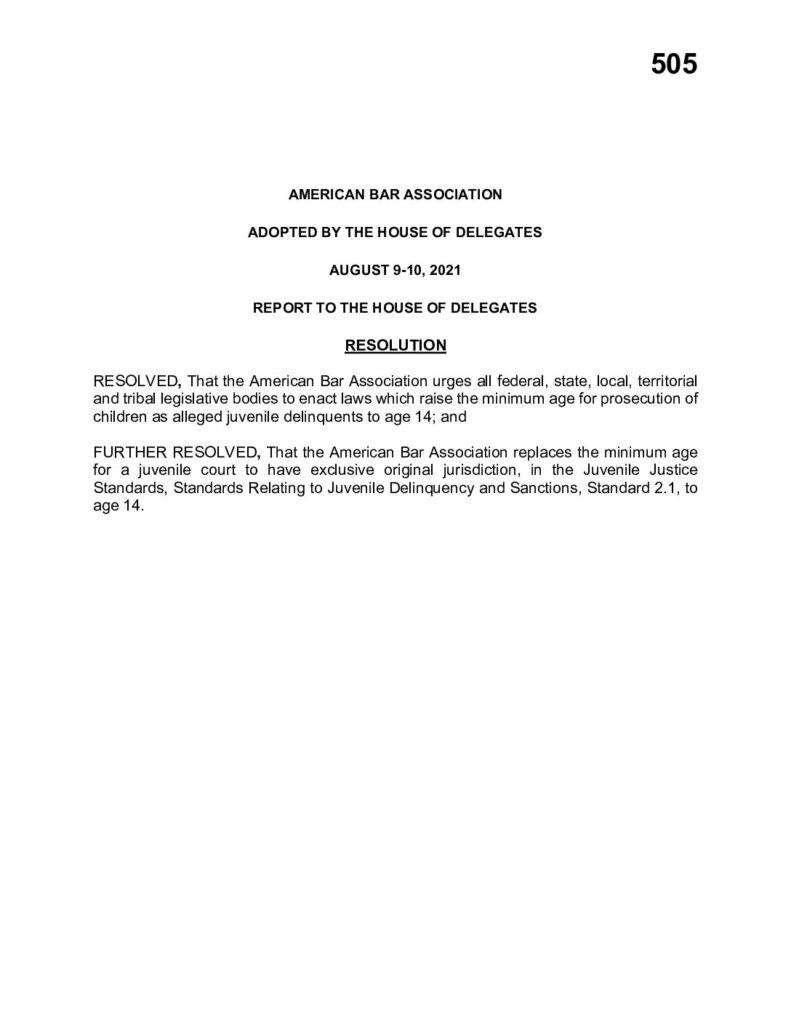
This resolution adopted by the American Bar Association on August 9-10, 2021, urges all “federal, state, local, territorial and tribal bodies to enact laws which raise the minimum age of prosecution of children as alleged juvenile delinquents to age 14.” From the resolution: “Children’s lack of risk perception, increased susceptibility to peer influence, and diminished…
