
Interrogation & Statements

School-based arrests have long made up a substantial number of cases in the juvenile legal system. This is particularly true for Black, Native/Indigenous, and Latino students; immigrant students, students with disabilities, LGBTQ+ students, and other historically marginalized students. Despite significant decreases in the rate of serious crimes and violence on school campuses over the past…

This checklist can be used to assess the presence of constitutional violations throughout the course of a client’s case. Please refer to the National Youth Defense Systems Standards and their accompanying User Guide for litigation strategies to challenge potential constitutional violations noted in this checklist.

This User Guide provides advocates with a step-by-step outline of how to actualize the vision of the National Youth Defense System Standards to equip and invest in youth defense teams to fight for the liberation of all youth.The User Guide outlines constitutional rights detailed in the System Standards, provides a checklist to assess the presence…


Outlines steps that states must take to comply with the minimum requirements of the U.S. Constitution to protect the rights of youth facing deprivations of liberty.


Sydney Baker et al., 29 Psychol. Pub. Pol’y & L. 320 (2023). This article is a call to action for the research community and advocates to engage youth and families with lived experience in the legal system in research on the impacts of race, development, and identity on youth interrogations. The authors detail the limitations…
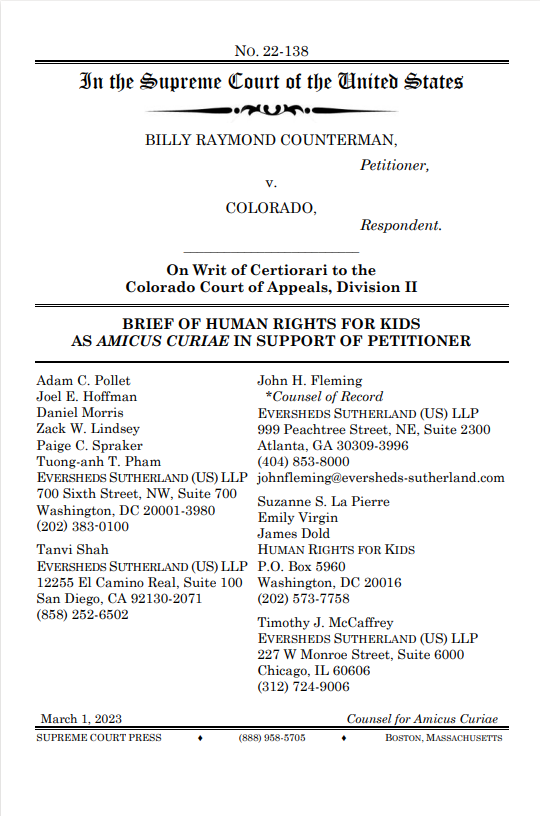

A fact sheet highlighting the need for young people to have counsel during interrogation.


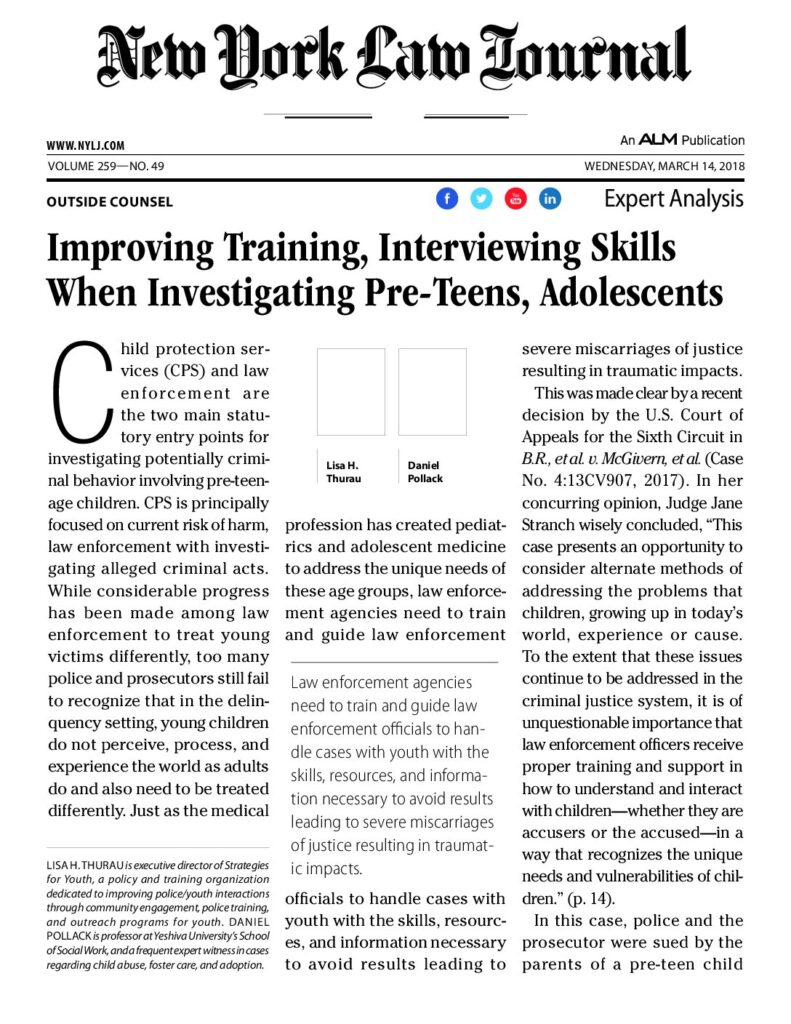

School-based arrests have long made up a substantial number of cases in the juvenile legal system. As a result, youth defenders often represent clients who have been seized, searched, or interrogated on school grounds. This guide provides a general overview of the law governing school seizures, searches, and interrogations and practice tips for challenging evidence…

From the memorandum opinion: “Gary Montgomery, a mentally disabled man, was arrested in 2012 and charged with the murder of Deoni Jones. After five and a half years of incarceration pending trial, a jury found Montgomery not guilty. Montgomery’s amended complaint alleges that defendant District of Columbia violated his rights under Title II of the…

The landmark case Miranda v. Arizona (1966), the United States Supreme Court required law enforcement agencies to advise all suspects of their “Miranda warnings,” or Constitutional protections, prior to interrogation. Previous research demonstrates that the Miranda warnings in the United States are largely unregulated and highlights how inadequate translations can impact comprehensibility. The present study…

From the introduction: “This project, which started in fall 2020, was initially intended to be significantly smaller than it turned out to be. Our coalition of authors intended to outline ways juvenile defenders could streamline their representation of youth charged with sex offenses. As the project gained momentum, this team of trial attorneys, social workers,…
- « Previous
- 1
- 2
- 3
- Next »
