
California
California | Oakland/Alameda County Organization Description: Communities United for Restorative Youth Justice (CURYJ) is a community-based organization that engages and builds leadership among young people at-risk for or directly impacted by the legal, immigration, and foster care systems to advance efforts to end youth criminalization and mass incarceration. CURYJ infuses political education, restorative justice practices,…
California | San Diego County Organization Description: Mid-City CAN is a community-based non-profit organization based in City Heights that serves San Diego County. Mid-City CAN’s mission is to build a safe and healthy community through collaboration, advocacy, and organizing. Mid-City accomplishes this through momentum teams, issue-based action groups, where Mid-City Can staff and community members…
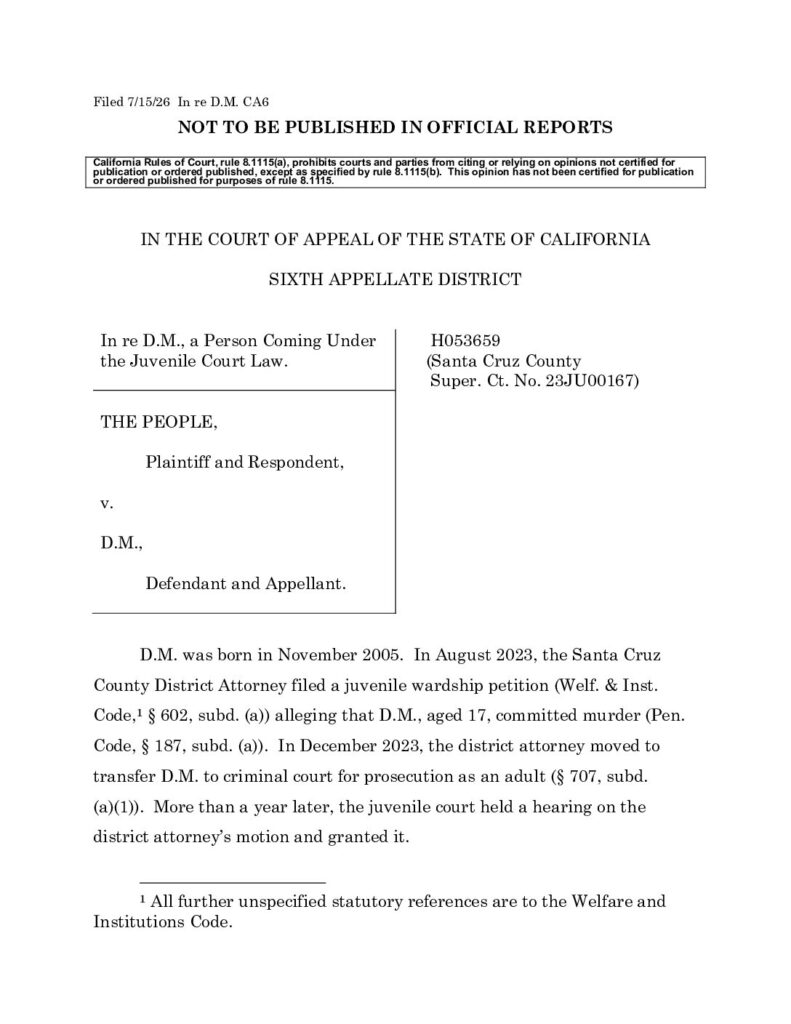
The California 6th District Court of Appeal reversed a transfer order, clarifying that the prosecution bears the burden of proof to establish by clear and convincing evidence that a youth is not amenable to rehabilitation under the jurisdiction of juvenile court in order to transfer a youth to adult court. The court stated in relevant…
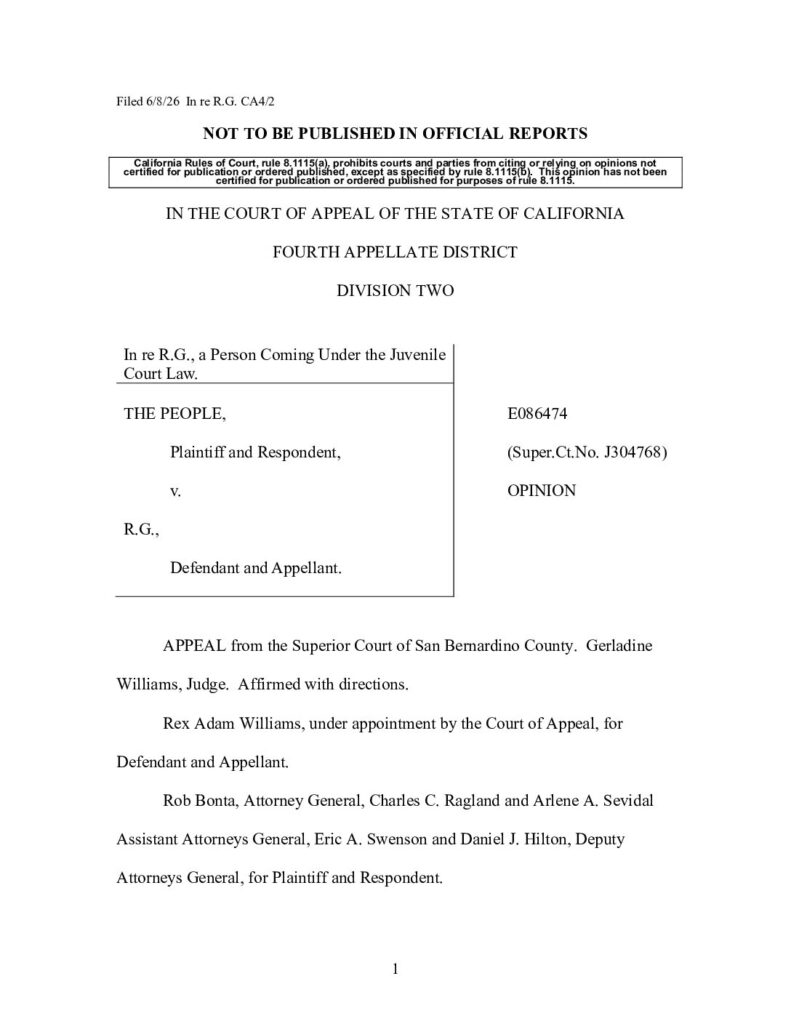
The California 4th District Court of Appeal struck down a probation condition that prohibited a youth from associating with any known gang members because the condition was not reasonably related to the underlying offense. The court stated in relevant part: When a gang condition imposed by the juvenile court involves non-criminal conduct and prohibits a…
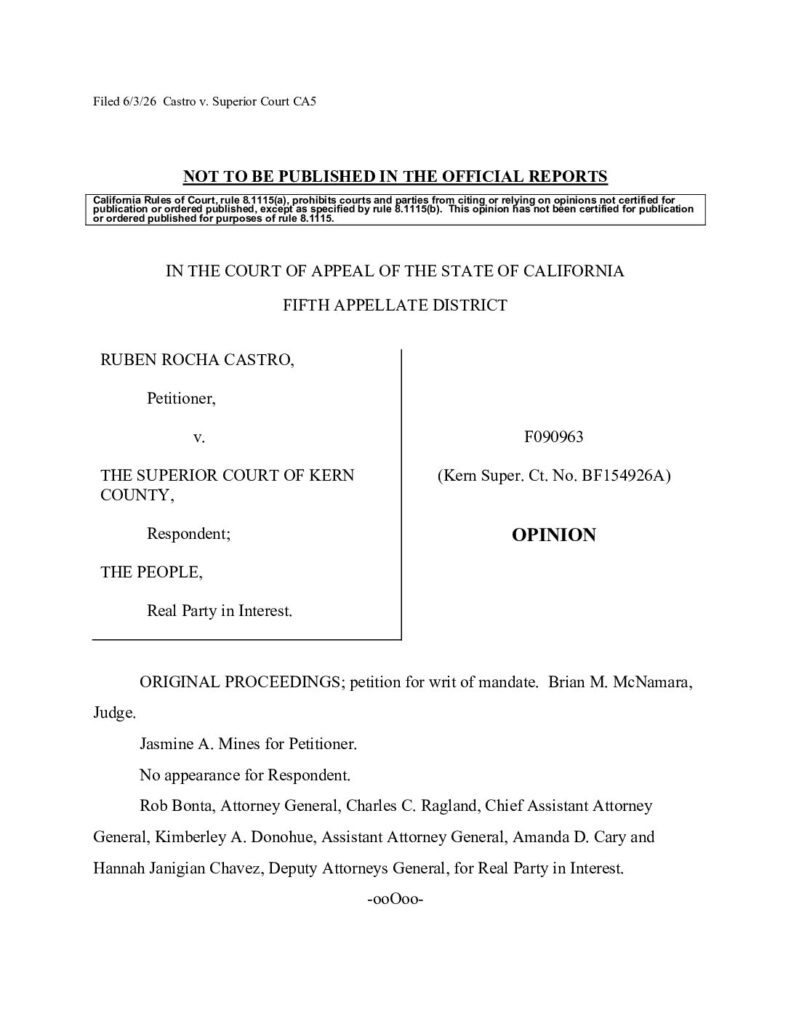
The California 5th District Court of Appeal held that the defense was entitled to discovery related to racial disparities in plea deals to voluntary manslaughter, finding that defense’s statistical evidence showing that Latine individuals in Kern County were more likely to be charged with murder and receive longer sentences than white individuals satisfied the “plausible…
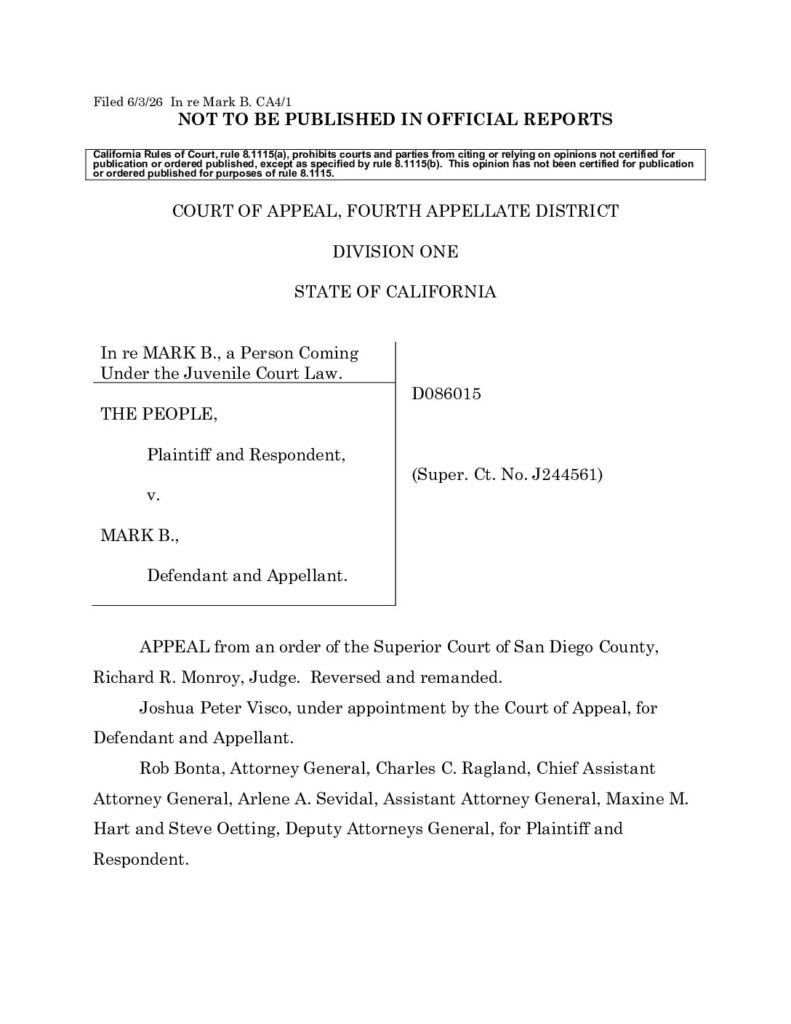
The California 4th District Court of Appeal found struck down a probation condition requiring a youth to “participate in counseling and/or an education program…as directed by your probation officer,” finding that the condition is too indefinite. The court stated in relevant part: We believe this condition leaves too much to the probation officer’s discretion because…
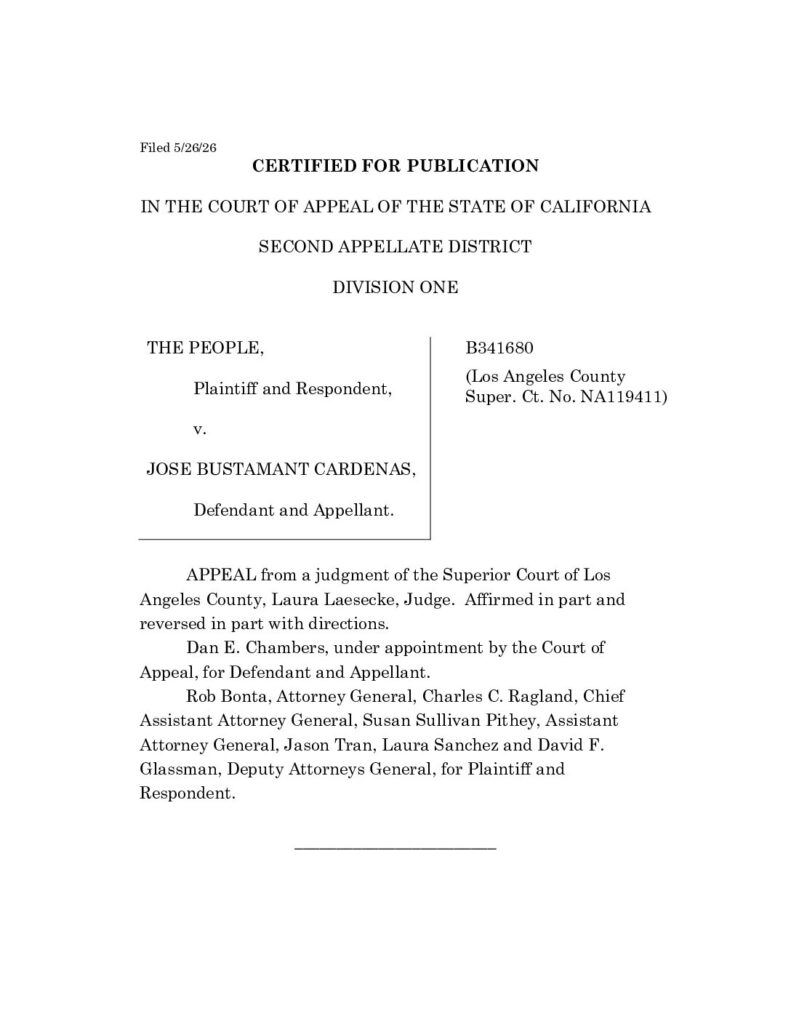
The California 2nd District Court of Appeal vacated a sentence enhancement, finding that the trial court erred in denying defense counsel the opportunity to present a closing argument. The court stated in relevant part: Under the determinate sentencing scheme, the court may not impose an upper term sentence unless an aggravating circumstance applies. (§ 1170,…
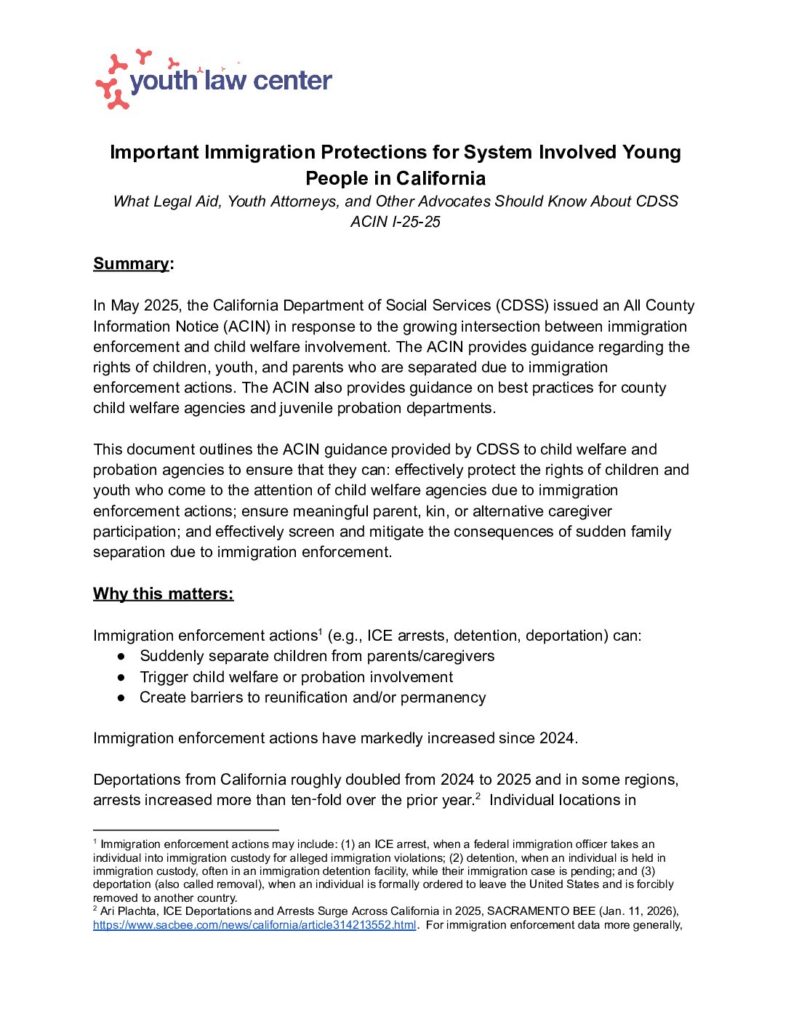
From the Summary of this practice guide by Youth Law Center: “In May 2025, the California Department of Social Services (CDSS) issued an All County Information Notice (ACIN) in response to the growing intersection between immigration enforcement and child welfare involvement. The ACIN provides guidance regarding the rights of children, youth, and parents who are…
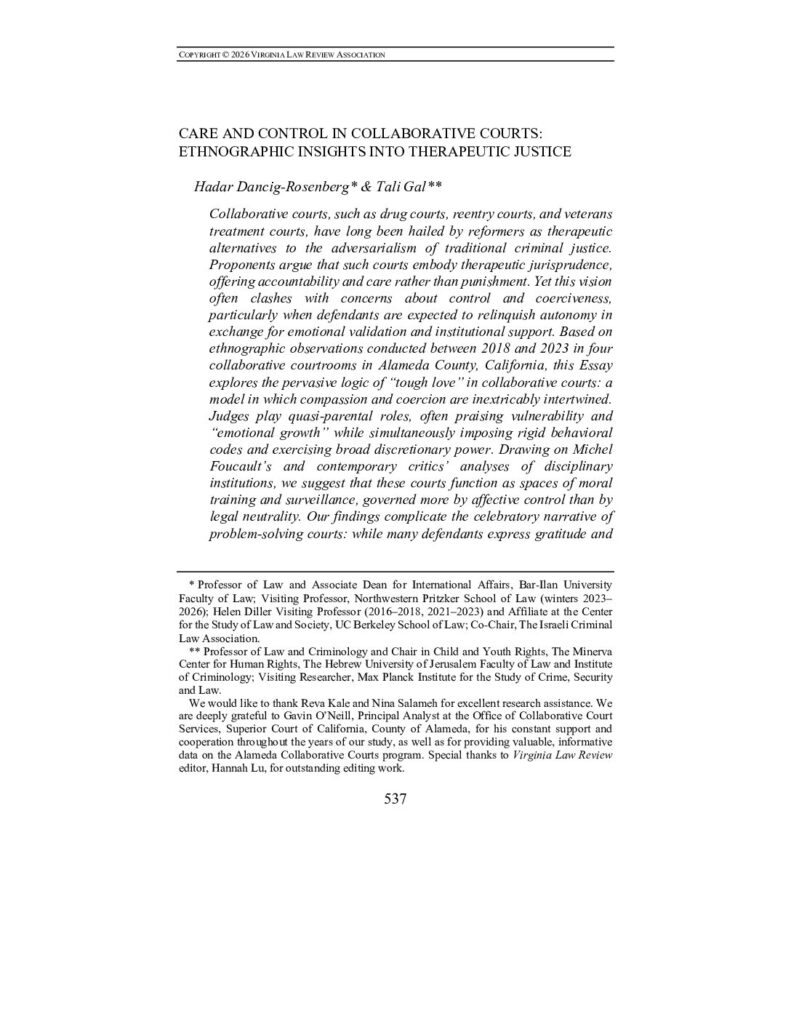
“Collaborative courts, such as drug courts, reentry courts, and veterans treatment courts, have long been hailed by reformers as therapeutic alternatives to the adversarialism of traditional criminal justice. Proponents argue that such courts embody therapeutic jurisprudence, offering accountability and care rather than punishment. Yet this vision often clashes with concerns about control and coerciveness, particularly…

From the Introduction of the report by the Samuelson Law, Technology & Public Policy Clinic at UC Berkeley School of Law: “The paper proceeds as follows: • Part I describes current community supervision technologies, including location tracking, alcohol monitoring, and drug testing, and the reliability concerns with each. • Part II describes and compares the…

The California Supreme Court found that a small amount of loose marijuana scattered on the rear floor of a car does not violate a state statute prohibiting driving while under the impairment of marijuana. The court further held that these circumstances did not create probable cause to conduct a search of the vehicle. The court…
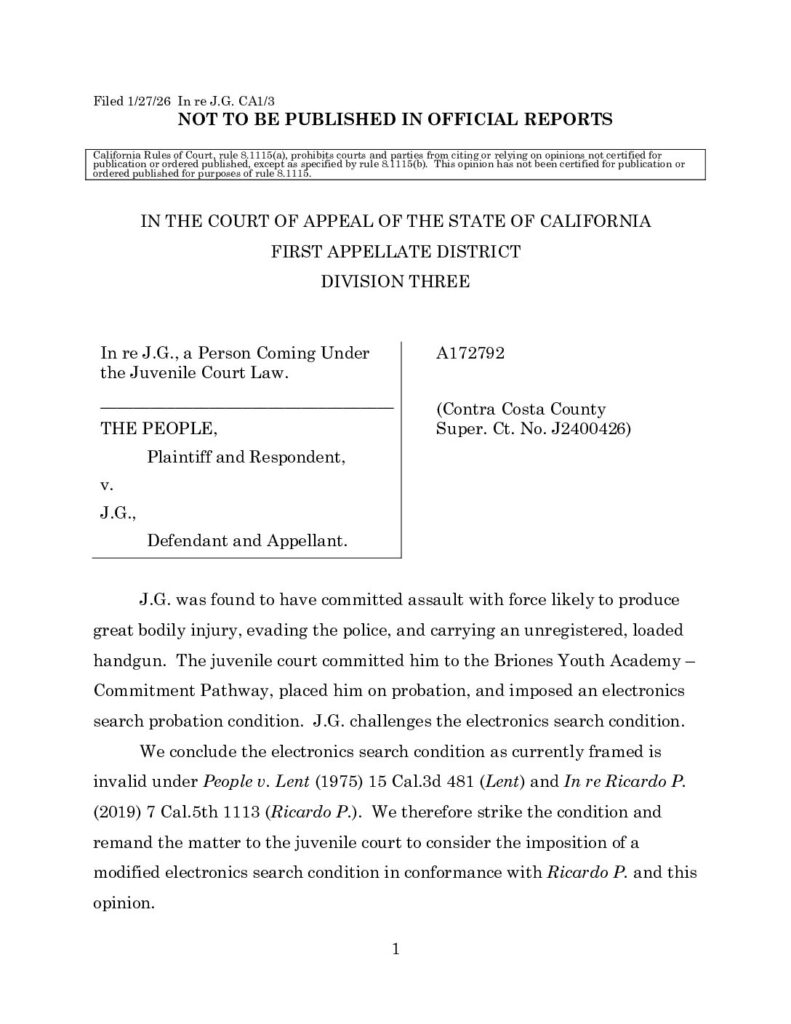
The California Court of Appeals, First District held the courts imposition of an electronics search probation condition invalid, finding under the first and third prongs of the Lent test that the condition “1)has no relationship to the crime which the offender was convicted, and 3) requires or forbids conduct which is not reasonably related to…
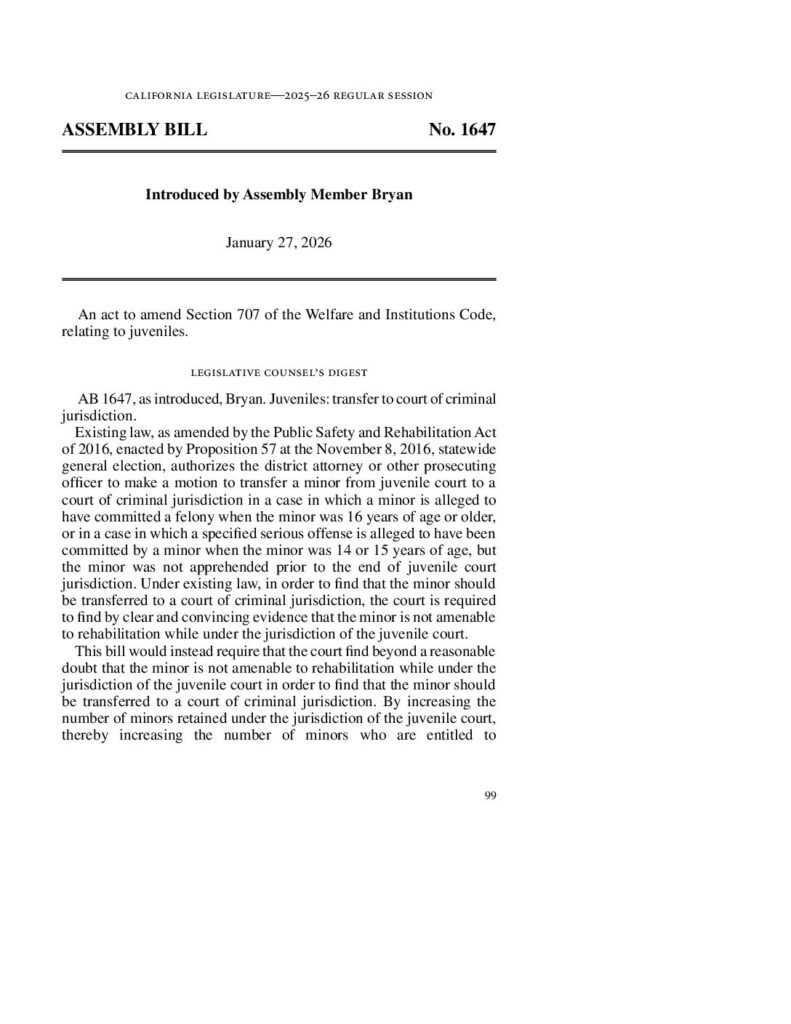
This proposed legislation from California amends the transfer law (CA WIC § 707(a)) to require a judicial finding of proof beyond a reasonable doubt, instead of the lesser standard of clear and convincing evidence, that a minor is not amendable to rehabilitation while in juvenile court.
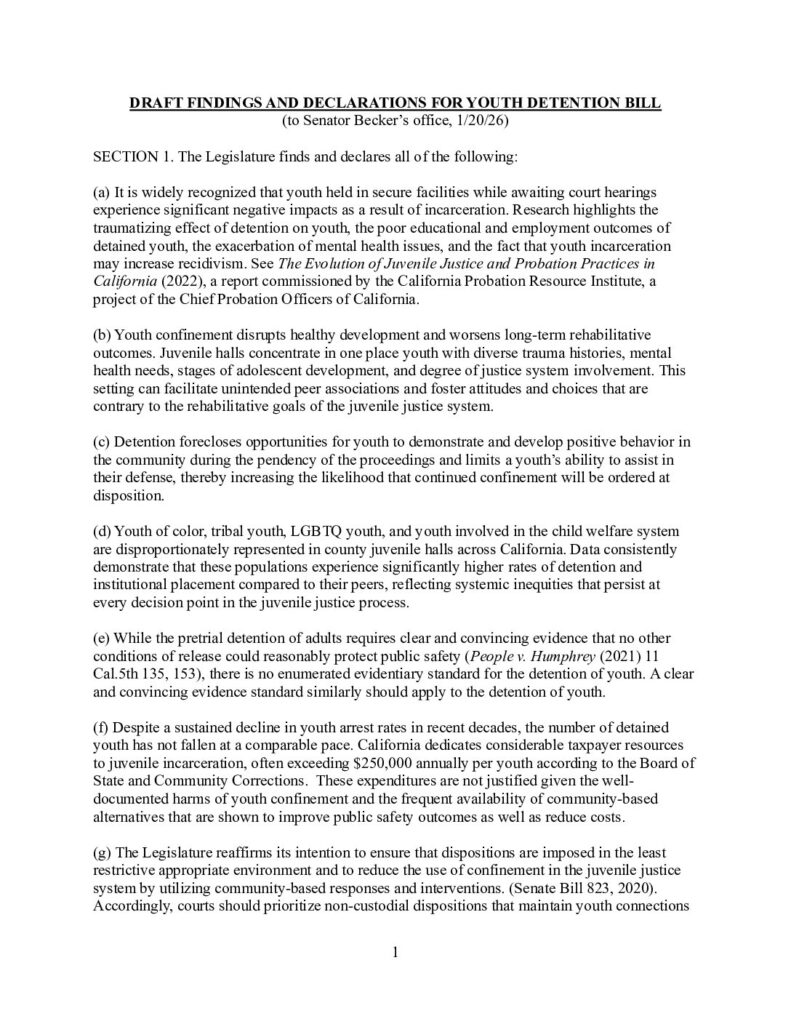
This proposed draft of a legislative “findings and declarations” document for a youth detention and disposition reform bill in California affirms the legislature’s commitment to make placement in juvenile detention “the exception, not the rule.” The draft findings rely on research regarding the impact of detention on young people, racial justice, developmental science, and California…

The California Second District Court of Appeal reversed the juvenile court’s adjudication and disposition orders related to a felony murder charge, finding that the record lacked substantial evidence that the youth acted with reckless indifference to human life. The court stated in relevant part: “Considering the totality of the circumstances, and measured against Emanuel‘s guidance, the…

The Fifth District Court of Appeal held that gang enhancements may form the basis of a petition for habeas relief and appointment of counsel under the state’s Racial Justice Act. The court stated in relevant part: “The present petition alleges racially disparate treatment, and it identifies the statutory subsections implicated as the basis for the…
The California Supreme Court held that the imposition of punitive fines and ancillary costs ordered as part of a criminal sentencing raises equal protection issues that require courts to consider ability to pay before imposing fines and costs. The Court stated in relevant part: “In sum, in light of the Legislature’s provision of fee waivers…

The 6th District Court of Appeal in California reversed an order denying a resentencing petition based on trial counsel’s failure to raise the implications of youthfulness and adolescent development in disputing implied malice in a felony murder case. The court stated in relevant part: “Lopez, 20, participated in the attack on Sandoval with two peers.…

This memorandum proposes language for a detention and disposition reform bill in California. The memorandum proposes four areas the detention reform bill aims to change including: 1) clarifying the legal standard for pre-adjudication detention of youth, 2) clarifying the juvenile court’s authority to determine whether pre-adjudication detention is still necessary, 3) clarifying the standard at…

The Third District Court of Appeal in California vacated a felony murder conviction based on insufficient evidence to support the state’s required “reckless indifference” finding, which must also take into consideration youthfulness at the time of the incident. The court stated in relevant part: “Finally, defendant’s youth also cuts against a finding of reckless indifference. In Moore, supra,…

The First District Court of Appeal in California held that defense counsel was ineffective for failing to present mitigation evidence at a resentencing hearing. The court stated in relevant part: “The judge might also have struck the enhancement as a reasonable response to the evidence of defendant’s intellectual disability and the abuse or neglect he…
The Third District Court of Appeal in California held that the plain language of California’s state statute authorized the juvenile court to order the County to pay for a young person’s housing. The court explained in relevant part: “As evidenced by both the plain language and the history of section 900, subdivision (b), the Legislature…
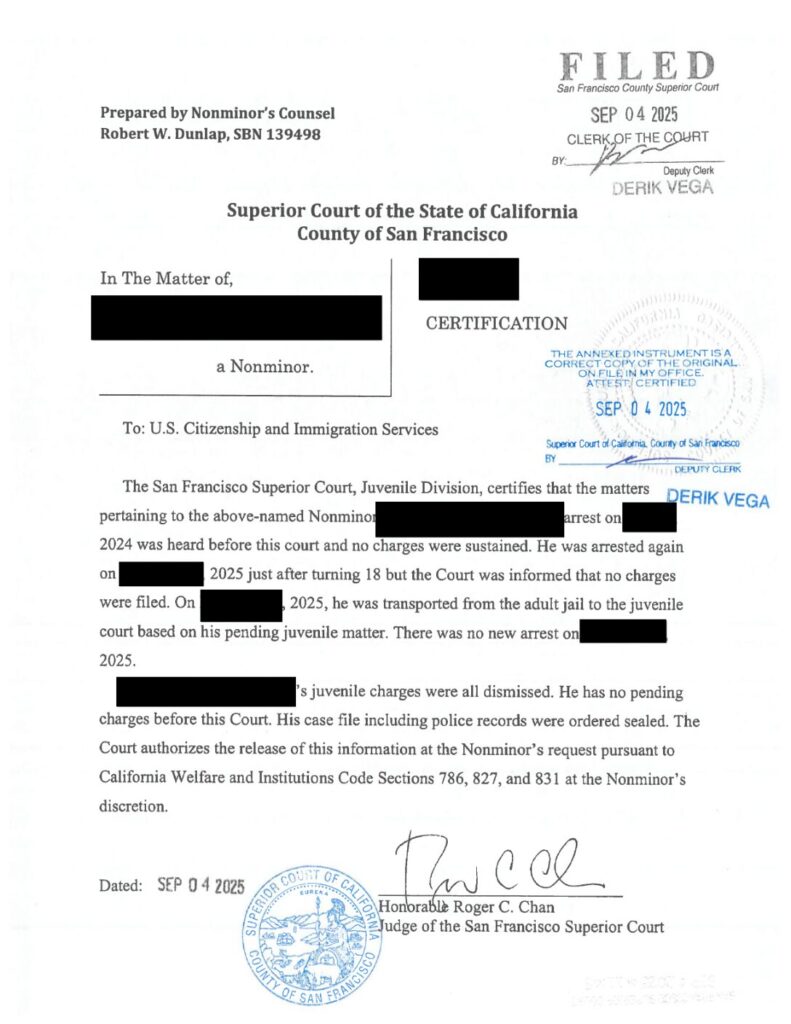
This is a sample certification order from the San Francisco Superior Court, Juvenile Division, which authorizes the release of requested information to U.S. Citizenship and Immigration Services (USCIS).

The United States District Court in the Eastern District of California granted a preliminary injunction in immigration removal proceedings for minor T.M., ordering her release. The District Court offered the following language in support: “Petitioner R.D.T.M. is a noncitizen who entered the United States in 2023 as an unaccompanied minor. After entry, she was briefly…
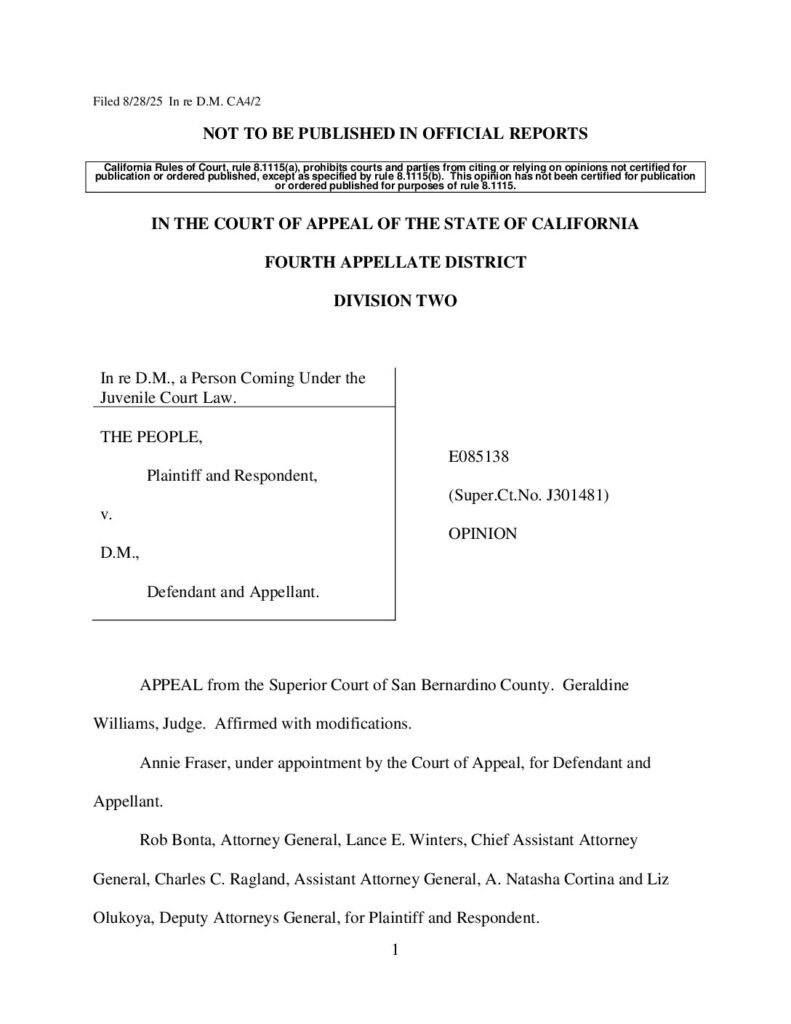
The 4th District Court of Appeal in California struck a weapons probation condition and modified an association condition and offered the following language in support. “A term of probation is invalid if it: “‘(1) has no relationship to the crime of which the offender was convicted, (2) relates to conduct which is not in itself criminal, and (3) requires…
