
Interviewing

Guides youth defenders on how to screen for SIJS eligibility and obtain a SIJS predicate order in juvenile court to support a young person’s application for immigration relief.

The 1st District Court of Appeals of Illinois held that an individual is entitled to a new trial due to ineffective assistance of counsel where defense counsel failed to communicate sufficiently with their client and investigate a witness that was flagged by the client. The court stated in relevant part: An attorney’s failure to communicate…

In October 2025, the Gault Center convened over three hundred youth defense lawyers and advocates at our annual Youth Defender Leadership Summit. Together, we practiced the cultivation of community in service of building a more just, more liberated, and more human humanity for all children and for us all. This resource captures the shared learnings…

This is a sample “youth report to the court” document (created by a Juvenile Court Judge in Iowa), for youth who are currently under the juvenile court jurisdiction. This report is provided to young people when they appear in court, asking if they would like the space to share pertinent information and ask questions of…

This resource from Lambda Legal and the American Bar Association Children’s Rights Litigation Committee gives attorneys an overview on how to approach client interviewing and relationship building in a respectful and trauma-informed way. The page discusses the importance of identity for young people’s well being and on their legal cases. It also reviews basic interview…

The Gault Center released an update on the state of youth defense in Kansas, which centers the perspectives and experiences of young people impacted by the juvenile legal system, through a collaborative effort with Progeny, a youth-adult partnership in Kansas, TerraLuna Collaborative, a research consulting group, and Mulberry Art Gallery, which focuses on supporting emerging…

Provides tangible opportunities probation officers have to support positive youth development equitably for all youth, regardless of immigration status and circumstances beyond a young person’s control.

A companion checklist for probation officers, walking through key considerations when working with noncitizen youth.

Offers an overview of the rights of noncitizen youth and strategies for youth defenders to safeguard these rights and mitigate harm throughout the course of representing youth in juvenile court.


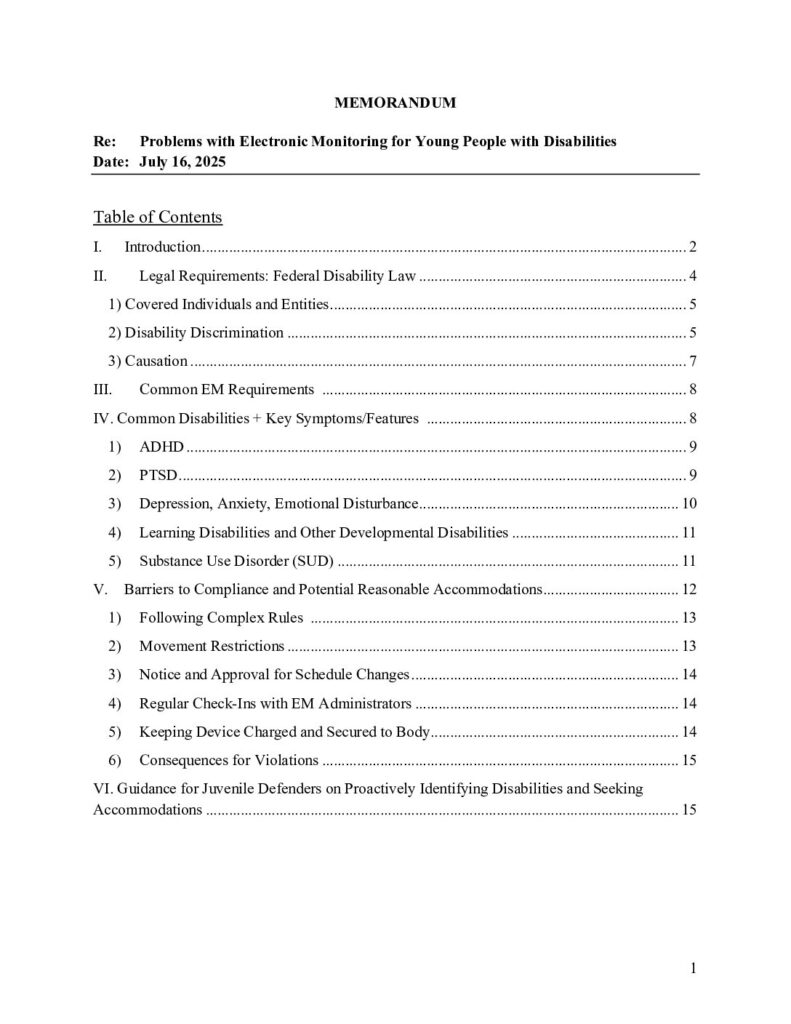
This memorandum from the American Civil Liberties Union provides litigation strategies for defenders challenging electronic monitoring conditions for young people with disabilities. From the Introduction to the memorandum: “Overall, this research project/memo aims to reduce the use of EM for kids with disabilities. Although there is no straightforward disability or accommodations-related argument for ending EM…


“This paper describes a community-based participatory research (CBPR) approach to evaluation used by an academic-practitioner partnership to refine the logic model for a violent crime reduction program and develop associated performance measures. Through qualitative and quantitative data collection, including semi-structured interviews, engagement with program stakeholders (e.g., program leaders and staff, peer researchers, community residents), community…

A resource guide to navigate a personal or group reading journey of Norma Wong’s “When No Thing Works.” This guide provides questions to accompany each chapter of the book as well as resources for hosting your own Navigation Circle.

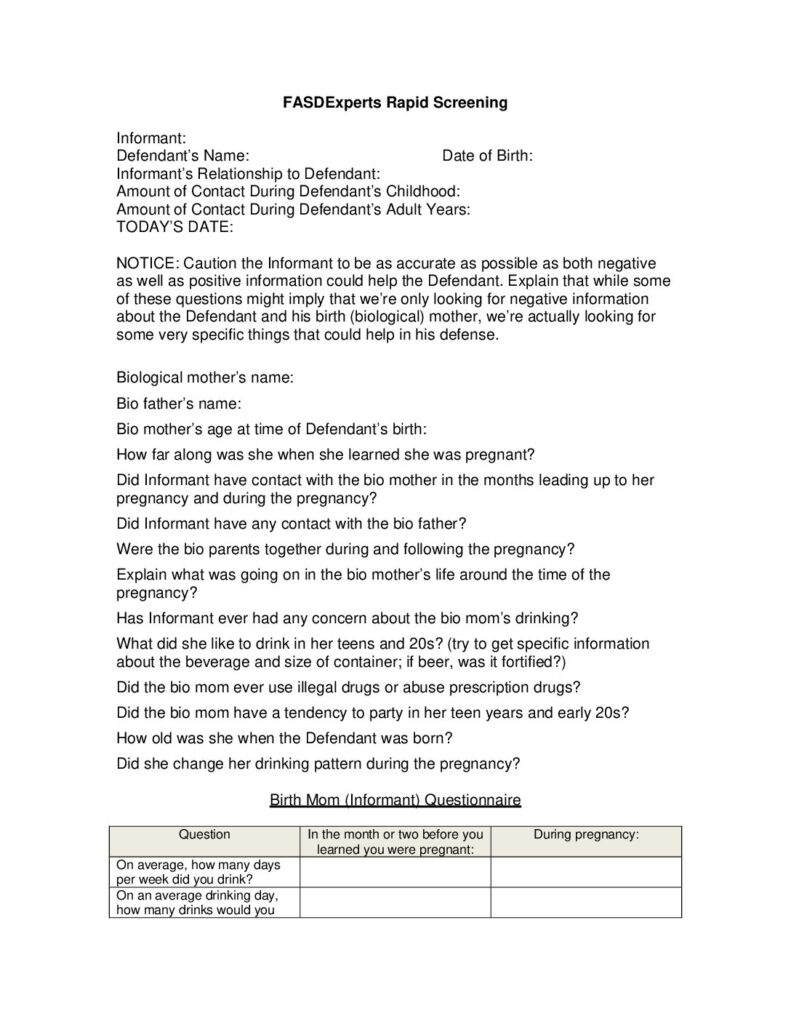
This is an example of a screening tool to be used in collaboration with defense experts, social work staff, and attorneys when gathering information as to whether a young person may have fetal alcohol spectrum disorder (FASD).
This article from Dr. Antoinette Kavanaugh and Dr. Thomas Grisso examines the roles experts can play in “Montgomery” resentencing cases. From the article: “In summary, experts can play an important role in the approximately five hundred Miller/ Montgomery cases pending in Pennsylvania’s courts. Experts retained by the defense can serve as educators or evaluators. In…

Expert Affidavit of Susan L. Burrell on Standards of Competence in the Legal Representation of Youth
Expert Affidavit of Susan L. Burrell for a young person’s case in Colorado claiming ineffective assistance of counsel. The claims included a failure to fulfill basic duties to the client, failure to investigate, failure to retain expert witnesses, and a failure to assure that a plea was voluntary, knowing and intelligent.

The delinquent act itself is often the primary basis for determining intention and competency of children under 18 in adult or juvenile court. But behaviors result from one or more of a diverse range of factors, each of which has different effects on decision-making. The capacity of juveniles to plan or to stop an action…
