

From the introduction: “In this policy brief, we will focus more precisely on the question of who has been most affected by the growth of the corrections system, and illustrate how the impact of the decision to fund the prisons over schools has been concentrated among Americans with little education. The improved high school completion…

The delinquent act itself is often the primary basis for determining intention and competency of children under 18 in adult or juvenile court. But behaviors result from one or more of a diverse range of factors, each of which has different effects on decision-making. The capacity of juveniles to plan or to stop an action…

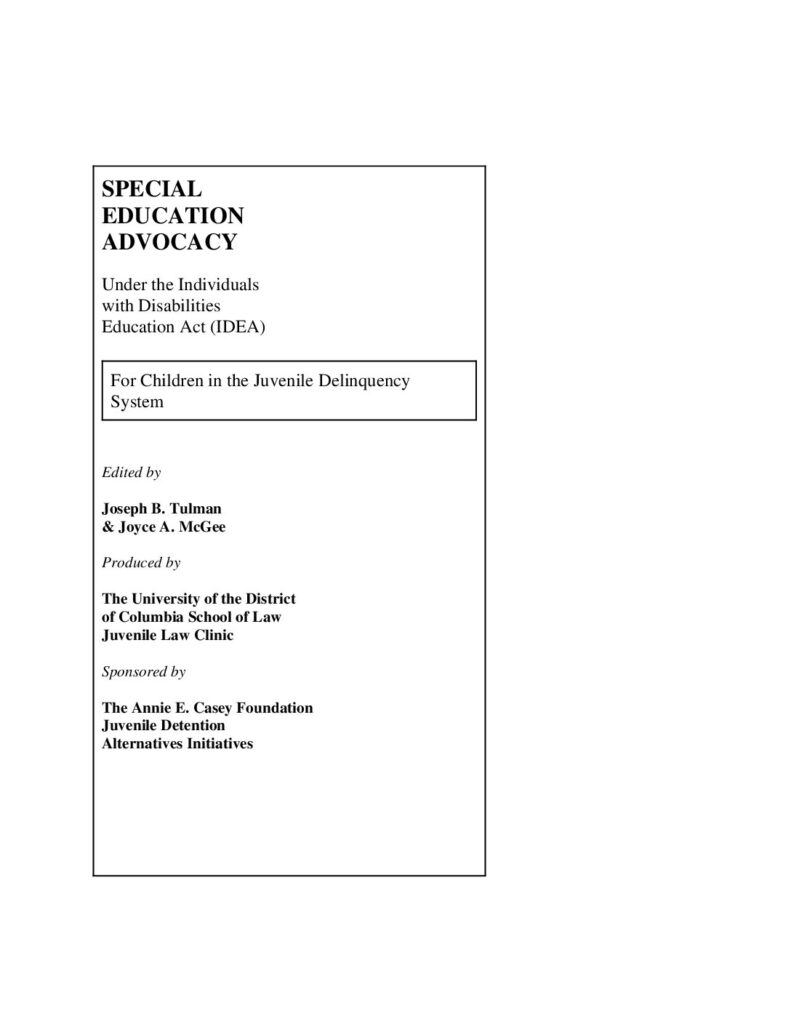
The intended audience for this manual is defense attorneys who represent children in delinquency matters and in status offenses; the intended audience includes also disability rights attorneys and other public interest attorneys with an interest in representing children who are enmeshed in the delinquency system. Children strive to be productive and to be accepted. Children…

The U.S. Supreme Court held the 4th Amendment of the U.S. Constitution applies to searches by school officials and is not limited to searches carried out by law enforcement officers. The Court reasoned that children in school have a reasonable expectation of privacy, and that searches must be reasonably justified at inception and in its scope so as not to be excessively intrusive given a child’s age,…
- « Previous
- 1
- …
- 4
- 5
- 6
