
From the abstract: “Tens of thousands of people incarcerated in jails and prisons throughout the United States have one or more communication disabilities, a term that describes persons who are deaf, hard of hearing, blind, low vision, deafblind, speech disabled, or otherwise disabled in ways that affect communication. Incarceration is not easy for anyone, but…

From the introduction: “This Essay centers disability as a lens for analysis in Fourth Amendment jurisprudence. This Essay discusses the ways in which disability mediates interactions with law enforcement and how Fourth Amendment doctrine renders disabled people vulnerable to police intrusions and police violence. More specifically, this Essay critiques the Terry doctrine, consensual encounters, consent…


This Article explores how race functions to ascribe and criminalize disability. It posits that for White students in wealthy schools, disabilities or perceived disabilities are often viewed as medical conditions and treated with care and resources. For students of color, however, the construction of disability (if it exists) may be a criminalized condition that is…

On November 15, 2018, a joint settlement was reached to address the conditions of confinement in Florida’s Palm Beach County Jail. The settlement agreement outlines comprehensive changes in the facility, including giving young people time and access to appropriate recreational activities outside of their cells during school hours. The settlement also limits the amount of…

On October 1, 2018, the DOJ filed a Statement of Interest in a federal class action lawsuit on behalf of young people confined in Florida’s Palm Beach County Jail. The DOJ highlights the protections afforded to students with disabilities under the Individuals with Disabilities Education Act (IDEA), and the “independent and shared” responsibilities and obligations…

On June 21, 2018, a federal class action lawsuit was filed on behalf of young people confined in the Palm Beach County Jail, alleging violations of their 8th and 14th Amendment rights under the U.S. Constitution. The plaintiffs are youth whose cases have been direct-filed in adult court in Palm Beach County, Florida. The complaint…


This article from the American Criminal Law Review “argues that our judicial system and legislatures, when crafting juvenile justice law, policy, and practice, cannot stop with merely incorporating the research behind the impact of normal adolescent development on the decisionmaking abilities of youth; they must also incorporate the research behind how the experience of trauma…
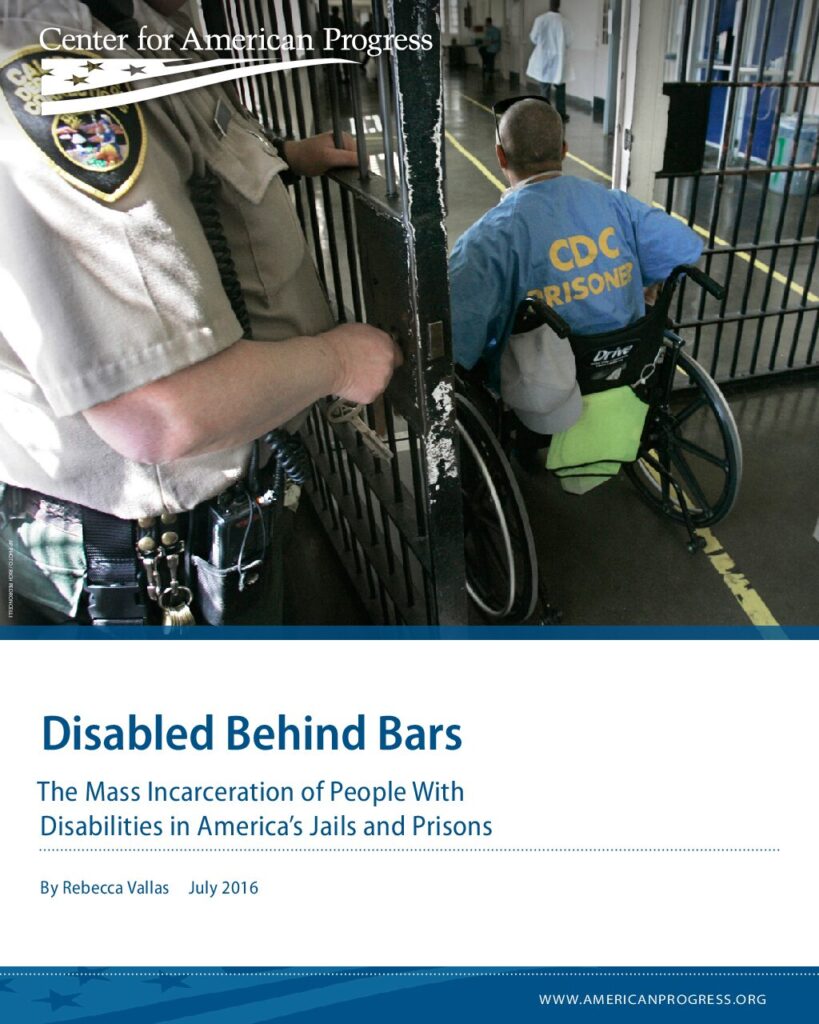
From the introduction: “This report highlights steps policymakers can take to combat inappropriate and unjust incarceration and criminalization of people with disabilities, as well as steps to ensure appropriate and humane treatment of people with disabilities throughout the justice system, from police practices to courts, conditions in jails and prisons, and reentry.”
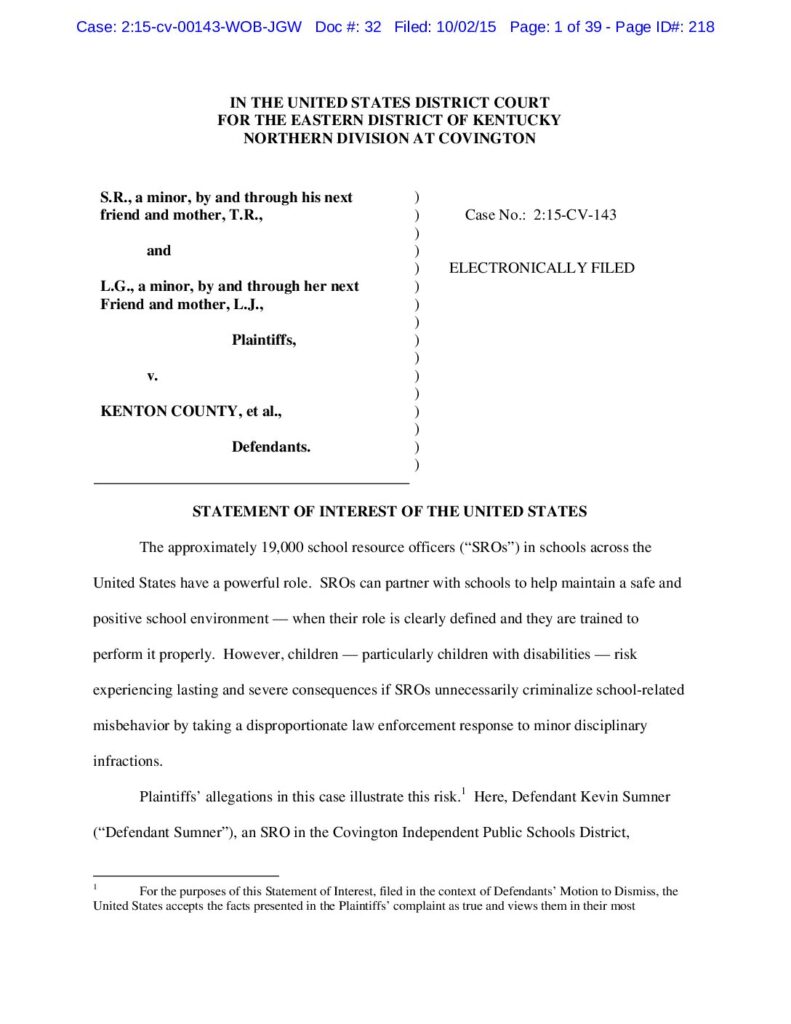
On October 2, 2015 the DOJ filed a Statement of Interest in a federal lawsuit on behalf of two students who were seized and handcuffed by a school resource officer (SRO), alleging violations under the Fourth and Fourteenth Amendments and Title II of the Americans with Disabilities Act (ADA). The DOJ asserted that the Sheriff’s…

On February 13, 2014, the DOJ filed a Statement of Interest in a federal class action lawsuit on behalf of young people confined in the Contra Costa County Juvenile Hall, alleging violations of the Individuals with Disabilities Education Act (IDEA). The DOJ reiterated that “Defendants (Contra Costa County) are required to provide special education and…

The intended audience for this manual is defense attorneys who represent children in delinquency matters and in status offenses; the intended audience includes also disability rights attorneys and other public interest attorneys with an interest in representing children who are enmeshed in the delinquency system. Children strive to be productive and to be accepted. Children…
- « Previous
- 1
- 2
