





An annotated bibliography of research on transfer/waiver from Dr. Antoinette Kavanaugh Ph.D., ABPP including research on transfer and recividism, studies on how juvenile court judges weigh transfer factors, and demographic data and analysis on who is transferred to adult court.
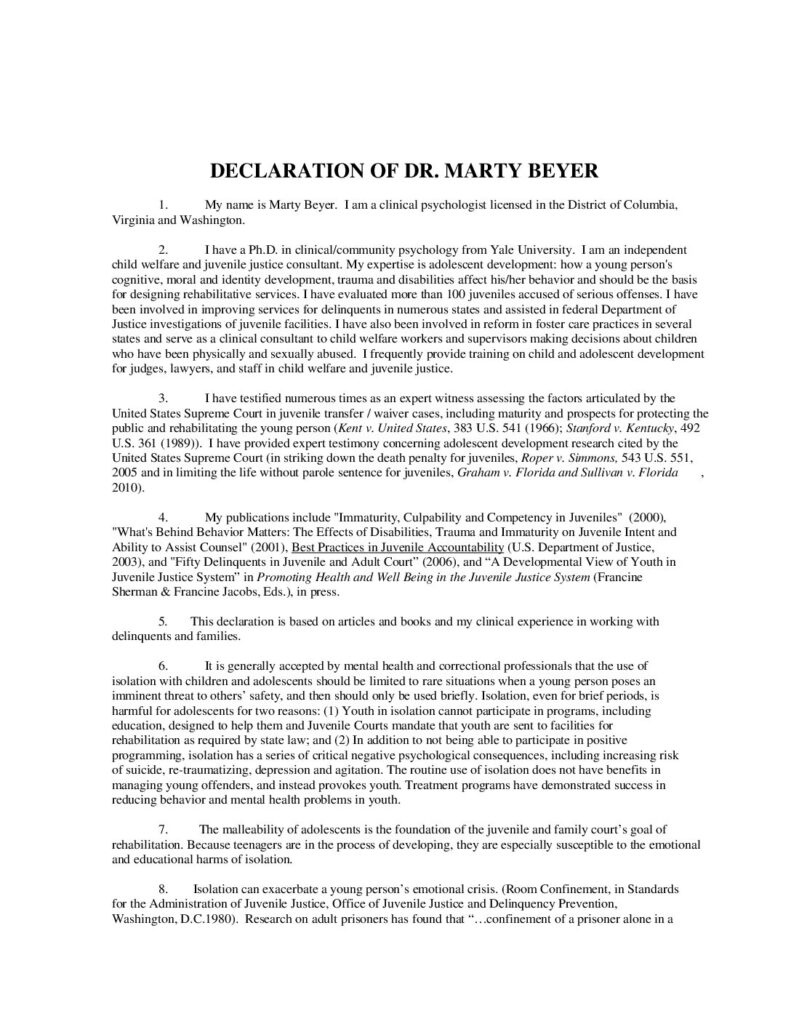
An expert declaration on the harms of the use of isolation on youth in juvenile correctional facilities.

School-based arrests have long made up a substantial number of cases in the juvenile legal system. As a result, youth defenders often represent clients who have been seized, searched, or interrogated on school grounds. This guide provides a general overview of the law governing school seizures, searches, and interrogations and practice tips for challenging evidence…

From the introduction: “In collaboration with the Refugee and Immigrant Center for Education and Legal Services (RAICES), the Child Health Immigration Research Team based out of the Massachusetts General Hospital (MGH) Asylum Clinic at the MGH Center for Global Health and the FXB Center for Health and Human Rights at Harvard University, analyzed the medical…

From the introduction: “In the legal field, trauma-informed care relates to how we, as legal practitioners, communicate with, listen to, empower, and support our clients. Trauma-informed lawyering entails that we, as lawyers, understand that our clients have undergone trauma and that we want to represent our clients in a way that provides safety, trust, and…

From the introduction: “This brief is an accompaniment to a short video documentary, ‘Don’t Abandon Us: Addressing Youth, Crime, and Trauma.’ Both designed to help increase awareness among decision makers on how childhood trauma and adverse experiences can contribute to youth crime and future legal system involvement. In a moment of growing concern about crime,…


The Center for Justice Innovation conducted an exploratory, participatory action research study of 103 youth ages 15-24 who reported carry guns in a neighborhood of Brooklyn. The research evaluates why these youth carry guns and proposing a collaborative approach to public safety. From the report: “The increase in gun violence experienced in many U.S.…
