
This expert affidavit from Dr. Gwen Wurm, a pediatrician licensed in the state of Florida, describes the impact that indiscriminate shackling has on adolescent, cognitive, and psychosocial development. The affidavit also describes the traumatizing effects of shackling on children who may have experienced abuse, neglect or other mental distress.

This expert affidavit from Dr. Donald Rosenblitt, a child psychiatrist and clinician licensed in North Carolina. Dr. Rosenblitt discusses the impact of shackling young people in juvenile court proceedings and how shackling negatively impacts a young people’s positive development, self-perception, overall health, and views of the legal system.

From the introduction: ” Recent Supreme Court cases have recognized the science underlying the common-sense notion that children are not “little adults.” Their brains function in a completely different manner than those of adults. In 2005, the Court abolished the juvenile death penalty and recognized the neuroscience underlying the claim that those under the age…
This expert affidavit from Dr. Eugene Griffin, an attorney and clinical psychologist and Director of Research for the ChildTrauma Academy, discusses the punitive and traumatic impact of indiscriminate shackling. Dr. Griffin highlights the impact of indiscriminate shackling on juvenile court proceedings, including making the court less safe, hampering a young person’s ability to effectively communicate…

This expert affidavit from Dr. Julian Ford, a clinical psychologist and professor of psychiatry at the University of Connecticut School of Medicine, discusses the stigmatizing experience of shackling on young people and the impact it can have on their sense of self and willingness to trust adults and participate as members of their community. Furthermore,…

This article summarizes a study conducted by Yale Law School, Columbia Law School and Mailman School of Public Health at Columbia University, examining the influence of street stops by police on the legal socialization of adolescents and emerging adults ages 18-26 in New York City. The study showed an association between the number of police…
From the abstract: “The study of adverse childhood experiences (ACEs) and their negative repercussion on adult health outcomes is well documented. In a population of insured Californians, a dose-response relationship has been demonstrated among 10 ACEs and a host of chronic physical health, mental health, and behavioral outcomes. Less widely studied is the prevalence of…
From the summary: “It is critical for judicial officers, attorneys, probation officers, child welfare, and other professionals who work with youth to be knowledgeable about the impact of trauma on children’s development and on their emotional, behavioral, and cognitive functioning. Understanding trauma and the potential impacts on children who come before the juvenile and family…
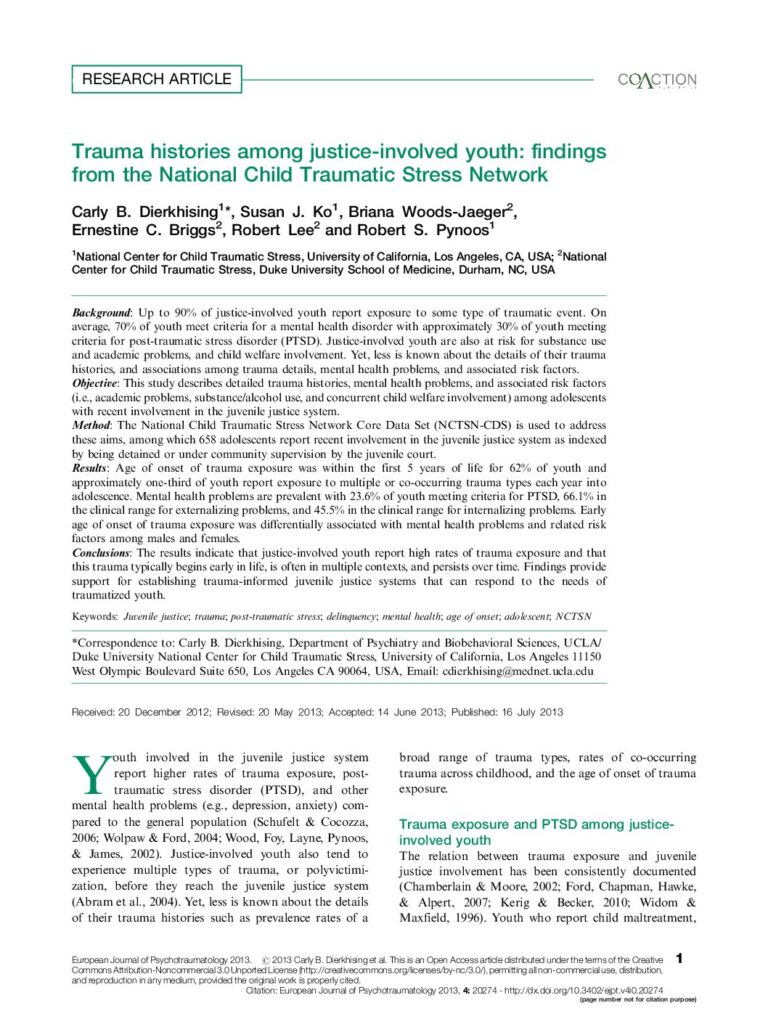
From the conclusion: “The results indicate that justice-involved youth report high rates of trauma exposure and that this trauma typically begins early in life, is often in multiple contexts, and persists over time. Findings provide support for establishing trauma-informed juvenile justice systems that can respond to the needs of traumatized youth.”

Expert Affidavit of Susan L. Burrell on Standards of Competence in the Legal Representation of Youth
Expert Affidavit of Susan L. Burrell for a young person’s case in Colorado claiming ineffective assistance of counsel. The claims included a failure to fulfill basic duties to the client, failure to investigate, failure to retain expert witnesses, and a failure to assure that a plea was voluntary, knowing and intelligent.


The delinquent act itself is often the primary basis for determining intention and competency of children under 18 in adult or juvenile court. But behaviors result from one or more of a diverse range of factors, each of which has different effects on decision-making. The capacity of juveniles to plan or to stop an action…
- « Previous
- 1
- …
- 6
- 7
- 8
