
Void for Vagueness
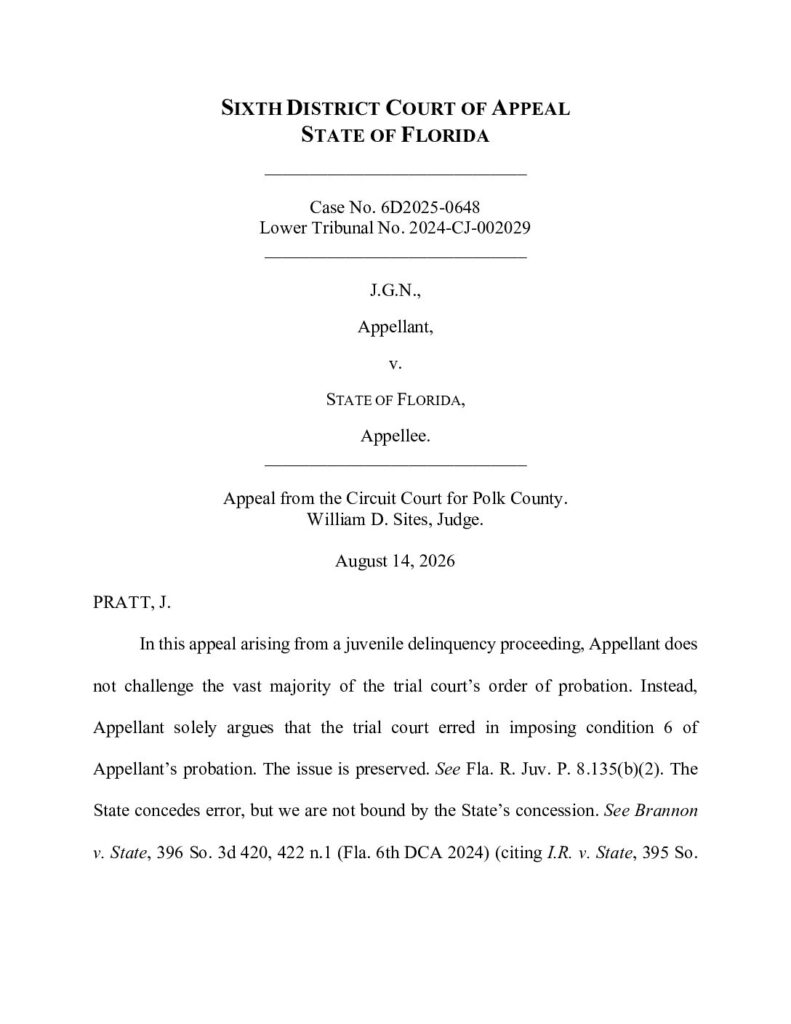
The Florida 6th District Court of Appeal held that a probation condition “prohibiting [the youth] from associating with anyone designated by the juvenile probation officer or a parent/guardian” was invalid because the condition is not reasonably related to the underlying adjudication or “future criminality” as required under state statute. The court stated in relevant part:…
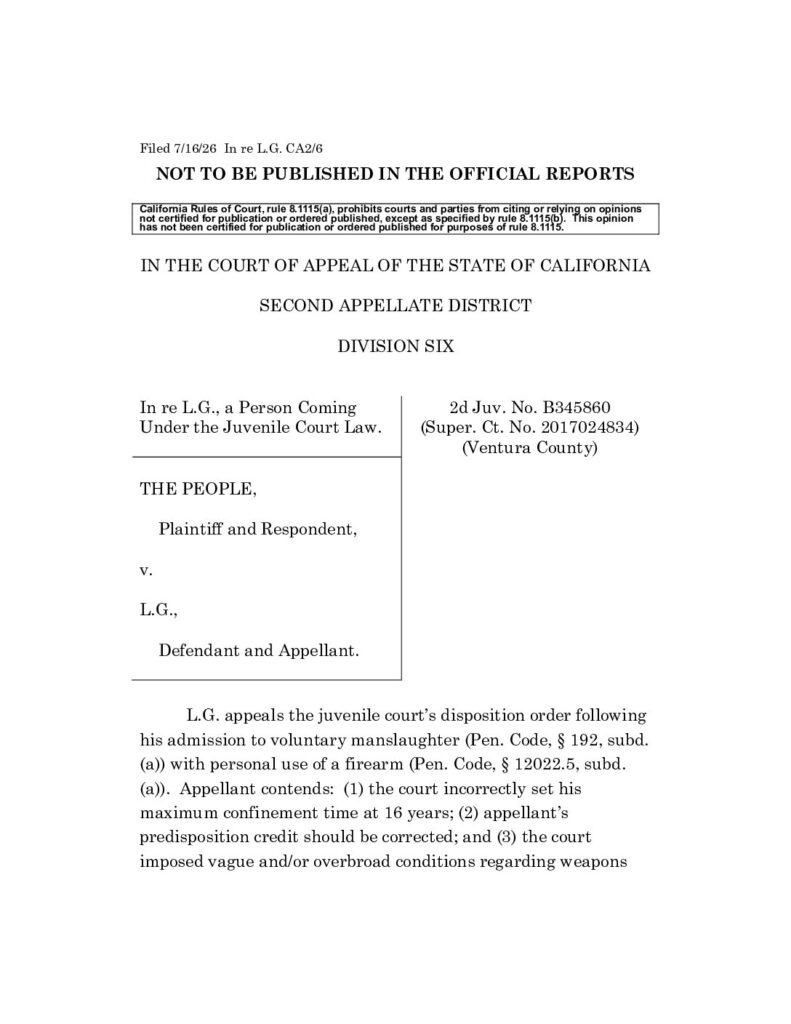
The California 2nd District Court of Appeal held that a probation condition prohibiting the association with anyone possessing weapons and controlled substances was unconstitutionally overbroad. The court stated in relevant part: “‘The juvenile court has wide discretion to select appropriate conditions,’ but ‘[a] probation condition that imposes limitations on a person’s constitutional rights must closely…
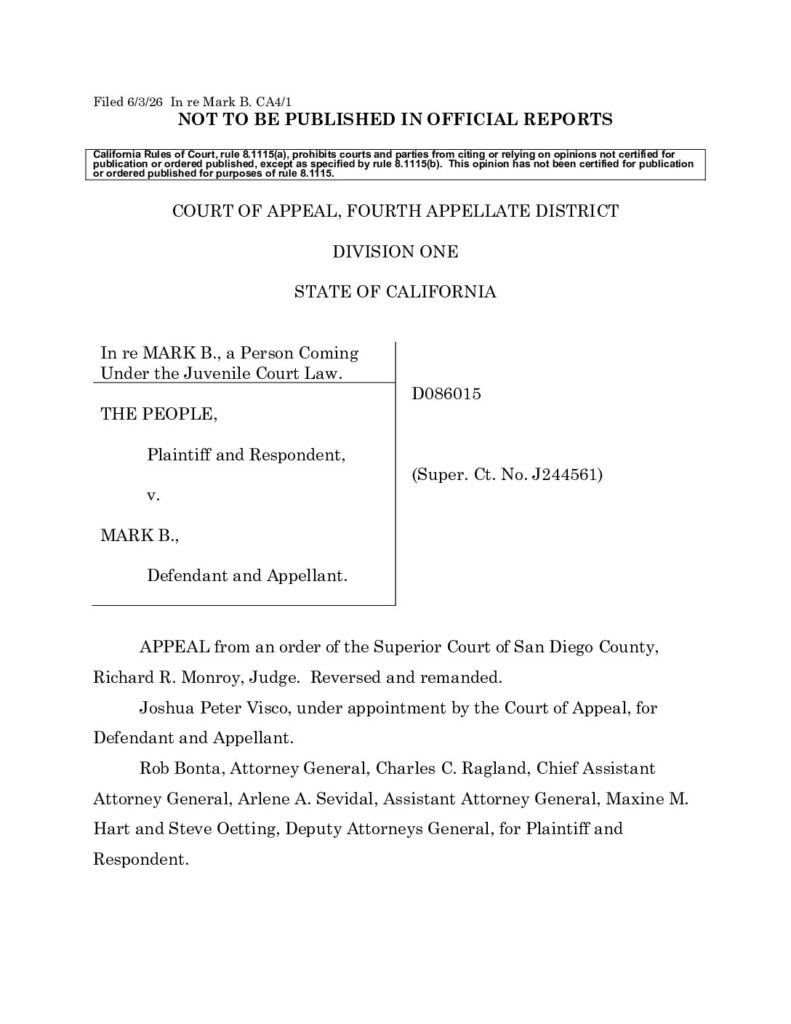
The California 4th District Court of Appeal found struck down a probation condition requiring a youth to “participate in counseling and/or an education program…as directed by your probation officer,” finding that the condition is too indefinite. The court stated in relevant part: We believe this condition leaves too much to the probation officer’s discretion because…
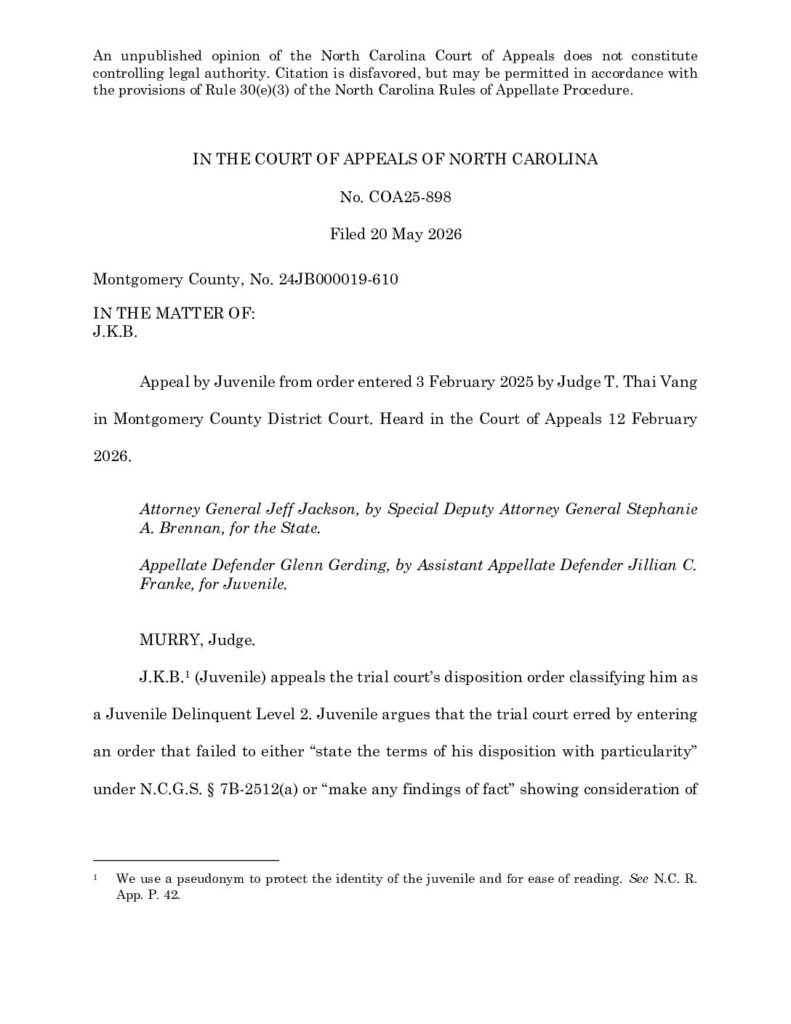
The North Carolina Court of Appeals vacated a disposition order, finding that the failure to specify the length of probation violated state statute. The court stated in relevant part: In juvenile-delinquency proceedings, the trial court’s dispositional order must “be in writing” and “contain appropriate findings of fact and conclusions of law.” N.C.G.S. § 7B-2512(a). Additionally, the…
The North Carolina Court of Appeals reversed an adjudication of disorderly conduct based on insufficient evidence. The court stated in relevant part: “Considering the evidence in the light most favorable to the State and giving the State the benefit of every reasonable inference, Rose, 339 N.C. at 192, 451 S.E.2d at 223 (citation omitted), the evidence is insufficient to…

The Idaho District Court rules that an antiloitering city ordinance is unconstitutionally vague and offers the following language in support. “It is a basic principle of due process that an enactment is void for vagueness if its prohibitions are not clearly defined.” Grayned v. City of Rockford, 408 U.S. 104, 108, 92 S. Ct. 2294,…
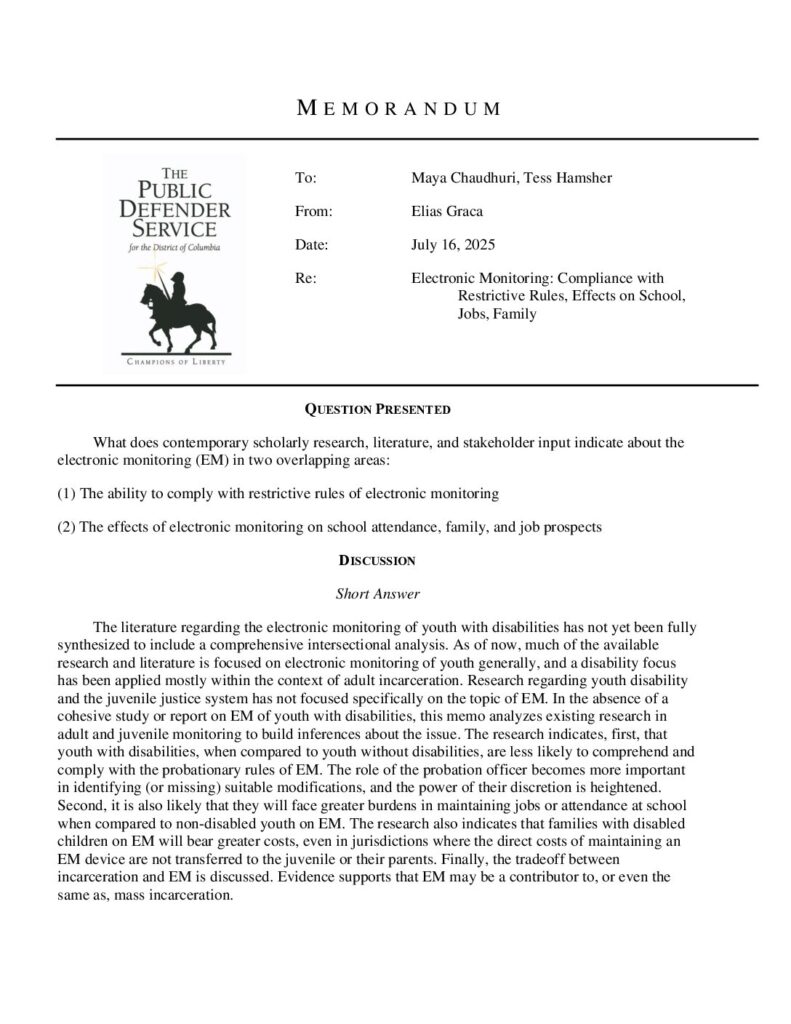
This memorandum from the Public Defender Service for the District of Columbia discusses the contemporary research and literature on electronic monitoring and its impacts on school attendance, family, and employment. The memorandum also discusses the real-world practicalities that make it difficult for youth to comply with the restrictive rules that often accompany electronic monitoring orders. From the memorandum: “The literature regarding the electronic monitoring of youth with disabilities has not yet been fully synthesized to…


From the executive summary: “• Police increasingly replace stop-and-frisk practices with databases that crudely profile Black and Latinx youth based on their neighborhoods, peer groups, and clothing. • These databases ruin lives: police typecast minority youths as gang members without evidence, putting them at risk of false arrest and wrongful deportation. • Many police departments…


A sample motion arguing child pornography laws are unconstitutional as applied to a children engaging in sexting. The motion argues the statute is void-for-vagueness since it fails to provide fair notice regarding prohibited conduct for children under 18 and it encourages arbitrary and discriminatory enforcement because the distinction between offender and victim is blurred. Furthermore,…

On November 28, 2016, the DOJ filed a Statement of Interest in response to a lawsuit filed in South Carolina, challenging two state statutes as void for vagueness in violation of the Due Process Clause. The lawsuit alleged that the vague language in the statute resulted in the criminalization of common youthful behavior, racial disparities,…

On September 18, 2015, the U.S. Department of Justice entered into a settlement agreement with the state of Mississippi about their probation and diversion practices. The settlement agreement includes provisions on protecting a youth’s right against self-incrimination, requiring probation orders to be written in simple terms to prevent arbitrary and discriminatory enforcement, and ensuring the…

On October 24, 2012, the U.S. Department of Justice filed a complaint in the United States District Court, Southern District of Mississippi asserting that the City of Meridian, County of Lauderdale, and State of Mississippi are engaging in a “pattern or practice of unlawful conduct through which they routinely and systematically arrest and incarcerate children,…

On August 10, 2012, the U.S. Department of Justice released a findings report regarding their investigation of Lauderdale County Youth Court, Meridian Police Department, and Mississippi Division of Youth Services. The findings included the following violations: “(1) The City of Meridian Violates the Fourth Amendment by Arresting Children Without Assessing Probable Cause; (2) Lauderdale County…
