
Positive Youth Development
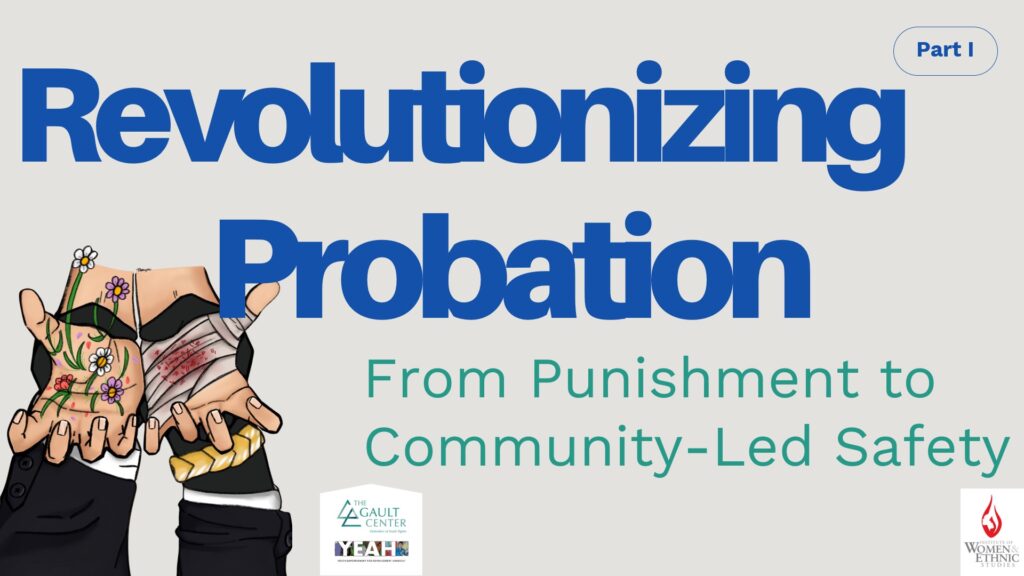
On March 26, 2026, the Gault Center & Youth Empowerment for Advancement Hangout (YEAH Philly) hosted a webinar on Revolutionizing Probation from Punishment to Community-Led Safety. This webinar focused on shifting narratives around juvenile probation—to challenge the dominant rhetoric that probation is an act of benevolence that keeps youth and communities safe and to bring…

On March 26, 2026, the Gault and Youth Empowerment for Advancement Hangout (YEAH Philly) co-hosted a webinar on Revolutionizing Probation from Punishment to Community-Led Safety. This resource includes PowerPoint presentations from the Gault Center covering the history and youth experiences on juvenile probation, YEAH Philly highlighting meaningful community-based alternatives, and the Institute of Women & Ethnic…
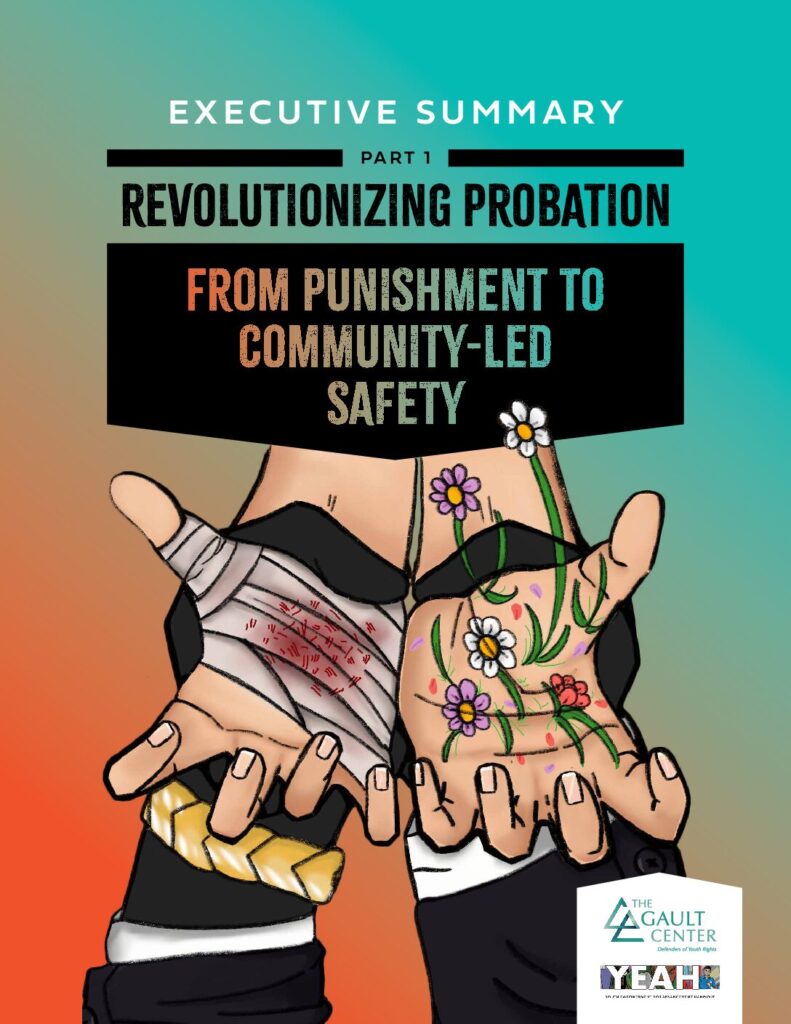
Summarizes what young people are saying about juvenile probation and offers a visual timeline highlighting the historical lineage of probation as a form of racialized social control.
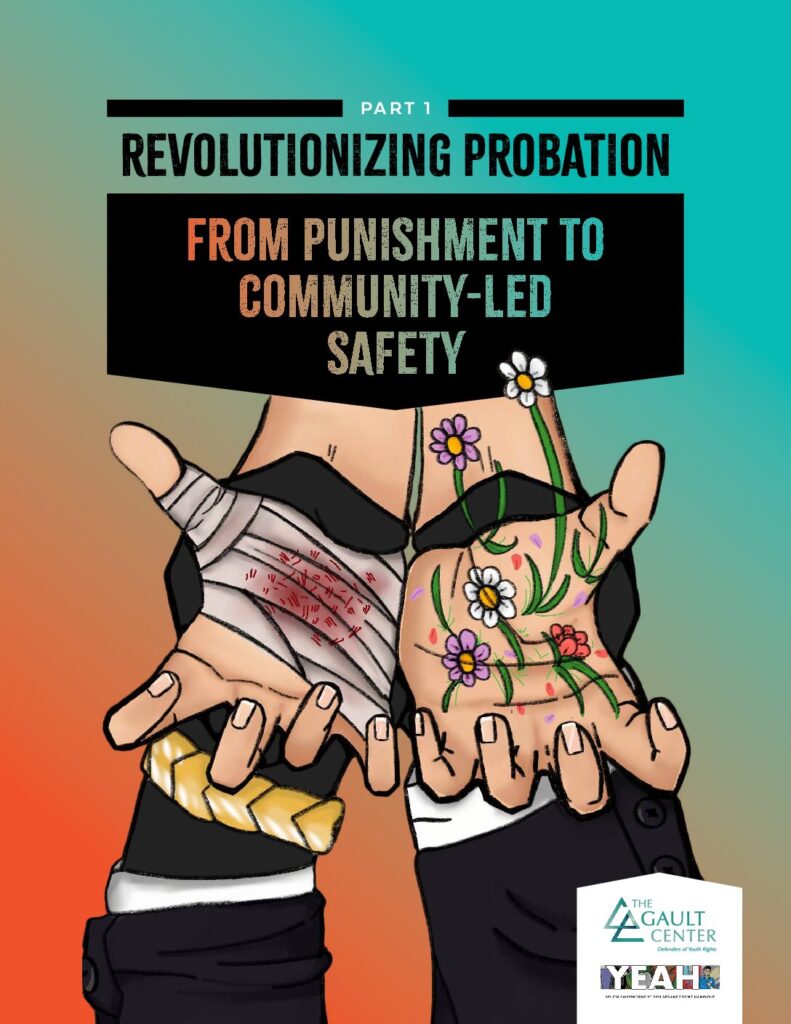
Examines young people’s experiences on juvenile probation and the racialized history of juvenile probation in our country.

This “Fast Facts” Publication from UCLA’s Center for the Developing Adolescent provides insight on how to support young people five years after the COVID-19 pandemic. From the publication: “In 2020, COVID disrupted nearly every aspect of education, work, and social connections. Students who were in the earliest years of their education when schools first closed…

This is a sample “youth report to the court” document (created by a Juvenile Court Judge in Iowa), for youth who are currently under the juvenile court jurisdiction. This report is provided to young people when they appear in court, asking if they would like the space to share pertinent information and ask questions of…


This resource from Lambda Legal and the American Bar Association Children’s Rights Litigation Committee gives attorneys an overview on how to approach client interviewing and relationship building in a respectful and trauma-informed way. The page discusses the importance of identity for young people’s well being and on their legal cases. It also reviews basic interview…


This article featured on the Frameworks Institute website offers research-based communication strategies for combating the manufactured controversy of a “crime emergency” caused by adolescents in Washington D.C. The article provides a topline nonpartisan message for responding to the relentless, toxic messaging around adolescent crime and outlines five framing recommendations for discussing the harmful policies being…


A brief on the core changes happening during the remarkable period of growth from 10 to 25 years old. The brief highlights the opportunities for positive development during this period of adolescence and the critical need for social systems to adapt to youth in a way that supports their success.

This report from National Institute for Criminal Justice Reform offers six principles of a positive youth justice system (‘PYJS’) including: 1) Minimize contact with the juvenile justice system, 2) partner with youth and families to develop and share ownership of case plans, 3) community-based organizations should take the lead, 4) build on youth assets and…

A sample disposition and mitigation memorandum filed in a juvenile court in Ohio.


This report, written by Youth Thrive (an initiative of the Center for the Study of Social Policy), is a research-informed framework on young people and well-being, designed to “support healthy development and improved life outcomes for youth ages 9-26 across the country.” This framework identifies five protective and promotive factors by incorporating positive youth development,…

From the Urban Institute: Jurisdictions across the country are changing how they administer juvenile probation and better aligning policy and practice with developmental science and positive youth development to improve outcomes for youth, families, and communities. These changes often advance two goals: divert most youth from system involvement altogether and shrink probation caseloads, and change…


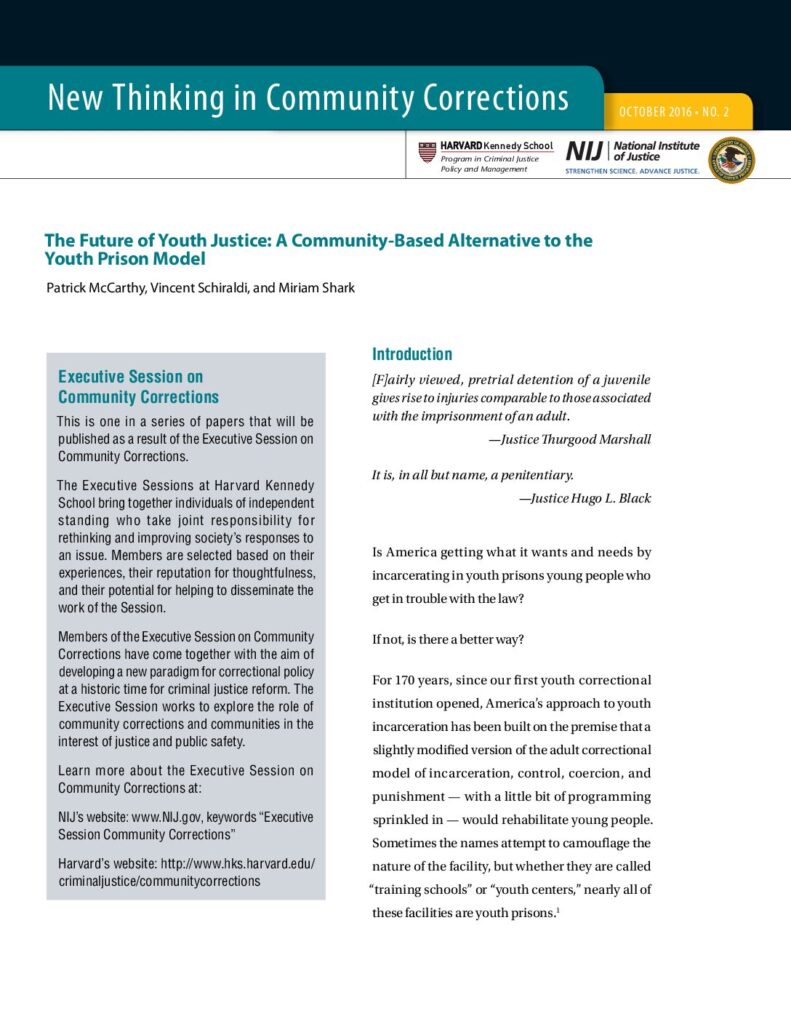
This paper from the Executive Session on Community Corrections at the Harvard Kennedy School examines the history of youth incarceration and discusses how the inherently flawed model of youth prisons demands systemic reforms, including closure of youth prisons, to actualize safer communities, and positive youth outcomes. From the introduction: “For 170 years, since our first youth correctional institution opened, America’s approach…

This expert affidavit from Dr. Marty Beyer, Ph.D., a clinical psychologist licensed in D.C., Virginia and Washington, highlights the negative impacts of shackling on young people’s identity development, including their views of their own self-worth and of fairness in legal settings. Further, the affidavit describes how shackling re-traumatizes youth who may have previously experienced traumatic…

This expert affidavit from Dr. Donald Rosenblitt, a child psychiatrist and clinician licensed in North Carolina. Dr. Rosenblitt discusses the impact of shackling young people in juvenile court proceedings and how shackling negatively impacts a young people’s positive development, self-perception, overall health, and views of the legal system.
