
Post-Disposition


A sample visual timeline capturing specific events in a client’s life for use as mitigation in different stages of a case, including: trial, disposition or post-disposition proceedings, sentencing, or parole advocacy.

From the introduction: “Preventing, reducing, and improving interactions between autistic individuals and the criminal justice system are urgent research and policy priorities. Research should guide evidence-based programs and policies that limit unnecessary interactions between autistic individuals and the criminal justice system and address documented high rates of victimization among autistic individuals. A diverse team of…

From the abstract: “The term wrongful conviction typically refers to the conviction or adjudication of individuals who are factually innocent. Decades of research has rightfully focused on uncovering contributing factors of convictions of factually innocent people to inform policy and practice. However, in this paper we expand our conceptualization of wrongful conviction. Specifically, we propose…

From the introduction: “This project, which started in fall 2020, was initially intended to be significantly smaller than it turned out to be. Our coalition of authors intended to outline ways juvenile defenders could streamline their representation of youth charged with sex offenses. As the project gained momentum, this team of trial attorneys, social workers,…

From the introduction: “This brief presents the research case for eliminating the use of correctional confinement or detention in response to technical violations of juvenile probation.”

This brief highlights the United States Supreme Court’s most important language in landmark cases about young people’s rights. These quotes can be used to bolster the arguments and pleadings of juvenile defense attorneys and advocates as they defend youth caught in the legal system.

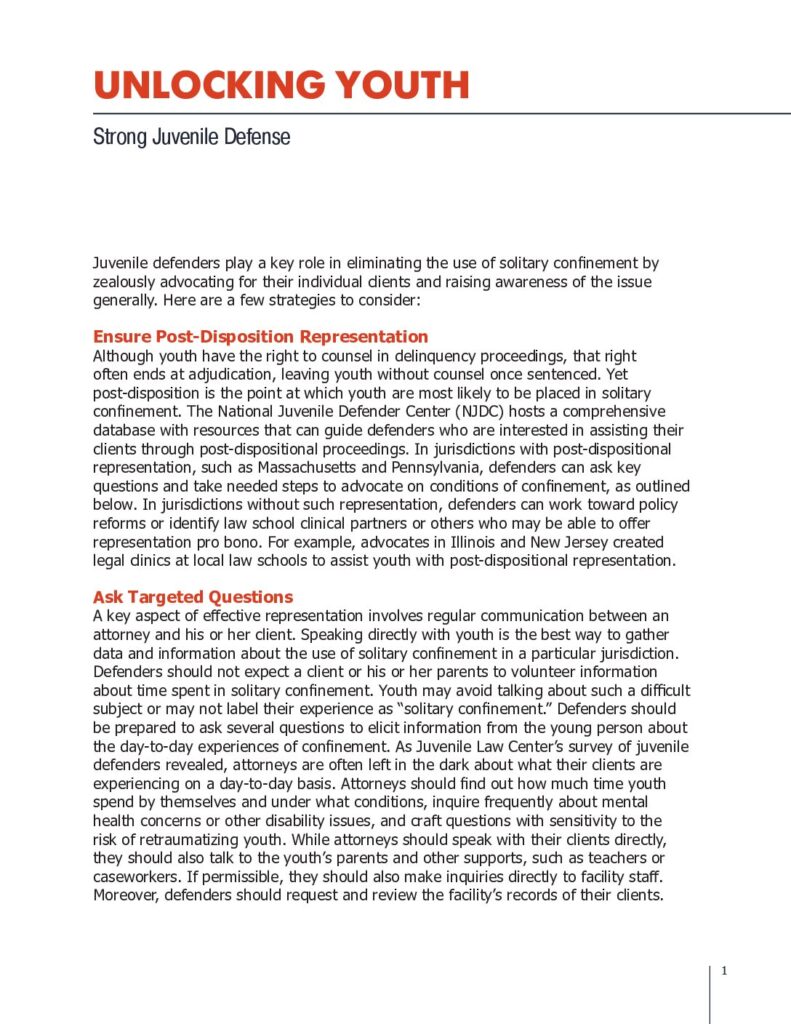
Youth facing time in both secure and non-secure facilities need vigilant advocates who can monitor the conditions of these facilities, and can either prevent the young person’s placement, limit the young person’s length of time in placement, and/or intervene on the young person’s behalf while they are at the placement. Juvenile defenders are ethically bound…

Access Denied found that “[n]o jurisdiction in the United States wholly fulfills the constitutional promise of justice for children.” So, no matter where you live and practice, your jurisdiction can improve. As juvenile defense advocates, we have a responsibility to identify and work to correct systemic deficiencies and to honor our clients’ dignity and well-being.…


Heavy workloads and the culture in many courts can make it difficult for juvenile defenders to stay connected to clients post-disposition. Even after disposition in juvenile court, young people face legal issues that affect — and often threaten — their liberty, their safety, their due process and civil rights, and their access to future opportunities.…

An infographic outlining strategies for post-disposition advocacy.

On December 14, 2016, the U.S. Department of Justice entered into a settlement agreement with the St. Louis County Family Court to remedy constitutional violations. The settlement agreement covers policies and practices to ensure the due process and equal protection rights of all youth are upheld. This includes early appointment of youth defense counsel, prohibition…

Disposition orders—commonly understood as sentencing—move children deeper into the juvenile court system. For example, some youth might be confined to secure custody or placed on probation. During the “post-disposition” phase, defenders must represent children at all probation and parole review or modification hearings, advise clients of their legal rights, explain their case options and possible…

A one-page infographic on juvenile appeal rates.

On July 31, 2015, the U.S. Department of Justice released its investigation findings into the St. Louis County Family Court, finding due process and equal protection violations. The findings include right to counsel violations by denying constitutionally adequate defense representation, privilege against self-incrimination violations by requiring a child to admit to allegations for diversion, inadequate…


After the disposition (sentencing) phase in juvenile court, a case moves into what may be the longest and most critical phase of the delinquency process—post-disposition. Post-disposition advocacy is vital to safeguard the constitutional rights of adjudicated youth and aid in community reintegration, and it encompasses a broad array of issues that affect adjudicated youth; yet,…

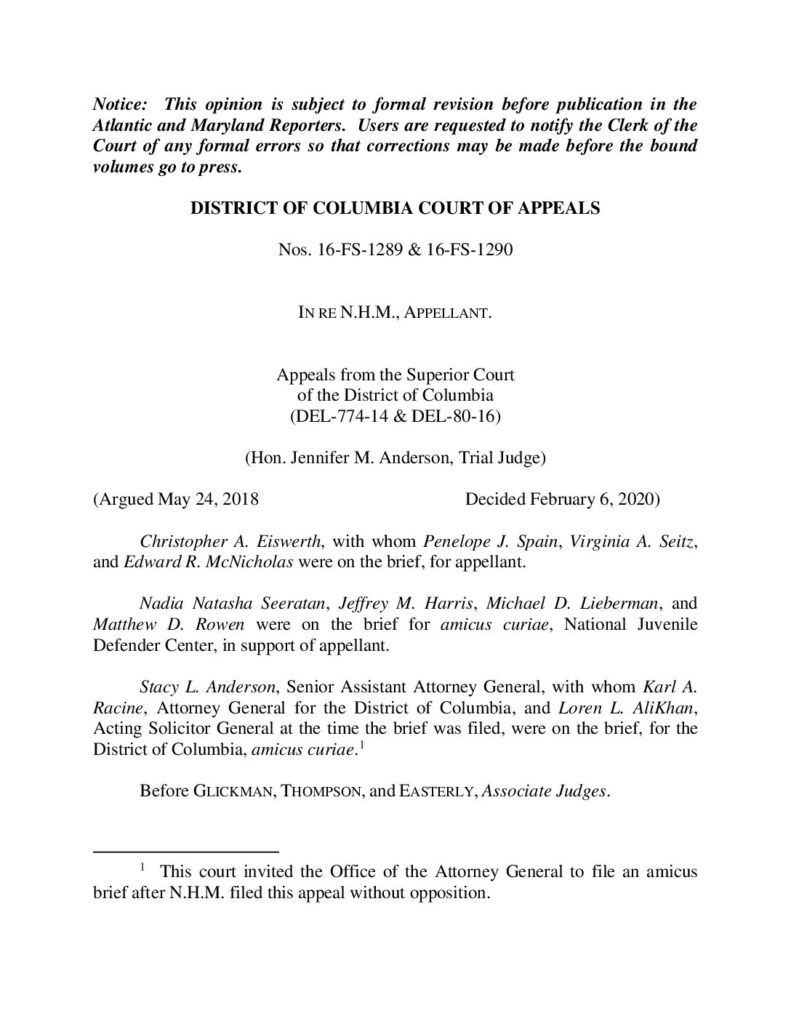
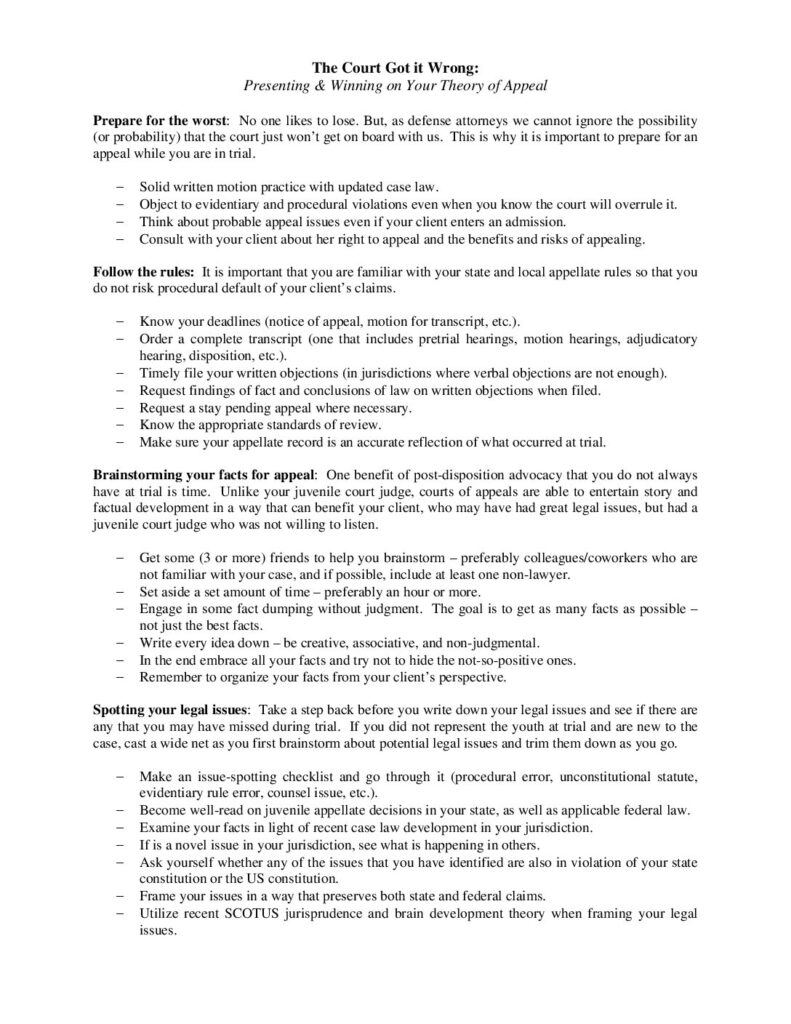
A robust and expeditious juvenile appellate practice ensures that youth are fully accorded their due process rights and is essential to developing a strong and cohesive body of juvenile jurisprudence. All children have a right to appeal their juvenile adjudications. Juvenile defenders are constitutionally mandated to confer with their young clients about their right to…
- « Previous
- 1
- 2
- 3
- Next »
