
Section 504

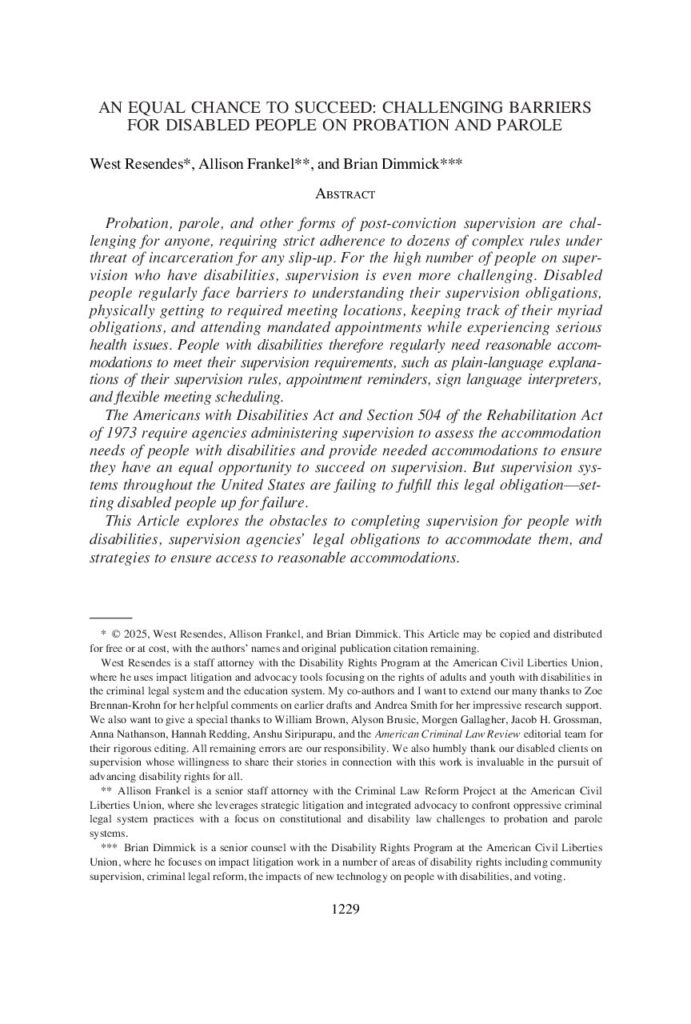
From the introduction: “Probation, parole, and other forms of post-conviction supervision are challenging for anyone, requiring strict adherence to dozens of complex rules under threat of incarceration for any slip-up. For the high number of people on supervision who have disabilities, supervision is even more challenging. Disabled people regularly face barriers to understanding their supervision…


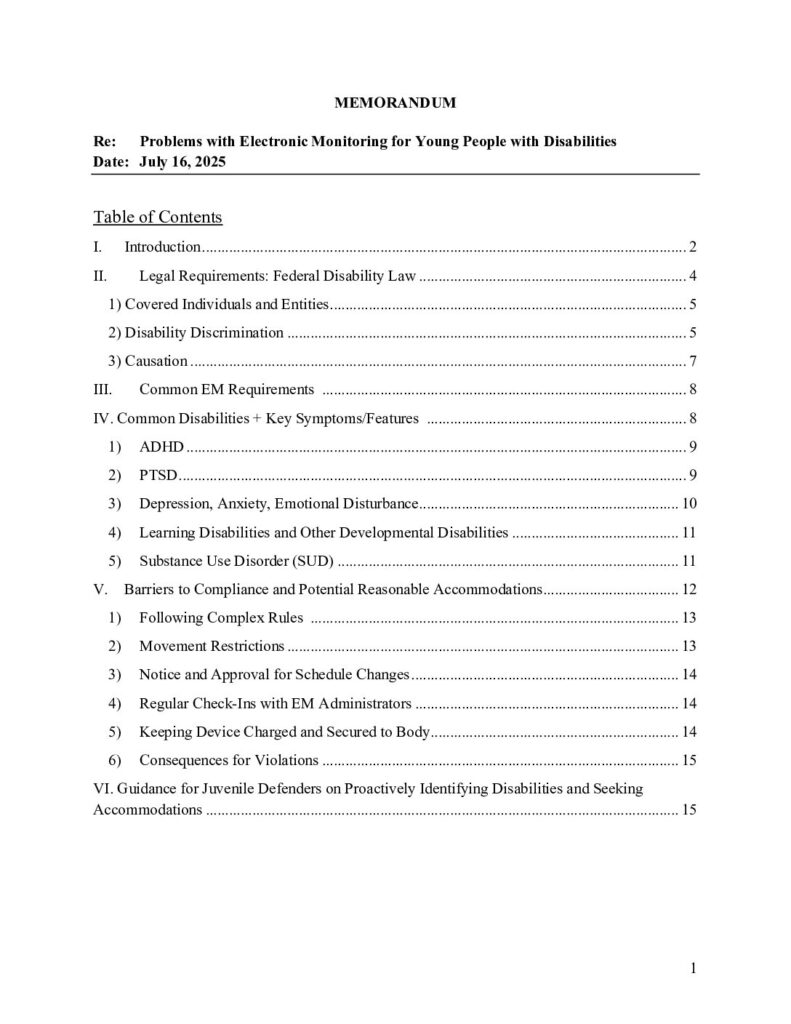
This memorandum from the American Civil Liberties Union provides litigation strategies for defenders challenging electronic monitoring conditions for young people with disabilities. From the Introduction to the memorandum: “Overall, this research project/memo aims to reduce the use of EM for kids with disabilities. Although there is no straightforward disability or accommodations-related argument for ending EM…

From the conclusion” “Conclusion There is no question that the statistical picture of special education is bleak. But after its meeting of stakeholders, interviews with experts, and review of the research, NCD believes that IDEA and other related disability laws, with improved enforcement, can and should benefit at-risk students who are properly referred and served.…


Professor Kris Henning and Rebba Omer authored a law review article on decriminalizing normal adolescent behaviors, race, and disabilities. This article maps a way forward for all system actors in the juvenile legal system to mitigate and buffer against the harms of juvenile legal system involvement for youth with disabilities. Specifically, this article outlines youth…


This report reviews the expanding infrastructure of police surveillance in public schools and highlights the failure of AI technologies and digital surveillance in making schools safer. Further, the report discusses the harms these technologies may cause to Black and Latine youth and youth from other historically vulnerable communities. Calling on youth justice advocates, youth leaders,…

From the introduction: “This Guide proceeds in four parts. Part I provides a brief overview of the prevalence of disabilities among people under correctional control. Part II summarizes the relevant disability discrimination legal framework, with a focus on the requirement to provide reasonable accommodations. Part III provides an overview of (A) structural obstacles confronting people…

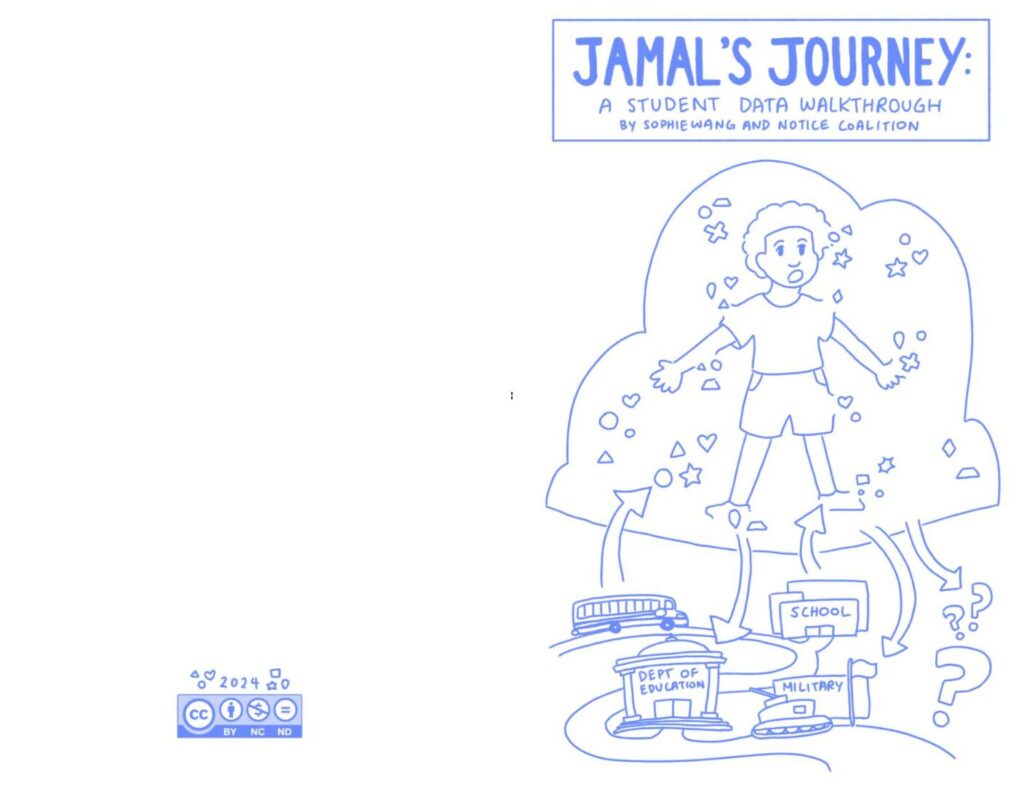
This infographic from the No Tech Criminalization in Education (NOTICE) Coalition provides a walkthrough of a student’s experience in a data-driven school from kindergarten to the end of high school. The resource includes information on different forms of information sharing and surveillance technologies and individual know your rights information for students navigating digital surveillance.

From the Executive Summary, developed by Equip for Equality: “The children in the Juvenile Temporary Detention Center (“JTDC”) are some of the most vulnerable youth in Cook County, many having experienced significant trauma and violence as part of their daily existence. The JTDC is the juvenile jail for Cook County, housing youth awaiting adjudication of their cases, as well…

From the introduction: “This brief offers context on the youth criminalization crisis in the United States. We then outline a series of harmful elements in the Bipartisan Safer Communities Act. Specifically, we review provisions that: • Increase funding for threat assessments, surveillance, and greater police presence in schools; • Expand data-sharing between law enforcement and…

This Article explores how race functions to ascribe and criminalize disability. It posits that for White students in wealthy schools, disabilities or perceived disabilities are often viewed as medical conditions and treated with care and resources. For students of color, however, the construction of disability (if it exists) may be a criminalized condition that is…

On November 15, 2018, a joint settlement was reached to address the conditions of confinement in Florida’s Palm Beach County Jail. The settlement agreement outlines comprehensive changes in the facility, including giving young people time and access to appropriate recreational activities outside of their cells during school hours. The settlement also limits the amount of…

On October 1, 2018, the DOJ filed a Statement of Interest in a federal class action lawsuit on behalf of young people confined in Florida’s Palm Beach County Jail. The DOJ highlights the protections afforded to students with disabilities under the Individuals with Disabilities Education Act (IDEA), and the “independent and shared” responsibilities and obligations…

On June 21, 2018, a federal class action lawsuit was filed on behalf of young people confined in the Palm Beach County Jail, alleging violations of their 8th and 14th Amendment rights under the U.S. Constitution. The plaintiffs are youth whose cases have been direct-filed in adult court in Palm Beach County, Florida. The complaint…

On August 6, 2015, the DOJ released an updated findings letter on several juvenile facilities in Puerto Rico. The DOJ finds that young people confined in juvenile facilities face substantive due process and equal protection violations, in addition to infringements to their federal rights under the Individuals with Disabilities Education Act and the Rehabilitation Act…

On March 31, 2011, Leflore County, Mississippi entered into a Memorandum of Agreement (MOA) with the United States to address the DOJ’s investigation findings into the Leflore County Juvenile Detention Center (LCJDC). The MOA outlines that LCJDC must provide young people with reasonably safe conditions of confinement, protect youth from harm, limit the use of…

On May 12, 2015, the DOJ filed a complaint in the U.S. District Court for the Northern District of Mississippi against Leflore County, Mississippi for engaging “in a pattern or practice of conduct that violates the Constitutional and statutory rights of youth at the Detention Center.” The complaint outlines 14th Amendment violations based on Leflore…

On February 13, 2014, the DOJ filed a Statement of Interest in a federal class action lawsuit on behalf of young people confined in the Contra Costa County Juvenile Hall, alleging violations of the Individuals with Disabilities Education Act (IDEA). The DOJ reiterated that “Defendants (Contra Costa County) are required to provide special education and…
