
Youth in Adult Facilities

This report, written by the Sentencing Project, highlights the harmful practice of direct file, or “auto-charging” youth in adult court. This national analysis looks at the practice of direct file and the pervasive harms that it has on the wellbeing and future thriving of young people and makes recommendations for states to limit pathways for…
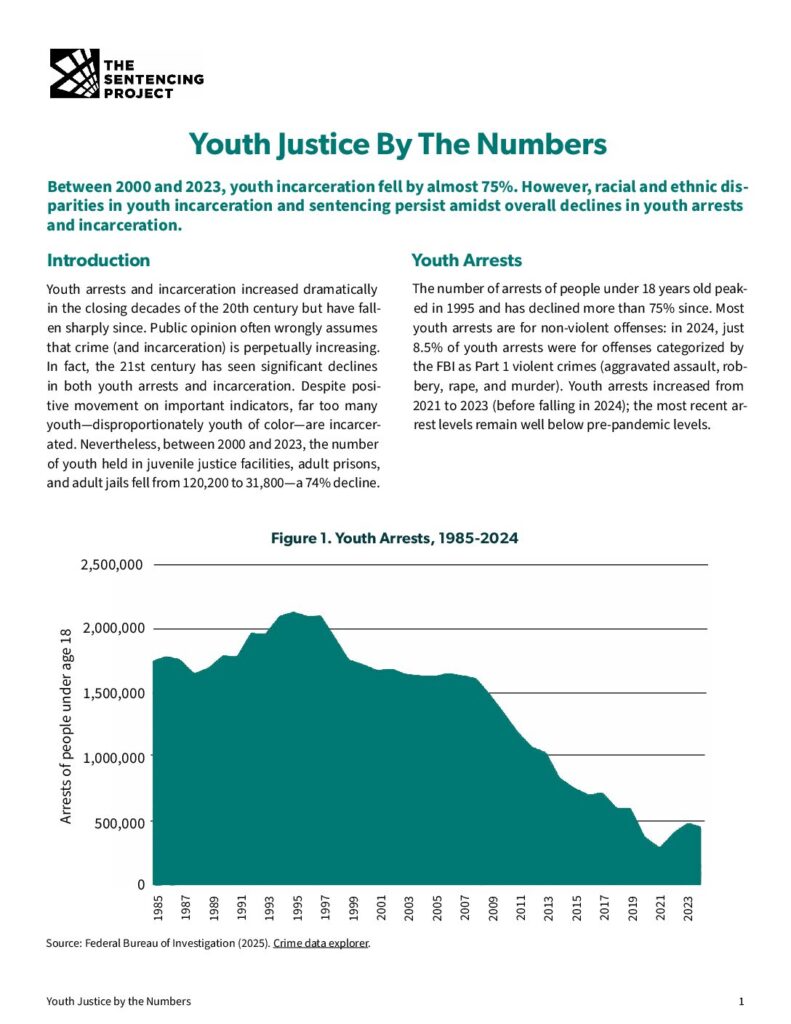
The Sentencing Project released an updated snapshot of the numbers of youth in the juvenile legal system from 2000 to 2023, finding significant declines in youth arrests and incarceration, though racial and ethnic disparities persist. The report calls for the need to continued shrinking the juvenile legal system by increasing informal or diversionary responses to youth arrests. Introduction: “Youth arrests and incarceration increased dramatically in the closing…

The Third District Court of Appeals in Florida considered a writ of Habeas Corpus filed by petitioners India Comer and Shantearia Gaines, challenging their detention in an adult correctional center. The Court of Appeals granted the petition and issued the writ, ordering Ms. Comer and Ms. Gaines to be moved to the juvenile detention center.…

Former Secretary of the Maryland Department of Juvenile Services, Vinny Schiraldi, wrote this op-ed, discussing President Trump’s deployment of National Guard troops in Washington D.C. and the District’s intentions to repeal lower the age for trying children as adults to 12 in the Youth Rehabilitation Act. The op-ed details Vinny’s reflections and observations during his…


Florida routinely pushes Black children out of schools and into a legal system with well-documented harms. In recent years, the state has made significant investments in school law enforcement and self-proclaimed “tough love” youth legal system policies, purportedly in the name of public safety. However, these investments have yielded a system that disparately disciplines, arrests,…
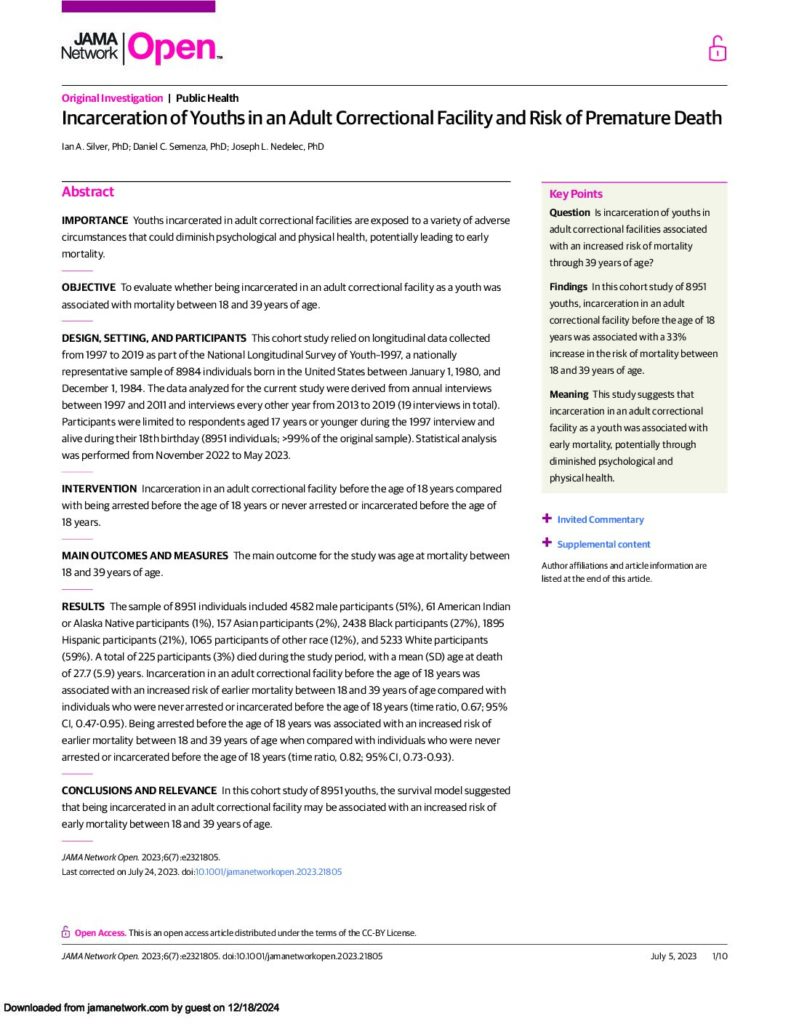
Youths incarcerated in adult correctional facilities are exposed to a variety of adverse circumstances that could diminish psychological and physical health, potentially leading to early mortality. In this cohort study of 8951 youths, the survival model suggested that being incarcerated in an adult correctional facility may be associated with an increased risk of early mortality…

From the resource: “This poster is a tool to assess and understand differences between reforms that strengthen imprisonment and abolitionist steps that reduce its overall impact and grow other possibilities for wellbeing. As we work to dismantle incarceration in all its forms, we must resist common reforms that create or expand cages anywhere, including under…


On November 15, 2018, a joint settlement was reached to address the conditions of confinement in Florida’s Palm Beach County Jail. The settlement agreement outlines comprehensive changes in the facility, including giving young people time and access to appropriate recreational activities outside of their cells during school hours. The settlement also limits the amount of…

On October 1, 2018, the DOJ filed a Statement of Interest in a federal class action lawsuit on behalf of young people confined in Florida’s Palm Beach County Jail. The DOJ highlights the protections afforded to students with disabilities under the Individuals with Disabilities Education Act (IDEA), and the “independent and shared” responsibilities and obligations…

On June 21, 2018, a federal class action lawsuit was filed on behalf of young people confined in the Palm Beach County Jail, alleging violations of their 8th and 14th Amendment rights under the U.S. Constitution. The plaintiffs are youth whose cases have been direct-filed in adult court in Palm Beach County, Florida. The complaint…

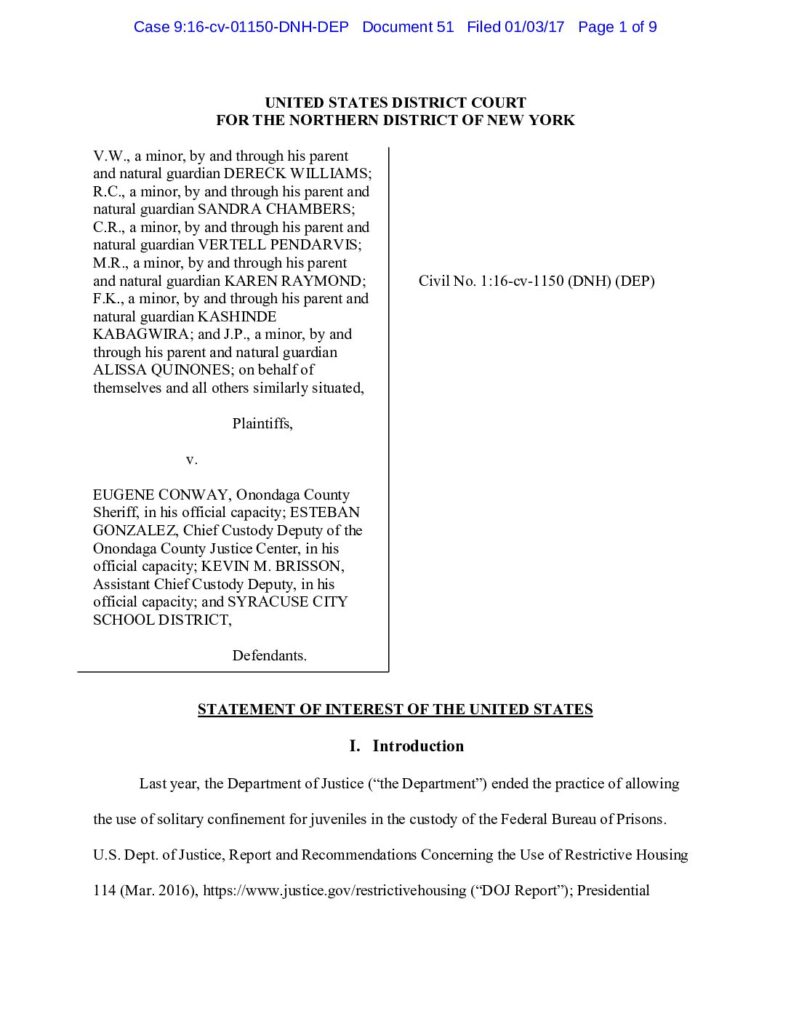
The U.S. Department of Justice filed a Statement of Interest in a federal class action lawsuit challenging the use of solitary confinement for 16- and 17-year-old youth in custody, including youth with disabilities. Calling for the federal district court to consider Supreme Court jurisprudence and growing scientific research on adolescent development, the DOJ asserts, “Juveniles…

On March 20, 2014, the DOJ filed a Statement of Interest in a federal conditions lawsuit on behalf young people under the age of 18 confined in the Michigan Department of Corrections, alleging violations of the Prison Rape Elimination Act (PREA). The DOJ emphasizes that “[s]tate correctional facilities. . . are subject to both the…

This amicus brief by Juvenile Law Center, The Gault Center, and others argues Ohio’s mandatory bindover statute violates the Due Process protections guaranteed by the 14th Amendment of the U.S. Constitution as the mandatory scheme does not allow for individualized sentencing and recognition of the unique characteristics of youth. Further, amici argue individualized transfer proceedings…


This amici brief prepared by the Juvenile Law Center et al. highlights the particular characteristics of adolescent development and youth that make juvenile life without parole sentences unconstitutional and in violation of the 8th Amendment to the U.S. Constitution. The brief addresses youth’s culpability, potential for change, and risk taking behavior compared to adults as…
