
Detention

From the introduction: “This brief presents the research case for eliminating the use of correctional confinement or detention in response to technical violations of juvenile probation.”

From the introduction: “Justice Policy Institute found that the average cost of the most expensive confinement option for a young person in 48 states was $588 per day, or $214,620 per year. The data show that in 40 states taxpayers spend at least $100,000 a year for a single young person’s confinement, and in 12…


This resource is part of the Youth Defender Advocacy Program (YDAP) curriculum, a specialized trial advocacy training program for youth defenders.

Advocates in Maryland created a series of short policy briefs to educate community members about pressing issues. You can see the others in this series here under “Sample Legislative Advocacy Briefs” on the Policy Page of the Racial Justice Toolkit.

On June 26, 2019, the DOJ closed its investigation of the Leflore County Juvenile Detention Center. In its closing letter, the DOJ stated “[w]e recognize that the state has made many improvements at the Detention Center School over the course of our involvement. . . . Specifically, the Detention Center School has made strides to…
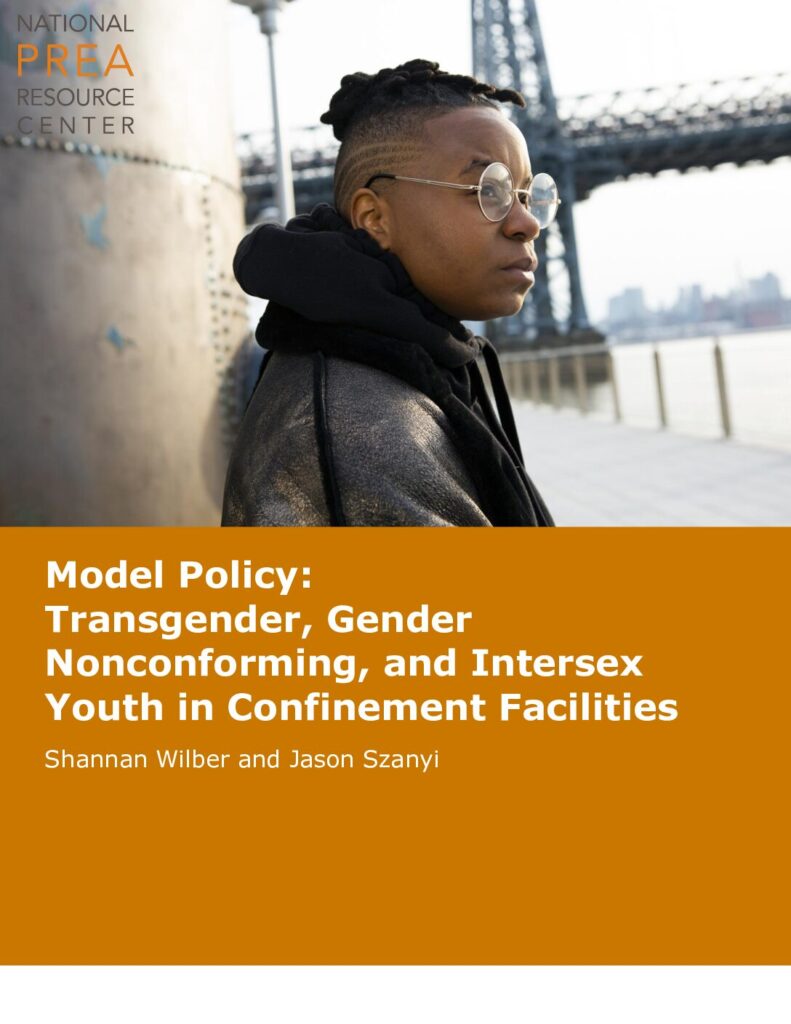

From the Executive Summary: “This primer introduces key factors that juvenile court judges should consider in order to take a trauma-informed approach when “newcomer immigrant youth” come before them in juvenile justice cases. Created by attorneys and mental health experts on trauma, juvenile justice, and immigration, this primer is the product of the Center for…


“The week of December 10, 2018, Congress passed H.R. 6964, the Juvenile Justice Reform Act of 2018 (the Act) with overwhelming bipartisan support. The President signed the bill into law on December 21, 2018, amending the Juvenile Justice Delinquency Prevention Act (JJDPA) after years of collaborative efforts among juvenile justice organizations and advocates across the…


The U.S. Department of Justice filed a Statement of Interest in a federal class action lawsuit challenging the use of solitary confinement for 16- and 17-year-old youth in custody, including youth with disabilities. Calling for the federal district court to consider Supreme Court jurisprudence and growing scientific research on adolescent development, the DOJ asserts, “Juveniles…

From the introduction: “Immigration and Customs Enforcement (“ICE”) agents work inside Massachusetts jails, houses of correction, and prisons and may try to interview you or ask you to sign documents. Other corrections officers working with ICE may also try to question you about your immigration or criminal history. Anything you say to an ICE officer…

On December 14, 2016, the U.S. Department of Justice entered into a settlement agreement with the St. Louis County Family Court to remedy constitutional violations. The settlement agreement covers policies and practices to ensure the due process and equal protection rights of all youth are upheld. This includes early appointment of youth defense counsel, prohibition…
This paper from the Executive Session on Community Corrections at the Harvard Kennedy School examines the history of youth incarceration and discusses how the inherently flawed model of youth prisons demands systemic reforms, including closure of youth prisons, to actualize safer communities, and positive youth outcomes. From the introduction: “For 170 years, since our first youth correctional institution opened, America’s approach…
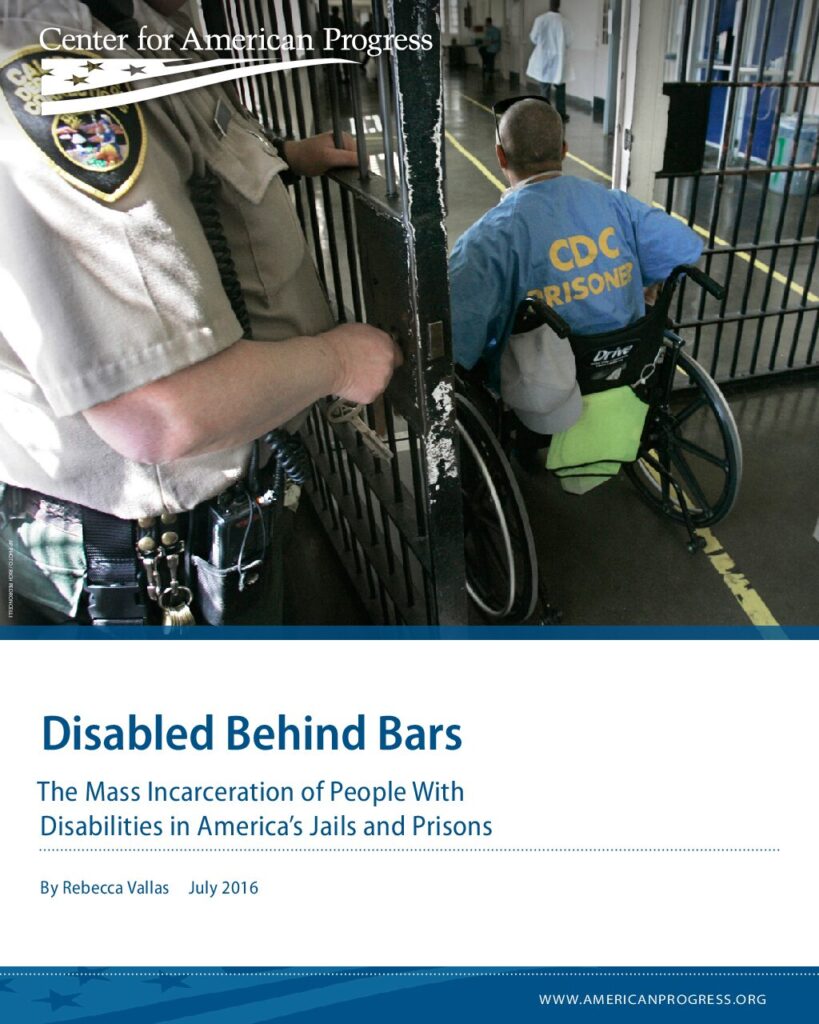
From the introduction: “This report highlights steps policymakers can take to combat inappropriate and unjust incarceration and criminalization of people with disabilities, as well as steps to ensure appropriate and humane treatment of people with disabilities throughout the justice system, from police practices to courts, conditions in jails and prisons, and reentry.”

On January 12, 2016, the DOJ released its second investigation findings on the Leflore County Juvenile Detention Center in Greenwood, Mississippi. The DOJ found “reasonable cause to believe that the provision of special education and related services at the Detention Center violate the federal rights of children under IDEA.” Specifically, the DOJ stated, “Our investigation…
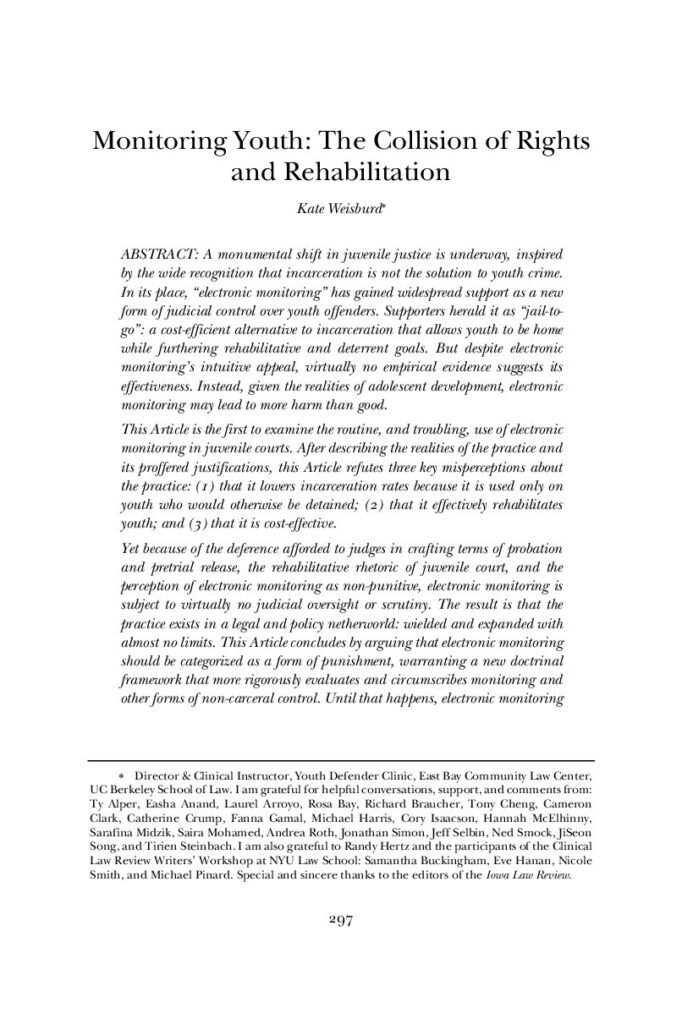
From the abstract: “A monumental shift in juvenile justice is underway, inspired by the wide recognition that incarceration is not the solution to youth crime. In its place, “electronic monitoring” has gained widespread support as a new form of judicial control over youth offenders. Supporters herald it as “jail-to-go”: a cost-efficient alternative to incarceration that…

On September 18, 2015, the U.S. Department of Justice entered into a settlement agreement with the city of Meridian to address the practice of arresting students in schools. The settlement agreement includes provisions that limit school-based arrests, including “for behavior that is appropriately addressed as a school discipline issue, including incidents involving public order offenses…

On September 18, 2015, the U.S. Department of Justice entered into a settlement agreement with the state of Mississippi about their probation and diversion practices. The settlement agreement includes provisions on protecting a youth’s right against self-incrimination, requiring probation orders to be written in simple terms to prevent arbitrary and discriminatory enforcement, and ensuring the…
