
Disabilities


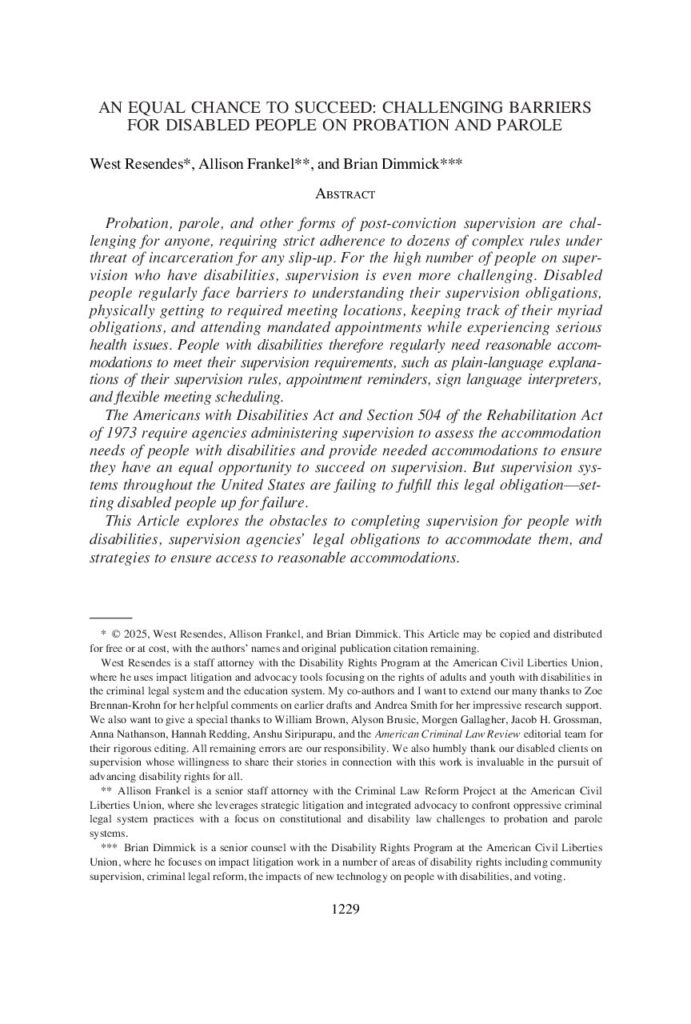
From the introduction: “Probation, parole, and other forms of post-conviction supervision are challenging for anyone, requiring strict adherence to dozens of complex rules under threat of incarceration for any slip-up. For the high number of people on supervision who have disabilities, supervision is even more challenging. Disabled people regularly face barriers to understanding their supervision…


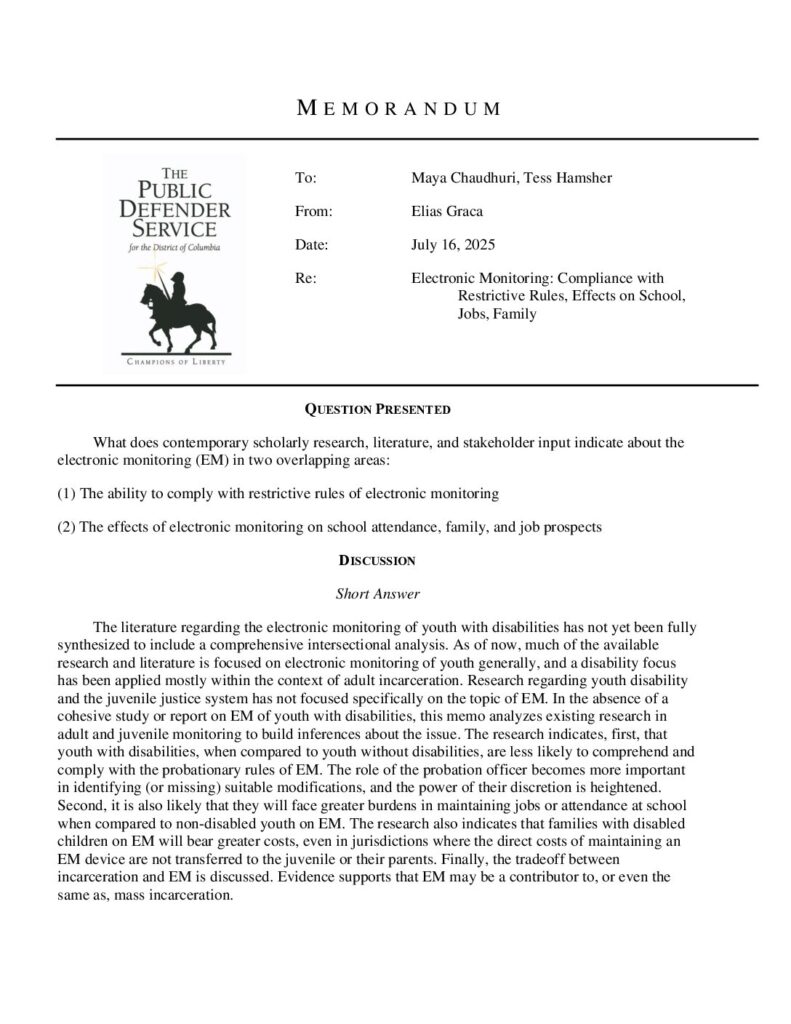
This memorandum from the Public Defender Service for the District of Columbia discusses the contemporary research and literature on electronic monitoring and its impacts on school attendance, family, and employment. The memorandum also discusses the real-world practicalities that make it difficult for youth to comply with the restrictive rules that often accompany electronic monitoring orders. From the memorandum: “The literature regarding the electronic monitoring of youth with disabilities has not yet been fully synthesized to…
This memorandum from the American Civil Liberties Union provides litigation strategies for defenders challenging electronic monitoring conditions for young people with disabilities. From the Introduction to the memorandum: “Overall, this research project/memo aims to reduce the use of EM for kids with disabilities. Although there is no straightforward disability or accommodations-related argument for ending EM…


From the conclusion” “Conclusion There is no question that the statistical picture of special education is bleak. But after its meeting of stakeholders, interviews with experts, and review of the research, NCD believes that IDEA and other related disability laws, with improved enforcement, can and should benefit at-risk students who are properly referred and served.…

From the abstract: “Hundreds of thousands of children are brought under the jurisdiction of delinquency courts every year in the United States. Despite the reality that most children engage in delinquent behavior during their adolescence, poor children, children of color, children with disabilities, and children who identify as LGBTQIA+ comprise a disproportionate number of those who become delinquency system-involved. These disparities exist…


Professor Kris Henning and Rebba Omer authored a law review article on decriminalizing normal adolescent behaviors, race, and disabilities. This article maps a way forward for all system actors in the juvenile legal system to mitigate and buffer against the harms of juvenile legal system involvement for youth with disabilities. Specifically, this article outlines youth…

From the abstract: “This paper explores the inequitable treatment of the Intellectually and Developmentally Disabled and Autistic (IDD/A) population in the criminal justice system. Although progress has been made over the past century with understanding the unique needs of this population, they still face challenges at all stages of the criminal justice system. Behavioral, social…



Human Rights Watch conducted a study on New Jersey’s waiver mechanisms, finding that the state is effectively operating a prosecutorial waiver system that is disproportionately harming Black and Latine youth, sidelining judicial oversight, and prioritizing punishment over treatment. This report offers recommendations for a wide range of system professionals to ultimately end the prosecution of…

This report, by the U.S. Department of Justice Civil Rights Division outlines key highlights of the Division’s work from 2021 to 2024 across policing, juvenile facilities, schools and beyond.


