
Historical Analysis

This Essay, written by HyeJi Kim at the Gault Center, details the role of youth defenders in abolition. The Essay offers five entry points for youth defenders to embrace an abolitionist ethos to build toward a horizon of interdependence: Embrace a shared vision that points toward a horizon of interdependent thriving where all children are…
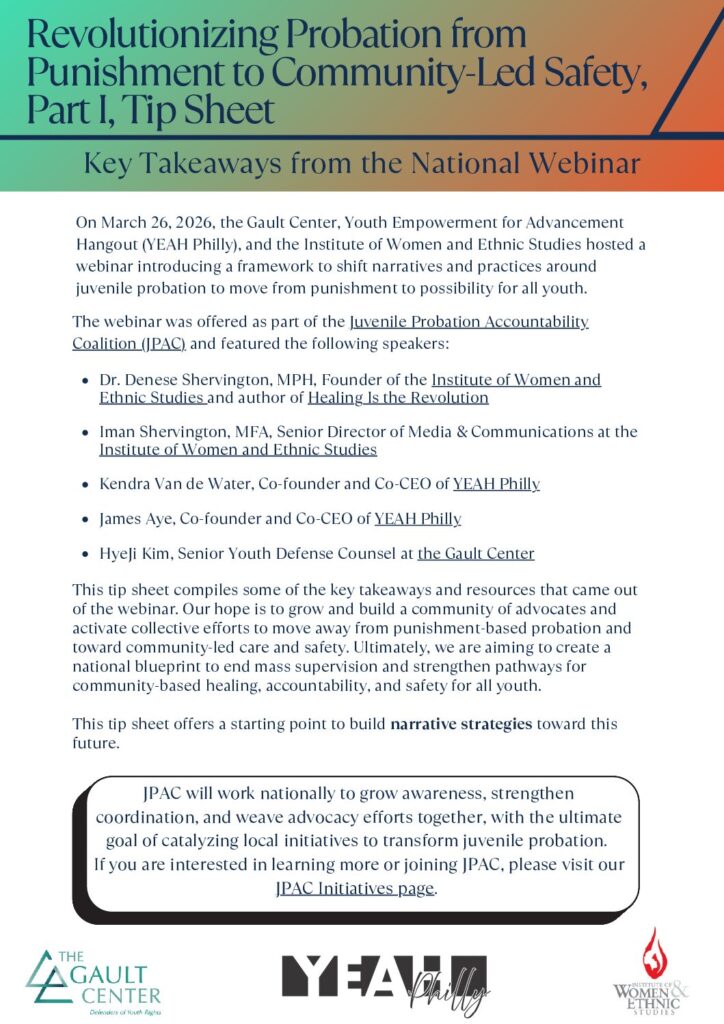
Compiles key takeaways and resources on building narrative strategies to transform juvenile probation, offered during a webinar on Revolutionizing Probation from Punishment to Community-Led Safety, Part I.

From the abstract: “Over the past several decades, there have been an alarming number of instances where young Americans have had their lives ruined due to their involvement as confidential informants in law enforcement narcotics investigations. These tragedies have garnered national attention and inspired attempts at reform several times. Yet, the reckless use of the…
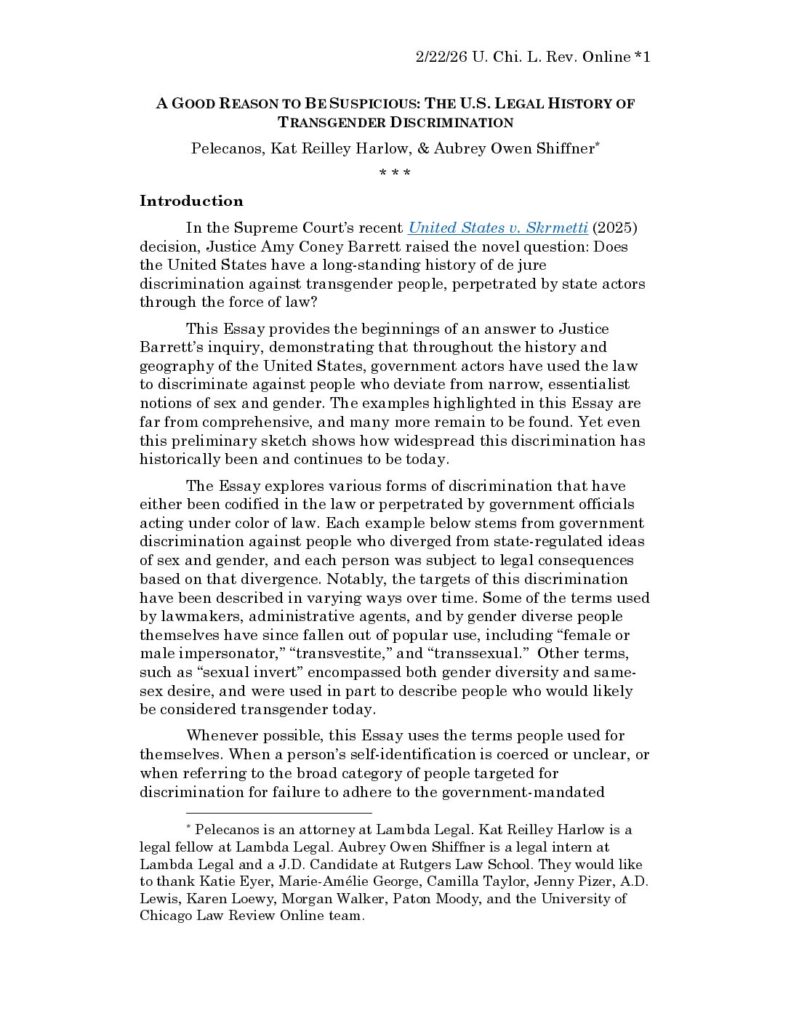
“In the Supreme Court’s recent United States v. Skrmetti (2025) decision, Justice Amy Coney Barrett raised the novel question: Does the United States have a long-standing history of de jure discrimination against transgender people, perpetrated by state actors through the force of law? This Essay provides the beginnings of an answer to Justice Barrett’s inquiry, demonstrating that throughout the…

“The Supreme Court’s 2022 ruling in New York State Rifle and Pistol Ass’n v. Bruen has dramatically reshaped Second Amendment jurisprudence. That decision, bucking precedent, created an entirely new, history-based standard for adjudicating the constitutionality of firearms restrictions and has led to a flurry of challenges to long-standing local, state, and federal gun laws. Among these…
From the abstract: “Hundreds of thousands of children are brought under the jurisdiction of delinquency courts every year in the United States. Despite the reality that most children engage in delinquent behavior during their adolescence, poor children, children of color, children with disabilities, and children who identify as LGBTQIA+ comprise a disproportionate number of those who become delinquency system-involved. These disparities exist…

This report from National Institute for Criminal Justice Reform offers six principles of a positive youth justice system (‘PYJS’) including: 1) Minimize contact with the juvenile justice system, 2) partner with youth and families to develop and share ownership of case plans, 3) community-based organizations should take the lead, 4) build on youth assets and…

This paper is part of the Series on Learning from Civil Rights Lawsuits from the Civil Rights Litigation Clearinghouse and focuses on parole review procedures for individuals serving long sentences for crimes committed under age 18, discusses constitutional dimensions of parole review for this group, and proposes model policies supporting a meaningful opportunities for release. From the Executive Summary: “In recent years, people serving…
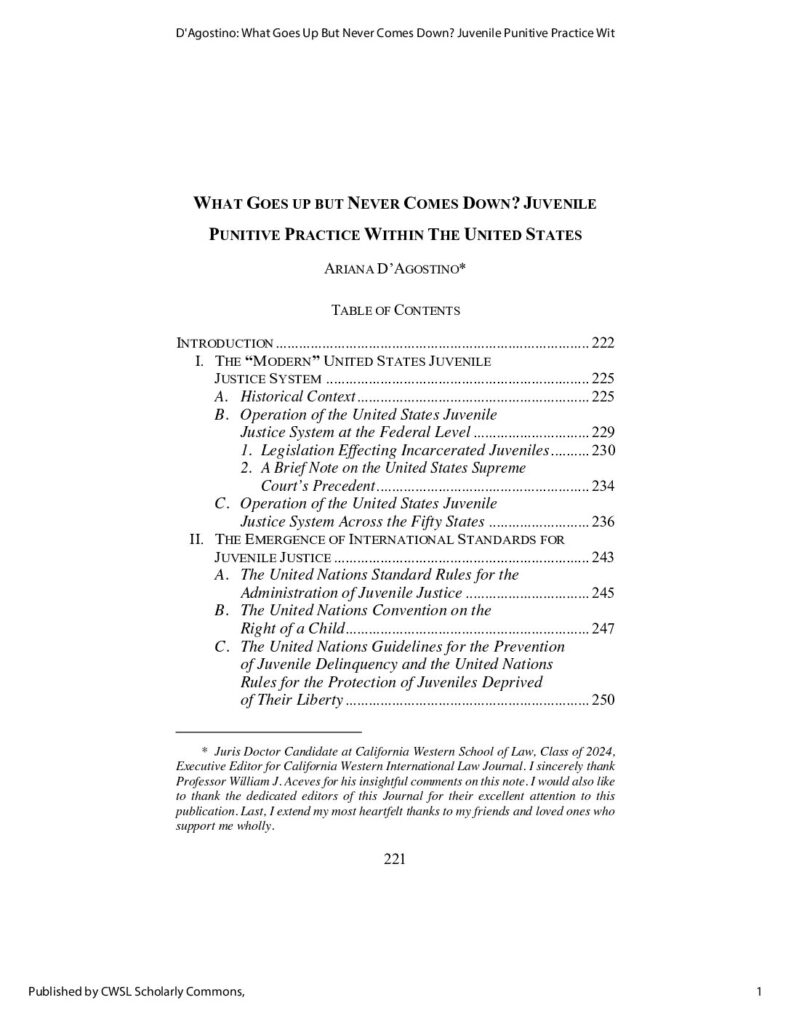
From the Introduction of the Paper: “The U.S.’s failure to implement an internationally abiding federal law regulating juvenile justice has important implications on the treatment of incarcerated adolescent populations while incarcerated, rehabilitated, and reintegrated into society. This article will analyze the harmful and outdated legal frameworks and institutional structures of the U.S. juvenile justice systems.…

Abstract: “Nearly sixty years ago, In re Gault guaranteed children in juvenile court the right to counsel. However, Gault fell short. While recognizing children’s distinct vulnerability, the Court created a right for children that is weaker than that of adults and failed to recognize how youth in fact require a more expansive right to counsel. Grounded in the stories of…

This amicus brief by American Civil Liberties Union and others argues that denying an opportunity for parole for young adults between the ages of 18 and 25 raises an equal protection violation given the racially disproportionate impact of life without parole sentences on young adults, resulting from “tough on crime” politics based in racial bias. From the Introduction: “In analyzing Petitioner Hardin’s equal protection…

This amicus brief by the Santa Clara County Independent Defense Counsel Office argues the decision in People v. Hardin should be affirmed because historical legacies of racism disparately expose some adolescents to the legal system and this does not justify lifelong punishment without considering rehabilitation. From Introduction & Summary of Argument: “Youthful offender parole is authorized by age at the…
From the Introduction: “This Article will focus on the difficulties ex-juvenile offenders face when seeking expungement of their juvenile records to prevent collateral consequences. Specifically, I will argue that a person under the age of eighteen should not be subject to the same statutory expungement bar as adults when seeking an expungement in New Jersey.…
This paper from the Executive Session on Community Corrections at the Harvard Kennedy School examines the history of youth incarceration and discusses how the inherently flawed model of youth prisons demands systemic reforms, including closure of youth prisons, to actualize safer communities, and positive youth outcomes. From the introduction: “For 170 years, since our first youth correctional institution opened, America’s approach…
