
Narrative
Compiles key takeaways and resources on building narrative strategies to transform juvenile probation, offered during a webinar on Revolutionizing Probation from Punishment to Community-Led Safety, Part I.

This report was written by Define American, an organization dedicated to “helping audiences see all immigrants with their full humanity” through diverse and nuanced storytelling about immigrant experiences across diverse media and industries. From the Overview: “Define American set out to better understand the “Moveable Middle”—people in the U.S. who, with the right approach, could…
On March 26, 2026, the Gault Center & Youth Empowerment for Advancement Hangout (YEAH Philly) hosted a webinar on Revolutionizing Probation from Punishment to Community-Led Safety. This webinar focused on shifting narratives around juvenile probation—to challenge the dominant rhetoric that probation is an act of benevolence that keeps youth and communities safe and to bring…
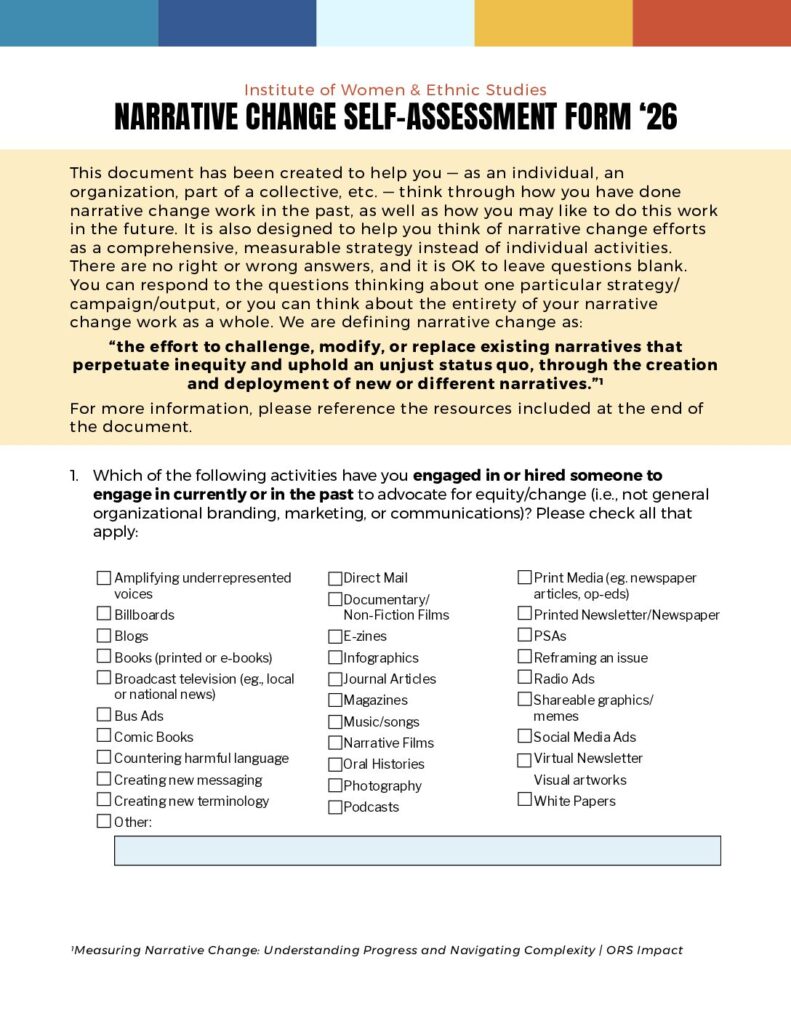
The Institute of Women and Ethnic Studies developed a Narrative Change Self-Assessment Form to think through narrative change work. This resource was shared as part of the Gault Center & Youth Empowerment for Advancement Hangout (YEAH Philly)’s webinar on Revolutionizing Probation from Punishment to Community-led Safety, Part I, held on March 26, 2026. “This document…

On March 26, 2026, the Gault and Youth Empowerment for Advancement Hangout (YEAH Philly) co-hosted a webinar on Revolutionizing Probation from Punishment to Community-Led Safety. This resource includes PowerPoint presentations from the Gault Center covering the history and youth experiences on juvenile probation, YEAH Philly highlighting meaningful community-based alternatives, and the Institute of Women & Ethnic…
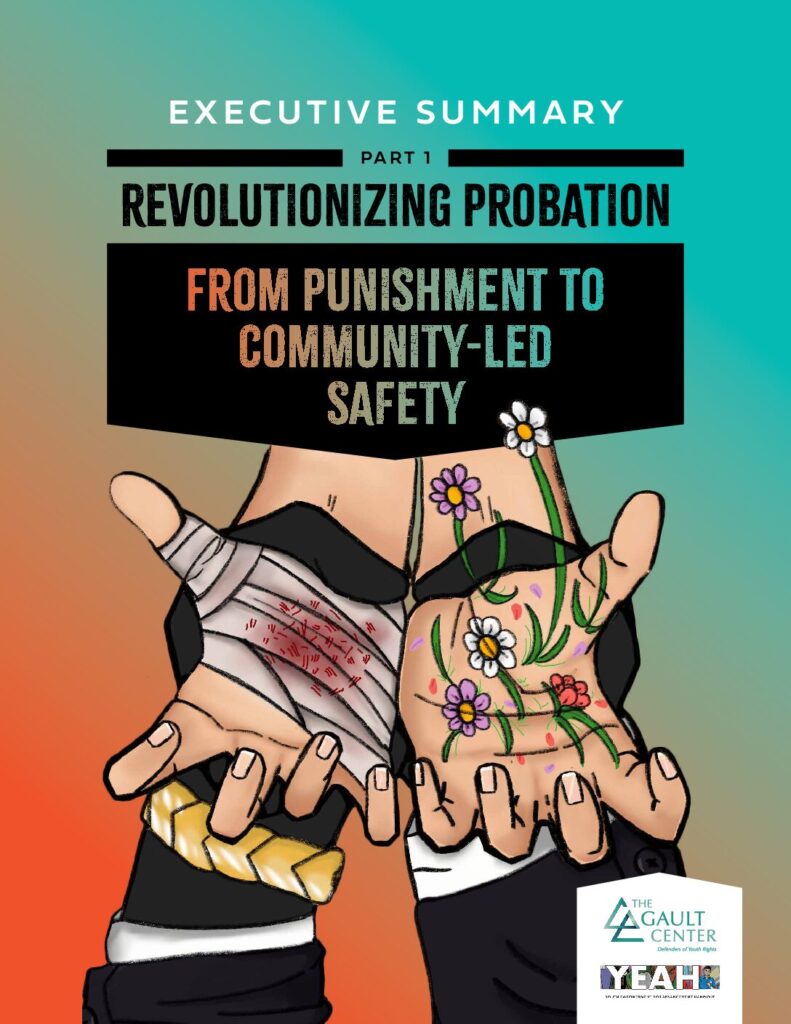
Summarizes what young people are saying about juvenile probation and offers a visual timeline highlighting the historical lineage of probation as a form of racialized social control.
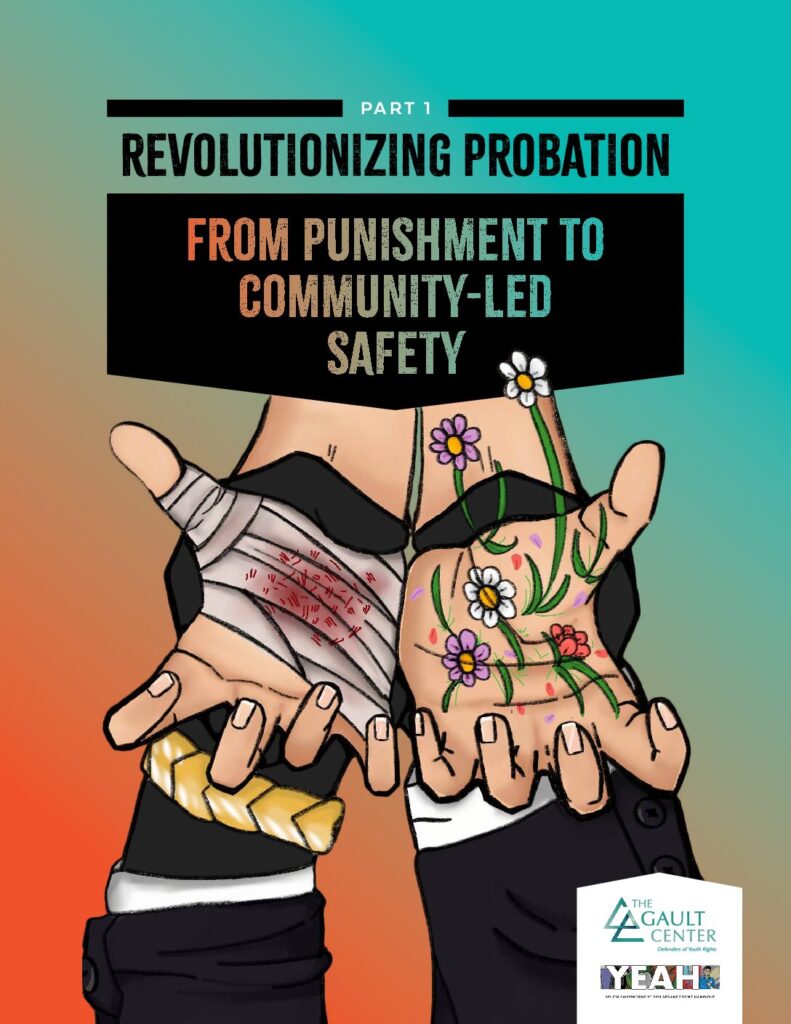
Examines young people’s experiences on juvenile probation and the racialized history of juvenile probation in our country.
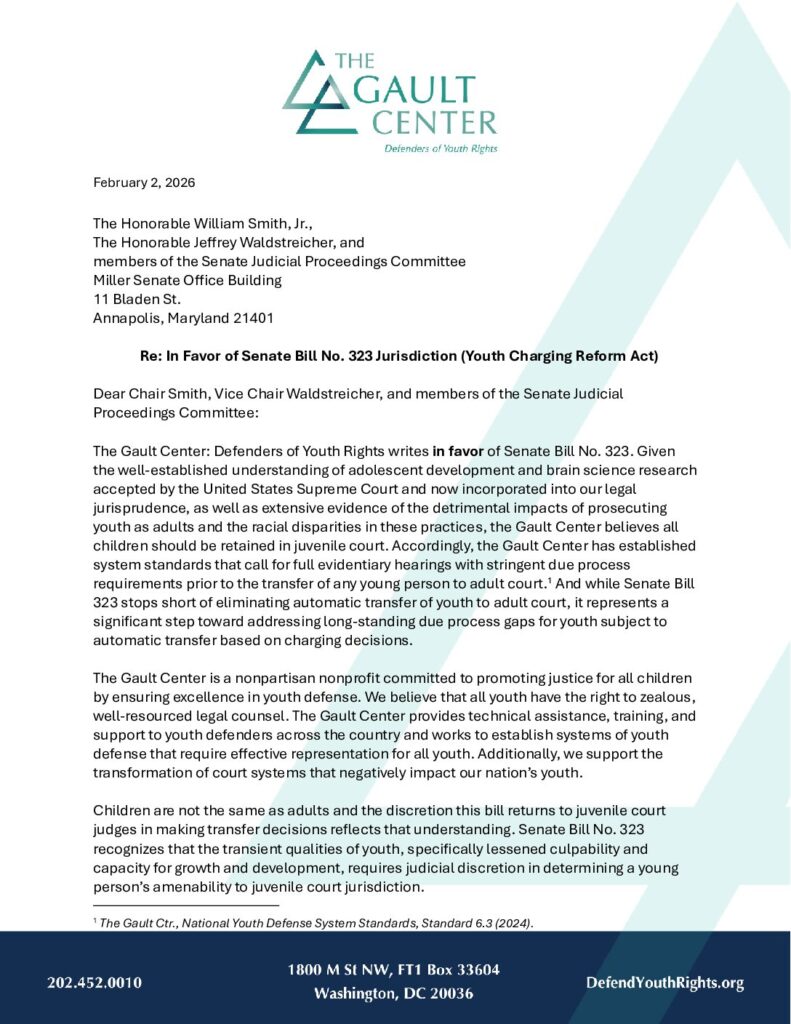
This letter written and submitted to the Maryland Senate Judicial Proceedings Committee on behalf of the Gault Center, outlines its reasons for supporting Maryland Bill No. 323 (named the Youth Charging Reform Act), which would limit the types of cases eligible for automatic transfer to adult court. From the letter: “The Gault Center: Defenders of…
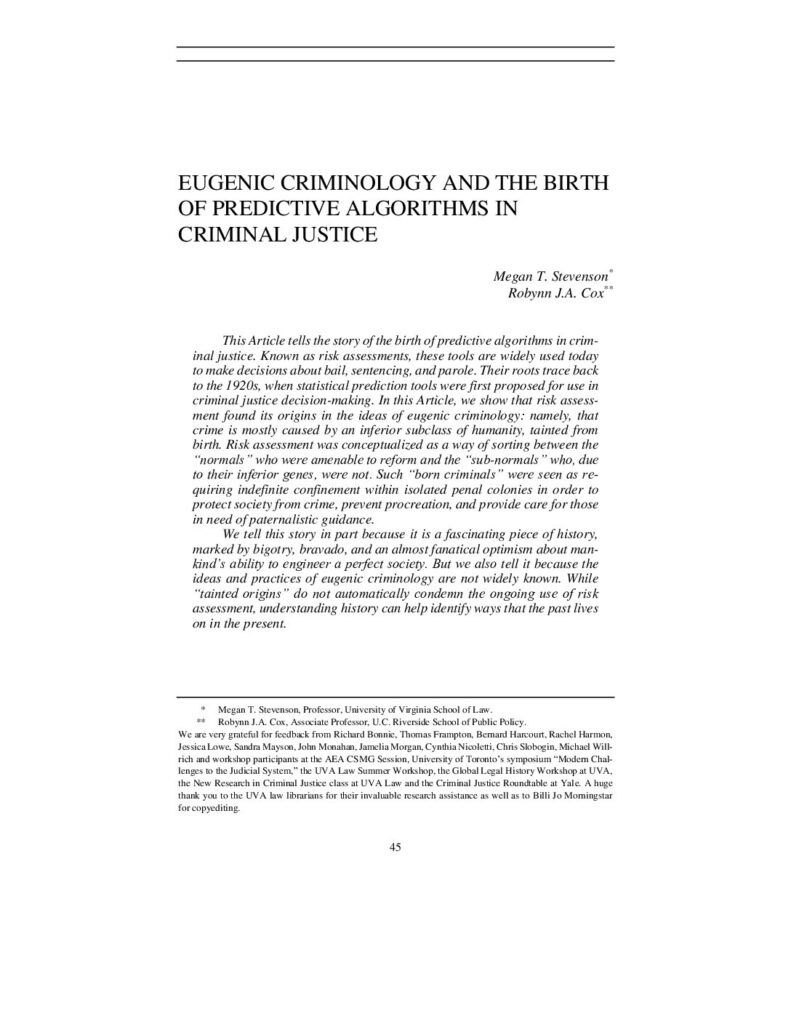
This law review article written by Professors Megan T. Stevenson and Robynn J.A. Cox uncovers the eugenic origins of risk assessment tools and highlights how modern-day uses of risk assessments for preventive detention still perpetuate eugenic criminology, albeit with new terminology. This article challenges the ongoing influence of eugenics in identifying who is “high risk”…
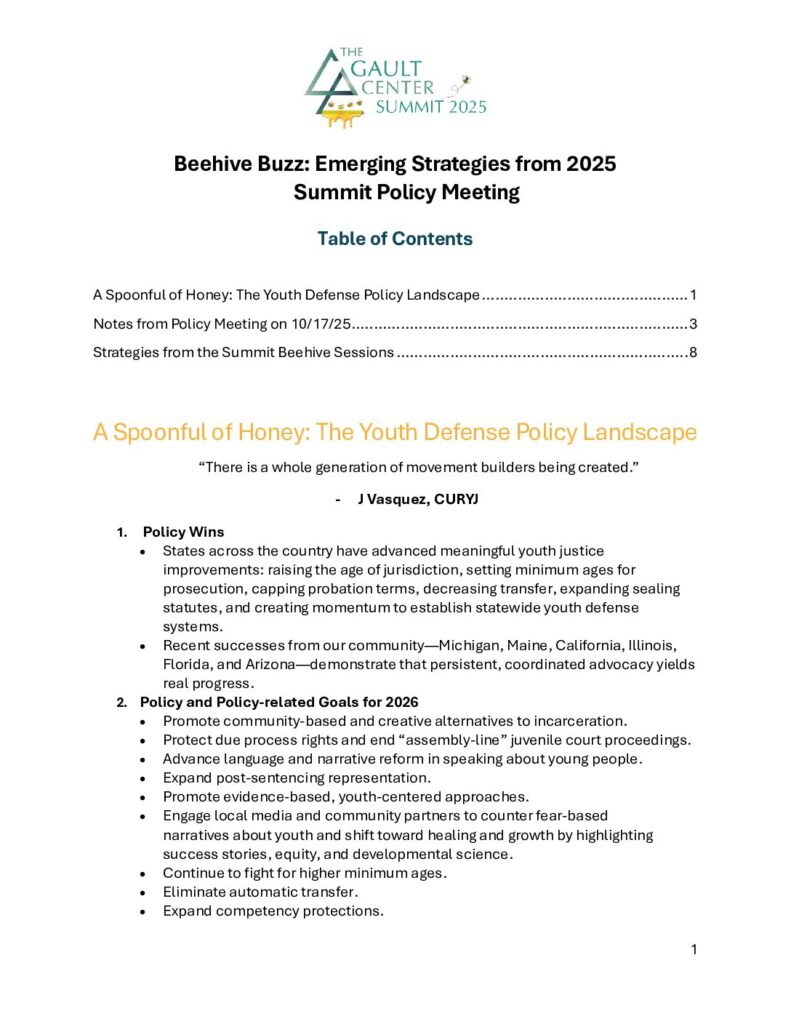

In October 2025, the Gault Center convened over three hundred youth defense lawyers and advocates at our annual Youth Defender Leadership Summit. Together, we practiced the cultivation of community in service of building a more just, more liberated, and more human humanity for all children and for us all. This resource captures the shared learnings…

This is a sample “youth report to the court” document (created by a Juvenile Court Judge in Iowa), for youth who are currently under the juvenile court jurisdiction. This report is provided to young people when they appear in court, asking if they would like the space to share pertinent information and ask questions of…

This memo from Fenton Communications Agency provides youth advocates with messaging strategies to respond to the D.C. Crimes Act and the Juvenile Sentencing Reform Act pending in Congress. The memo includes succinct responses to questions posed about public safety, youth crime, and transfer laws. The memo also provides suggested talking points on tone and relevant…

Former Secretary of the Maryland Department of Juvenile Services, Vinny Schiraldi, wrote this op-ed, discussing President Trump’s deployment of National Guard troops in Washington D.C. and the District’s intentions to repeal lower the age for trying children as adults to 12 in the Youth Rehabilitation Act. The op-ed details Vinny’s reflections and observations during his…

This issue brief by the Juvenile Justice Initiative provides an overview of transfer laws in Illinois. Additionally, the brief reviews demographic data on young people who are being tried as adults and identifies the ways that transfer fails children and public safety in the state of Illinois. The brief ends by calling for a return…


This article featured on the Frameworks Institute website offers research-based communication strategies for combating the manufactured controversy of a “crime emergency” caused by adolescents in Washington D.C. The article provides a topline nonpartisan message for responding to the relentless, toxic messaging around adolescent crime and outlines five framing recommendations for discussing the harmful policies being…


This report from the National Center for Youth Law examines the emerging policies across the United States that are likely to reverse the downward trend of youth incarceration rates.


Georgetown University Law Center Associate Professor Eduardo Ferrer penned this op-Ed on regarding the narrative that there is a “rise” in violent crime in D.C. This narrative is being used to justify regressive tough-on-crime policies that do not improve public safety. Professor Ferrer discusses the perception versus the reality of crime statistics and data, including…

From the introduction: “For decades media scholars have noted that local news coverage is often sensationalized and framed in ways that heighten public fears of youthful offending. And this tendency has continued since the outset of the pandemic. This coverage has likely contributed to a shift in public opinion toward tough-sounding policies that conflict with…

A resource guide to navigate a personal or group reading journey of Norma Wong’s “When No Thing Works.” This guide provides questions to accompany each chapter of the book as well as resources for hosting your own Navigation Circle.


From the introduction: “This brief is an accompaniment to a short video documentary, ‘Don’t Abandon Us: Addressing Youth, Crime, and Trauma.’ Both designed to help increase awareness among decision makers on how childhood trauma and adverse experiences can contribute to youth crime and future legal system involvement. In a moment of growing concern about crime,…
