
Native and Indigenous Youth
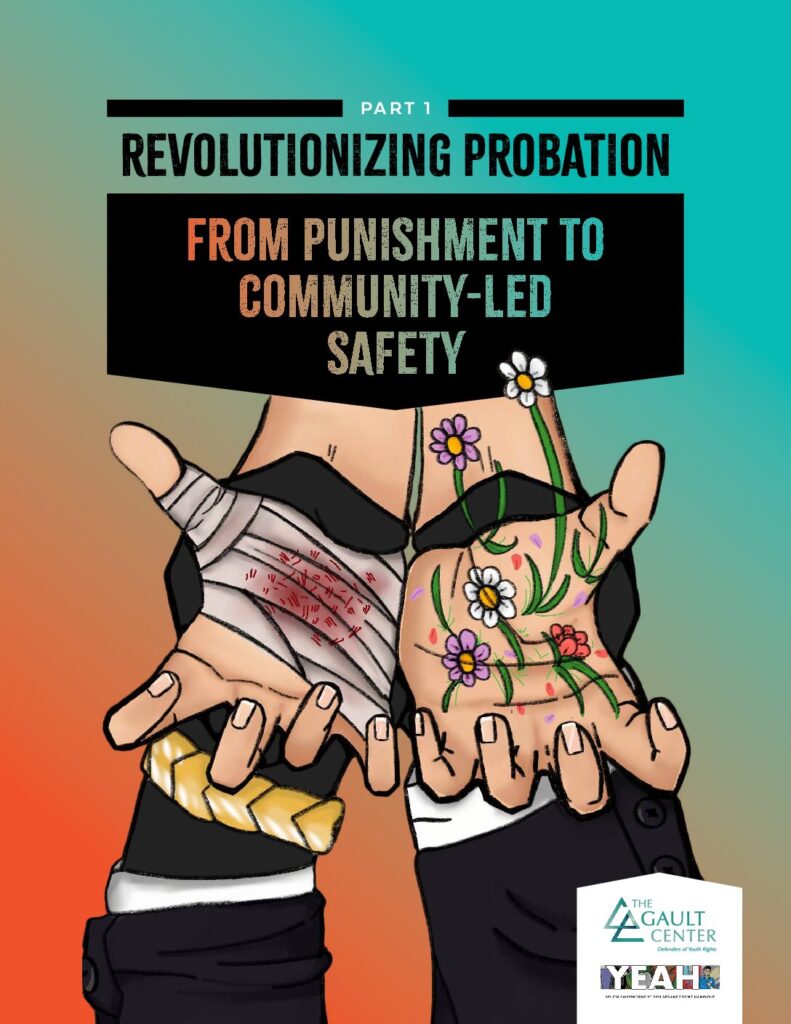
Examines young people’s experiences on juvenile probation and the racialized history of juvenile probation in our country.
“In the Supreme Court’s recent United States v. Skrmetti (2025) decision, Justice Amy Coney Barrett raised the novel question: Does the United States have a long-standing history of de jure discrimination against transgender people, perpetrated by state actors through the force of law? This Essay provides the beginnings of an answer to Justice Barrett’s inquiry, demonstrating that throughout the…
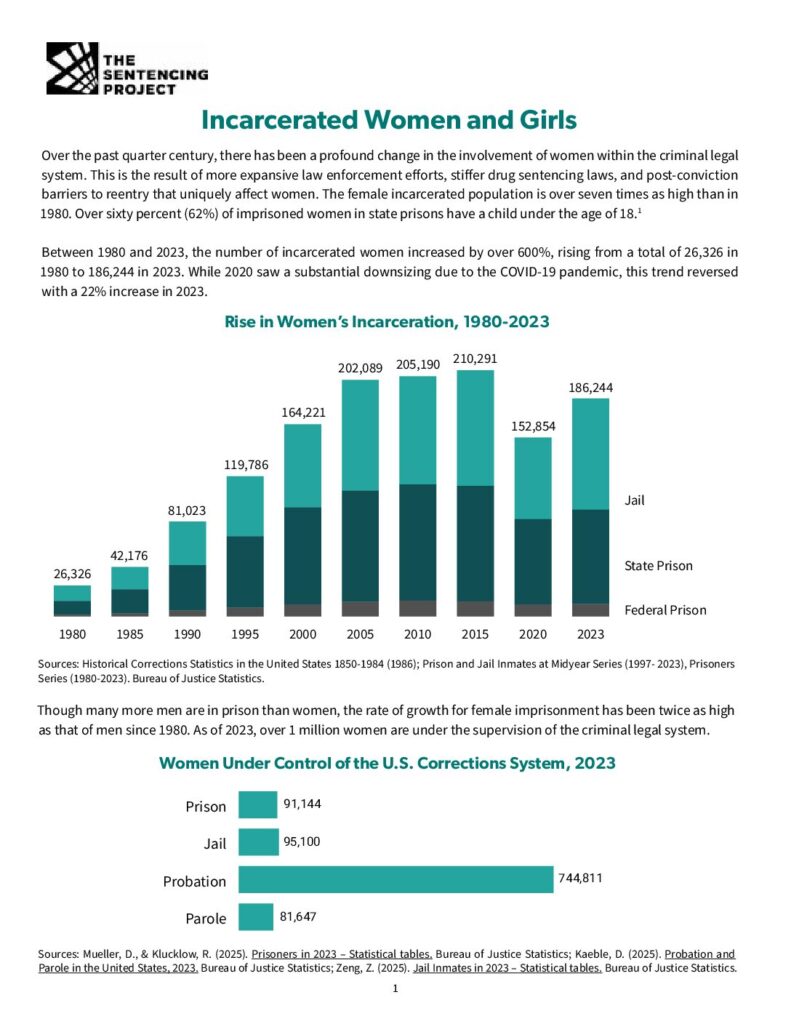
This report, by The Sentencing Project, examines the changes in involvement of women and girls in the criminal and juvenile legal system over the past quarter century. The report includes data examining the rise of women and girls’ incarceration in jails, state and federal prisons, residential placement centers, as well as women under the control of the U.S. Corrections systems through probation or parole., This…
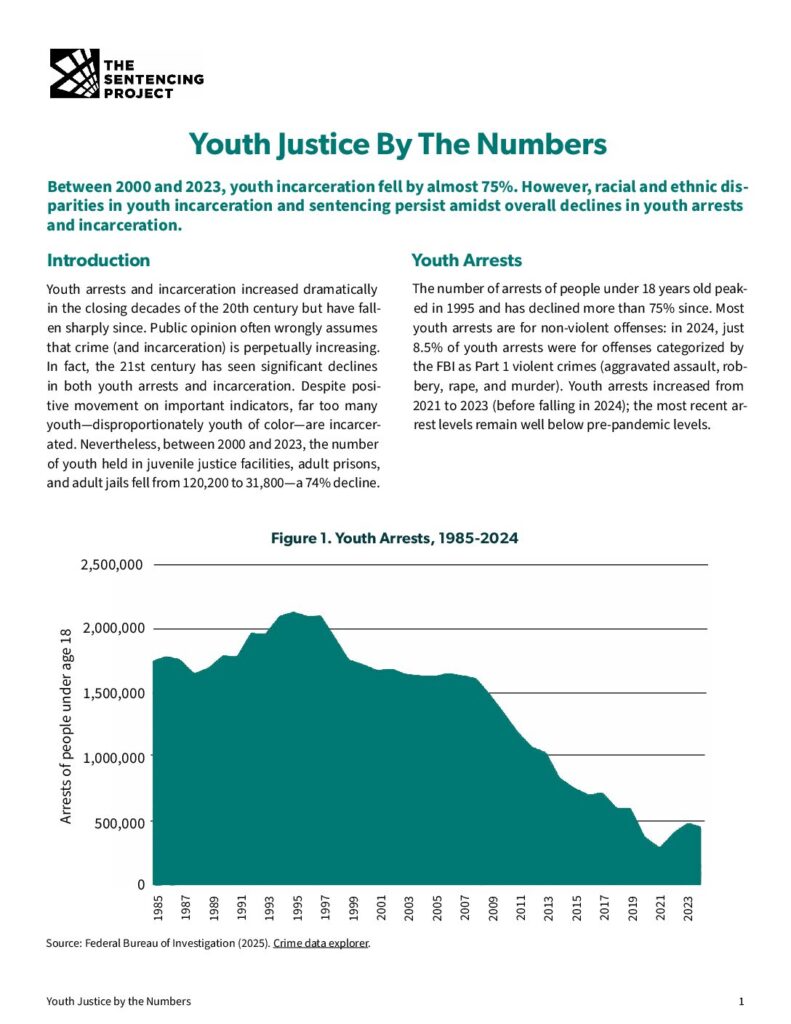
The Sentencing Project released an updated snapshot of the numbers of youth in the juvenile legal system from 2000 to 2023, finding significant declines in youth arrests and incarceration, though racial and ethnic disparities persist. The report calls for the need to continued shrinking the juvenile legal system by increasing informal or diversionary responses to youth arrests. Introduction: “Youth arrests and incarceration increased dramatically in the closing…

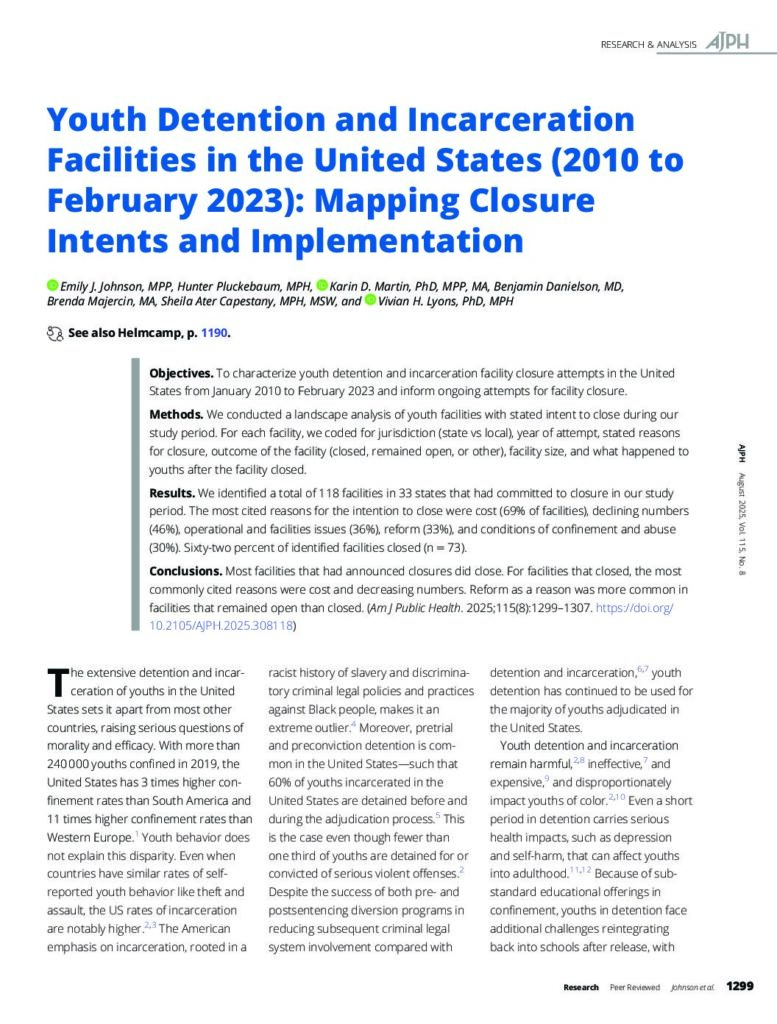
From the Discussion: “This study illuminates pathways for future research to explore facility closures. Such research should investigate the impact of specific drivers supporting completed closures of youth facilities, including the combination of stated reasons to appeal to different audiences. Notably, we only found 1 paper in our scoping review that explores the strategies used…
From the abstract: “Hundreds of thousands of children are brought under the jurisdiction of delinquency courts every year in the United States. Despite the reality that most children engage in delinquent behavior during their adolescence, poor children, children of color, children with disabilities, and children who identify as LGBTQIA+ comprise a disproportionate number of those who become delinquency system-involved. These disparities exist…


This report, by the U.S. Department of Justice Civil Rights Division outlines key highlights of the Division’s work from 2021 to 2024 across policing, juvenile facilities, schools and beyond.


This report reviews the expanding infrastructure of police surveillance in public schools and highlights the failure of AI technologies and digital surveillance in making schools safer. Further, the report discusses the harms these technologies may cause to Black and Latine youth and youth from other historically vulnerable communities. Calling on youth justice advocates, youth leaders,…

From the Introduction: “Racial inequities are addressed to varying degrees in at least three of the four sections of the Restatement of Children and the Law. This Essay evaluates whether and how well this Restatement advances racial justice and identifies additional opportunities for the ALI to address racial inequities now and in future iterations of the Restatement. The…

This amicus brief by the Santa Clara County Independent Defense Counsel Office argues the decision in People v. Hardin should be affirmed because historical legacies of racism disparately expose some adolescents to the legal system and this does not justify lifelong punishment without considering rehabilitation. From Introduction & Summary of Argument: “Youthful offender parole is authorized by age at the…

From the introduction: “Imagine you’re a student with a disability that impacts how you interact with others and process situations. In an instant, that disability may be criminalized, and you could find yourself thrust into a juvenile justice system that offers little support and few education resources. This scenario is all too common. Thousands of…

From the executive summary: “On April 21, 2021, the Department of Justice opened a pattern or practice investigation of the Minneapolis Police Department (MPD) and the City of Minneapolis. By then, Derek Chauvin had been convicted in state court for the tragic murder of George Floyd in 2020. In the years before, shootings by other…


From the introduction: “This brief offers context on the youth criminalization crisis in the United States. We then outline a series of harmful elements in the Bipartisan Safer Communities Act. Specifically, we review provisions that: • Increase funding for threat assessments, surveillance, and greater police presence in schools; • Expand data-sharing between law enforcement and…

From the introduction: “The COVID-19 pandemic has laid bare the dangers of the juvenile legal system; this should make it harder to look away from the societal inequities that are exacerbated by youth incarceration. Indeed, the current moment, including the unprecedented nationwide protests in response to the murders of George Floyd and Breonna Taylor in…
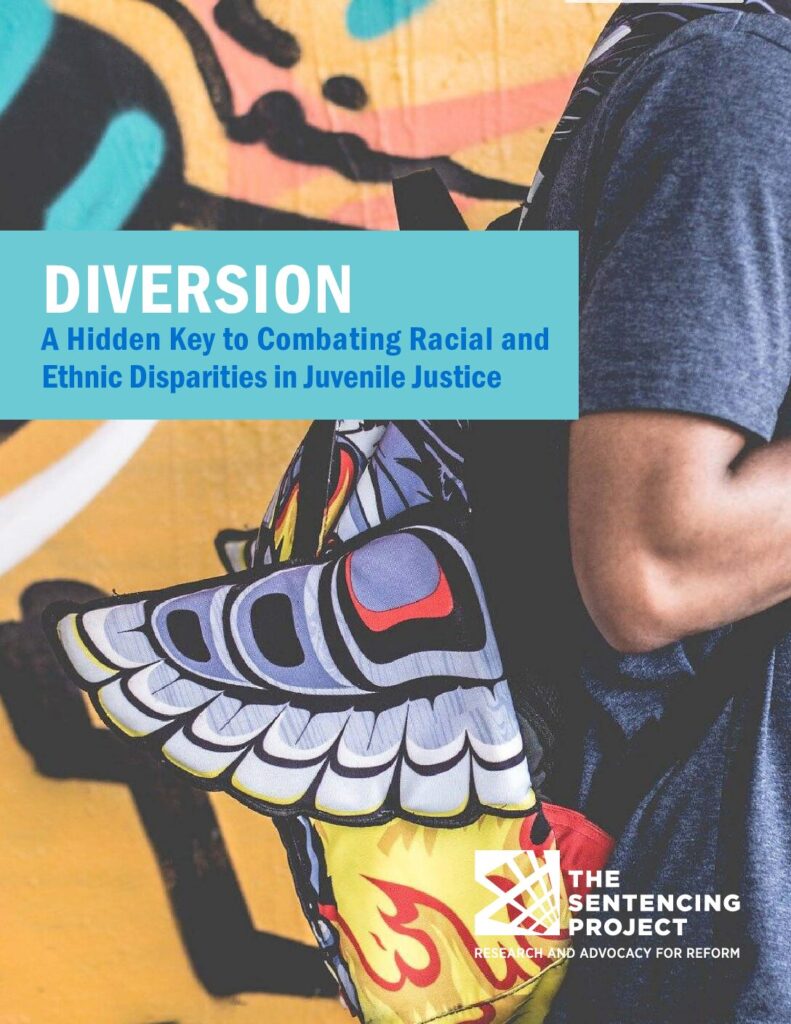
This report from The Sentencing Project discusses the state of diversion for youth in the juvenile legal system, existing disparities in diversion and why they are so severe, and strategies for expanding diversion. From the Summary: “Diverting youth from juvenile court involvement should be a central focus in efforts to reduce racial and ethnic disparities…

This article traces the history of racist gun laws and how they interact with the Second Amendment, highlighting the racially disproportionate impact of gun charges on Black and Latine communities. Relevant language from the article includes: “As the courts increasingly look to history and tradition to determine the scope of the right to keep and…
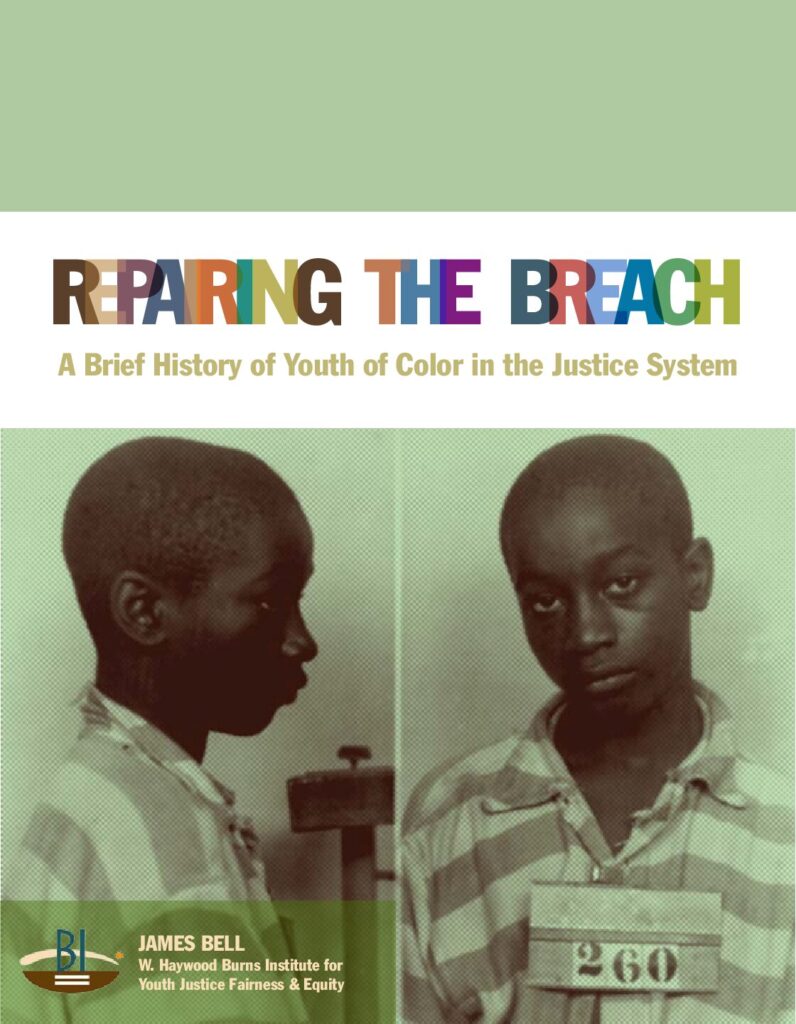
The W. Haywood Burns Institute for Youth Justice Fairness & Equity released a report outlining the history of how youth of color have been treated in the juvenile legal system over time as a framework for meaningfully engaging in the fight against mass incarceration. “Trying to meaningfully address the unacceptable levels of racial and ethnic…

From the introduction: “Justice Policy Institute found that the average cost of the most expensive confinement option for a young person in 48 states was $588 per day, or $214,620 per year. The data show that in 40 states taxpayers spend at least $100,000 a year for a single young person’s confinement, and in 12…
