
Peer Pressure and Influence

This report from the Urban Institute features results from a survey of young people in four Chicago neighborhoods to “learn from young adults firsthand whether and why they decide to carry guns, how they acquire firearms, how they experience gun violence, and what they view as the best strategies to reduce gun carrying and promote safety in their communities.” From the report: …

This article from Dr. Antoinette Kavanaugh and Dr. Thomas Grisso examines the roles experts can play in “Montgomery” resentencing cases. From the article: “In summary, experts can play an important role in the approximately five hundred Miller/ Montgomery cases pending in Pennsylvania’s courts. Experts retained by the defense can serve as educators or evaluators. In…
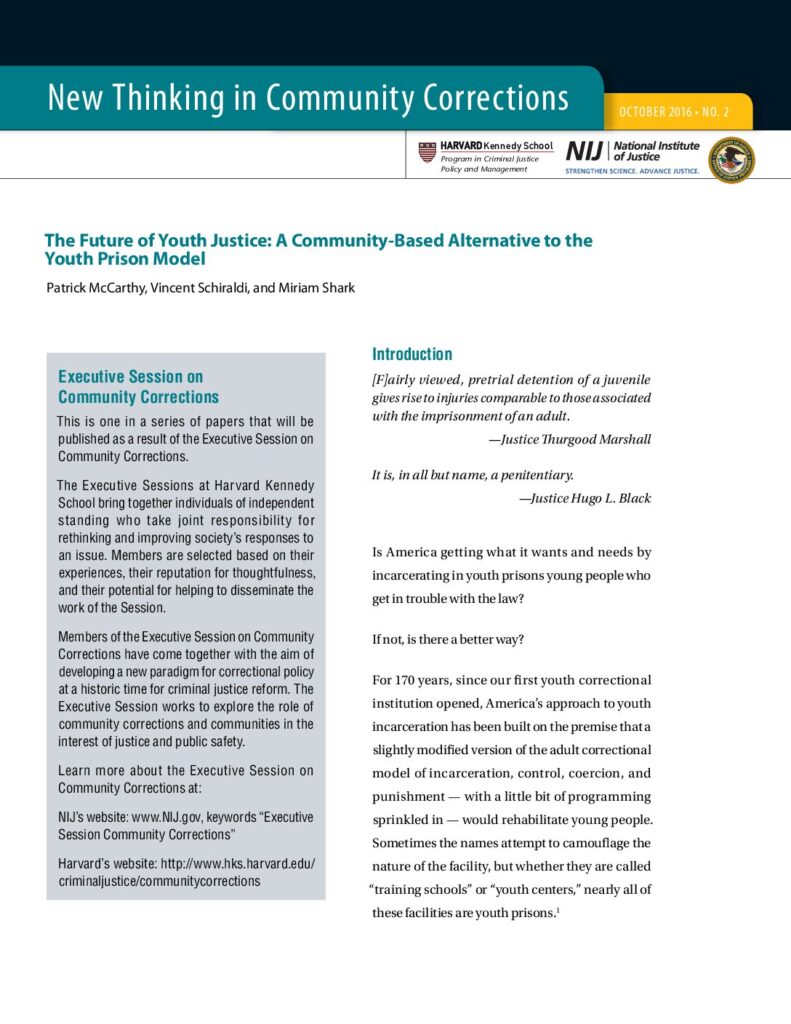
This paper from the Executive Session on Community Corrections at the Harvard Kennedy School examines the history of youth incarceration and discusses how the inherently flawed model of youth prisons demands systemic reforms, including closure of youth prisons, to actualize safer communities, and positive youth outcomes. From the introduction: “For 170 years, since our first youth correctional institution opened, America’s approach…

From the introduction: ” Recent Supreme Court cases have recognized the science underlying the common-sense notion that children are not “little adults.” Their brains function in a completely different manner than those of adults. In 2005, the Court abolished the juvenile death penalty and recognized the neuroscience underlying the claim that those under the age…

This amici brief by Juvenile Law Center, Loyola Civitas Childlaw Clinic, and others argues automatic prosecution and mandatory sentencing of young people charged with felony murder is unconstitutional in light of recent Supreme Court case law as Illinois law does not allow for individual sentencing based on maturity and culpability. Furthemore, the brief argues the…

This amici brief prepared by the Juvenile Law Center et al. highlights the particular characteristics of adolescent development and youth that make juvenile life without parole sentences unconstitutional and in violation of the 8th Amendment to the U.S. Constitution. The brief addresses youth’s culpability, potential for change, and risk taking behavior compared to adults as…

This amicus brief by Juvenile Law Center, Campaign for Youth Justice, and The Gault Center argues the transfer hearing in the state juvenile court deprived the young person of due process when the judge only considered the intentional murder charge, when they were ultimately convicted on the lesser offense of felony murder and second degree…

The U.S. Supreme Court held juvenile life without parole for non-homicide offenses violates the 8th Amendment and offered the following language in support. “Roper established that because juveniles have lessened culpability they are less deserving of the most severe punishments. 543 U.S., at 569, 125 S. Ct. 1183, 161 L. Ed. 2d 1. As compared…
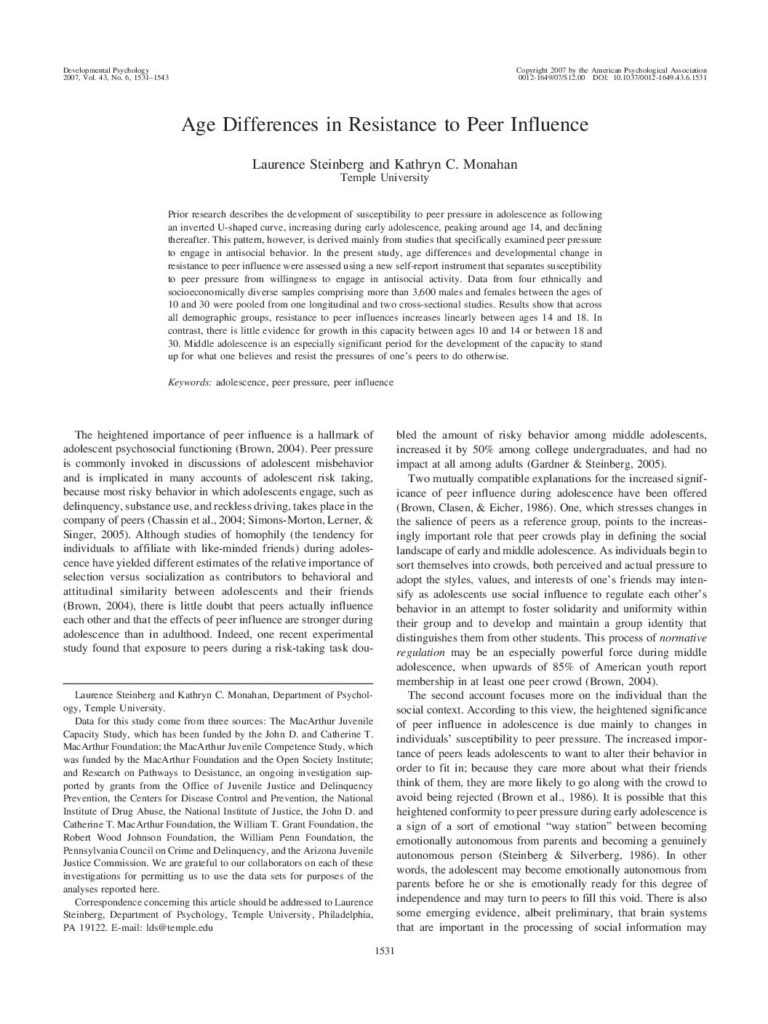
“Prior research describes the development of susceptibility to peer pressure in adolescence as following an inverted U-shaped curve, increasing during early adolescence, peaking around age 14, and declining thereafter. This pattern, however, is derived mainly from studies that specifically examined peer pressure to engage in antisocial behavior. In the present study, age differences and developmental…
- « Previous
- 1
- 2
