
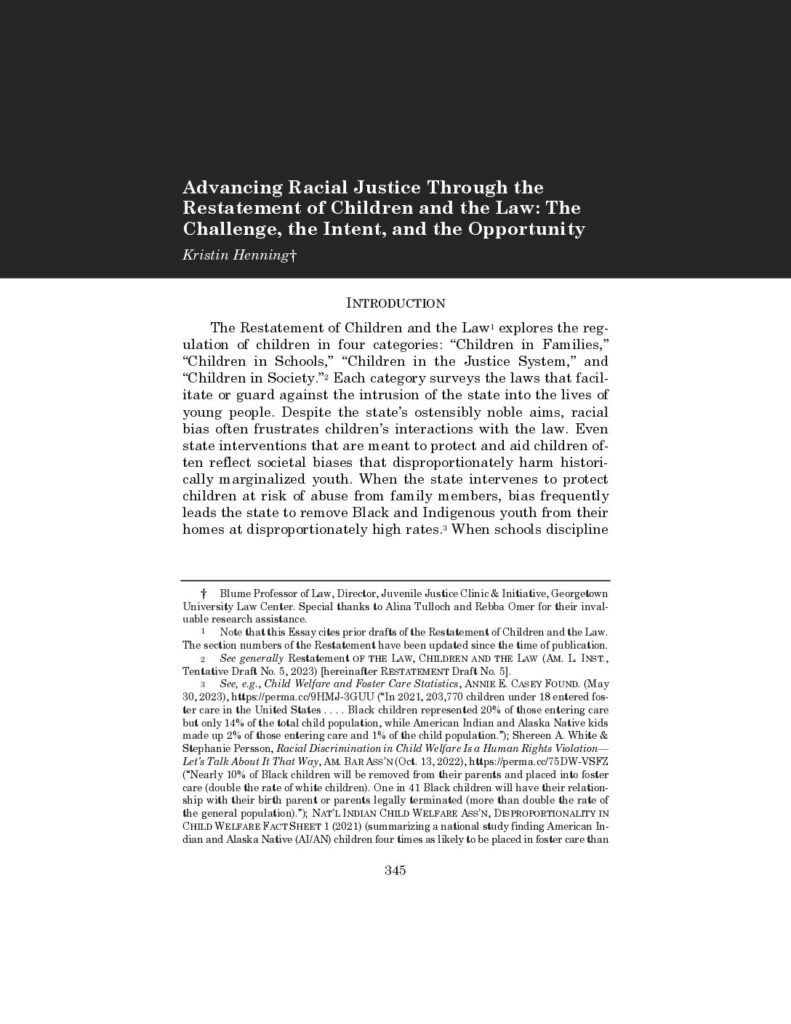
Police
School-based arrests have long made up a substantial number of cases in the juvenile legal system. As a result, youth defenders often represent clients who have been seized, searched, or interrogated on school grounds. This guide provides a general overview of the law governing school seizures, searches, and interrogations and practice tips for challenging evidence…
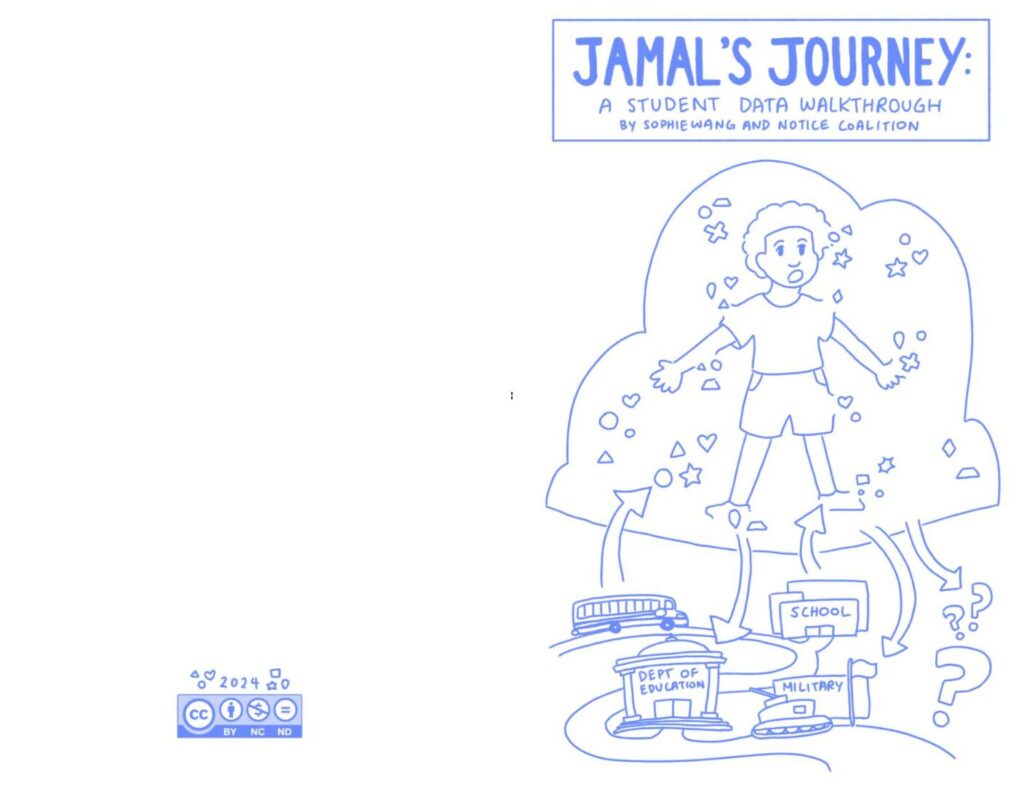
From the executive summary: “• Police increasingly replace stop-and-frisk practices with databases that crudely profile Black and Latinx youth based on their neighborhoods, peer groups, and clothing. • These databases ruin lives: police typecast minority youths as gang members without evidence, putting them at risk of false arrest and wrongful deportation. • Many police departments…
From the introduction: “Imagine you’re a student with a disability that impacts how you interact with others and process situations. In an instant, that disability may be criminalized, and you could find yourself thrust into a juvenile justice system that offers little support and few education resources. This scenario is all too common. Thousands of…
The Center for Justice Innovation conducted an exploratory, participatory action research study of 103 youth ages 15-24 who reported carry guns in a neighborhood of Brooklyn. The research evaluates why these youth carry guns and proposing a collaborative approach to public safety. From the report: “The increase in gun violence experienced in many U.S.…
This resource was created as part of the 2022 Racial Justice Training Series, co-hosted with the Georgetown Juvenile Justice Clinic & Initiative. Advocates and experts gathered each month to discuss a chapter of Prof. Kristin Henning’s Book The Rage of Innocence: How America Criminalizes Black Youth. Watch recordings of the monthly webinars and see other…
From the executive summary: “On April 21, 2021, the Department of Justice opened a pattern or practice investigation of the Minneapolis Police Department (MPD) and the City of Minneapolis. By then, Derek Chauvin had been convicted in state court for the tragic murder of George Floyd in 2020. In the years before, shootings by other…
From the resource: “This poster is a tool to assess and understand differences between reforms that strengthen imprisonment and abolitionist steps that reduce its overall impact and grow other possibilities for wellbeing. As we work to dismantle incarceration in all its forms, we must resist common reforms that create or expand cages anywhere, including under…
This article discusses the legal landscape of school surveillance, including digital and artificial intelligence surveillance, through the lens of Fourth Amendment and federal privacy laws. From the Abstract: “Since the Covid-19 pandemic, schools have escalated their use of educational technology to improve students’ in-school and at-home learning. Although educational technology has many educational benefits for…
From the executive summary: “The Department of Justice has reasonable cause to believe that the Louisville/Jefferson County Metro Government (Louisville Metro) and the Louisville Metro Police Department (LMPD) engage in a pattern or practice of conduct that deprives people of their rights under the Constitution and federal law: • LMPD uses excessive force, including unjustified…
This expert report analyzes the presence of racial bias in a police encounter with Black teenage girls in Colorado. The report utilizes research on implicit racial bias, stereotype threat, adultification, and policing as trauma in its analysis of the facts of the case.
This resource was created as part of the 2022 Racial Justice Training Series, co-hosted with the Georgetown Juvenile Justice Clinic & Initiative. Advocates and experts gathered each month to discuss a chapter of Prof. Kristin Henning’s Book The Rage of Innocence: How America Criminalizes Black Youth. Watch recordings of the monthly webinars and see other…
From the introduction: “This brief offers context on the youth criminalization crisis in the United States. We then outline a series of harmful elements in the Bipartisan Safer Communities Act. Specifically, we review provisions that: • Increase funding for threat assessments, surveillance, and greater police presence in schools; • Expand data-sharing between law enforcement and…
This resource was created as part of the 2022 Racial Justice Training Series, co-hosted with the Georgetown Juvenile Justice Clinic & Initiative. Advocates and experts gathered each month to discuss a chapter of Prof. Kristin Henning’s Book The Rage of Innocence: How America Criminalizes Black Youth. Watch recordings of the monthly webinars and see other…