
System Transformation & Abolition


Outlines steps that states must take to comply with the minimum requirements of the U.S. Constitution to protect the rights of youth facing deprivations of liberty.

The Ella Baker Center for Human Rights and Ceres Policy Research Center partnered with youth leaders in Alameda County, California, to assess the current landscape of the juvenile legal system and outline a youth-centered vision for the future. Utilizing a youth participatory action research protocol, this report relied on youth leaders to design and implement…

From the resource: “This poster is a tool to assess and understand differences between reforms that strengthen imprisonment and abolitionist steps that reduce its overall impact and grow other possibilities for wellbeing. As we work to dismantle incarceration in all its forms, we must resist common reforms that create or expand cages anywhere, including under…
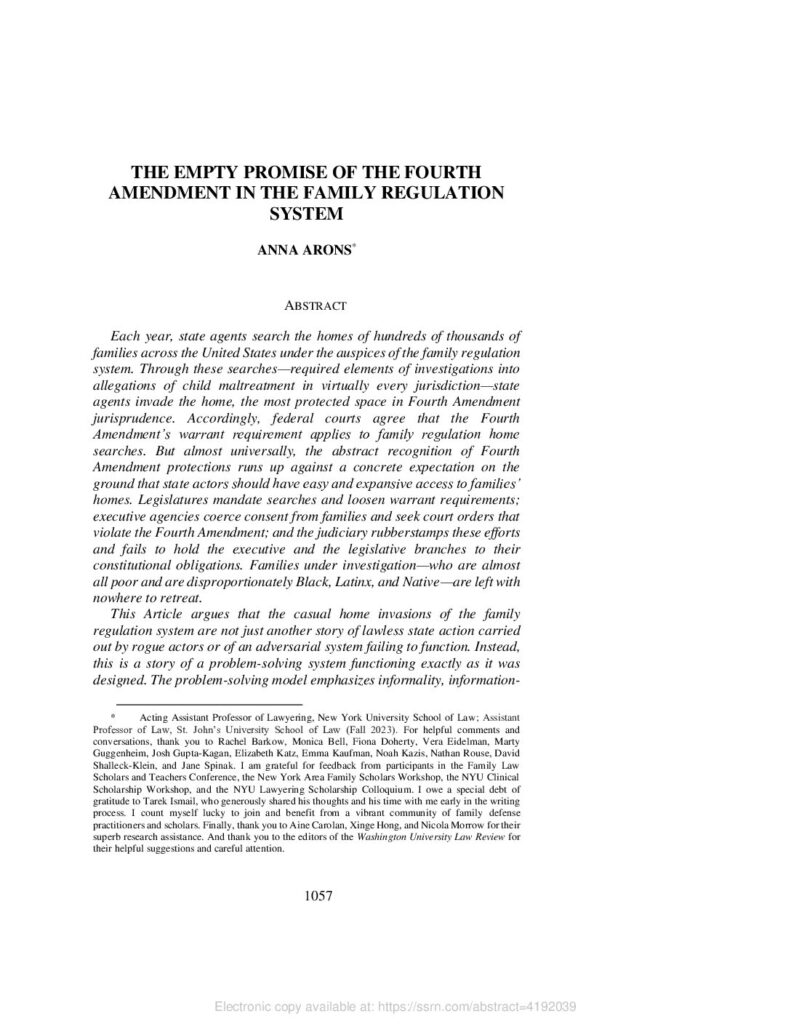
This Article argues that the casual home invasions of the family regulation system are not just another story of lawless state action carried out by rogue actors or of an adversarial system failing to function. Instead, this is a story of a problem-solving system functioning exactly as it was designed. The problem-solving model emphasizes informality,…

From the introduction: “The COVID-19 pandemic has laid bare the dangers of the juvenile legal system; this should make it harder to look away from the societal inequities that are exacerbated by youth incarceration. Indeed, the current moment, including the unprecedented nationwide protests in response to the murders of George Floyd and Breonna Taylor in…

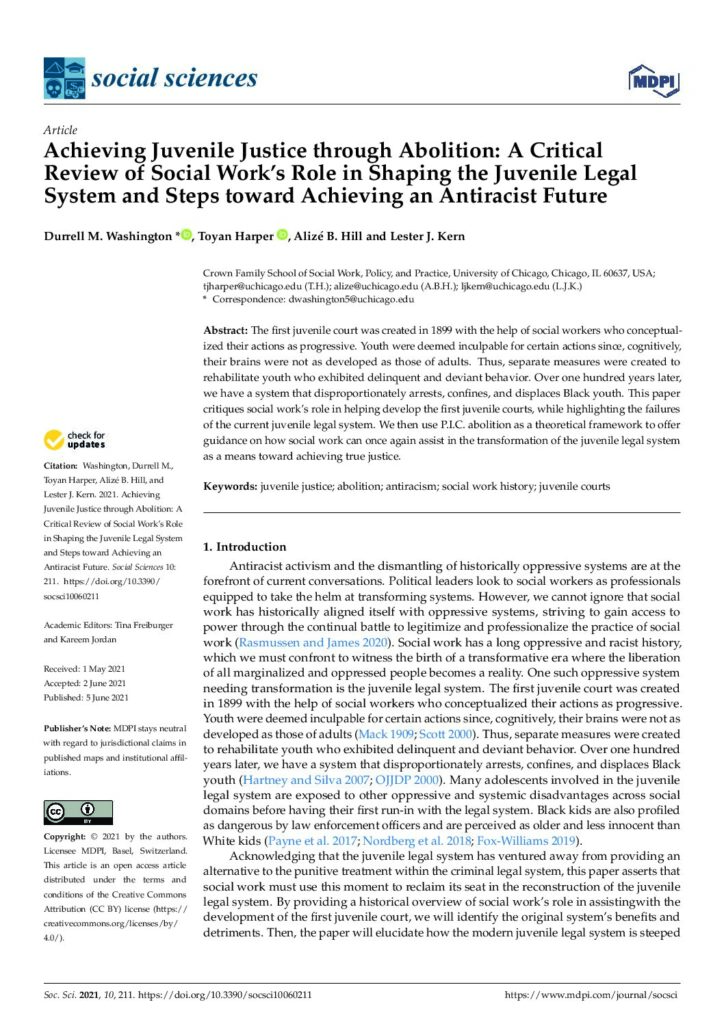

From the abstract: “Today’s left social movements are challenging formal law and politics for their capitulation to a regime of racial capitalism. In this Feature, I argue that we must reconceive our relationship to reform and the popular struggles in which they are embedded. I examine the turn of left social movements to “non-reformist reforms”…

This policy report features interviews of young people who have been incarcerated in youth facilities in Colorado and details the harmful conditions and culture in these programs. From the Executive Summary: “Despite a mission of rehabilitation rather than punishment, the culture of the Colorado Division of Youth Corrections (DYC) is plagued by punitive practices that…

From the introduction: “This brief tells the story of how the four Models for Change states—Pennsylvania, Illinois, Louisiana, and Washington—are already moving to reform and reshape their own state juvenile justice systems. These states have demonstrated strong leadership in juvenile justice policy, value collaboration and engagement, and because of their efforts, have changed the political…
- « Previous
- 1
- 2
