


In this letter to school officials, the ACLU of Ohio provides guidance in response to the revocation of the “sensitive locations” policy that had previously limited immigration enforcement at schools. The letter provides guidance regarding procedures schools should have in place if immigration agents take enforcement action at schools, the collection of information regarding students’…


This memo, filed by youth defenders from the Hamilton County, Ohio public defender office, demands evidentiary competence hearings based on state statutory grounds and constitutional doctrines of fundamental fairness, effective assistance of counsel, and separation of powers. Notably, this memo cites Standard 3.2 of the National Youth Defense System Standards on independence to highlight an…

This report from National Institute for Criminal Justice Reform offers six principles of a positive youth justice system (‘PYJS’) including: 1) Minimize contact with the juvenile justice system, 2) partner with youth and families to develop and share ownership of case plans, 3) community-based organizations should take the lead, 4) build on youth assets and…
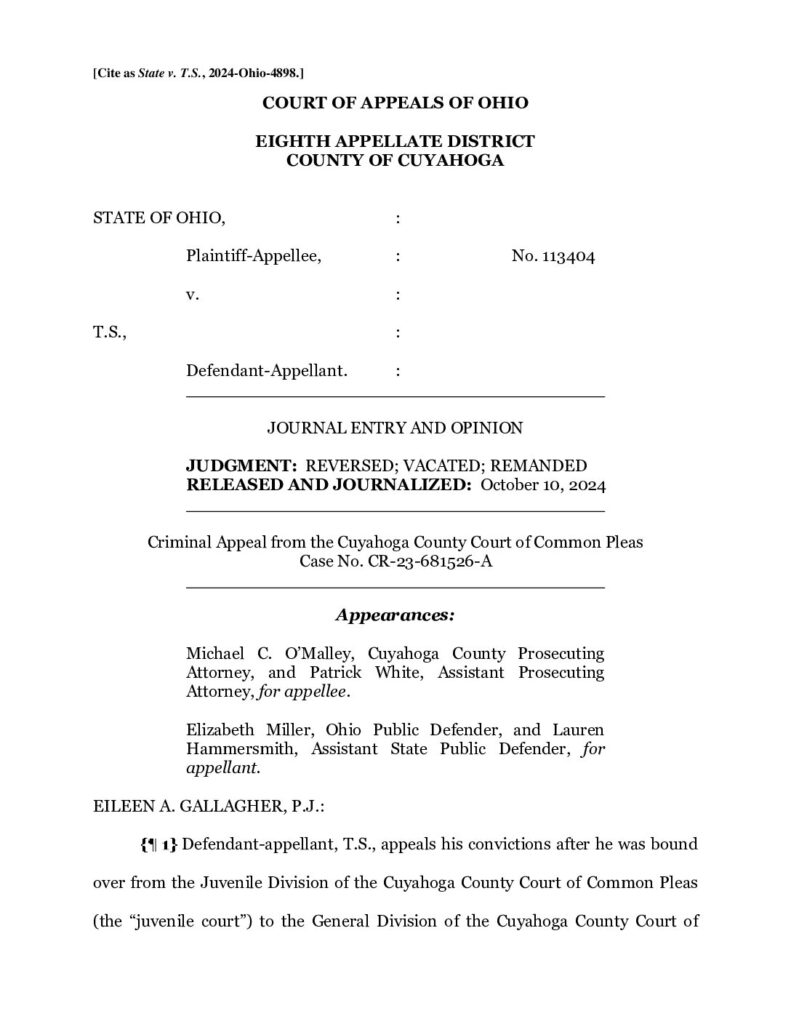
In State v. T.S., the Ohio Court of Appeals ruled the juvenile court abused its discretion when it transferred T.S.’s case to adult court pursuant to R.C. 2152.12(B) (Ohio’s discretionary transfer law). The court found the evidence presented in the transfer hearing, did not support a finding that T.S. was not amenable to rehabilitation within the juvenile system. The court offers the following language in support of its decision:: “Few,…

A sample memorandum of understanding (MOU) between the Hamilton County Juvenile Court detention center and a community mental health service provider.

A sample disposition and mitigation memorandum filed in a juvenile court in Ohio.


The Ohio Appellate Court vacated a youth’s convictions and transfer order and offered the following language in support. “Because the juvenile court (1) did not identify all of the factors it considered, i.e., the “other information factors” referenced at the amenability hearing, (2) did not identify or discuss the factual or evidentiary basis for its…

This resource is part of the Youth Defender Advocacy Program (YDAP) curriculum, a specialized trial advocacy training program for youth defenders.

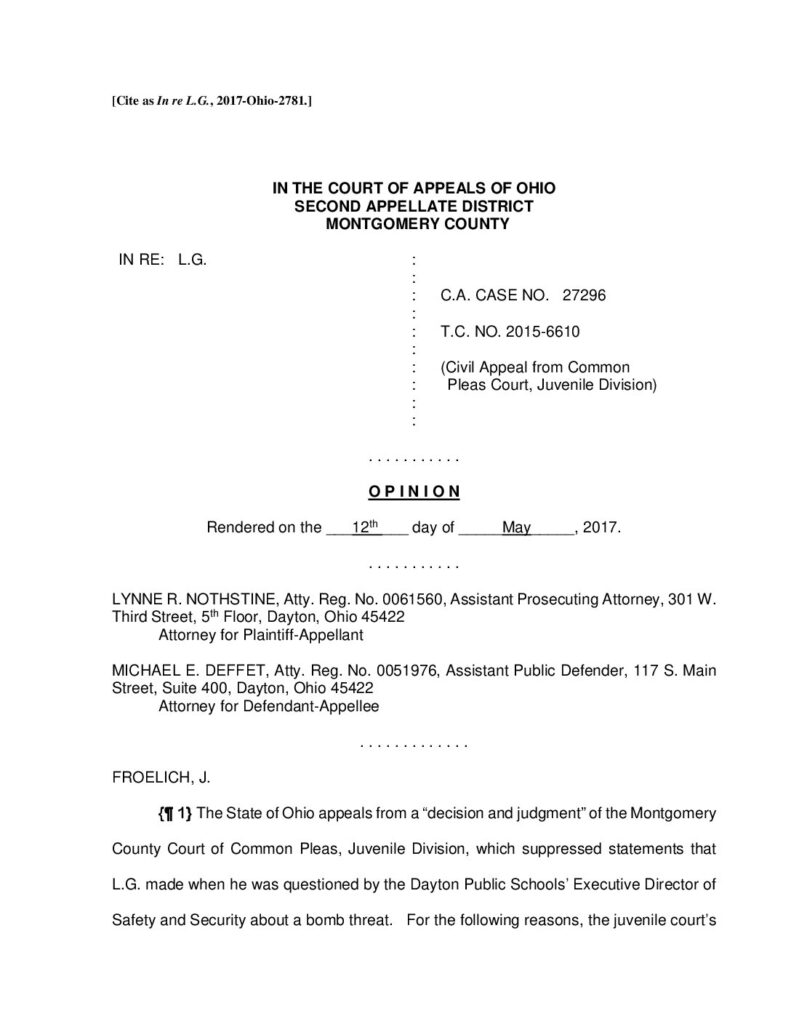
The Ohio Court of Appeals Second District affirmed the juvenile court’s suppression of L.G.’s statements, finding that L.G. was in custody when he was questioned by Dayton Public Schools’ Executive Director of Safety and Security, requiring Miranda warnings. The court held in relevant part: “[T]he juvenile court reasonably concluded that, when viewing the totality of the…

A sample motion arguing child pornography laws are unconstitutional as applied to a children engaging in sexting. The motion argues the statute is void-for-vagueness since it fails to provide fair notice regarding prohibited conduct for children under 18 and it encourages arbitrary and discriminatory enforcement because the distinction between offender and victim is blurred. Furthermore,…
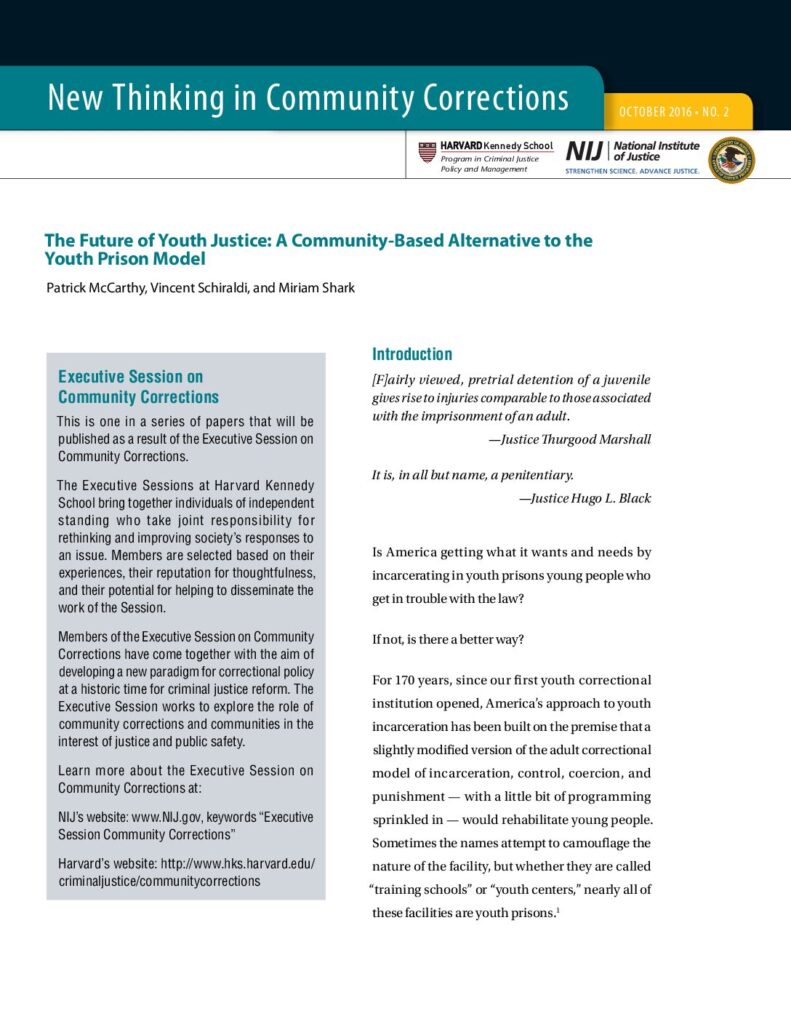
This paper from the Executive Session on Community Corrections at the Harvard Kennedy School examines the history of youth incarceration and discusses how the inherently flawed model of youth prisons demands systemic reforms, including closure of youth prisons, to actualize safer communities, and positive youth outcomes. From the introduction: “For 170 years, since our first youth correctional institution opened, America’s approach…

On December 9, 2015, the U.S. District Court for the Southern District of Ohio Eastern Division terminated the consent decree, finding the Ohio Department of Youth Services in substantial compliance with the consent decree. Notable improvements made to the Ohio juvenile facilities include: “meaningful grievance system and easy access to attorneys to address concerns related…

This amicus brief by Juvenile Law Center, The Gault Center, and others argues Ohio’s mandatory bindover statute violates the Due Process protections guaranteed by the 14th Amendment of the U.S. Constitution as the mandatory scheme does not allow for individualized sentencing and recognition of the unique characteristics of youth. Further, amici argue individualized transfer proceedings…

This amicus brief prepared by Children’s Law Center, Inc., the Office of the Ohio Public Defender, The Gault Center, and others argues that due process and fundamental fairness, pursuant to the 5th Amendment, the 14th Amendment and Ohio law, require the state to provide full discovery to a young person prior to a probable cause…

A sample motion from Ohio requesting suppression of statements made by a 17-year old with disabilities including a specific learning disability and expressive language disorder. The motion argues the child’s statement should be suppressed given the inherent coerciveness of police interrogations of children, the inadequate and untimely reading of the Miranda rights by the police…
- « Previous
- 1
- 2
- 3
- Next »
