
14th Amendment

On May 9, 2007, the DOJ released its investigation of the Scioto Juvenile Correctional Facility, finding that the conditions violate federal and constitutional rights of youth. Specifically, the investigation highlights violations of young people’s right to reasonable safety, right to adequate mental health care, and right to special education services. Related actions: [Ohio] Marion Juvenile…

On May 9, 2007, the DOJ released its investigation of the Marion County, Ohio Juvenile Correctional Facility, finding that the conditions violate federal and constitutional rights of youth. Specifically, the investigation highlights violations of young people’s right to reasonable safety, right to adequate mental health care, and right to special education services. Related actions: [Ohio]…

This research paper from the Journal of Interpretation looks at the intersection of a subset of deaf people, who are classified as semilingual (meaning they are functionally illiterate (reading level grade 2.9 or below) and lack proficient English or sign language skills.), and their involvement in the legal system. The research paper examines eleven frequently…
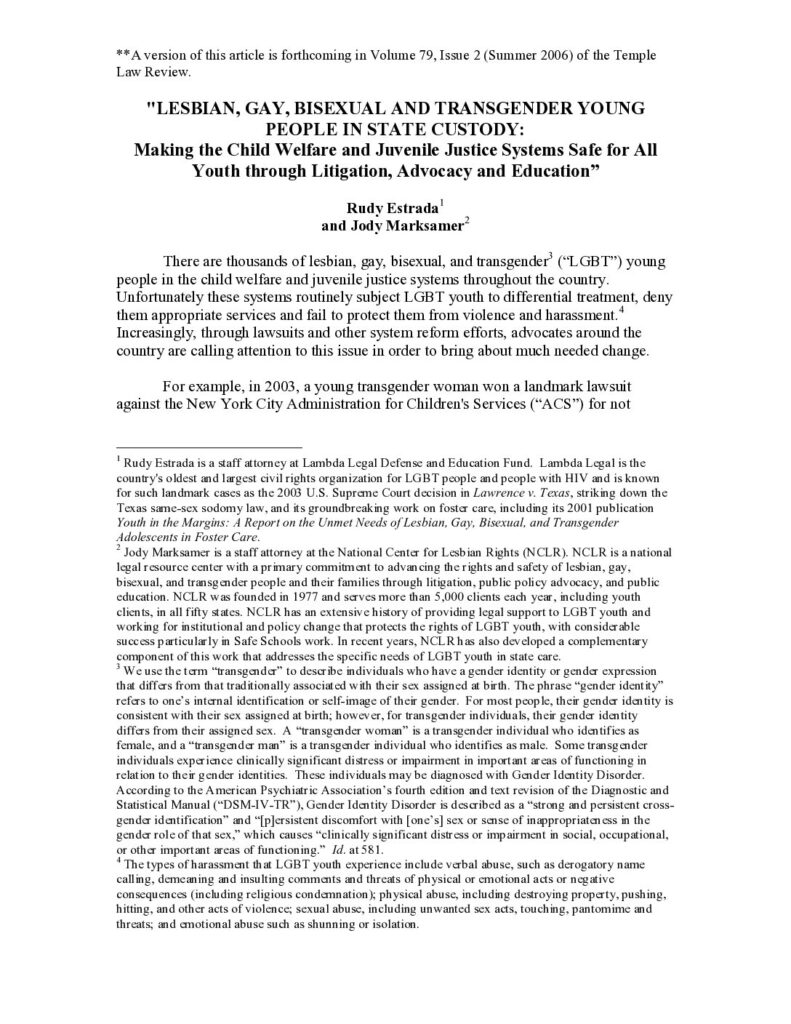
From the Conclusion: “For too long, LGBT young people in the child welfare and juvenile justice systems have been overlooked, ignored and mistreated. Because of the hard work of hundreds of advocates who have come together through coordinated national efforts, a cultural shift has begun. These advocates are creating effective nondiscrimination policies, best practices guidelines,…


The U.S. Supreme Court held that when mental health is a significant factor in an accused person’s defense, they must have the ability to hire an independent expert provided to the defense at the expense of the state if they cannot afford it. The Court reversed and remanded the holding of the Oklahoma Court of…


The U.S. Supreme Court held the Due Process Clause of the 14th Amendment did not require an accused person to give pretrial notice to the prosecution of his alibi defense and witnesses unless the accused person had reciprocal discovery rights. The conviction was reversed and remanded. To support this ruling, the Court stated: “Although the…

The U.S. Supreme Court ruled the Due Process Clause of the Fourteenth Amendment did not assure the right to a jury trial for youth in juvenile court. Here is excerpted language from the decision: “The juvenile concept held high promise. We are reluctant to say that, despite disappointments of grave dimensions, it still does not…


The Oregon Supreme Court held the Due Process Clause of the 14th Amendment requires states to “accord a hearing before a [youth]can be remanded to the adult criminal process.” In this case, the remand statute at issue ORS 419.533 did not expressly provide for a hearing before transfer to adult court but the Oregon Supreme Court concluded that the intent…
- « Previous
- 1
- …
- 7
- 8
- 9
