
Adolescent Development

From the introduction: “This brief is an accompaniment to a short video documentary, ‘Don’t Abandon Us: Addressing Youth, Crime, and Trauma.’ Both designed to help increase awareness among decision makers on how childhood trauma and adverse experiences can contribute to youth crime and future legal system involvement. In a moment of growing concern about crime,…
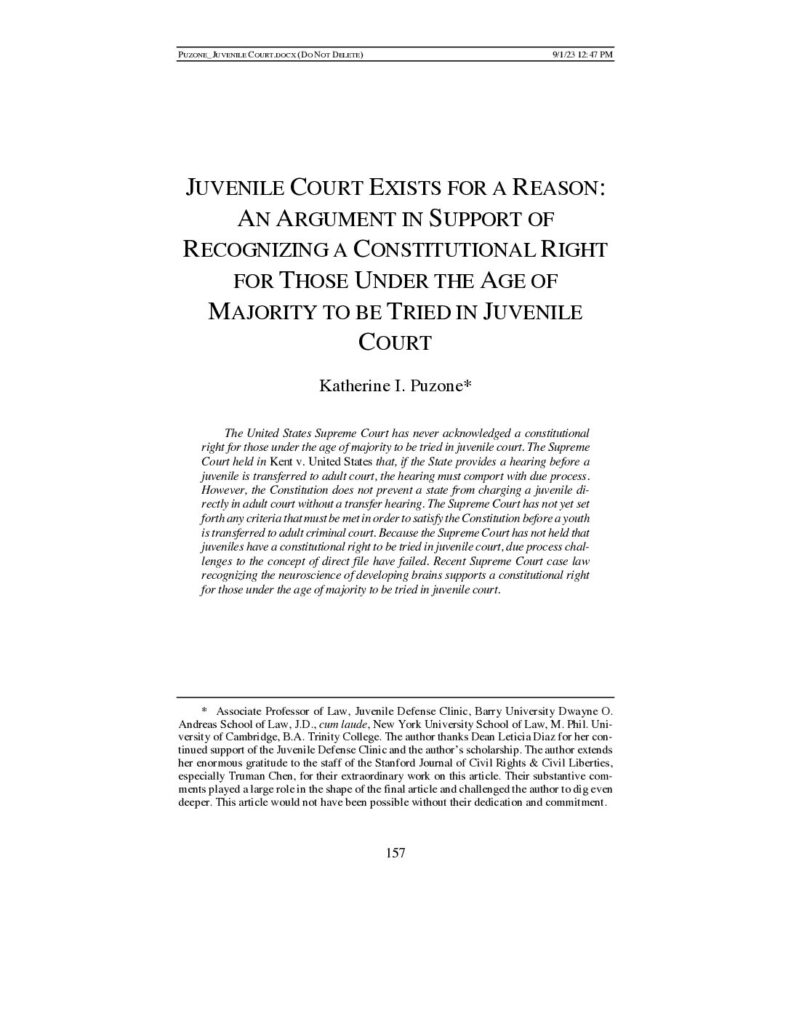
From the Abstract: The United States Supreme Court has never acknowledged a constitutional right for those under the age of majority to be tried in juvenile court. The Supreme Court held in Kent v. United States that, if the State provides a hearing before a juvenile is transferred to adult court, the hearing must comport…

This amicus brief by the Santa Clara County Independent Defense Counsel Office argues the decision in People v. Hardin should be affirmed because historical legacies of racism disparately expose some adolescents to the legal system and this does not justify lifelong punishment without considering rehabilitation. From Introduction & Summary of Argument: “Youthful offender parole is authorized by age at the…

The U.S. Department of Justice filed a statement of interest in a civil lawsuit addressing the constitutional rights of youth who had been adjudicated delinquent and transferred to the Louisiana State Penitentiary’s former death row building, known as Angola. In their statement, the United States asserted that youth are particularly vulnerable to harmful conditions of…

This affidavit relies on adolescent development research to conclude that felony murder should not be applied to youth, given that young people’s ongoing brain and psychosocial development goes against the very premise of felony murder. This affidavit emphasizes how felony murder perpetuates racial disparities and is contrary to adolescent development principles—namely that youth experience more…

This resource was created as part of the 2022 Racial Justice Training Series, co-hosted with the Georgetown Juvenile Justice Clinic & Initiative. Advocates and experts gathered each month to discuss a chapter of Prof. Kristin Henning’s Book The Rage of Innocence: How America Criminalizes Black Youth. Watch recordings of the monthly webinars and see other…


From the executive summary: “On April 21, 2021, the Department of Justice opened a pattern or practice investigation of the Minneapolis Police Department (MPD) and the City of Minneapolis. By then, Derek Chauvin had been convicted in state court for the tragic murder of George Floyd in 2020. In the years before, shootings by other…
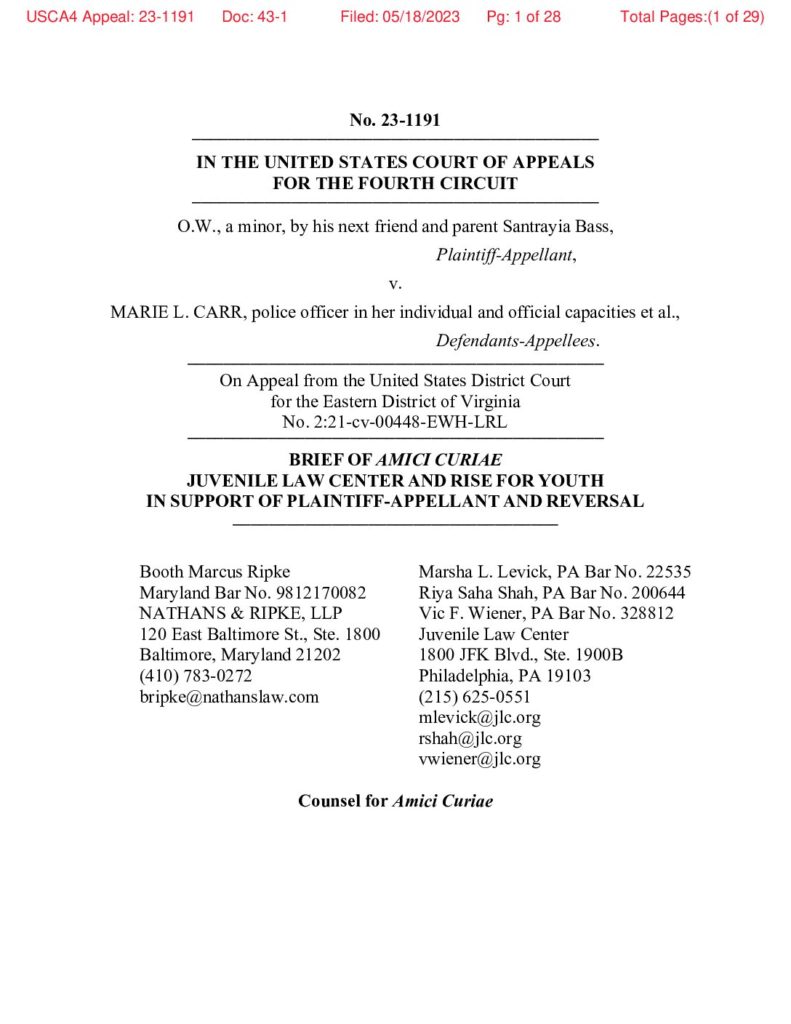
This amicus brief by the Juvenile Law Center and Rise for Youth argues schools and school officials are increasingly entangled with law enforcement, especially, through the use of school resource officer programs, impacting students’ constitutional rights. The brief argues that O.W., a 13-year old student in this case, had his Fifth Amendment rights violated when his vice principal and the school resource officer compelled him to make an incriminating statement…
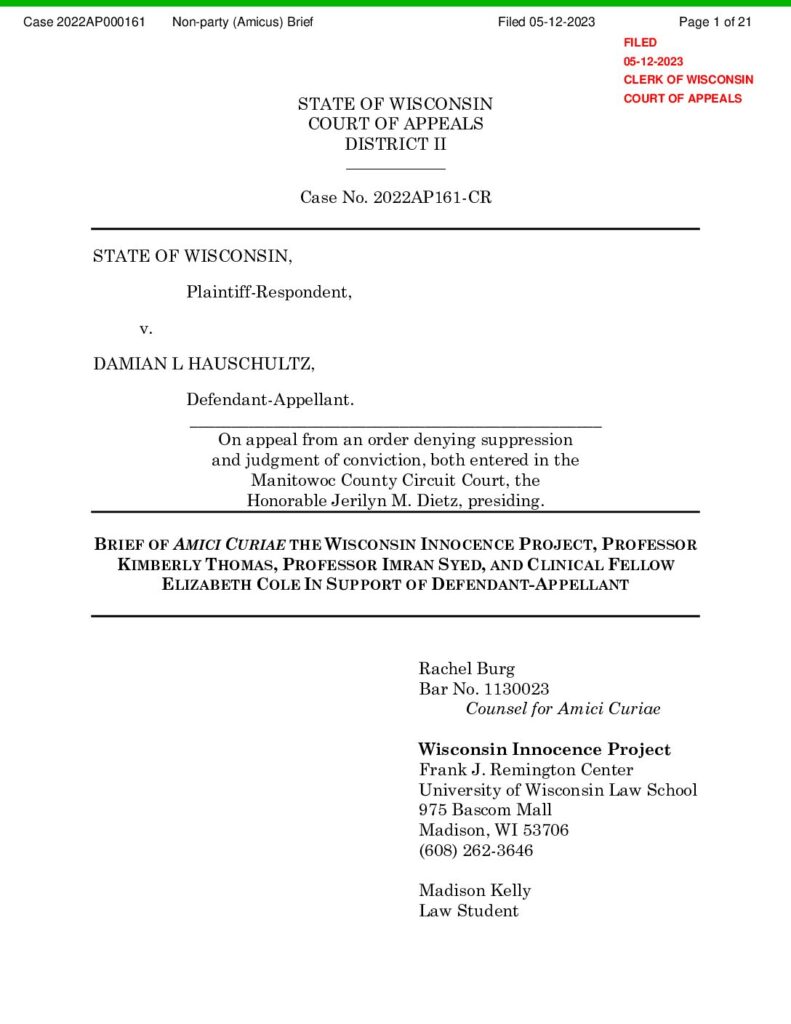
This brief by the Wisconsin Innocence Project and others argues the developmental characteristics of children and adolescents make them uniquely susceptible to the pressures of police interrogation, resulting in young people making involuntary statements. The brief calls the court to consider the child’s age and the coercive psychological tactics used during police interrogations, specifically the minimization and maximization techniques, to assess whether the child was in custody and…
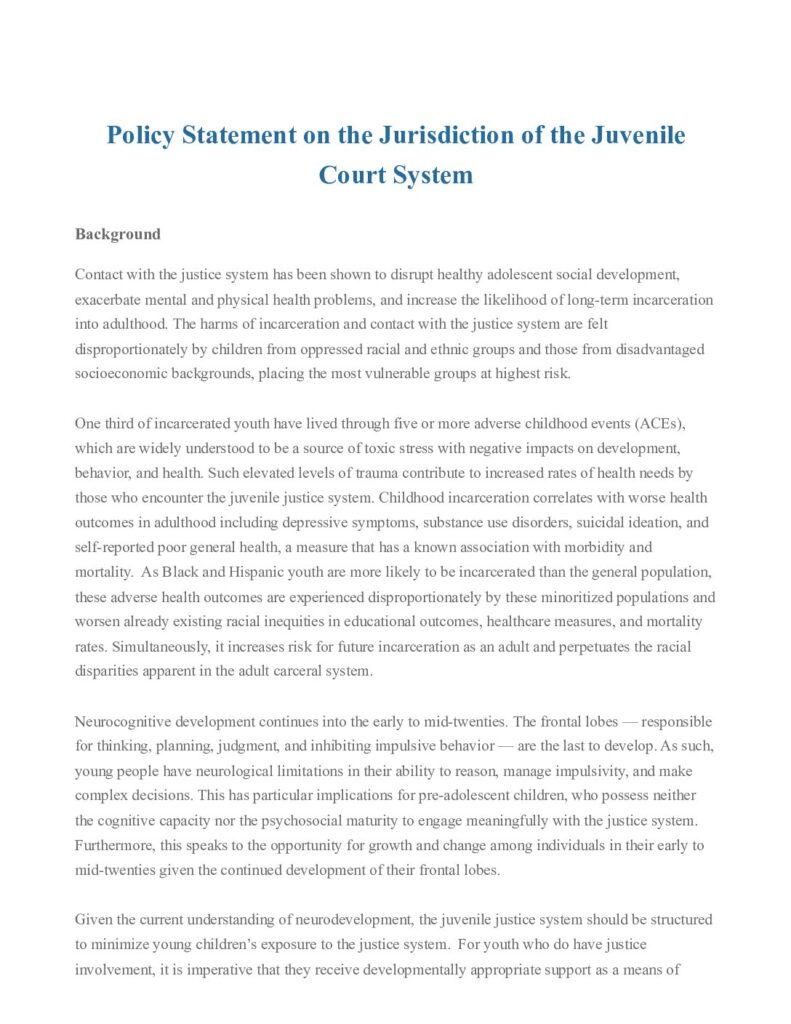
This statement from the American Academy of Child and Adolescent Psychiatry makes several recommendations to minimize the “harms of childhood incarceration.” The Academy recommends adopting state and federal policy that establishes a minimum age of at least fourteen years old for juvenile court jurisdiction, establishes a maximum age of jurisdiction to include young people to…
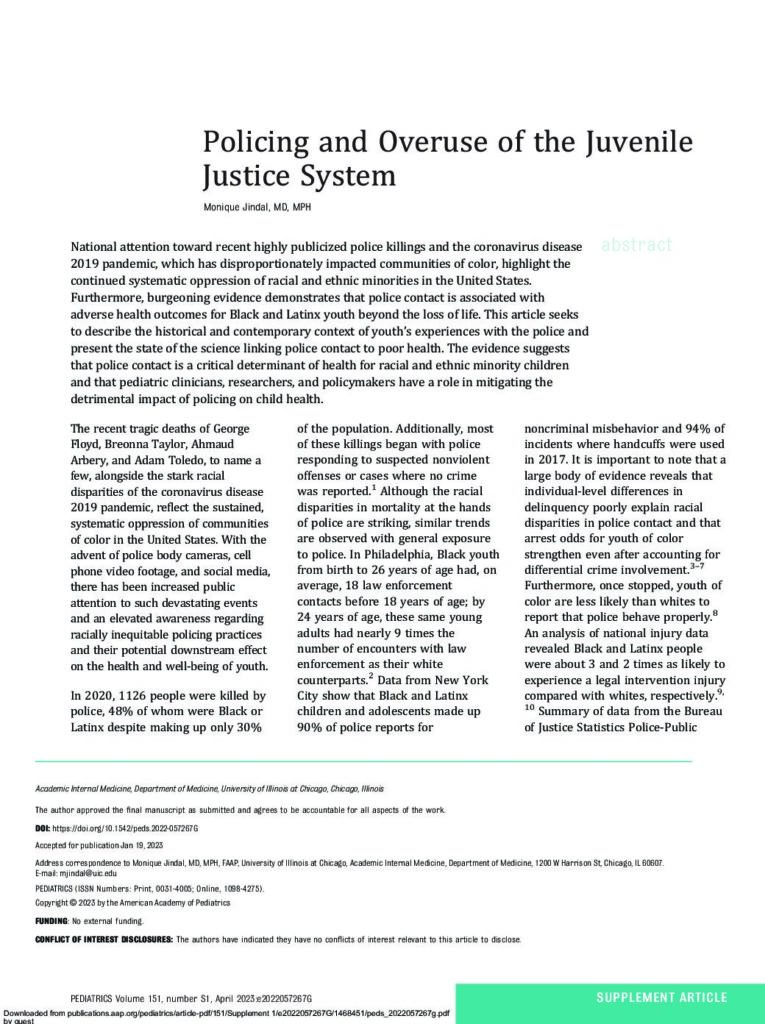
From the abstract: National attention toward recent highly publicized police killings and the coronavirus disease abstract 2019 pandemic, which has disproportionately impacted communities of color, highlight the continued systematic oppression of racial and ethnic minorities in the United States. Furthermore, burgeoning evidence demonstrates that police contact is associated with adverse health outcomes for Black and…

This expert report analyzes the presence of racial bias in a police encounter with Black teenage girls in Colorado. The report utilizes research on implicit racial bias, stereotype threat, adultification, and policing as trauma in its analysis of the facts of the case.

This resource was created as part of the 2022 Racial Justice Training Series, co-hosted with the Georgetown Juvenile Justice Clinic & Initiative. Advocates and experts gathered each month to discuss a chapter of Prof. Kristin Henning’s Book The Rage of Innocence: How America Criminalizes Black Youth. Watch recordings of the monthly webinars and see other…
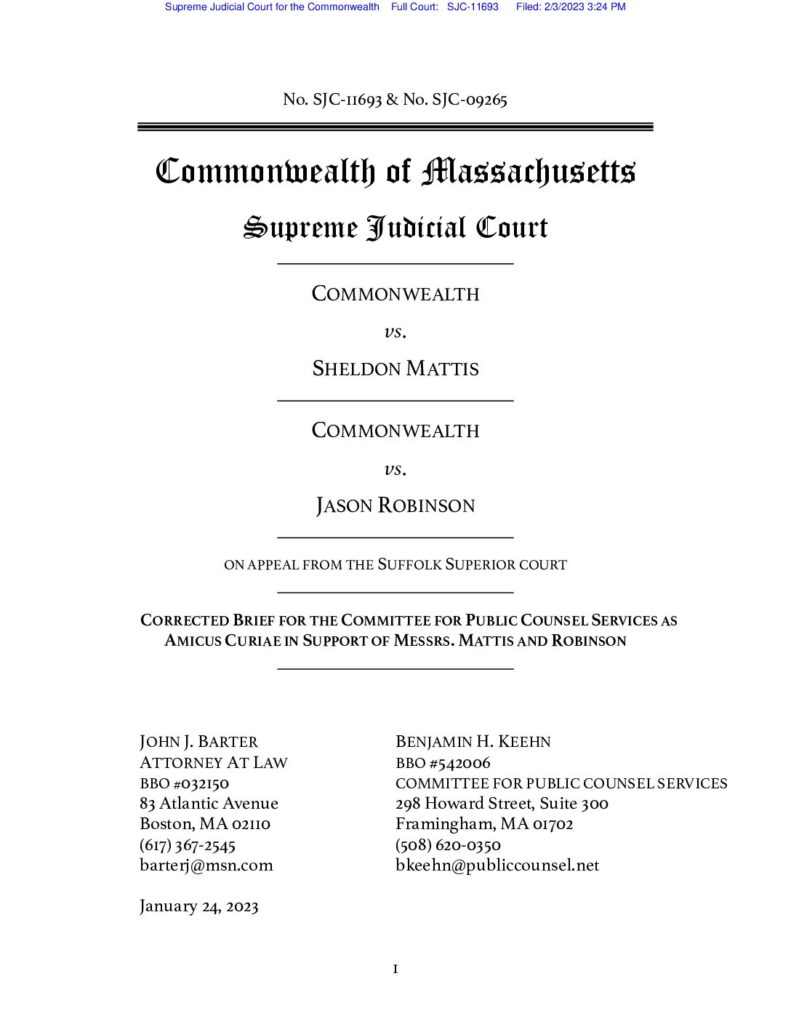
This amicus brief by the Massachusetts Committee for Public Counsel Services argues the remedy of considering parole after fifteen years can be extended to late adolescents from 18-20 years old with life without parole sentences while still protecting public safety. Additionally, the brief argues judicial findings regarding the capacity of late adolescents to change are…
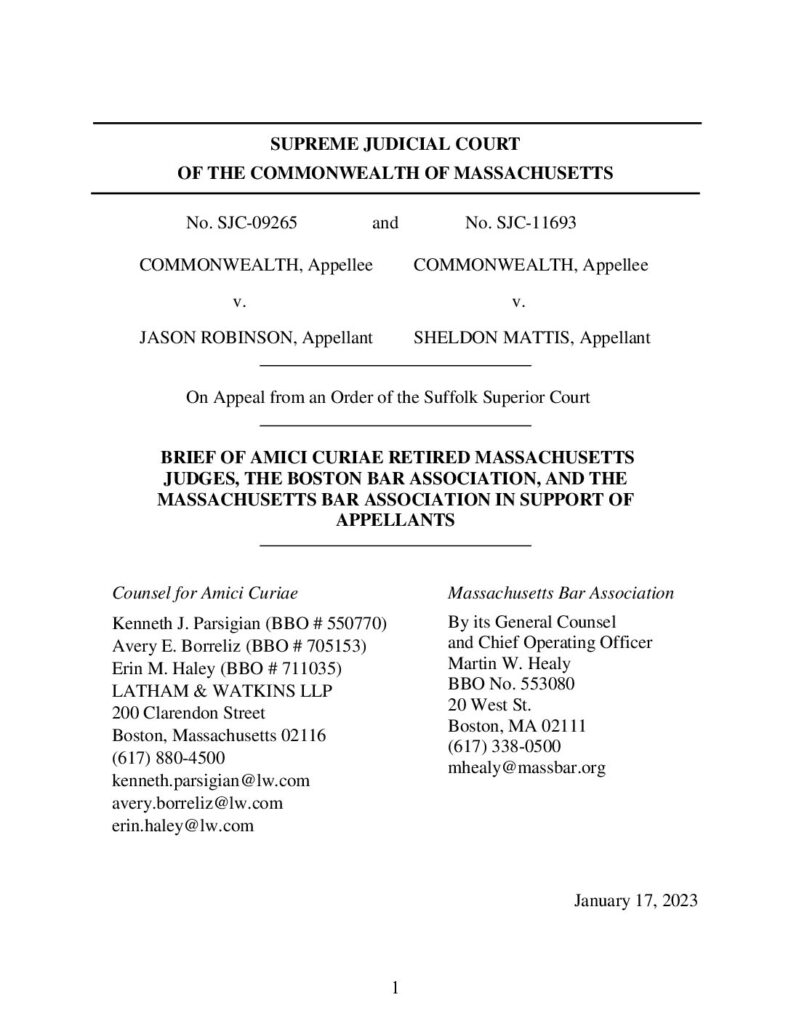
This amicus brief from former Massachusetts judges, the Boston Bar Association, and the Massachusetts Bar Association argues life without parole sentences violate the Commonwealth’s prohibition on cruel and unusual punishment for late adolescents between 18-20 years old for the same reasons they did for youth under 18 years old (as articulated in Diatchenko). Additionally, the brief argues late adolescents have a great propensity…

This resource was created as part of the 2022 Racial Justice Training Series, co-hosted with the Georgetown Juvenile Justice Clinic & Initiative. Advocates and experts gathered each month to discuss a chapter of Prof. Kristin Henning’s Book The Rage of Innocence: How America Criminalizes Black Youth. Watch recordings of the monthly webinars and see other…
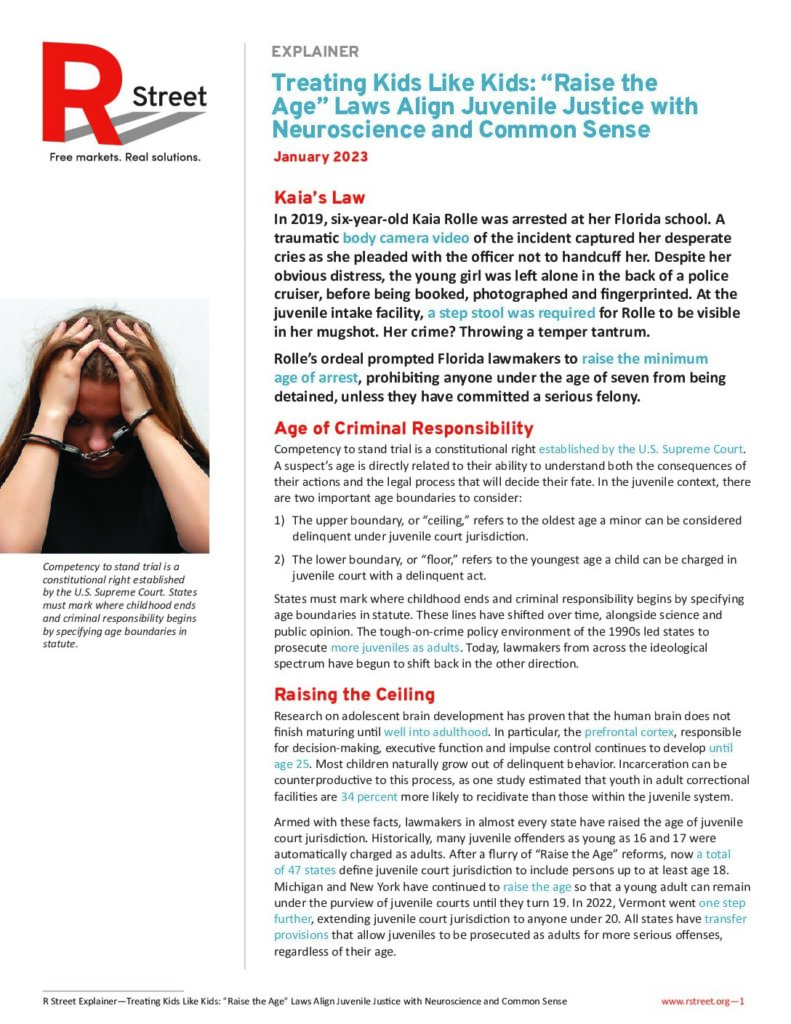
This explainer from R Street outlines why raising both the upper age of juvenile court jurisdiction and increasing the minimum age of prosecution (raising the “ceiling” and the “floor”) align with developmental research and constitutional principles. The report synthesizes research on developmental science, recidivism data, and Raise the Age legislation across the United States to…

This resource was created as part of the 2022 Racial Justice Training Series, co-hosted with the Georgetown Juvenile Justice Clinic & Initiative. Advocates and experts gathered each month to discuss a chapter of Prof. Kristin Henning’s Book The Rage of Innocence: How America Criminalizes Black Youth. Watch recordings of the monthly webinars and see other…

This resource was created as part of the 2022 Racial Justice Training Series, co-hosted with the Georgetown Juvenile Justice Clinic & Initiative. Advocates and experts gathered each month to discuss a chapter of Prof. Kristin Henning’s Book The Rage of Innocence: How America Criminalizes Black Youth. Watch recordings of the monthly webinars and see other…
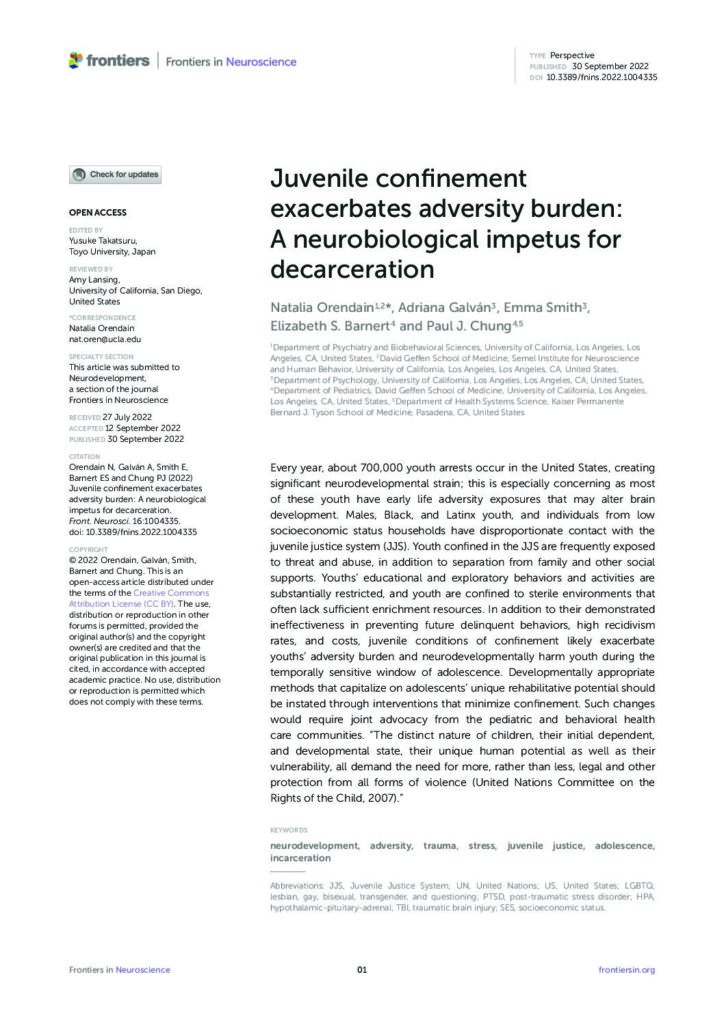
This report draws on neurodevelopmental science, empirical studies, meta-analyses, national survey data, government reports, and Supreme Court jurisprudence to highlight that confinement of youth exacerbates neurodevelopmental harm. From the summary: Every year, about 700,000 youth arrests occur in the United States, creating significant neurodevelopmental strain; this is especially concerning as most of these youth have early life adversity exposures that…

This resource was created as part of the 2022 Racial Justice Training Series, co-hosted with the Georgetown Juvenile Justice Clinic & Initiative. Advocates and experts gathered each month to discuss a chapter of Prof. Kristin Henning’s Book The Rage of Innocence: How America Criminalizes Black Youth. Watch recordings of the monthly webinars and see other…

This resource was created as part of the 2022 Racial Justice Training Series, co-hosted with the Georgetown Juvenile Justice Clinic & Initiative. Advocates and experts gathered each month to discuss a chapter of Prof. Kristin Henning’s Book The Rage of Innocence: How America Criminalizes Black Youth. Watch recordings of the monthly webinars and see other…
