
Adolescent Development
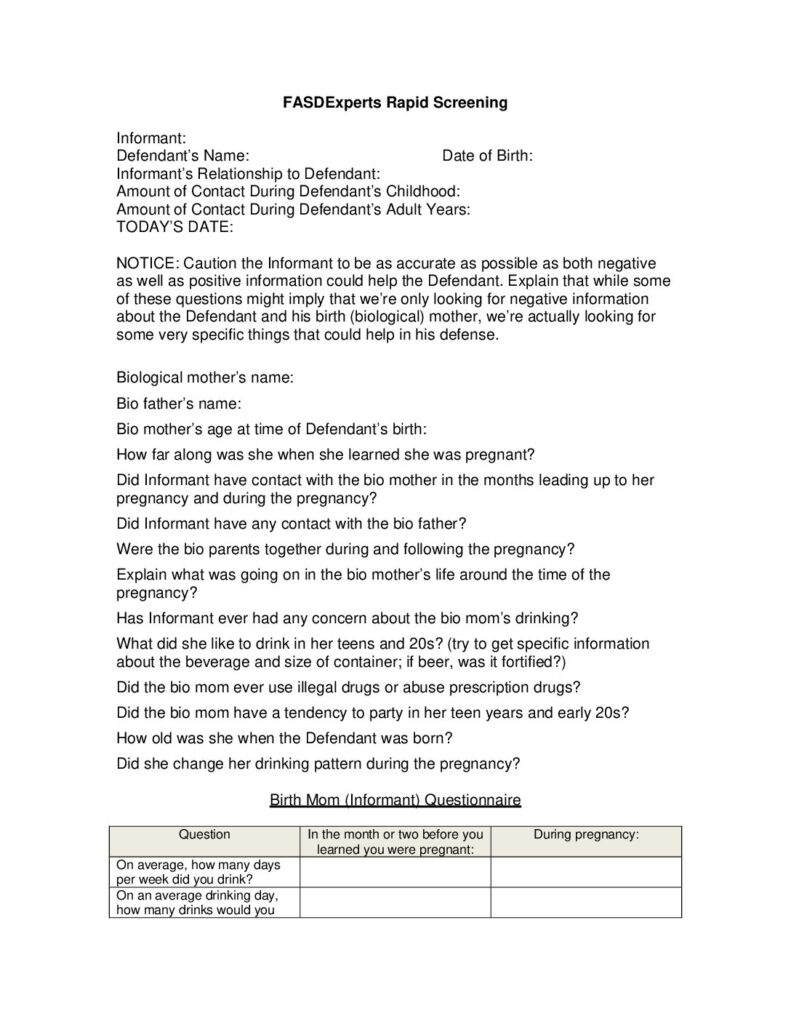
This is an example of a screening tool to be used in collaboration with defense experts, social work staff, and attorneys when gathering information as to whether a young person may have fetal alcohol spectrum disorder (FASD).
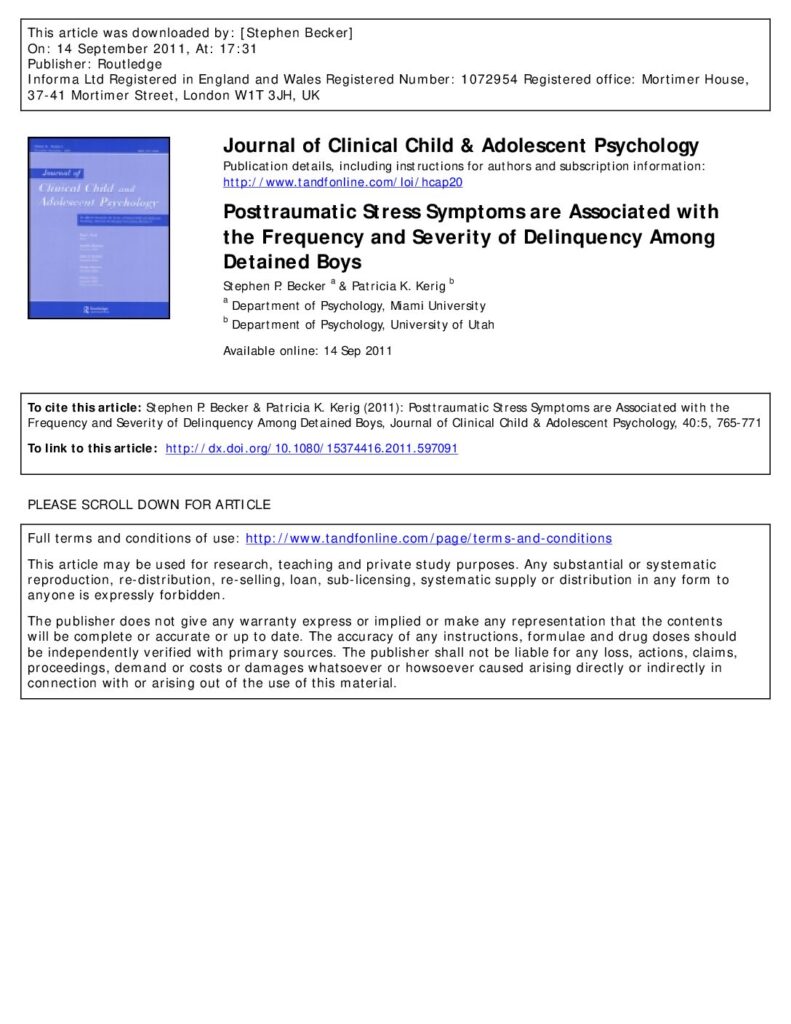


From the introduction: “During adolescence, physical and cognitive changes combine with new social contexts in ways that increase our sensitivity to belonging and earning respect from those around us. This heightened attention to our place in a wider social world motivates us to adapt to the more complex social demands of adulthood. Following are 5…

Abstract: “Nearly sixty years ago, In re Gault guaranteed children in juvenile court the right to counsel. However, Gault fell short. While recognizing children’s distinct vulnerability, the Court created a right for children that is weaker than that of adults and failed to recognize how youth in fact require a more expansive right to counsel. Grounded in the stories of…

From the introduction: “During adolescence, we form a deeper sense of who we are, what we value, and who we want to be. Healthy development in adolescence involves creating a positive sense of self and belonging, based on our values and aspirations. Following are five facts about how we develop our values, goals, and identity…

From the introduction: “This brief is an accompaniment to a short video documentary, ‘Don’t Abandon Us: Addressing Youth, Crime, and Trauma.’ Both designed to help increase awareness among decision makers on how childhood trauma and adverse experiences can contribute to youth crime and future legal system involvement. In a moment of growing concern about crime,…

This amicus brief by the Santa Clara County Independent Defense Counsel Office argues the decision in People v. Hardin should be affirmed because historical legacies of racism disparately expose some adolescents to the legal system and this does not justify lifelong punishment without considering rehabilitation. From Introduction & Summary of Argument: “Youthful offender parole is authorized by age at the…

The U.S. Department of Justice filed a statement of interest in a civil lawsuit addressing the constitutional rights of youth who had been adjudicated delinquent and transferred to the Louisiana State Penitentiary’s former death row building, known as Angola. In their statement, the United States asserted that youth are particularly vulnerable to harmful conditions of…

This affidavit relies on adolescent development research to conclude that felony murder should not be applied to youth, given that young people’s ongoing brain and psychosocial development goes against the very premise of felony murder. This affidavit emphasizes how felony murder perpetuates racial disparities and is contrary to adolescent development principles—namely that youth experience more…

This resource was created as part of the 2022 Racial Justice Training Series, co-hosted with the Georgetown Juvenile Justice Clinic & Initiative. Advocates and experts gathered each month to discuss a chapter of Prof. Kristin Henning’s Book The Rage of Innocence: How America Criminalizes Black Youth. Watch recordings of the monthly webinars and see other…


From the executive summary: “On April 21, 2021, the Department of Justice opened a pattern or practice investigation of the Minneapolis Police Department (MPD) and the City of Minneapolis. By then, Derek Chauvin had been convicted in state court for the tragic murder of George Floyd in 2020. In the years before, shootings by other…
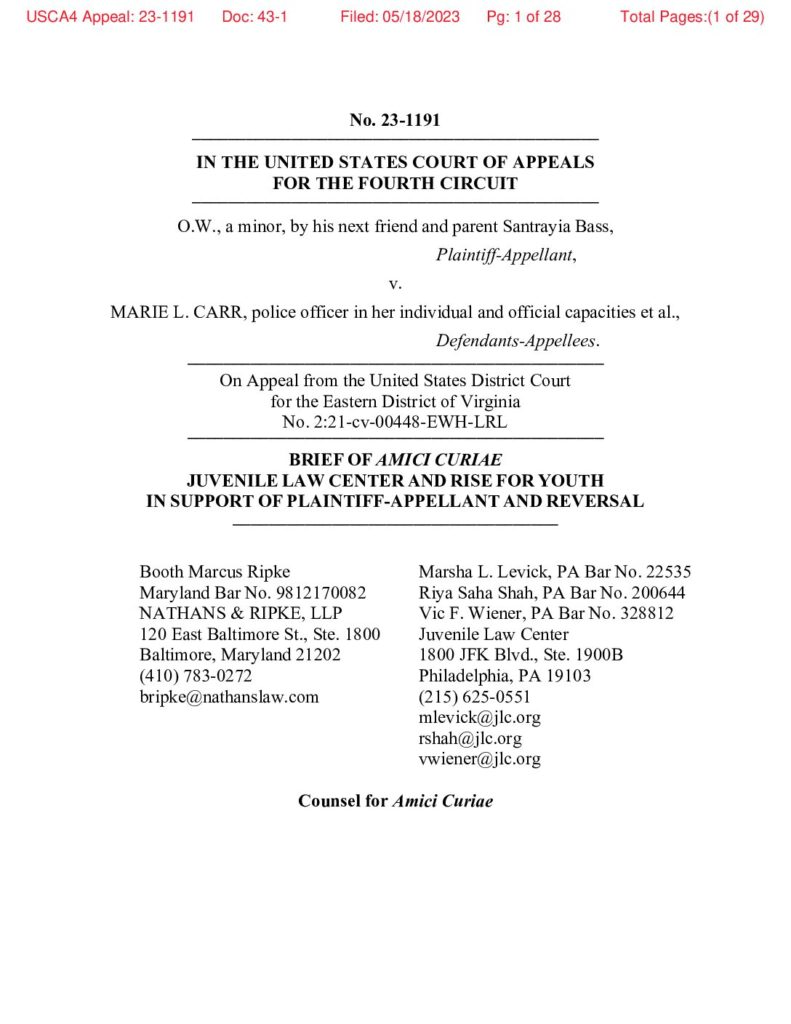
This amicus brief by the Juvenile Law Center and Rise for Youth argues schools and school officials are increasingly entangled with law enforcement, especially, through the use of school resource officer programs, impacting students’ constitutional rights. The brief argues that O.W., a 13-year old student in this case, had his Fifth Amendment rights violated when his vice principal and the school resource officer compelled him to make an incriminating statement…
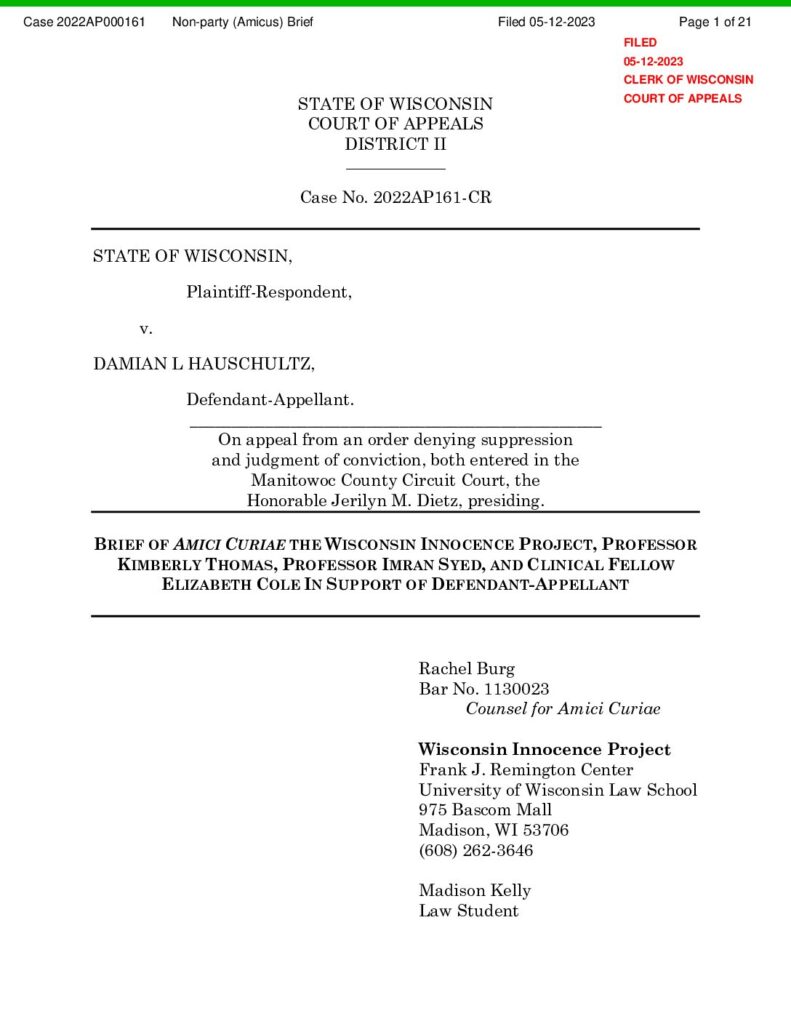
This brief by the Wisconsin Innocence Project and others argues the developmental characteristics of children and adolescents make them uniquely susceptible to the pressures of police interrogation, resulting in young people making involuntary statements. The brief calls the court to consider the child’s age and the coercive psychological tactics used during police interrogations, specifically the minimization and maximization techniques, to assess whether the child was in custody and…

This expert report analyzes the presence of racial bias in a police encounter with Black teenage girls in Colorado. The report utilizes research on implicit racial bias, stereotype threat, adultification, and policing as trauma in its analysis of the facts of the case.

This resource was created as part of the 2022 Racial Justice Training Series, co-hosted with the Georgetown Juvenile Justice Clinic & Initiative. Advocates and experts gathered each month to discuss a chapter of Prof. Kristin Henning’s Book The Rage of Innocence: How America Criminalizes Black Youth. Watch recordings of the monthly webinars and see other…
This amicus brief by the Massachusetts Committee for Public Counsel Services argues the remedy of considering parole after fifteen years can be extended to late adolescents from 18-20 years old with life without parole sentences while still protecting public safety. Additionally, the brief argues judicial findings regarding the capacity of late adolescents to change are…
This amicus brief from former Massachusetts judges, the Boston Bar Association, and the Massachusetts Bar Association argues life without parole sentences violate the Commonwealth’s prohibition on cruel and unusual punishment for late adolescents between 18-20 years old for the same reasons they did for youth under 18 years old (as articulated in Diatchenko). Additionally, the brief argues late adolescents have a great propensity…

This resource was created as part of the 2022 Racial Justice Training Series, co-hosted with the Georgetown Juvenile Justice Clinic & Initiative. Advocates and experts gathered each month to discuss a chapter of Prof. Kristin Henning’s Book The Rage of Innocence: How America Criminalizes Black Youth. Watch recordings of the monthly webinars and see other…

This resource was created as part of the 2022 Racial Justice Training Series, co-hosted with the Georgetown Juvenile Justice Clinic & Initiative. Advocates and experts gathered each month to discuss a chapter of Prof. Kristin Henning’s Book The Rage of Innocence: How America Criminalizes Black Youth. Watch recordings of the monthly webinars and see other…

This resource was created as part of the 2022 Racial Justice Training Series, co-hosted with the Georgetown Juvenile Justice Clinic & Initiative. Advocates and experts gathered each month to discuss a chapter of Prof. Kristin Henning’s Book The Rage of Innocence: How America Criminalizes Black Youth. Watch recordings of the monthly webinars and see other…
