
Adolescent Development


This article is a transcript of a lecture given by Professor Chaz P. Arnett at a Symposium hosted by the University of Maryland Francis King Carey School of Law’s Journal of Health Care Law & Policy. Professor Arnett discusses juvenile courts’ increased reliance on electronic monitoring, which he classifies as “e-carceration,” or the “the digital…

Written testimony by BJ Casey, Ph.D. and Leah H. Somerville, PhD submitted to the US Sentencing Commission. The testimony argues that brain and behavioral development continues well into a person’s twenties.
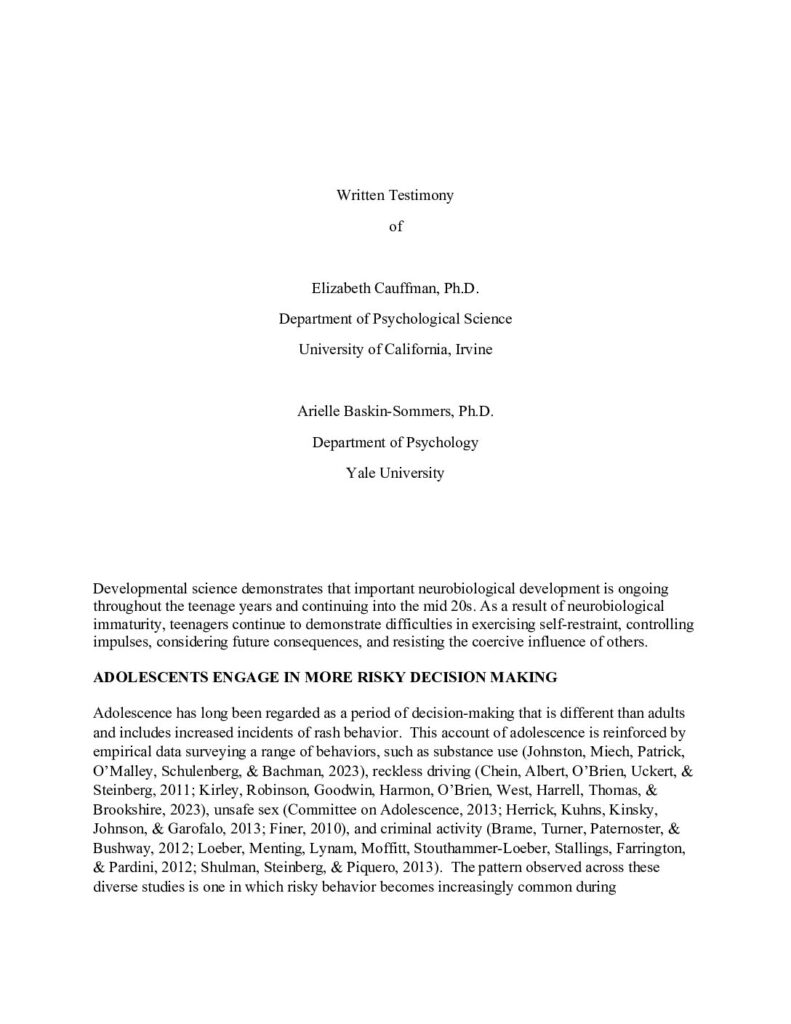
This written testimony from Elizabeth Cauffman, Ph.D. and Arielle Baskin-Sommers, Ph.D. discusses what developmental science says about the impact of brain development on adolescent risk taking, decision making, and susceptibility to social and peer influence as it relates to a young person’s culpability. The testimony also provides information on diversion and its impact on lower recidivism and improved public safety. Below is an excerpt from…

Outlines steps that states must take to comply with the minimum requirements of the U.S. Constitution to protect the rights of youth facing deprivations of liberty.


