
Amenability or Capacity to Change
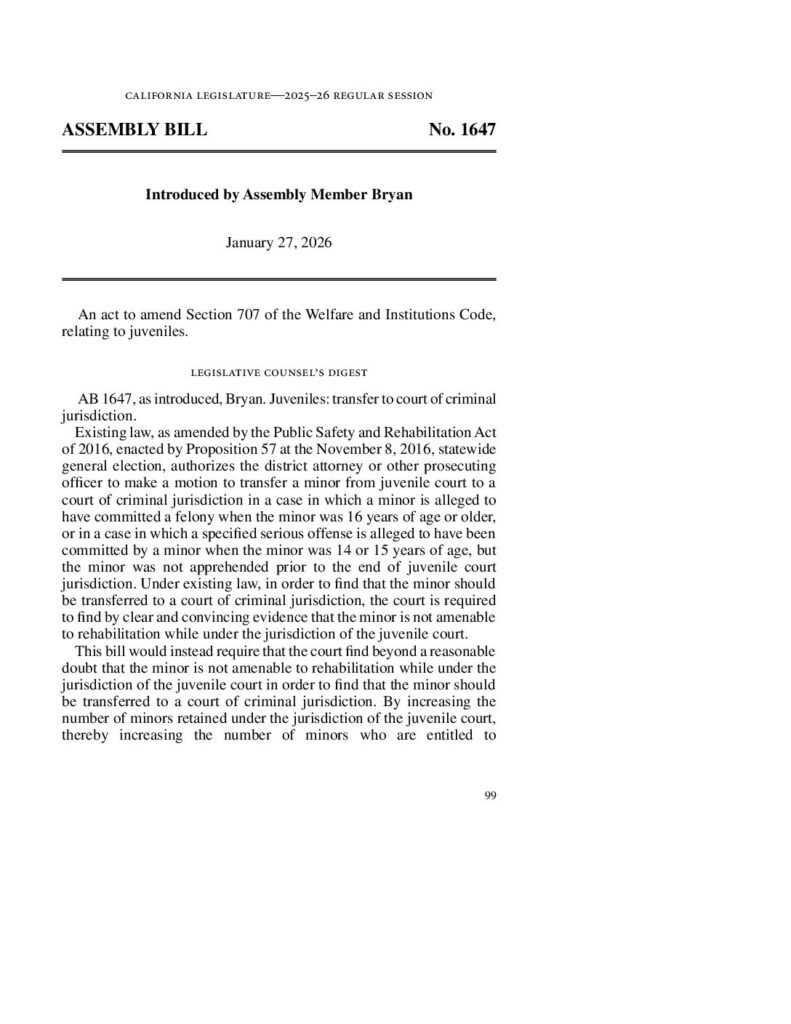
This proposed legislation from California amends the transfer law (CA WIC § 707(a)) to require a judicial finding of proof beyond a reasonable doubt, instead of the lesser standard of clear and convincing evidence, that a minor is not amendable to rehabilitation while in juvenile court.
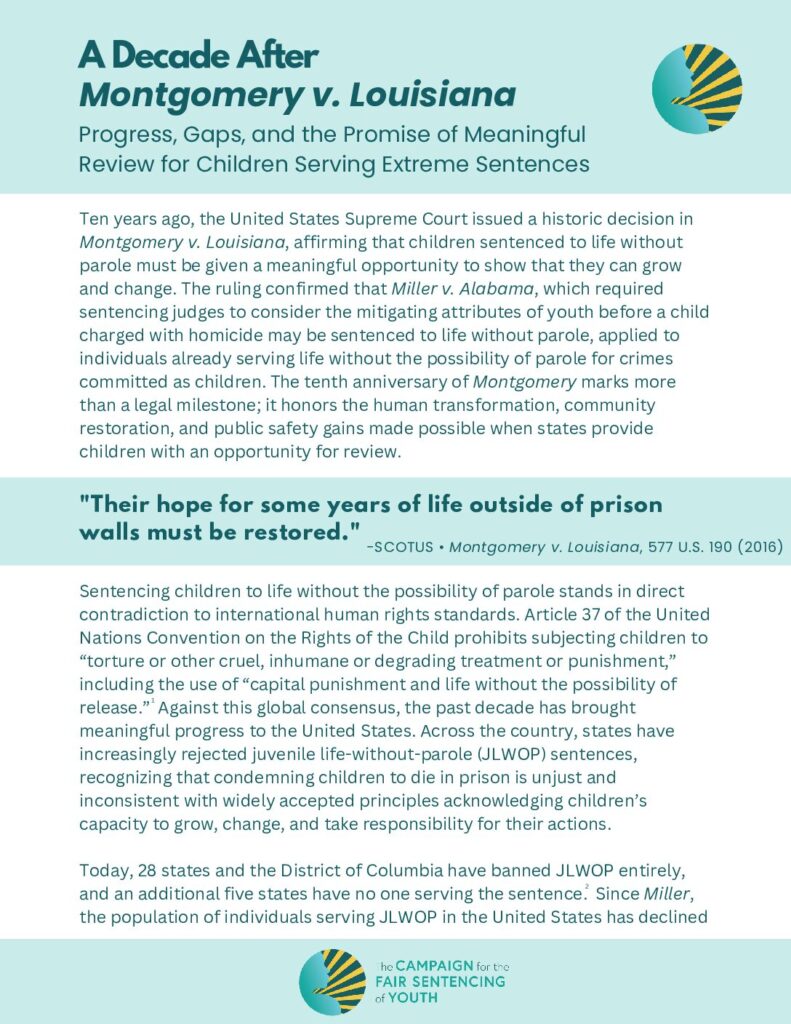
This report from the Campaign for the Fair Sentencing of Youth provides a national overview of the progress states have made post-Montgomery in changing sentencing laws for young people in adult court facing life without parole and other lengthy sentences, and opportunities for continued legislative, legal and policy change. From the resource: Ten years ago, the…
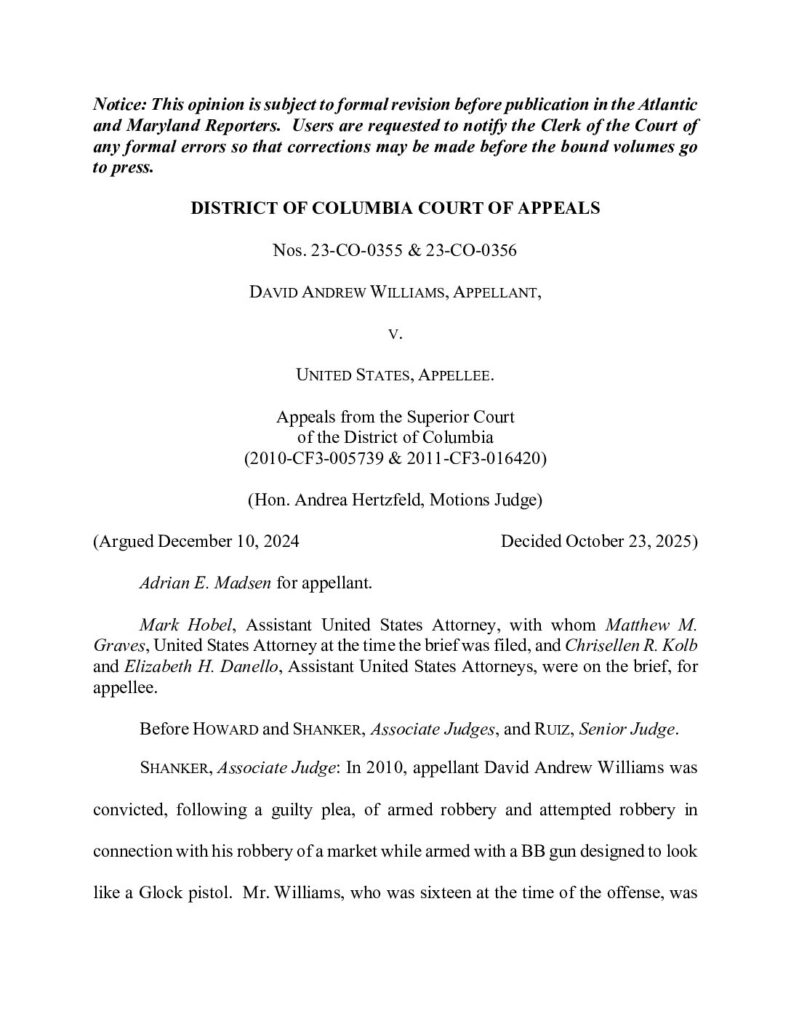
The District of Columbia Court of Appeals held the sentencing court erred in setting aside Appellant’s conviction under the Youth Rehabilitation Act (YRA) where the court did not weigh Appellant’s age at the time of the offense in his favor and misapplied several other factors. The court stated in relevant part: “In amending the YRA…
Abstract: “Records generated by youth legal systems—or “juvenile justice systems”—are increasingly being used against young people in immigration proceedings. This practice undermines the core purpose of these youth-focused systems and can have devastating, life-altering consequences, including the denial of immigration benefits or deportation. Juvenile justice systems in the United States are founded on the recognition…
This amicus brief by forty developmental science scholars and nonprofits argues transformative growth during ages 18-20 makes mandatory LWOP for individuals in that age range a disproportionate sentence in violation of Article 1, Section 16 of the Michigan constitution. From the Summary of the Argument: “People v Parks held that Article 1, Section 16…
In State v. T.S., the Ohio Court of Appeals ruled the juvenile court abused its discretion when it transferred T.S.’s case to adult court pursuant to R.C. 2152.12(B) (Ohio’s discretionary transfer law). The court found the evidence presented in the transfer hearing, did not support a finding that T.S. was not amenable to rehabilitation within the juvenile system. The court offers the following language in support of its decision:: “Few,…
This amicus brief from American Academy of Pediatric Neuropsychology, the American Civil Liberties Union of New Jersey, the Gault Center, and others argues there is no reasonable, scientific basis for drawing the line for adolescence at age 18, and therefore protections from Comer (including reconsideration of lengthy sentences for homicide offenses committed by individuals under 18) should extend to young people who were 18 to 20 years old. Additionally, the brief…
This amicus brief from the Center for Law, Brain, and Behavior highlights the adolescent capacity for significant growth and social maturation as well as criminological evidence on the unlikelihood of reoffending and responsiveness to evidence-based treatment among youth accused of sex offenses. The brief ultimately calls for the court to find that a de facto life without parole sentence is grossly disproportionate based on developmental science and research. From the Summary of Argument: “Evan McCarrick Jerald is…

This paper is part of the Series on Learning from Civil Rights Lawsuits from the Civil Rights Litigation Clearinghouse and focuses on parole review procedures for individuals serving long sentences for crimes committed under age 18, discusses constitutional dimensions of parole review for this group, and proposes model policies supporting a meaningful opportunities for release. From the Executive Summary: “In recent years, people serving…
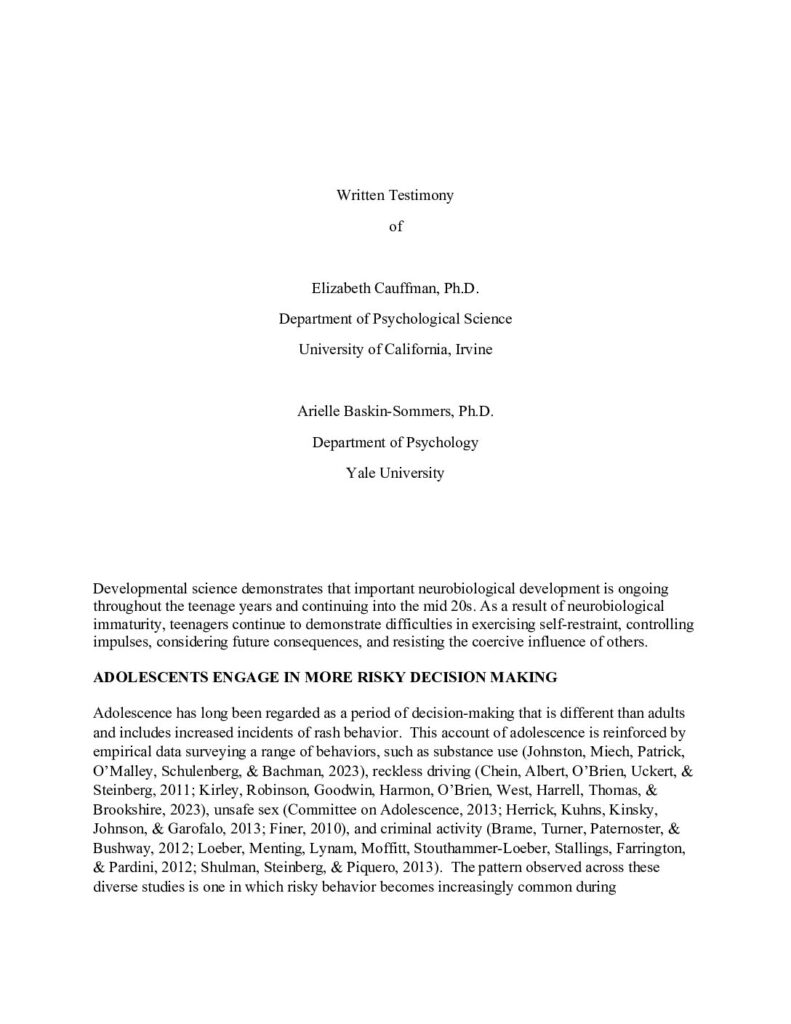
This written testimony from Elizabeth Cauffman, Ph.D. and Arielle Baskin-Sommers, Ph.D. discusses what developmental science says about the impact of brain development on adolescent risk taking, decision making, and susceptibility to social and peer influence as it relates to a young person’s culpability. The testimony also provides information on diversion and its impact on lower recidivism and improved public safety. Below is an excerpt from…

This amicus brief from former Massachusetts judges, the Boston Bar Association, and the Massachusetts Bar Association argues life without parole sentences violate the Commonwealth’s prohibition on cruel and unusual punishment for late adolescents between 18-20 years old for the same reasons they did for youth under 18 years old (as articulated in Diatchenko). Additionally, the brief argues late adolescents have a great propensity…

This bill amends CA WIC § 707(a) by requiring a court to find by clear and convincing evidence that a minor is not amenable to rehabilitation while under juvenile court jurisdiction and requiring that court’s order to include the reasons supporting a finding that a minor is not amenable to rehabilitation in the juvenile court. This bill…
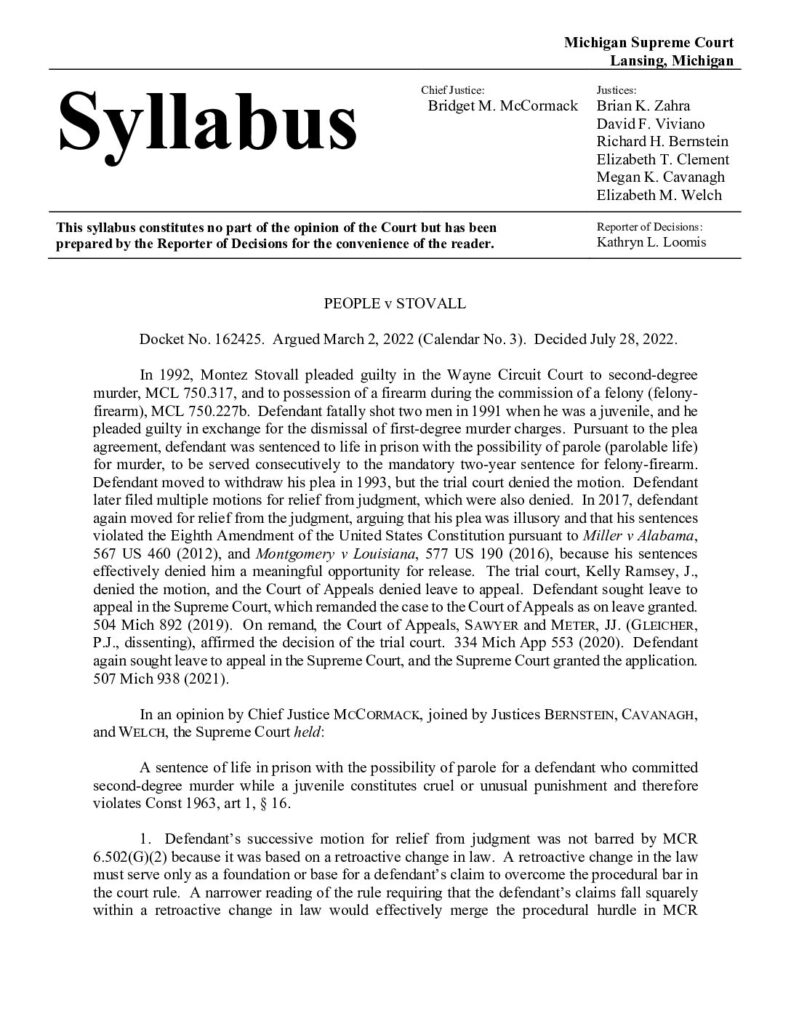
In People v. Stovall, the Michigan Supreme Court vacated Stovall’s sentence of a parolable life sentence for second-degree murder finding it violated Article 1, Section 16 of the Michigan constitution prohibition against cruel and unusual punishment. The court offered the following language in support: “The Michigan Constitution, however, is different. Article 1, § 16 of the Michigan Constitution provides that “[e]xcessive bail shall not be…
In New Mexico v. Jones, the New Mexico Supreme Court held that before an adult sentence is imposed on a young person based on the state’s “Youthful Offender” status, which enables either a juvenile or adult sentence, an amenability hearing must first be held to determine whether a young person is amenable to rehabilitation or treatment in the juvenile legal system. The court offered the following language in support: …
