
Community Programs
This slide deck from FORCE Detroit is a companion to the plenary session on “Building Effective Strategies to Advocate Against Gun Charges,” highlighting the critical importance of communities as an intervention strategy. FORCE Detroit “uses community violence intervention to address the root causes of gun violence through evidence-informed practices that engage residents in safety solutions…
This report, written in collaboration with several groups including the East Bay Community Law Center and The Center for Racial and Economic Justice at UC Law SF, provides research, resources and practice suggestions for youth defenders to utilize when arguing against the use of electronic monitoring in juvenile court proceedings. From the introduction: “The use…

Compiles key takeaways on transforming probation orders, highlighting youth voice, narrative strategies, and best practice recommendations rooted in research.
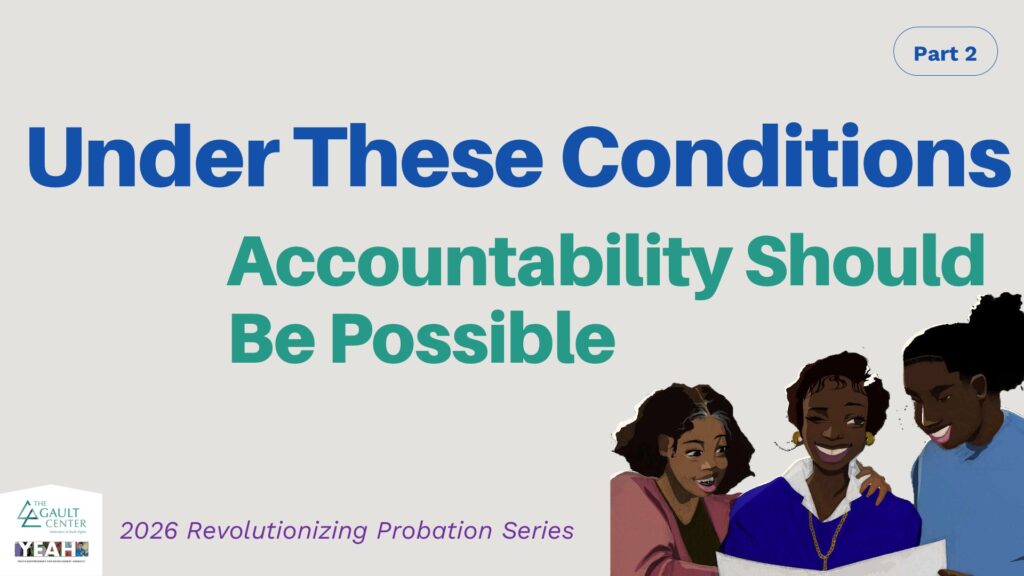
On August 11, 2026, the Gault Center & Youth Empowerment for Advancement Hangout (YEAH Philly) hosted a webinar to launch our probation conditions campaign, Under These Conditions: Accountability Should Be Possible. This webinar featured a moderated youth panel, followed by a walkthrough of campaign tools to spark local efforts to transform probation orders and practices.…
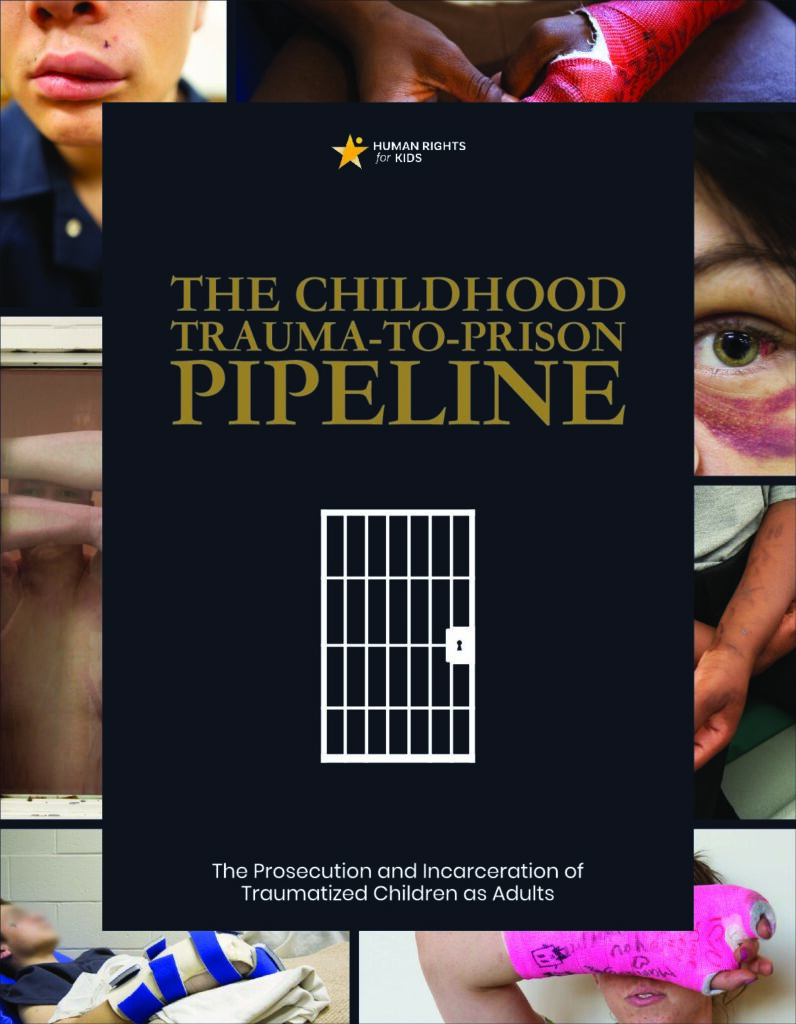
This report from Human Rights for Kids details survey results from 2,200 individuals who were incarcerated as adults for crimes they committed as children. The findings from the report demonstrate the fact that “children tried as adults are often victims long before they became [system-involved],” discusses the intersection between childhood trauma and the legal system,…
The Juvenile Law Center, the Gault Center, and Dr. Gia Elise Barboza-Salerno filed an amicus brief in support of an eleven-year old child who was deemed incompetent to stand trial and detained for competency restoration. From the introduction: Confining an eleven-year-old child deemed incompetent in a detention facility puts the child at grave risk of…

From the resource by Case Western Reserve University Schubert Center for Child Studies: “This document offers an overview of the most current and reliable national and Ohio-specific guidance and resources to support practitioners and providers working with immigrant children. It is organized in the following child and youth-specific settings: Each section provides practical tools, current…
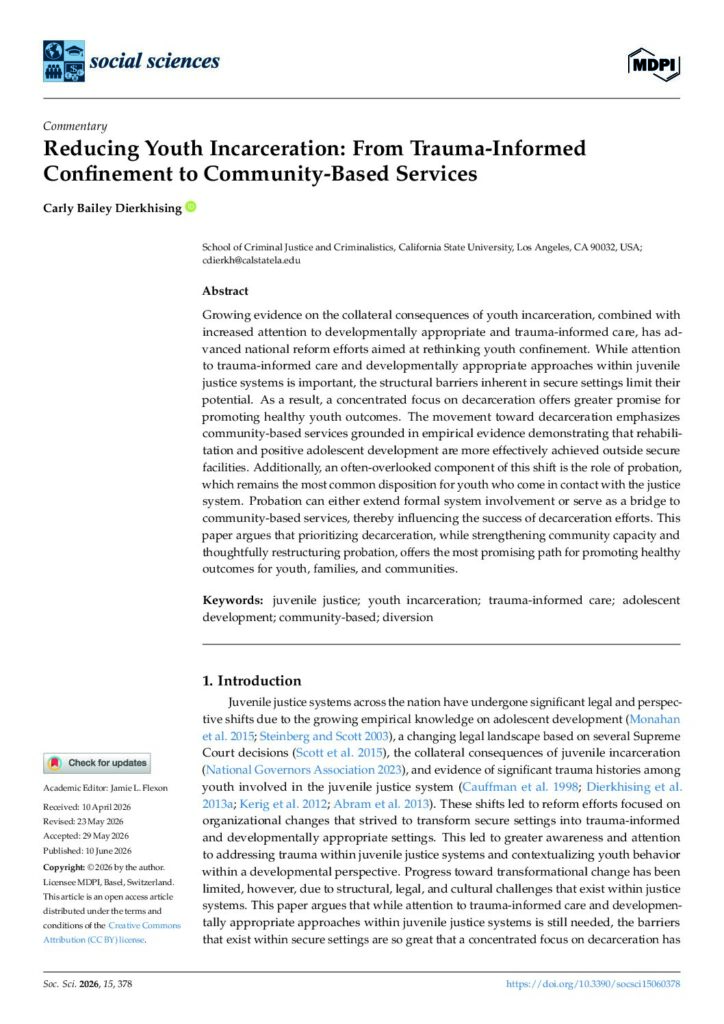
From the abstract: Growing evidence on the collateral consequences of youth incarceration, combined with increased attention to developmentally appropriate and trauma-informed care, has advanced national reform efforts aimed at rethinking youth confinement. While attention to trauma-informed care and developmentally appropriate approaches within juvenile justice systems is important, the structural barriers inherent in secure settings limit…
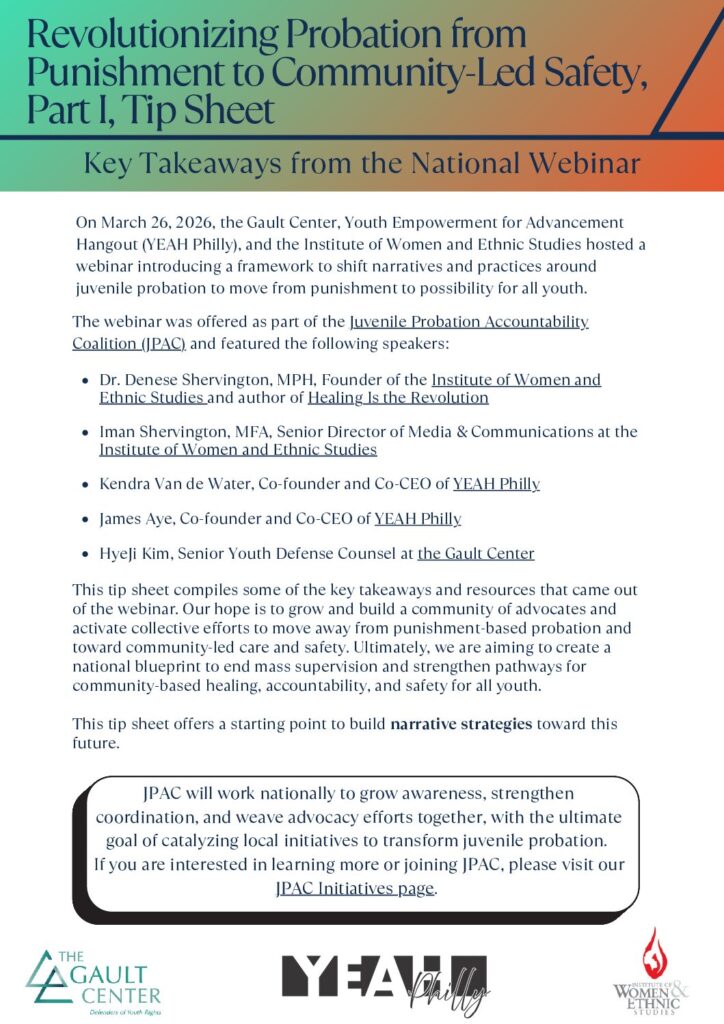
Compiles key takeaways and resources on building narrative strategies to transform juvenile probation, offered during a webinar on Revolutionizing Probation from Punishment to Community-Led Safety.
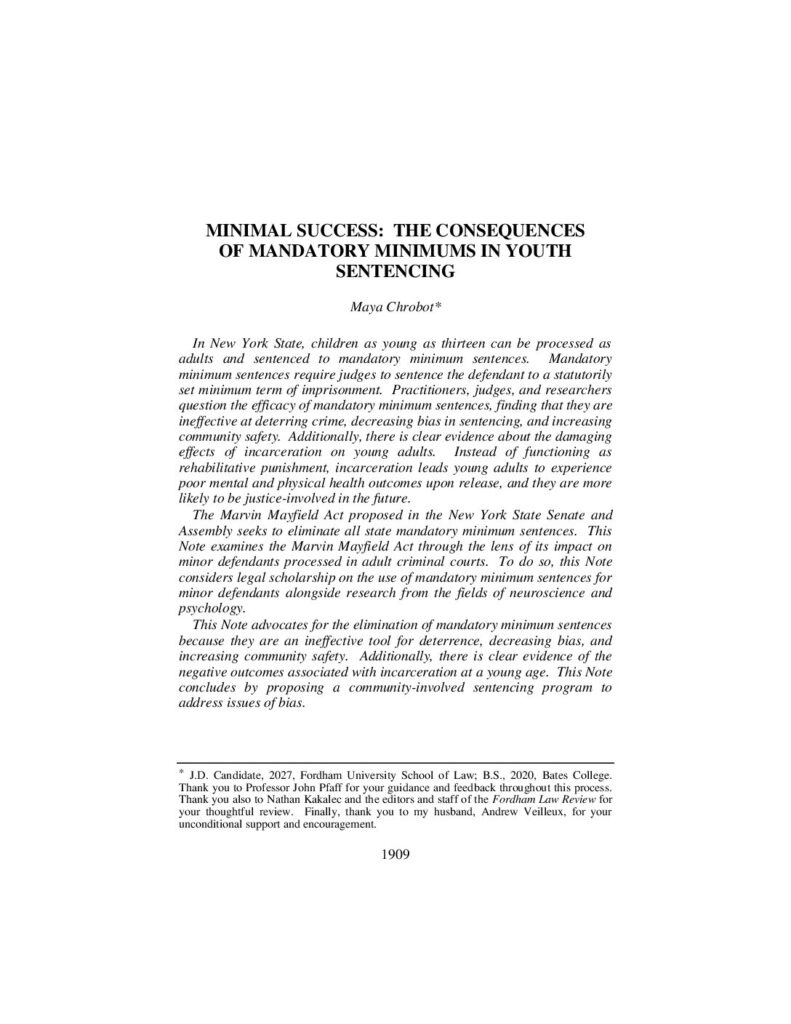
“In New York State, children as young as thirteen can be processed as adults and sentenced to mandatory minimum sentences. Mandatory minimum sentences require judges to sentence the defendant to a statutorily set minimum term of imprisonment. Practitioners, judges, and researchers question the efficacy of mandatory minimum sentences, finding that they are ineffective at deterring…
On March 26, 2026, the Gault Center & Youth Empowerment for Advancement Hangout (YEAH Philly) hosted a webinar on Revolutionizing Probation from Punishment to Community-Led Safety. This webinar focused on shifting narratives around juvenile probation—to challenge the dominant rhetoric that probation is an act of benevolence that keeps youth and communities safe and to bring…

On March 26, 2026, the Gault and Youth Empowerment for Advancement Hangout (YEAH Philly) co-hosted a webinar on Revolutionizing Probation from Punishment to Community-Led Safety. This resource includes PowerPoint presentations from the Gault Center covering the history and youth experiences on juvenile probation, YEAH Philly highlighting meaningful community-based alternatives, and the Institute of Women & Ethnic…
Summarizes what young people are saying about juvenile probation and offers a visual timeline highlighting the historical lineage of probation as a form of racialized social control.
Examines young people’s experiences on juvenile probation and the racialized history of juvenile probation in our country.

The National Institute for Criminal Justice Reform released a report spotlighting promising examples of credible messenger and intensive life-coaching programs to reach youth charged with serious offenses. “This brief argues that the next phase of youth justice reform must focus on intentionally and effectively serving HR2 youth. Doing so will require moving beyond strict replication…
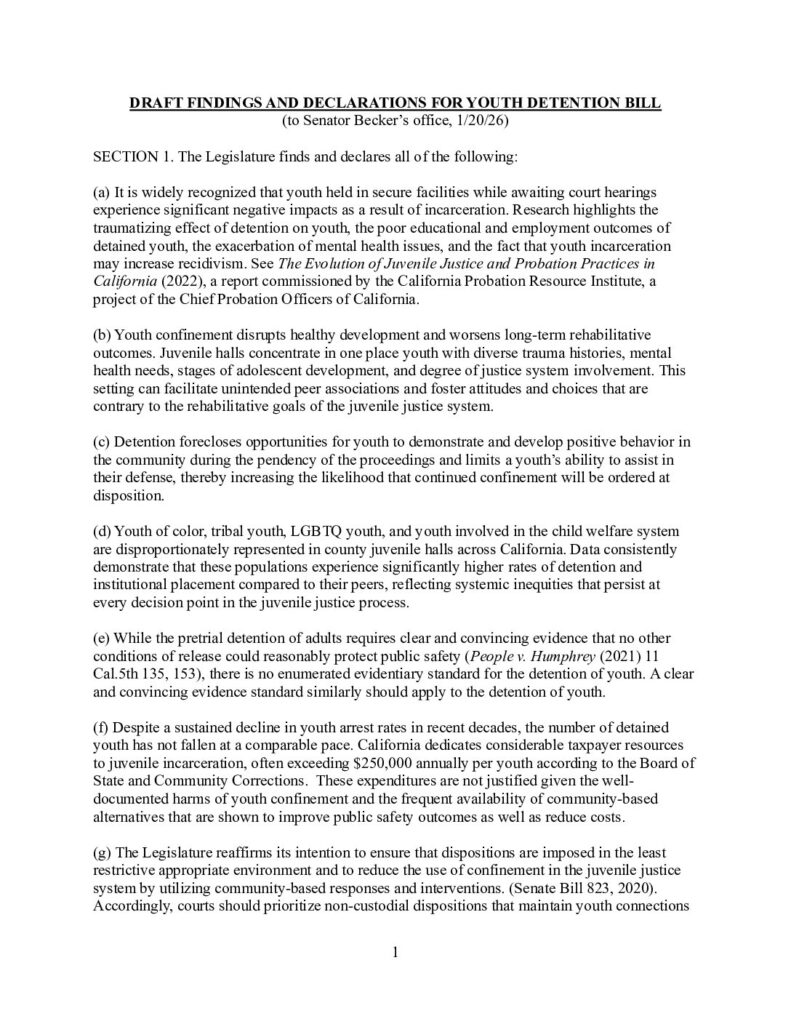
This proposed draft of a legislative “findings and declarations” document for a youth detention and disposition reform bill in California affirms the legislature’s commitment to make placement in juvenile detention “the exception, not the rule.” The draft findings rely on research regarding the impact of detention on young people, racial justice, developmental science, and California…
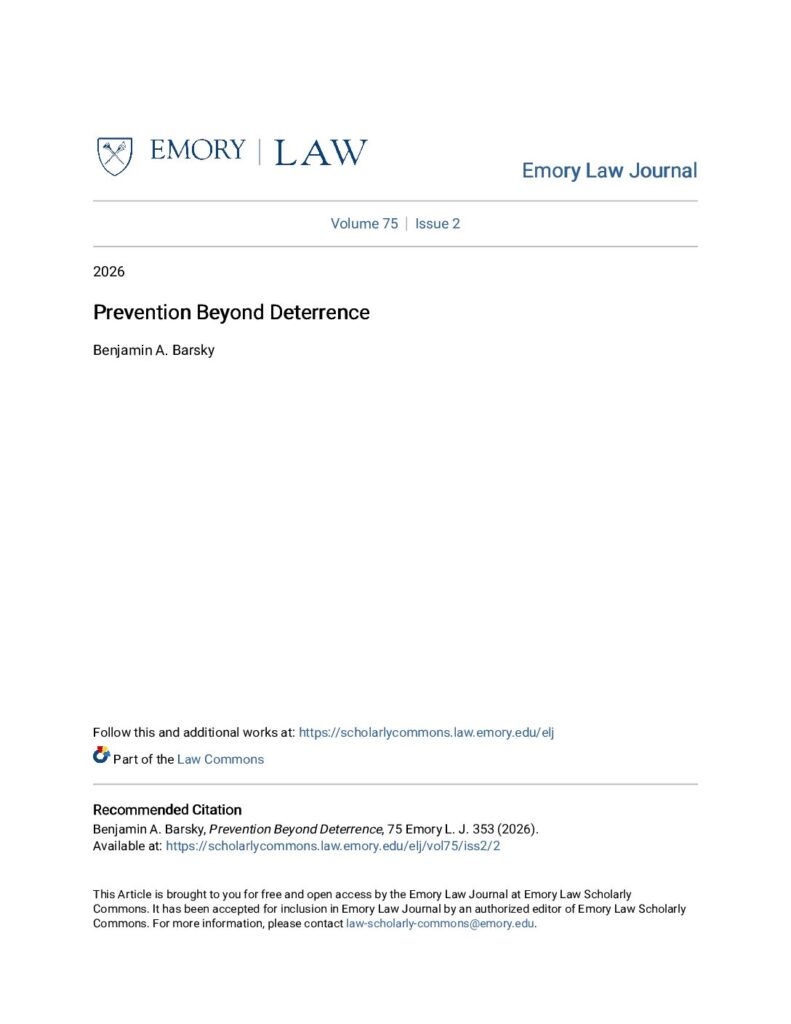
“This Article reconceptualizes preventive justice—the public safety paradigm that seeks to prevent harm before it occurs. Scholars have long documented how cities have advanced this paradigm through largely punitive measures, notably variants of broken windows policing, which posit that aggressive misdemeanor enforcement deters more serious crime. Yet in the aftermath of the 2020 George Floyd…
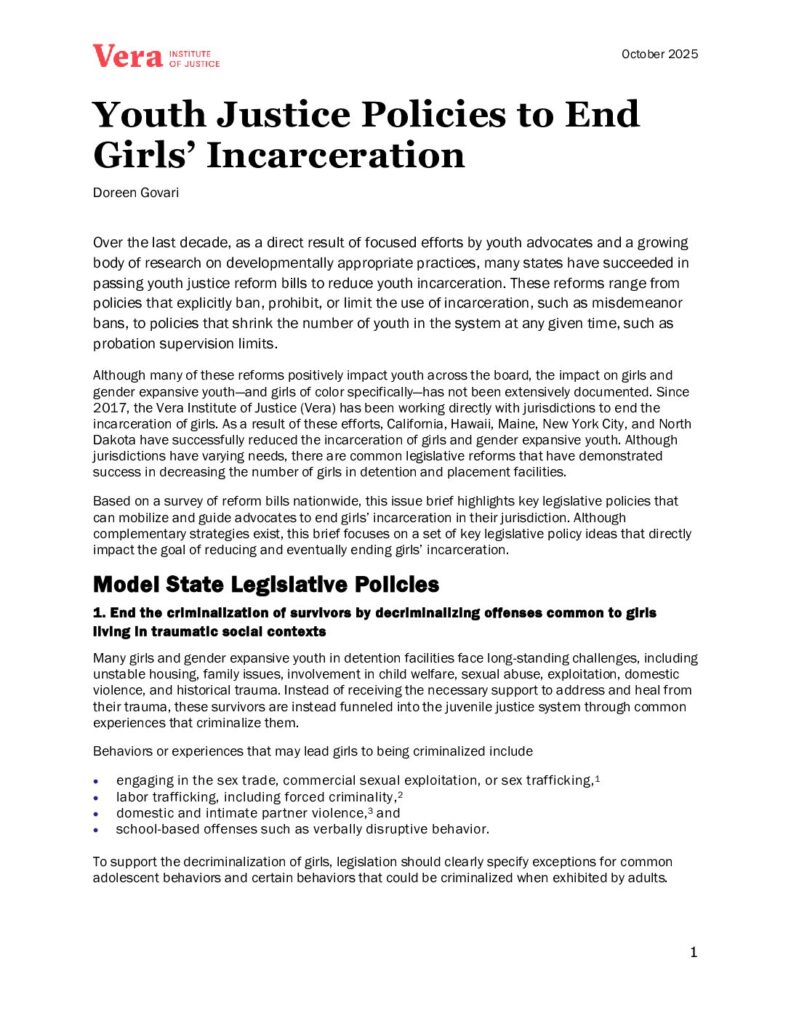
This report from Vera Institute for Justice provides examples of reforms from various states that are working to reduce the incarceration of girls in detention and long-term placement. “Over the last decade, as a direct result of focused efforts by youth advocates and a growing body of research on developmentally appropriate practices, many states have…
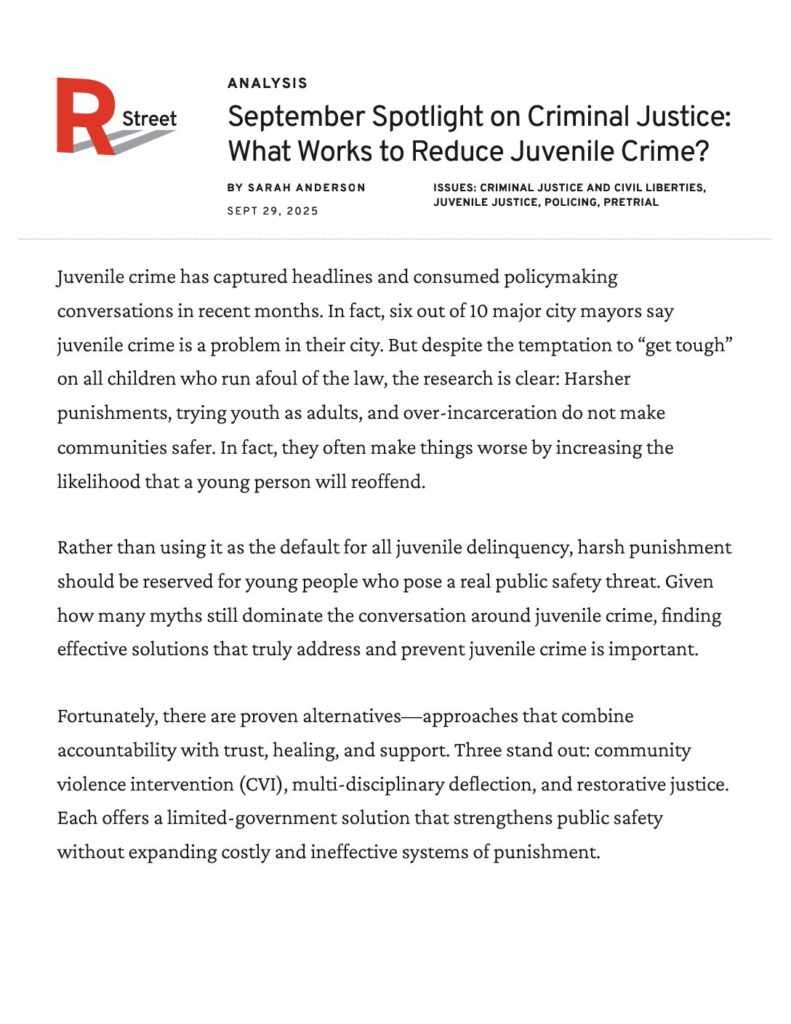
From the R Street Institute: “Juvenile crime has captured headlines and consumed policymaking conversations in recent months. In fact, say six out of 10 major city mayors say juvenile crime is a problem in their city. But despite the temptation to “get tough” on all children who run afoul of the law, the research is clear: Harsher punishments, trying youth…
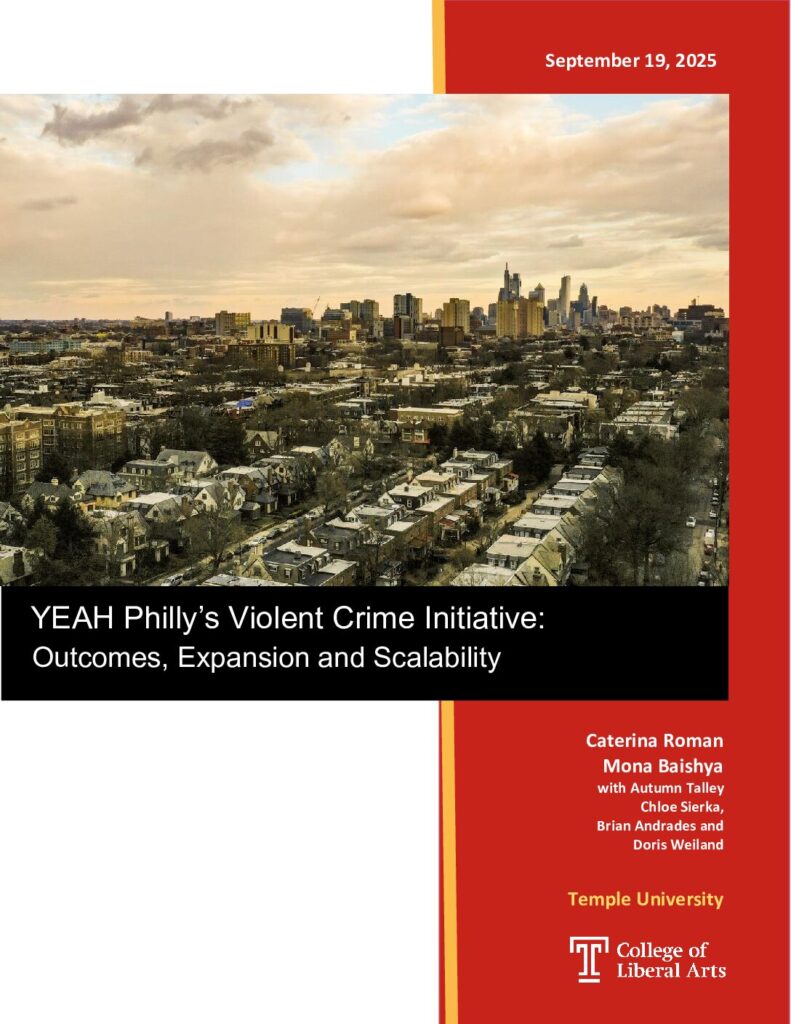
From the executive summary: Youth Empowerment for Advancement Hangout (YEAH Inc.) launched the Violent Crime Initiative (VCI) to support young people ages 15–24 in West and Southwest Philadelphia who have been arrested for violent offenses or gun crimes. Unlike traditional system-driven approaches, VCI provides voluntary, holistic, and flexible services that address both immediate needs (such…
