Community Programs

The Gault Center released an update on the state of youth defense in Kansas, which centers the perspectives and experiences of young people impacted by the juvenile legal system, through a collaborative effort with Progeny, a youth-adult partnership in Kansas, TerraLuna Collaborative, a research consulting group, and Mulberry Art Gallery, which focuses on supporting emerging…
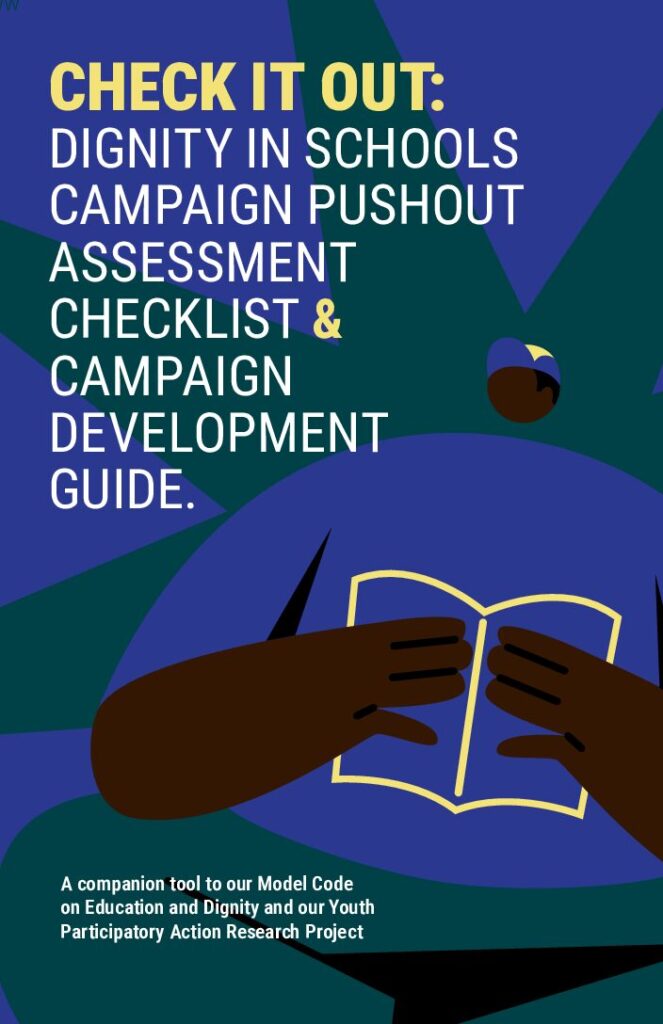
This school pushout assessment and campaign development guide is a companion tool to Dignity in Schools Campaign’s Model Code on Education and Dignity and Youth Participatory Action Research Project. This checklist tool provides a framework for individuals and groups working in schools to assess school policies and practices around discipline, safety, curriculum, logistics, staffing, and other processes to prevent young people from being pushed…

Provides tangible opportunities probation officers have to support positive youth development equitably for all youth, regardless of immigration status and circumstances beyond a young person’s control.

A companion checklist for probation officers, walking through key considerations when working with noncitizen youth.

This report from the National Center for Youth Law examines the emerging policies across the United States that are likely to reverse the downward trend of youth incarceration rates.
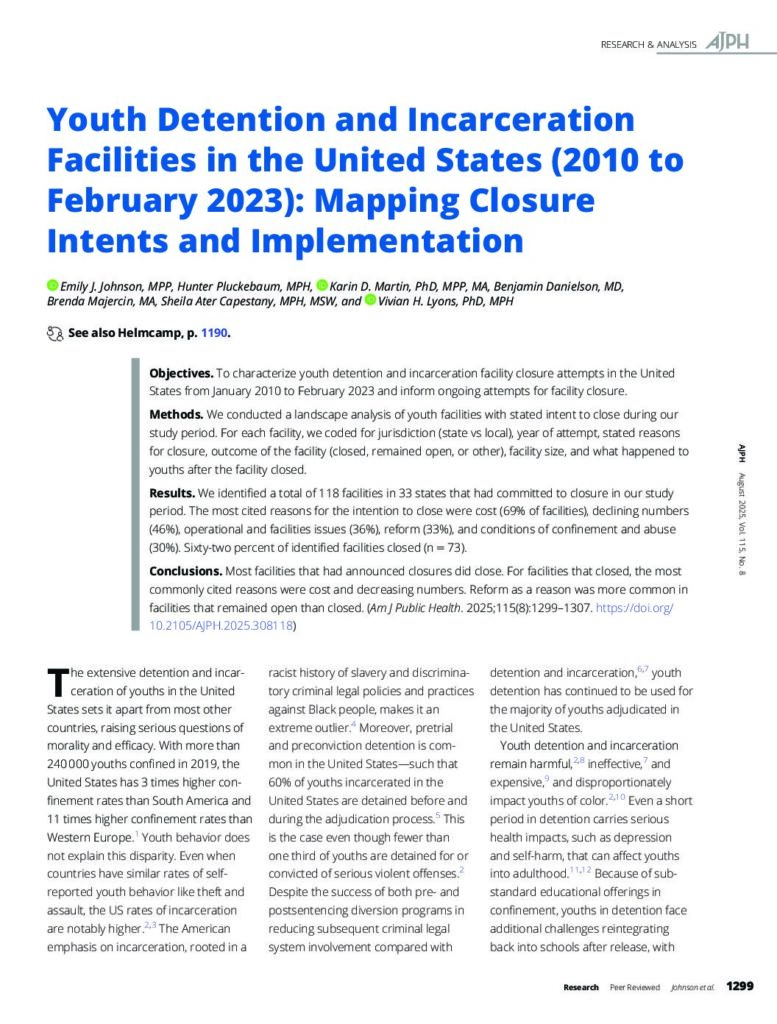
From the Discussion: “This study illuminates pathways for future research to explore facility closures. Such research should investigate the impact of specific drivers supporting completed closures of youth facilities, including the combination of stated reasons to appeal to different audiences. Notably, we only found 1 paper in our scoping review that explores the strategies used…

From the Introduction: “Following a 2024 County Council request, the Pierce County Performance Audit Committee contracted with the CoLab for Community and Behavioral Health Policy at the University of Washington to conduct an audit of the county’s juvenile justice system against national and research best practice. The assessment is intended to guide future county investments…
From the abstract: “Hundreds of thousands of children are brought under the jurisdiction of delinquency courts every year in the United States. Despite the reality that most children engage in delinquent behavior during their adolescence, poor children, children of color, children with disabilities, and children who identify as LGBTQIA+ comprise a disproportionate number of those who become delinquency system-involved. These disparities exist…

“This paper describes a community-based participatory research (CBPR) approach to evaluation used by an academic-practitioner partnership to refine the logic model for a violent crime reduction program and develop associated performance measures. Through qualitative and quantitative data collection, including semi-structured interviews, engagement with program stakeholders (e.g., program leaders and staff, peer researchers, community residents), community…

This report from National Institute for Criminal Justice Reform offers six principles of a positive youth justice system (‘PYJS’) including: 1) Minimize contact with the juvenile justice system, 2) partner with youth and families to develop and share ownership of case plans, 3) community-based organizations should take the lead, 4) build on youth assets and…

A sample memorandum of understanding (MOU) between the Hamilton County Juvenile Court detention center and a community mental health service provider.

A sample disposition and mitigation memorandum filed in a juvenile court in Ohio.

From the Executive Summary of this research report by the Urban Institute: Adolescence and young adulthood are critical life stages full of possibility, but to experience healthy development, young people need support in all aspects of their lives. During this life stage, people begin to gain independence, learn social skills and behaviors that shape the…

From the resource: “This poster is a tool to assess and understand differences between reforms that strengthen imprisonment and abolitionist steps that reduce its overall impact and grow other possibilities for wellbeing. As we work to dismantle incarceration in all its forms, we must resist common reforms that create or expand cages anywhere, including under…

This article traces the history of racist gun laws and how they interact with the Second Amendment, highlighting the racially disproportionate impact of gun charges on Black and Latine communities. Relevant language from the article includes: “As the courts increasingly look to history and tradition to determine the scope of the right to keep and…
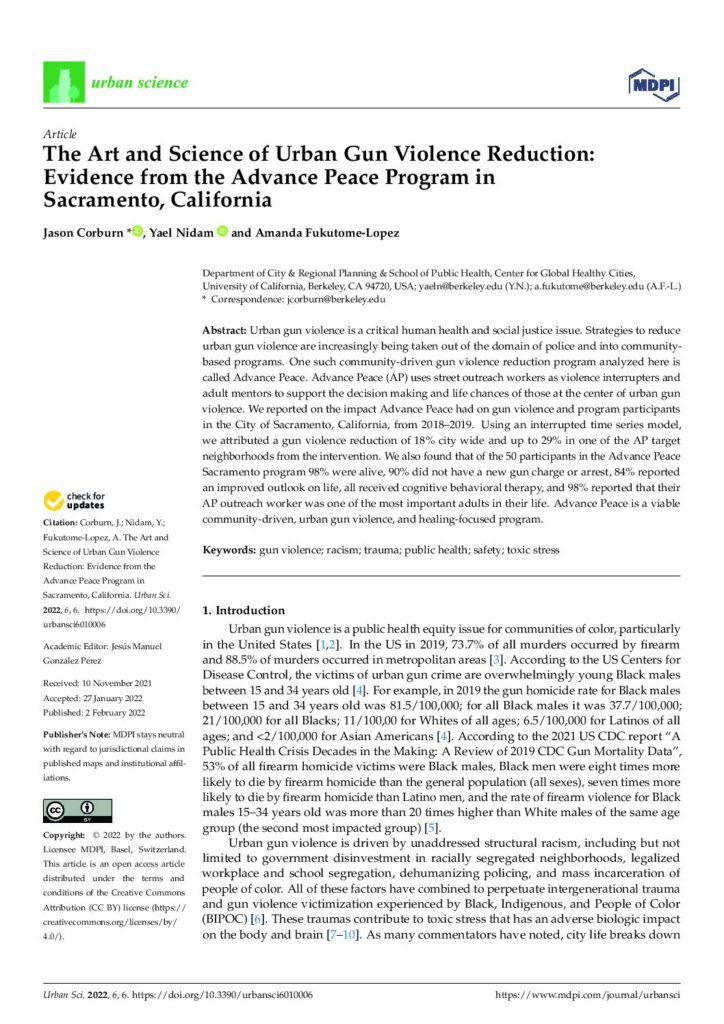
This article from Urban Science evaluates the success rate of the Advance Peace Sacramento gun crime reduction program and concludes that Advance Peace is a model for “urban public safety that combines inter-personal healing and community crime reduction. Abstract: “Urban gun violence is a critical human health and social justice issue. Strategies to reduce urban…
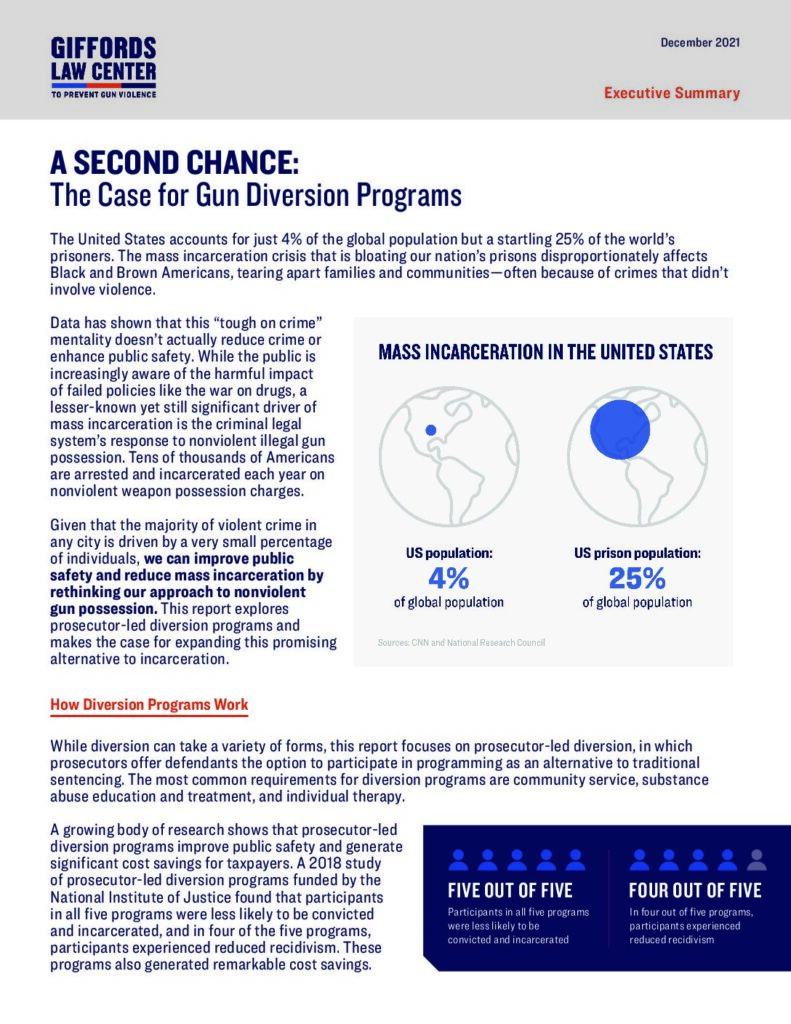
This executive summary from the Giffords Law Center examines the effectiveness of diversion programs for nonviolent gun possession, focusing on diversion programs in Brooklyn and Minneapolis as successful examples. From the resource: “The United States accounts for just 4% of the global population but a startling 25% of the world’s prisoners. The mass incarceration crisis…


From the Urban Institute: Jurisdictions across the country are changing how they administer juvenile probation and better aligning policy and practice with developmental science and positive youth development to improve outcomes for youth, families, and communities. These changes often advance two goals: divert most youth from system involvement altogether and shrink probation caseloads, and change…

This research report provides an overview of and recidivism rates for a unique multidisciplinary intervention program for youth charged with weapons offenses (GATE/JWOP Program). The report discusses the study methods, 6- and 12-month recidivism rates for the studied cohort, and potential for expansion of the program to applicable state and national jurisdictions. From the Discussion…


- « Previous
- 1
- 2
- 3
- Next »
