
Harms of Incarceration

An infographic outlining strategies for post-disposition advocacy.

This report by the Center for American Progress, Movement Advancement Project, and Youth First offers an overview of youth incarceration in the United States and in particular, data on the experiences and challenges of LGBTQ youth incarcerated in the juvenile legal system. It concludes with several recommendations for reducing system involvement, ensuring fair treatment within…


This policy report features interviews of young people who have been incarcerated in youth facilities in Colorado and details the harmful conditions and culture in these programs. From the Executive Summary: “Despite a mission of rehabilitation rather than punishment, the culture of the Colorado Division of Youth Corrections (DYC) is plagued by punitive practices that…

On January 3, 2017, the DOJ filed a Statement of Interest in a case involving the use of solitary confinement for 16 and 17 year olds in the Onondaga County Justice Center in New York. This brief outlines the harms of solitary confinement as applied to young people in light of their brain development and…
The U.S. Department of Justice filed a Statement of Interest in a federal class action lawsuit challenging the use of solitary confinement for 16- and 17-year-old youth in custody, including youth with disabilities. Calling for the federal district court to consider Supreme Court jurisprudence and growing scientific research on adolescent development, the DOJ asserts, “Juveniles…
This paper from the Executive Session on Community Corrections at the Harvard Kennedy School examines the history of youth incarceration and discusses how the inherently flawed model of youth prisons demands systemic reforms, including closure of youth prisons, to actualize safer communities, and positive youth outcomes. From the introduction: “For 170 years, since our first youth correctional institution opened, America’s approach…
In the national conversation about youth overincarceration and disproportionate minority contact in the juvenile legal system, Native American youth are often statistically invisible. Closer attention, however, reveals that Native youth who come into contact with the juvenile legal system are more likely to be locked in secure confinement than other youth, with disproportionality rates in…
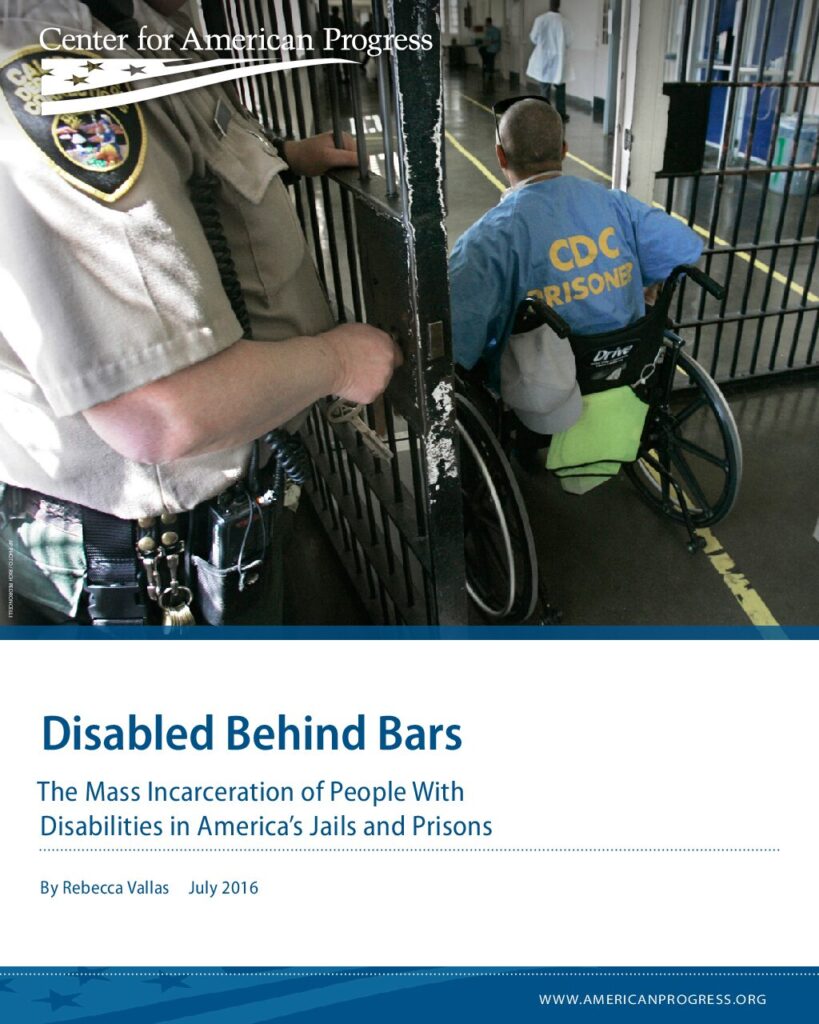
From the introduction: “This report highlights steps policymakers can take to combat inappropriate and unjust incarceration and criminalization of people with disabilities, as well as steps to ensure appropriate and humane treatment of people with disabilities throughout the justice system, from police practices to courts, conditions in jails and prisons, and reentry.”

On December 9, 2015, the U.S. District Court for the Southern District of Ohio Eastern Division terminated the consent decree, finding the Ohio Department of Youth Services in substantial compliance with the consent decree. Notable improvements made to the Ohio juvenile facilities include: “meaningful grievance system and easy access to attorneys to address concerns related…

On August 6, 2015, the DOJ released an updated findings letter on several juvenile facilities in Puerto Rico. The DOJ finds that young people confined in juvenile facilities face substantive due process and equal protection violations, in addition to infringements to their federal rights under the Individuals with Disabilities Education Act and the Rehabilitation Act…

On March 20, 2014, the DOJ filed a Statement of Interest in a federal conditions lawsuit on behalf young people under the age of 18 confined in the Michigan Department of Corrections, alleging violations of the Prison Rape Elimination Act (PREA). The DOJ emphasizes that “[s]tate correctional facilities. . . are subject to both the…

This amicus brief by Juvenile Law Center, The Gault Center, and others argues Ohio’s mandatory bindover statute violates the Due Process protections guaranteed by the 14th Amendment of the U.S. Constitution as the mandatory scheme does not allow for individualized sentencing and recognition of the unique characteristics of youth. Further, amici argue individualized transfer proceedings…

On October 24, 2012, the U.S. Department of Justice filed a complaint in the United States District Court, Southern District of Mississippi asserting that the City of Meridian, County of Lauderdale, and State of Mississippi are engaging in a “pattern or practice of unlawful conduct through which they routinely and systematically arrest and incarcerate children,…

On August 22, 2012, the DOJ released its investigation findings into the Pendleton Juvenile Correctional Facility in Indiana. The investigation finds that “Pendleton exposes incarcerated youth to significant harm in violation of their constitutional and federal statutory rights. Pendleton fails to take reasonable steps to prevent youth from committing suicide, fails to provide reasonably safe…


On August 10, 2012, the U.S. Department of Justice released a findings report regarding their investigation of Lauderdale County Youth Court, Meridian Police Department, and Mississippi Division of Youth Services. The findings included the following violations: “(1) The City of Meridian Violates the Fourth Amendment by Arresting Children Without Assessing Probable Cause; (2) Lauderdale County…

On March 20, 2012, the DOJ released its investigation findings into the conditions of confinement at the Walnut Grove youth Correctional Facility (WGYCF) in Walnut Grove, Mississippi. The investigation concludes, “the State of Mississippi is deliberately indifferent to the constitutional rights of young men confined at WGYCF. Evidence discovered at WGYCF reveals systematic, egregious, and…

This amicus brief by Juvenile Law Center and The Gault Center argues Illinois automatic transfer law does not comply with recent research and findings on adolescent development as recognized by the Supreme Court jurisprudence in Roper and Graham. Further, amici argue the state’s automatic transfer statute violates the proportionality clause of Article I, Section 11…

On July 14, 2010, the DOJ filed a complaint in the U.S. District Court for the Northern District of New York against the State of New York, alleging that the state “disregarded known or serious risks of harm to youths at the Facilities . . . . constituting a pattern or practice that violates the…

On July 14, 2010, the DOJ entered into a settlement agreement with the State of New York to remedy constitutional violations in the juvenile facilities. The settlement agreement outlines that the state shall not subject youth to undue restraints and must provide adequate and appropriate mental health care and treatment to youth. Related actions: [New…

On January 29, 2010, the Department of Justice issued a findings letter regarding an investigation of the Indianapolis Juvenile Correctional Facility (ICJF) pursuant to the Civil Rights of Institutionalized Persons Act, 42 U.S.C. § 1997 (CIPRA), and the pattern or practice provision of the Violent Crime Control and Law Enforcement Act of 1994, U.S.C. §14141…

On November 23, 2009, the DOJ and the Ohio Department of Youth Services entered into an amended consent decree to address the remaining conditions of confinement in the Scioto Juvenile Correctional Facility, following the closure of the Marion Juvenile Correctional Facility. Related Actions: [Ohio] Marion Juvenile Correctional Facility: Investigation [Ohio] DOJ Complaint in U.S. v.…

On August 14, 2009, the DOJ released its investigation of four juvenile facilities in New York, finding that conditions violate federal and constitutional rights of youth. Specifically, the investigation highlights the facilities’ use of excessive force and inappropriate restraints and its failure to provide adequate mental health care and treatment for youth, in violation of…

This amicus brief prepared by The Gault Center and Juvenile Law Center argues that Louisiana must grant jury trials in juvenile court given the persistent deficiencies in Louisiana’s juvenile legal system including the punitive nature of consequences youth face and the dire and harmful conditions of the state’s jails. Furthermore, amici argue there is a…
