
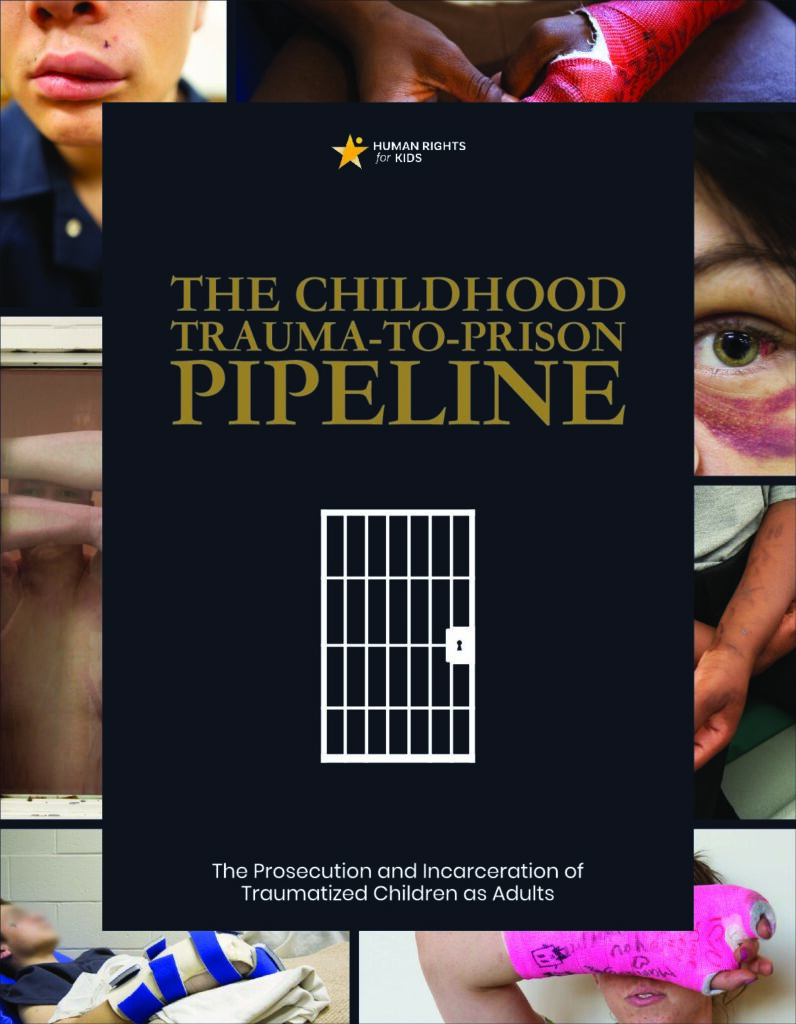
This report from Human Rights for Kids details survey results from 2,200 individuals who were incarcerated as adults for crimes they committed as children. The findings from the report demonstrate the fact that “children tried as adults are often victims long before they became [system-involved],” discusses the intersection between childhood trauma and the legal system,…
From the abstract: “Mass incarceration in the United States has been driven largely by increasingly long sentences, particularly for individuals convicted of violent offenses. A major obstacle to reversing this trend is the widespread belief that these sentences cannot be revisited. While there has been a growing recognition across political and ideological lines that far…
From the abstract: “Among the constellation of actors who appear in courtrooms every day, probation has been largely overlooked in conversations and debates about institutional reform in the criminal legal system. Prior scholarship has focused on probation’s role in administering the sentence of probation. This Article calls for recognizing probation as a key institutional player…

From the Introduction of the report by the Samuelson Law, Technology & Public Policy Clinic at UC Berkeley School of Law: “The paper proceeds as follows: • Part I describes current community supervision technologies, including location tracking, alcohol monitoring, and drug testing, and the reliability concerns with each. • Part II describes and compares the…
This report from the Campaign for the Fair Sentencing of Youth provides a national overview of the progress states have made post-Montgomery in changing sentencing laws for young people in adult court facing life without parole and other lengthy sentences, and opportunities for continued legislative, legal and policy change. From the resource: Ten years ago, the…
This article focuses on the policies and practices of community supervision programs, and the impact they have on individuals with disabilities, including discriminatory practices that prevent disabled individuals from successfully completing probation or parole. From the introduction: ” This Article addresses disability discrimination in community supervision programs, a large—but frequently overlooked—component of the criminal legal…

This paper is part of the Series on Learning from Civil Rights Lawsuits from the Civil Rights Litigation Clearinghouse and focuses on parole review procedures for individuals serving long sentences for crimes committed under age 18, discusses constitutional dimensions of parole review for this group, and proposes model policies supporting a meaningful opportunities for release. From the Executive Summary: “In recent years, people serving…

A brief timeline of states banning juvenile life without parole.

This amicus brief by the Santa Clara County Independent Defense Counsel Office argues the decision in People v. Hardin should be affirmed because historical legacies of racism disparately expose some adolescents to the legal system and this does not justify lifelong punishment without considering rehabilitation. From Introduction & Summary of Argument: “Youthful offender parole is authorized by age at the…

This amicus brief by American Civil Liberties Union and others argues that denying an opportunity for parole for young adults between the ages of 18 and 25 raises an equal protection violation given the racially disproportionate impact of life without parole sentences on young adults, resulting from “tough on crime” politics based in racial bias. From the Introduction: “In analyzing Petitioner Hardin’s equal protection…
This amicus brief by the Massachusetts Committee for Public Counsel Services argues the remedy of considering parole after fifteen years can be extended to late adolescents from 18-20 years old with life without parole sentences while still protecting public safety. Additionally, the brief argues judicial findings regarding the capacity of late adolescents to change are…
This amicus brief from former Massachusetts judges, the Boston Bar Association, and the Massachusetts Bar Association argues life without parole sentences violate the Commonwealth’s prohibition on cruel and unusual punishment for late adolescents between 18-20 years old for the same reasons they did for youth under 18 years old (as articulated in Diatchenko). Additionally, the brief argues late adolescents have a great propensity…

A sample visual timeline capturing specific events in a client’s life for use as mitigation in different stages of a case, including: trial, disposition or post-disposition proceedings, sentencing, or parole advocacy.
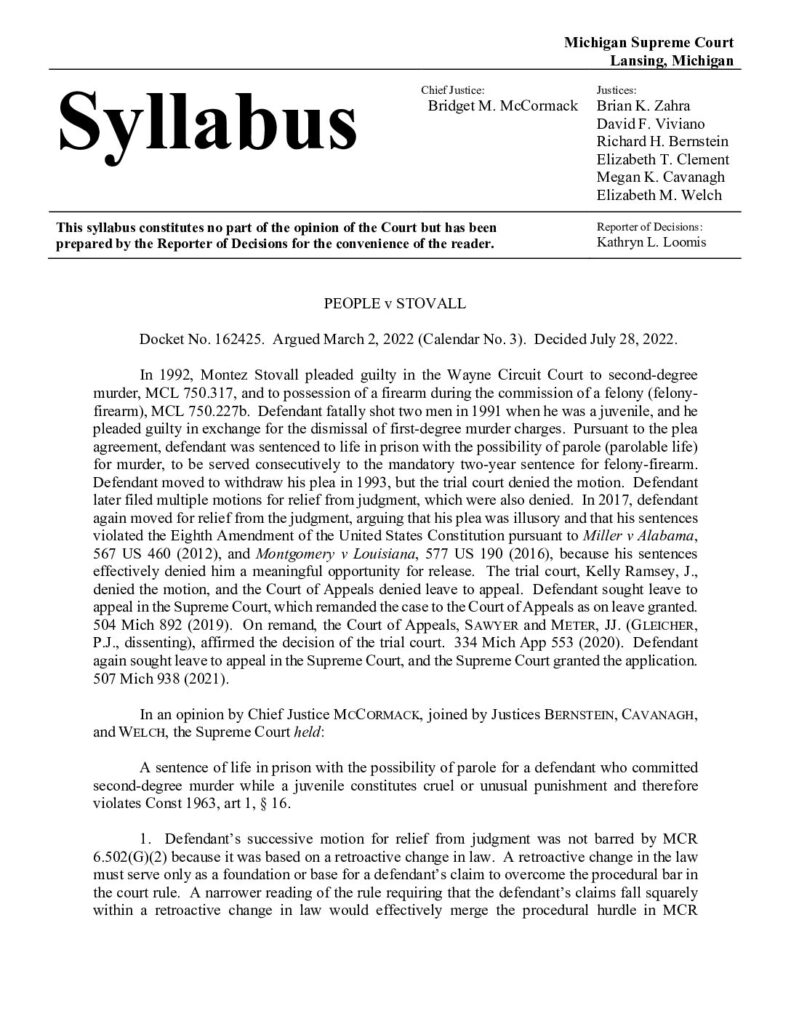
In People v. Stovall, the Michigan Supreme Court vacated Stovall’s sentence of a parolable life sentence for second-degree murder finding it violated Article 1, Section 16 of the Michigan constitution prohibition against cruel and unusual punishment. The court offered the following language in support: “The Michigan Constitution, however, is different. Article 1, § 16 of the Michigan Constitution provides that “[e]xcessive bail shall not be…

From the conclusion: “Washington, DC has severe racial disparities in its justice-involved population. That should alarm local leadership and its residents. These disparities are rooted in policing practices that target communities of color, a lack of investment and opportunity in historically disadvantaged neighborhoods, and an overly punitive sentencing, parole, and corrections system. The current system…
