
Physical Restraint
Semi-annual report from the Colorado Division of Youth Services on use of seclusion and restraint in their youth facilities.

On May 15, 2024, the DOJ submitted a letter to Kentucky Governor Andy Beshear to notify the state of the commencement of a DOJ investigation into nine juvenile facilities operated by the Kentucky Department of Juvenile Justice (DJJ). The specific issues the DOJ outlined they would investigate include excessive use of chemical force, physical and…
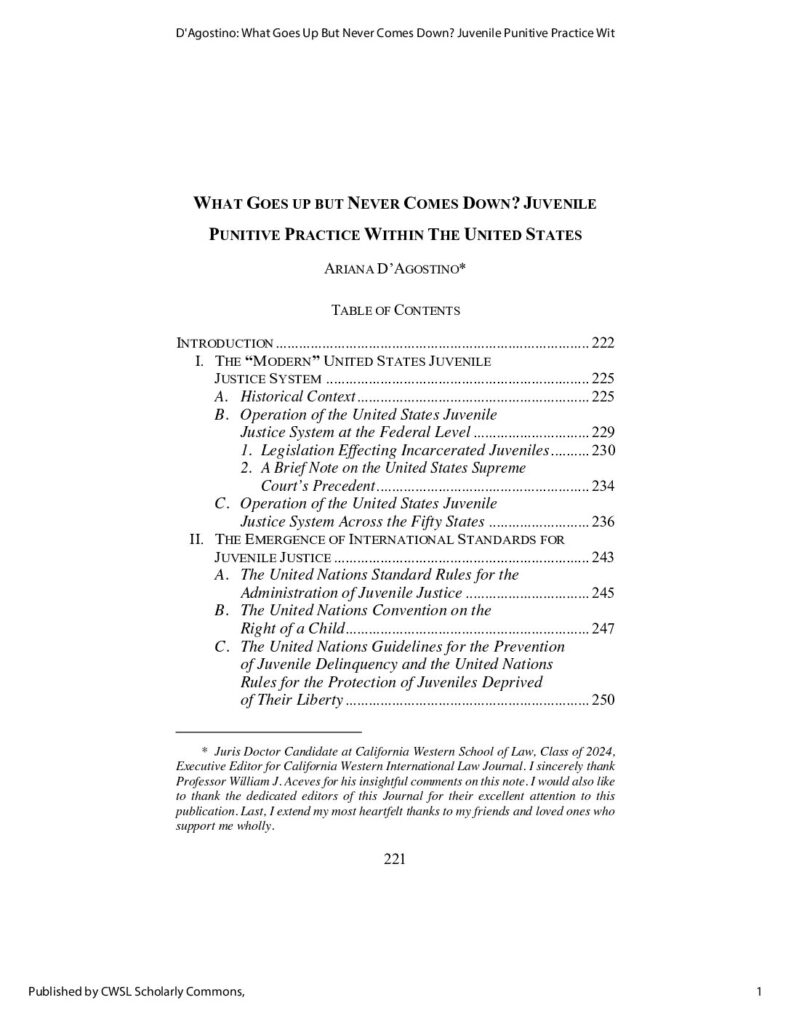
From the Introduction of the Paper: “The U.S.’s failure to implement an internationally abiding federal law regulating juvenile justice has important implications on the treatment of incarcerated adolescent populations while incarcerated, rehabilitated, and reintegrated into society. This article will analyze the harmful and outdated legal frameworks and institutional structures of the U.S. juvenile justice systems.…

Semi-annual report from January-June 2023 from the Colorado Division of Youth Services on reported number of physical and sexual assaults, number of facility staff, and other conditions of confinement data in its state-run residential facilities for detained and committed young people.

From the Executive Summary, developed by Equip for Equality: “The children in the Juvenile Temporary Detention Center (“JTDC”) are some of the most vulnerable youth in Cook County, many having experienced significant trauma and violence as part of their daily existence. The JTDC is the juvenile jail for Cook County, housing youth awaiting adjudication of their cases, as well…

On September 14, 2020, the DOJ filed a statement of interest involving young people between the ages of 11 and 16 subject to “a broad range of unconstitutional conditions, including unsanitary and unsafe conditions, use of excessive force, overcrowding, lack of recreation and programming, inadequate health and mental health care, and inadequate educational services.” The…

On October 17, 2017, the DOJ closed its investigation of the Pendleton Juvenile Correctional Facility, citing improvements made to the facility. The letter states, “Most broadly, the State has made system-wide efforts to minimize incarceration of youth; to move toward a rehabilitative juvenile justice model; to increase youth’s access to community-based alternatives to incarceration; and…

This policy report features interviews of young people who have been incarcerated in youth facilities in Colorado and details the harmful conditions and culture in these programs. From the Executive Summary: “Despite a mission of rehabilitation rather than punishment, the culture of the Colorado Division of Youth Corrections (DYC) is plagued by punitive practices that…

On December 9, 2015, the U.S. District Court for the Southern District of Ohio Eastern Division terminated the consent decree, finding the Ohio Department of Youth Services in substantial compliance with the consent decree. Notable improvements made to the Ohio juvenile facilities include: “meaningful grievance system and easy access to attorneys to address concerns related…

On March 31, 2011, Leflore County, Mississippi entered into a Memorandum of Agreement (MOA) with the United States to address the DOJ’s investigation findings into the Leflore County Juvenile Detention Center (LCJDC). The MOA outlines that LCJDC must provide young people with reasonably safe conditions of confinement, protect youth from harm, limit the use of…

On May 12, 2015, the DOJ filed a complaint in the U.S. District Court for the Northern District of Mississippi against Leflore County, Mississippi for engaging “in a pattern or practice of conduct that violates the Constitutional and statutory rights of youth at the Detention Center.” The complaint outlines 14th Amendment violations based on Leflore…

This expert affidavit from Dr. Gwenyth Campbell Rost, Ph.D., a speech-language pathologist, describes the impacts of shackling and the use of physical restraints on young people with communication and language disabilities who are involved in the juvenile legal system. The affidavit highlights how shackling and restraining youth impedes their ability to communicate and remember information…

On August 22, 2012, the DOJ released its investigation findings into the Pendleton Juvenile Correctional Facility in Indiana. The investigation finds that “Pendleton exposes incarcerated youth to significant harm in violation of their constitutional and federal statutory rights. Pendleton fails to take reasonable steps to prevent youth from committing suicide, fails to provide reasonably safe…

On March 20, 2012, the DOJ released its investigation findings into the conditions of confinement at the Walnut Grove youth Correctional Facility (WGYCF) in Walnut Grove, Mississippi. The investigation concludes, “the State of Mississippi is deliberately indifferent to the constitutional rights of young men confined at WGYCF. Evidence discovered at WGYCF reveals systematic, egregious, and…

On March 31, 2011, the Department of Justice released the findings of their investigation into the Leflore County Juvenile Detention Center (LCJDC) in Greenwood, Mississippi. The DOJ found that “[o]ur investigation revealed systemic, egregious and dangerous abuses perpetuated by a lack of accountability and controls.” The DOJ investigation uncovered that LCJDC fails to prevent unconstitutional…

On December 12, 2010, the Memorandum of Agreement (MOA) between Los Angeles County and the United States regarding the Los Angeles County Probation Camps was amended a second time. The amended MOA recognizes that the County implemented significant reforms and achieved substantial compliance with all but four paragraphs of the MOA, and thus extends the…

On October 31, 2010, Los Angeles County entered into a Memorandum of Agreement (MOA) with the United States to address the DOJ’s investigation findings into the Los Angeles County Probation Camps. The MOA provisions include implementing new policies that govern the use of force, restricting the use of chemical sprays, creating a system of review…

On July 14, 2010, the DOJ entered into a settlement agreement with the State of New York to remedy constitutional violations in the juvenile facilities. The settlement agreement outlines that the state shall not subject youth to undue restraints and must provide adequate and appropriate mental health care and treatment to youth. Related actions: [New…

On July 14, 2010, the DOJ filed a complaint in the U.S. District Court for the Northern District of New York against the State of New York, alleging that the state “disregarded known or serious risks of harm to youths at the Facilities . . . . constituting a pattern or practice that violates the…

On March 29, 2010, the Memorandum of Agreement (MOA) between Los Angeles County and the United States regarding the Los Angeles County Probation Camps was amended. The amended MOA includes language outlining that “The Monitor shall ensure that the subset of the Monitoring Team that participates in these visits has the requisite experience and expertise…
