
Racial and Ethnic Disparities

The Annie E. Casey Foundation released its annual Kids Count Data Book, which offers a national analysis on four indicators of child wellbeing: economic wellbeing, education, health, and family and community. This report is part of the Kids Count Data Center, which provides demographic and wellbeing data on children and families. This report includes data…
From the abstract: “Hundreds of thousands of children are brought under the jurisdiction of delinquency courts every year in the United States. Despite the reality that most children engage in delinquent behavior during their adolescence, poor children, children of color, children with disabilities, and children who identify as LGBTQIA+ comprise a disproportionate number of those who become delinquency system-involved. These disparities exist…


From the introduction: “Youth justice advocates, including lawyers, organizers, and other youth and adult movement builders, want to replace the current damaging, discriminatory, and ineffective juvenile and criminal legal systems1 with better approaches. We envision approaches that support children, help them f lourish, and contribute to a safe, equitable, and healthy community. How do we…

Professor Kris Henning and Rebba Omer authored a law review article on decriminalizing normal adolescent behaviors, race, and disabilities. This article maps a way forward for all system actors in the juvenile legal system to mitigate and buffer against the harms of juvenile legal system involvement for youth with disabilities. Specifically, this article outlines youth…
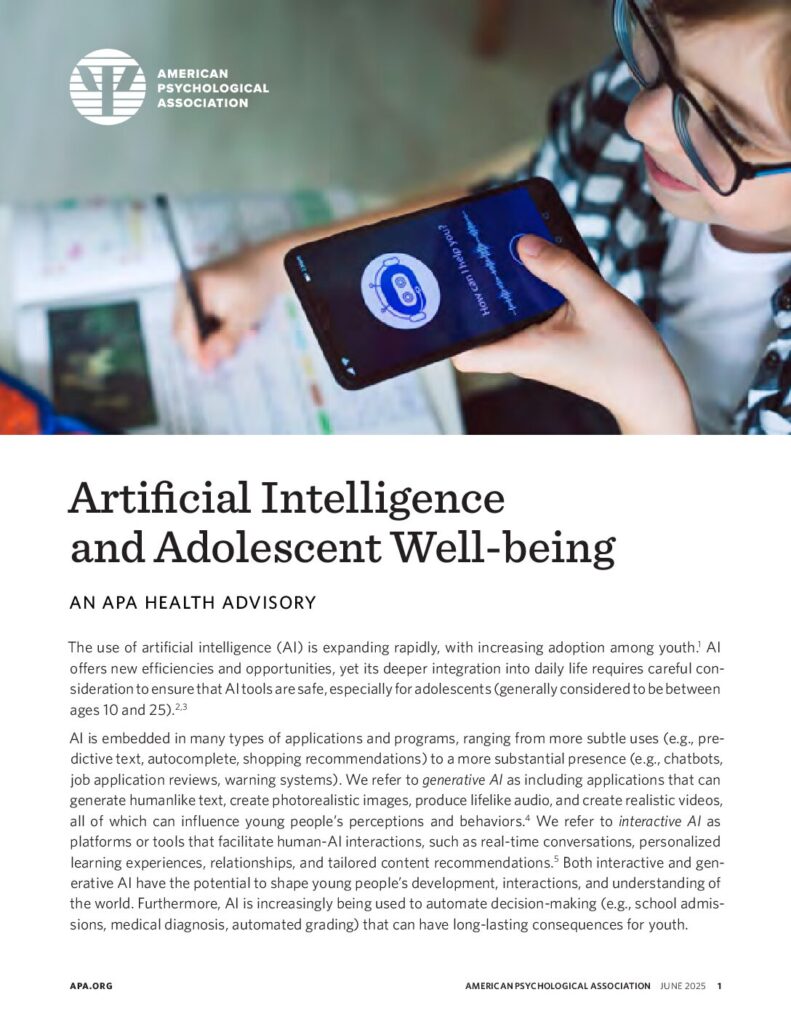
The American Psychological Association’s health advisory examines the growing use of AI among youth. While AI offers many benefits, its increasing role in children’s daily lives requires careful consideration. Because AI is embedded in many applications that shape perceptions and behaviors, it can have lasting impacts on children’s development. The advisory outlines these potential risks and offers recommendations to…

From abstract: Over the past decade, dozens of state and local jurisdictions across the country and political spectrum have ended fines and fees in juvenile courts. One monetary sanction, however, is routinely left out of reform efforts: victim restitution. Unlike most fines and fees, youth restitution—paid to victims or harmed parties for economic loss or…

Following the 20th anniversary of the Roper v. Simmons decision that ruled the death penalty unconstitutional for youth under the age of 18, the Death Penalty Information Center released a report on the latest science of adolescent brain development and evolving societal standards that recognize the need for heightened legal protections for 18- to 20-year-olds.…


From the Abstract: In Maine, there is no such thing as a child too young to be prosecuted. Maine’s Juvenile Code grants the juvenile court jurisdiction over a child of any age, even one who would have been considered too young to prosecute in the fifteenth century. As of 2024, just over half of states…


From the introduction: “A subset of the research that has been conducted on the effects of counsel at first appearance in criminal cases examines the effects of providing counsel to individual defendants on the system itself, rather than the effects on the individuals. As discussed below, this research shows that providing counsel at first appearance…

Human Rights Watch conducted a study on New Jersey’s waiver mechanisms, finding that the state is effectively operating a prosecutorial waiver system that is disproportionately harming Black and Latine youth, sidelining judicial oversight, and prioritizing punishment over treatment. This report offers recommendations for a wide range of system professionals to ultimately end the prosecution of…

In August 2024, the Office for Access to Justice hosted a convening on youth defense, calling attention to the urgent need to invest in youth defense specialization. “Such investments from the state and federal level are essential to safeguarding young people’s constitutional rights. Well-trained and specialized counsel help young people understand their rights as they…

In this amicus brief (and a companion brief filed in Michigan v. Andrew Czarnecki), Fair and Just Prosecution urges the Michigan Supreme Court to extend 19- and 20-year olds its finding that life without parole sentences for young people violate state and federal constitutional protections against cruel and unusual punishment.


This report is the latest in a series of Juvenile Justice Initiative (JJI) reports on juvenile detention, building on prior research in concluding the time is ripe for a complete overhaul of the juvenile detention system in Illinois.

This report challenges the notion that Georgia’s youth legal system is built to rehabilitate and suggests measures that protect the health and humanity of all the state’s children. First, this report will explore the myth of the “superpredator” and its impact on perceived Black youth criminality. Second, it will detail the state’s school-to-prison pipeline and…
