
Racial and Ethnic Disparities

This report, written by the Sentencing Project, highlights the harmful practice of direct file, or “auto-charging” youth in adult court. This national analysis looks at the practice of direct file and the pervasive harms that it has on the wellbeing and future thriving of young people and makes recommendations for states to limit pathways for…
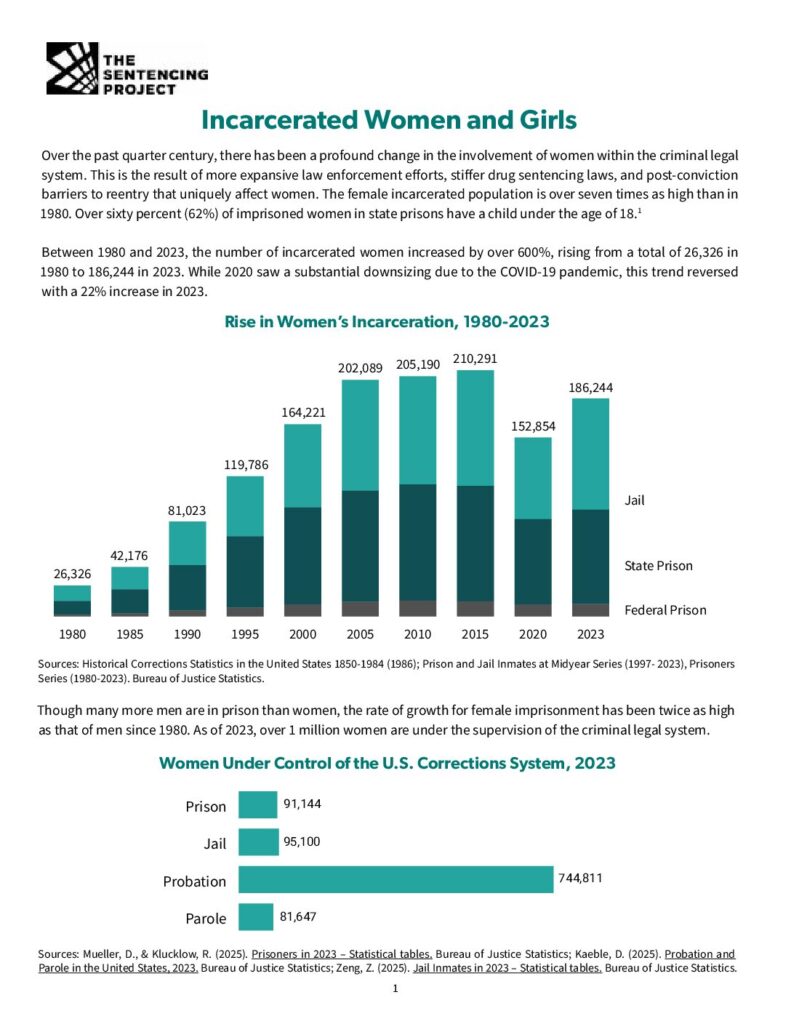
This report, by The Sentencing Project, examines the changes in involvement of women and girls in the criminal and juvenile legal system over the past quarter century. The report includes data examining the rise of women and girls’ incarceration in jails, state and federal prisons, residential placement centers, as well as women under the control of the U.S. Corrections systems through probation or parole., This…

From the abstract: “This Note provides a general review of the current state of Facial Recognition Technology (FRT), including Illinois state regulation and past federal regulation attempts. This Note asserts that even as datasets become more diverse and “fairer,” FRT may still have discriminatory impacts on minority populations, as evidenced by a few highlighted examples…

“Suspensions, expulsions, and school-based arrests: These exclusionary and overly punitive disciplinary responses disproportionately impact Black students and have become normalized throughout the nation. In reality, school pushout, or the disciplinary sanction of removing students from the classroom, contravenes the very purpose of public education to prepare children to engage as full citizens in our democratic…

In October 2025, the Gault Center convened over three hundred youth defense lawyers and advocates at our annual Youth Defender Leadership Summit. Together, we practiced the cultivation of community in service of building a more just, more liberated, and more human humanity for all children and for us all. This resource captures the shared learnings…
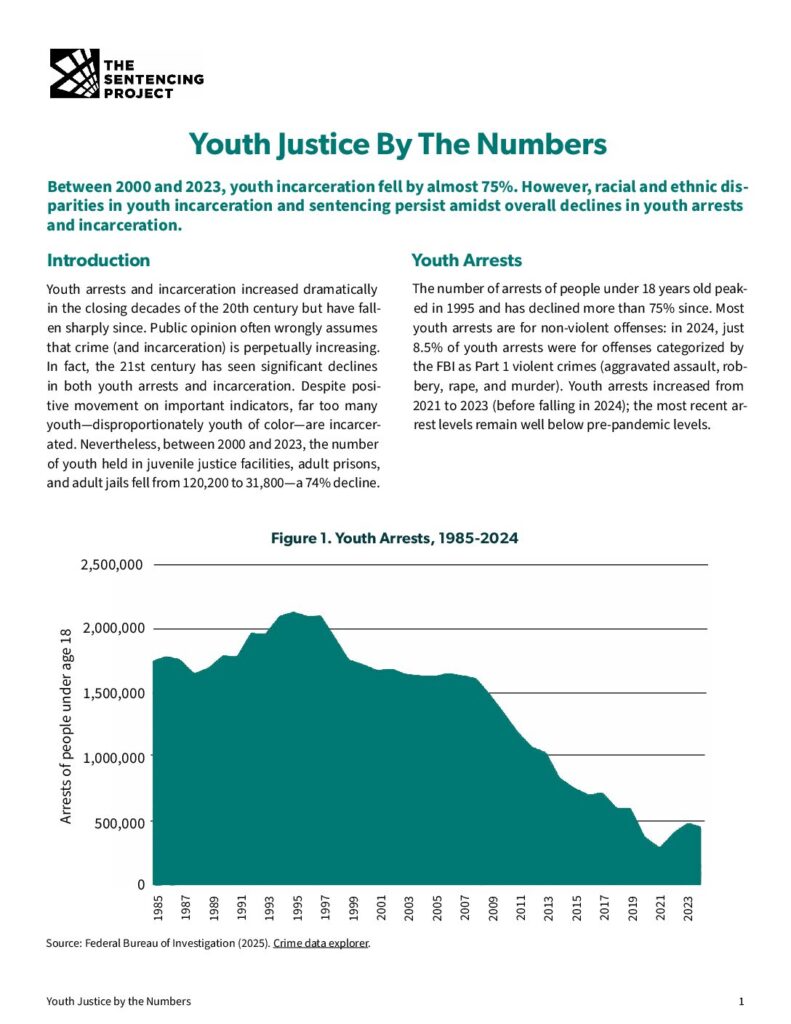
The Sentencing Project released an updated snapshot of the numbers of youth in the juvenile legal system from 2000 to 2023, finding significant declines in youth arrests and incarceration, though racial and ethnic disparities persist. The report calls for the need to continued shrinking the juvenile legal system by increasing informal or diversionary responses to youth arrests. Introduction: “Youth arrests and incarceration increased dramatically in the closing…

From the abstract: This Article employs the Law Review’s Discourse symposium on my book, Unreasonable: Black Lives, Police Power, and the Fourth Amendment, as a starting point to foreground and elaborate on an idea that I reference in that text: police power abolition. The Article begins by describing the central insight that motivates Unreasonable—namely, that…

This “Fast Facts” Publication from UCLA’s Center for the Developing Adolescent provides insight on how to support young people five years after the COVID-19 pandemic. From the publication: “In 2020, COVID disrupted nearly every aspect of education, work, and social connections. Students who were in the earliest years of their education when schools first closed…
This amicus brief from over 26 juvenile justice amici, including the Gault Center, , argues 1) the spirit and text of New York’s passage of landmark Raise the Age Law rejects the attitudes that underlay the Juvenile Offender Act of 1978, 2) New York’s Raise the Age Law and its legislative history demands a youth subject to adult prosecution only in “extremely rare and exceptional cases”, 3) before courts…

“For decades, in the summertime, America has confined certain of its youth in what are essentially open-air heat camps. In city after city, camp-form is established through the enactment of warm-weather juvenile curfews which keep the youth at home or in state-sponsored centers during summer nights and, increasingly, during days as well. Local governments justify…

The Gault Center released an update on the state of youth defense in Kansas, which centers the perspectives and experiences of young people impacted by the juvenile legal system, through a collaborative effort with Progeny, a youth-adult partnership in Kansas, TerraLuna Collaborative, a research consulting group, and Mulberry Art Gallery, which focuses on supporting emerging…

This report highlights D.C. transfer laws and discusses the current U.S. Attorney’s argument that the District of Columbia should amend its law to transfer more young people to to adult court. The report compares D.C.’s transfer law to transfer laws across the country and highlights decades of research that has concluded transfer laws do not…

This issue brief by the Juvenile Justice Initiative provides an overview of transfer laws in Illinois. Additionally, the brief reviews demographic data on young people who are being tried as adults and identifies the ways that transfer fails children and public safety in the state of Illinois. The brief ends by calling for a return…


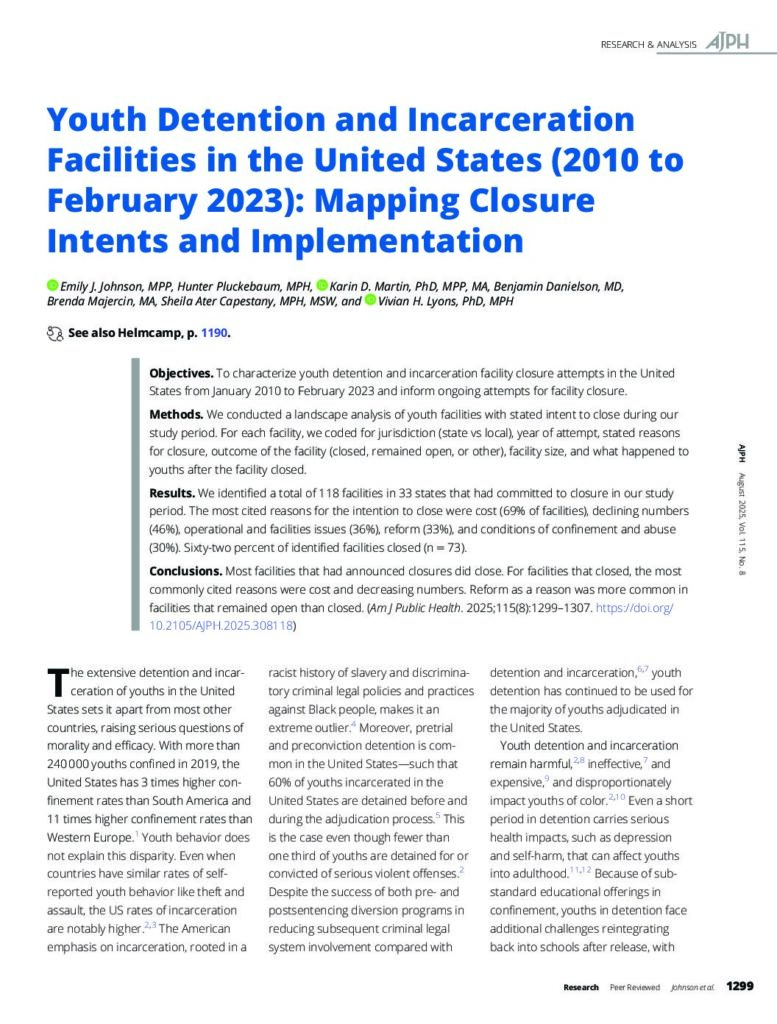
From the Discussion: “This study illuminates pathways for future research to explore facility closures. Such research should investigate the impact of specific drivers supporting completed closures of youth facilities, including the combination of stated reasons to appeal to different audiences. Notably, we only found 1 paper in our scoping review that explores the strategies used…

From the Introduction: “Following a 2024 County Council request, the Pierce County Performance Audit Committee contracted with the CoLab for Community and Behavioral Health Policy at the University of Washington to conduct an audit of the county’s juvenile justice system against national and research best practice. The assessment is intended to guide future county investments…

From the abstract: “The discipline of public health has begun to recognize the structural inequities of the carceral system as drivers of poor individual and population health. Thenumberofpeopleincarceratedandthelengthoftheirincarcerationdeterminethescopeandgravityoftheirexposureto these individual and public health effects. Plea bargains all but guarantee a period of incarceration, often for many years, because prosecutors have significant bargaining power against defendants…

From the introduction: “Although the Fourth Amendment grants the Supreme Court power over searches and seizures, it would be unrealistic to turn to the Court for help. In theory, the Fourth Amendment exclusionary rule shapes future police behavior by excluding evidence from trials if the police obtained it unlawfully. However, when it comes to racial…


From the conclusion” “Conclusion There is no question that the statistical picture of special education is bleak. But after its meeting of stakeholders, interviews with experts, and review of the research, NCD believes that IDEA and other related disability laws, with improved enforcement, can and should benefit at-risk students who are properly referred and served.…

The Sentencing Project released a report on adolescent gun possession cases, highlighting the harms of punishment and calling for comprehensive community-based initiatives to reduce gun violence. This report offers research on the reasons why youth carry guns, ranging from peer influence to past experiences of trauma and walks through how juvenile court systems typically respond…
